
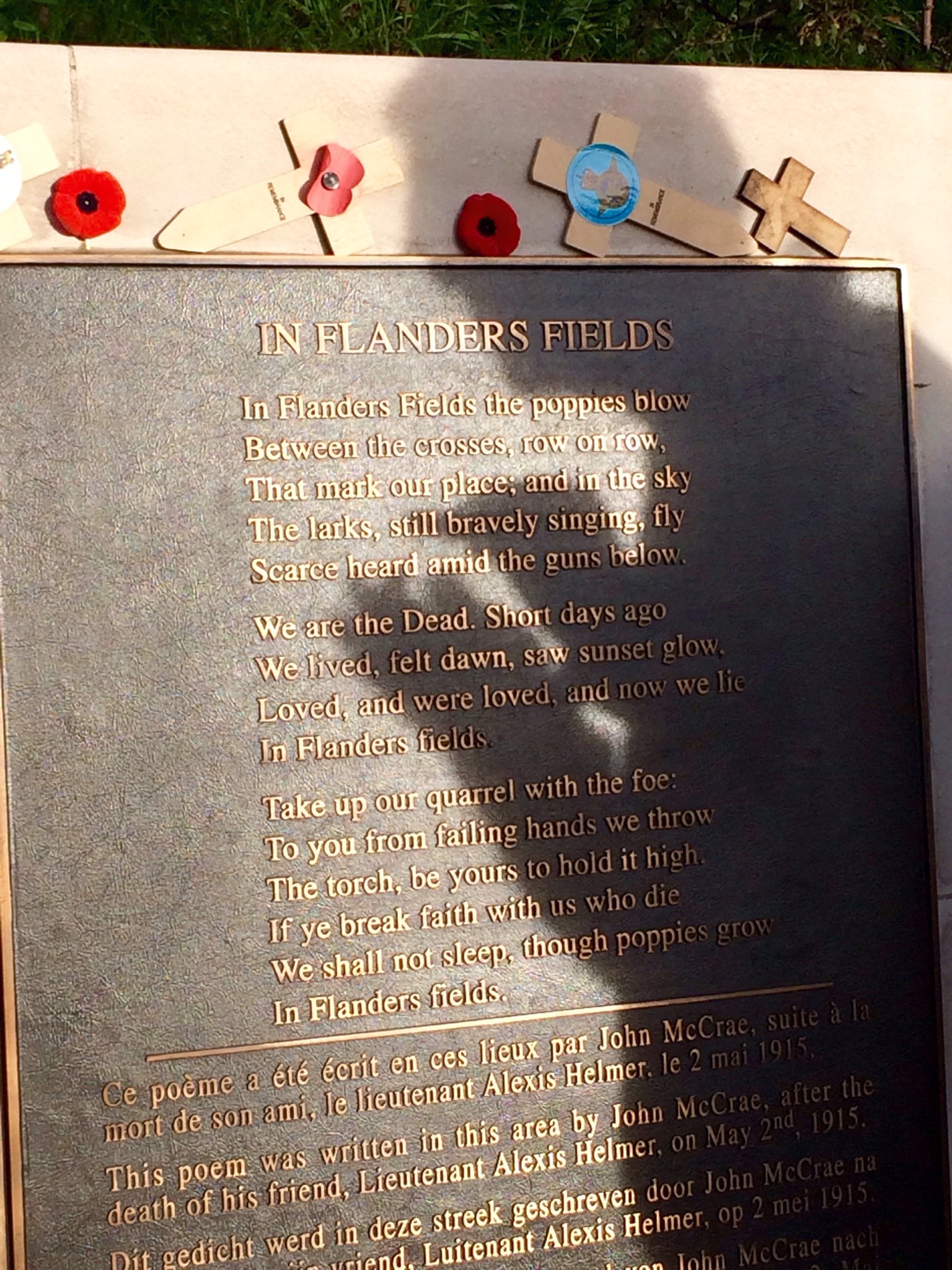
In Flanders fields the poppies blow
Between the crosses, row on row,
That mark our place; and in the sky
The larks, still bravely singing, fly
Scarce heard amid the guns below.We are the Dead. Short days ago
We lived, felt dawn, saw sunset glow,
Loved and were loved, and now we lie,
In Flanders fields.Take up our quarrel with the foe:
To you from failing hands we throw
The torch; be yours to hold it high.
If ye break faith with us who die
We shall not sleep, though poppies grow
In Flanders fields.
I can remember when I first heard this poem. My mom used to read to me as a child, from her enormous book of classic poetry. Of course I didn’t always understand the words or the overall meaning of the poems, but I just liked to listen to the rhythm of the words. She could make any poem come to life, and I could easily picture the fields of red poppies, and the larks flying overhead. It’s funny how some poems just stay with you. For whatever reason, this poem captured something in me, and I have constantly found myself drawn to it.
I can probably thank this poem for my interest in World War One history. It was a horrible war, perhaps the bloodiest in modern history. An entire generation of men was destroyed, and many of them fell in Flanders’ fields. What makes it such a tragic war was that it was unnecessary. Yet in the end, it managed to destroy those who led it; the monarchies and aristocracy of Europe. Unlike many wars before it, we can read first-hand accounts from men like John McCrae, the poet of the poem above. His story alone is enough to epitomize the tragedy of the war. John McCrae was a Canadian physician during World War One. Stationed in the center of the fighting in Flanders, Belgium, he witnessed the full brutality of the war. He wrote this poem after watching his good friend die on the battlefield in Ypres.
Flanders bore the brunt of the German invasion. Belgium was attacked first, in order for the German forces to reach France. It thus became the main battlefield of the Western Front. Belgium is such a small country, and it’s amazing that it even survived the war. The green hills of the countryside throughout Flanders are covered in the white headstones of WWI graves.
When I began to plan the trip the Belgium, I knew that I wanted to see the battlefields. The three of us were incredibly lucky to have stumbled upon Carl Ooghe’s Western Front Tour. We paid 75 euro for a full day tour of Ypres and Passendale. Beforehand, he asked about our background (nationality, heritage, etc.) and if any of our family members had fought in Flanders. Using this information, he was able to form a tour based around us and our interests in the war. I cannot recommend this tour enough. If you go to Flanders, do not miss it!
Let me start out by saying that Carl is extremely knowledgeable about WWI history, but he does not present the facts in a way that is dull or dry. Instead, he uses his enthusiasm and love for history to vividly paint the story of the war with his words. With each visit to a battlefield, I was able to picture the fighting, and to understand how each battle connected to the other.
There were only two spots open on that Saturday, so Justin went on the tour the day before. Carl picked Meret and I up from our hostel in his big white van. He immediately reacted with surprise when he saw us. He said that he had been expecting to meet little old ladies. His normal customers are usually past the age of 60.
We then picked up a family. The husband and wife were retired, and their sons were in their early forties. We were intrigued to learn that they were Australians. Carl announced that he would take us on a tour of battlefields where Australians, British, and other members of the Commonwealth had fought and died. Unfortunately it would be difficult to find an American battlefield, because the Americans mainly fought in the south, toward Somme. Nevertheless, I was excited to learn about British history in the war. Even more so, I looked forward to learning about Australian, and Canadian history, since they are often (and sadly) left out of American discussions on the war.
Essex Farm Cemetery
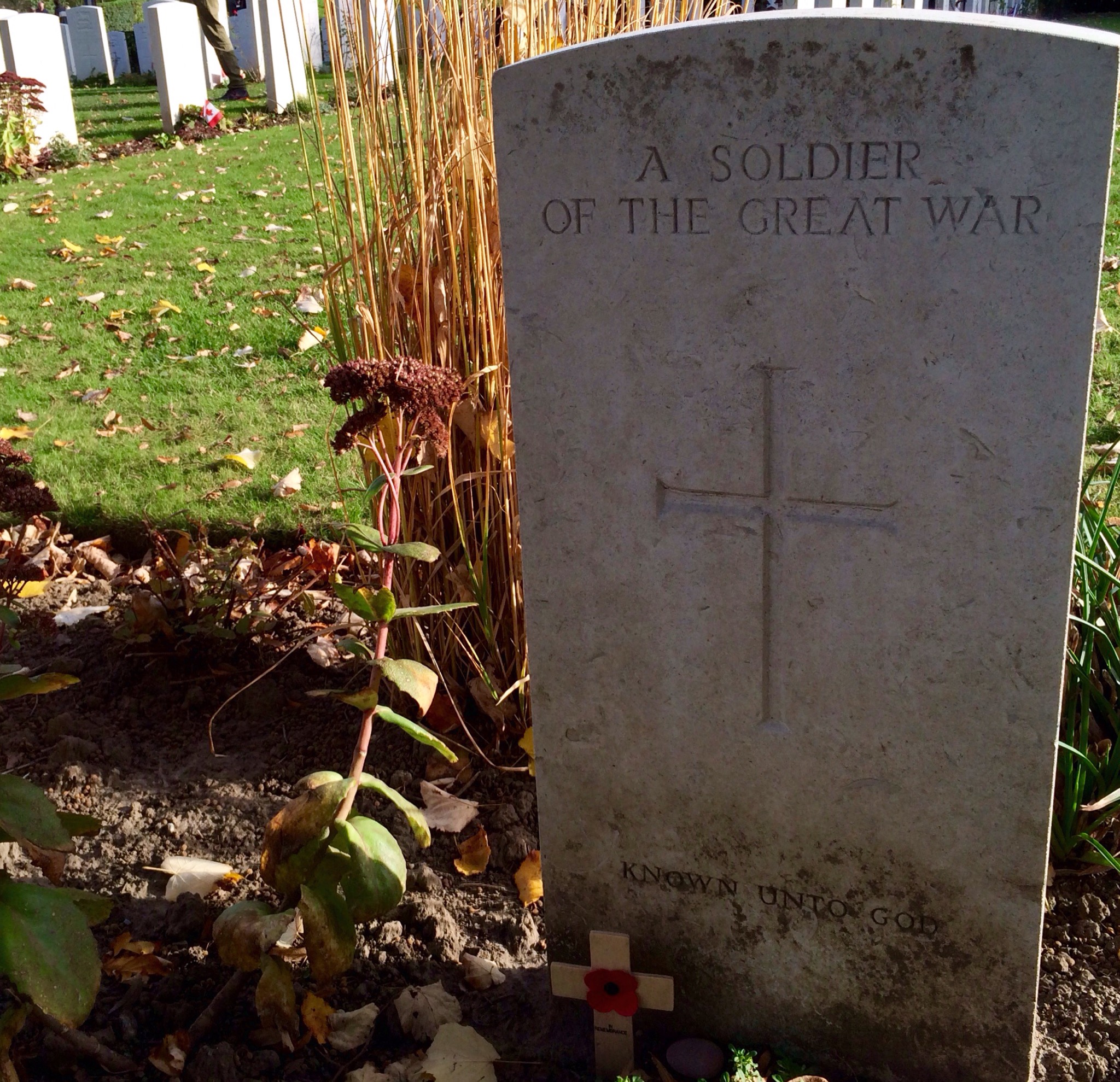
Along the way to Ypres, he causally asked us all if anyone would like to see the battlefield where John McCrae wrote his famous poem. We all said yes. It wasn’t long before we reached Ypres, and the van pulled up to Essex Farm Cemetery. It was located just off of the main road, but the scenary was stunning. The soft morning light illuminated the green hills and peeked out through the branches of the trees; trees that stood over white gravestones. There wasn’t any wind, and the stillness gave the battlefield a very solemn atmosphere. I could tell that we all sensed the need to be as quiet and as still as the landscape. I almost felt as if we had intruded. The dead didn’t want to be disturbed.
Carl even spoke in a low tone when we began to describe the battle. This was the one of the first military graveyards built during the war. 1200 men were buried there. 103 were never identified. Many of the graves were for young men, some as young as 15 years old.
John McCrae wrote his poem here, after burying his friend, in May of 1915.

Trench Warfare
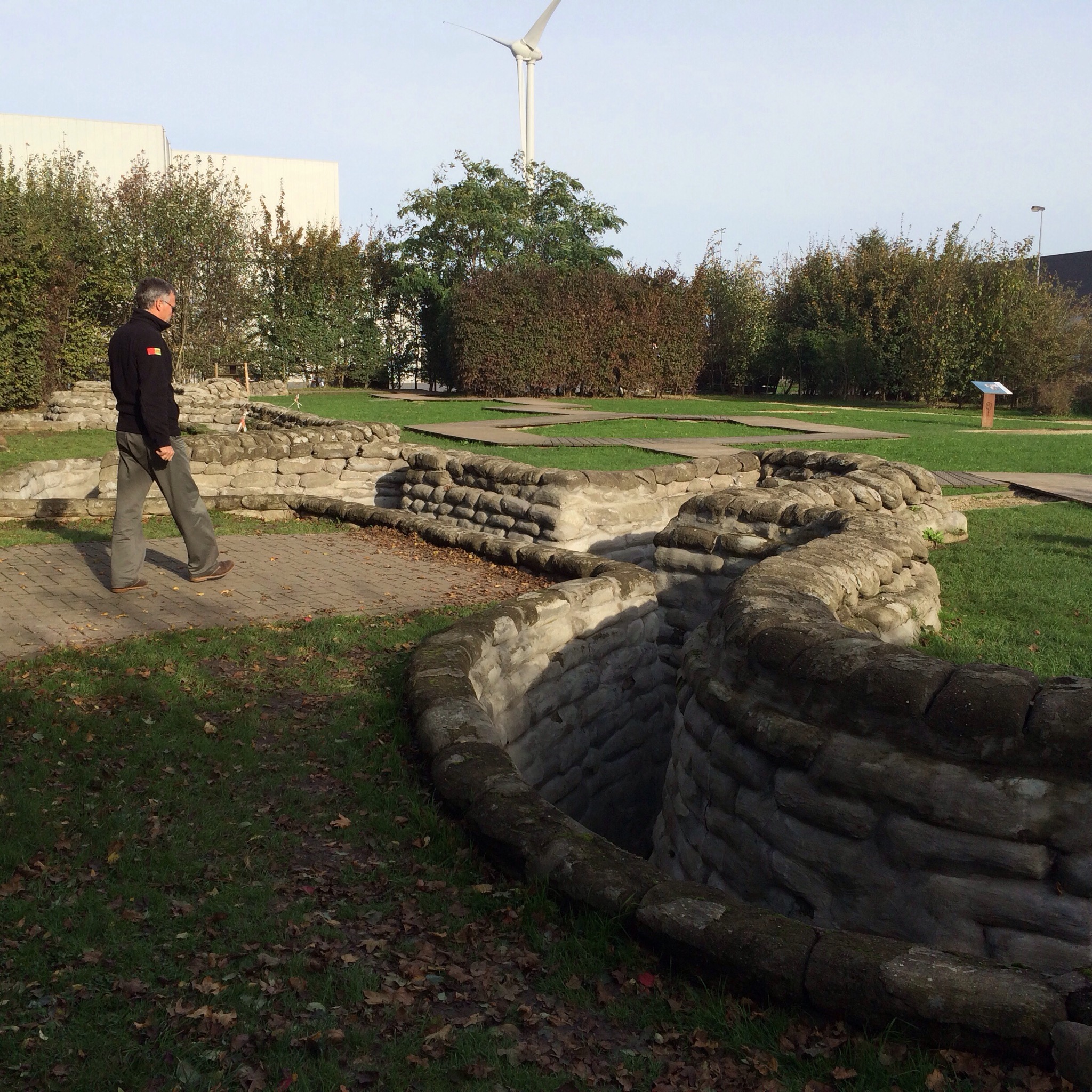
Next, we took a short drive to a nearby pig farm. The stench was unbelievable, but it was worth it. The field to the right was split in half by a deep, narrow, and curvy trench. It was built in 1914, and again in 1917 by British soldiers during the war. It was only recently discovered by construction workers on a nearby turbine farm. We walked along the trench, and envisioned what absolute hell the men must have faced while trapped in these narrow, and muddy passageways
Langemark German Cemetery
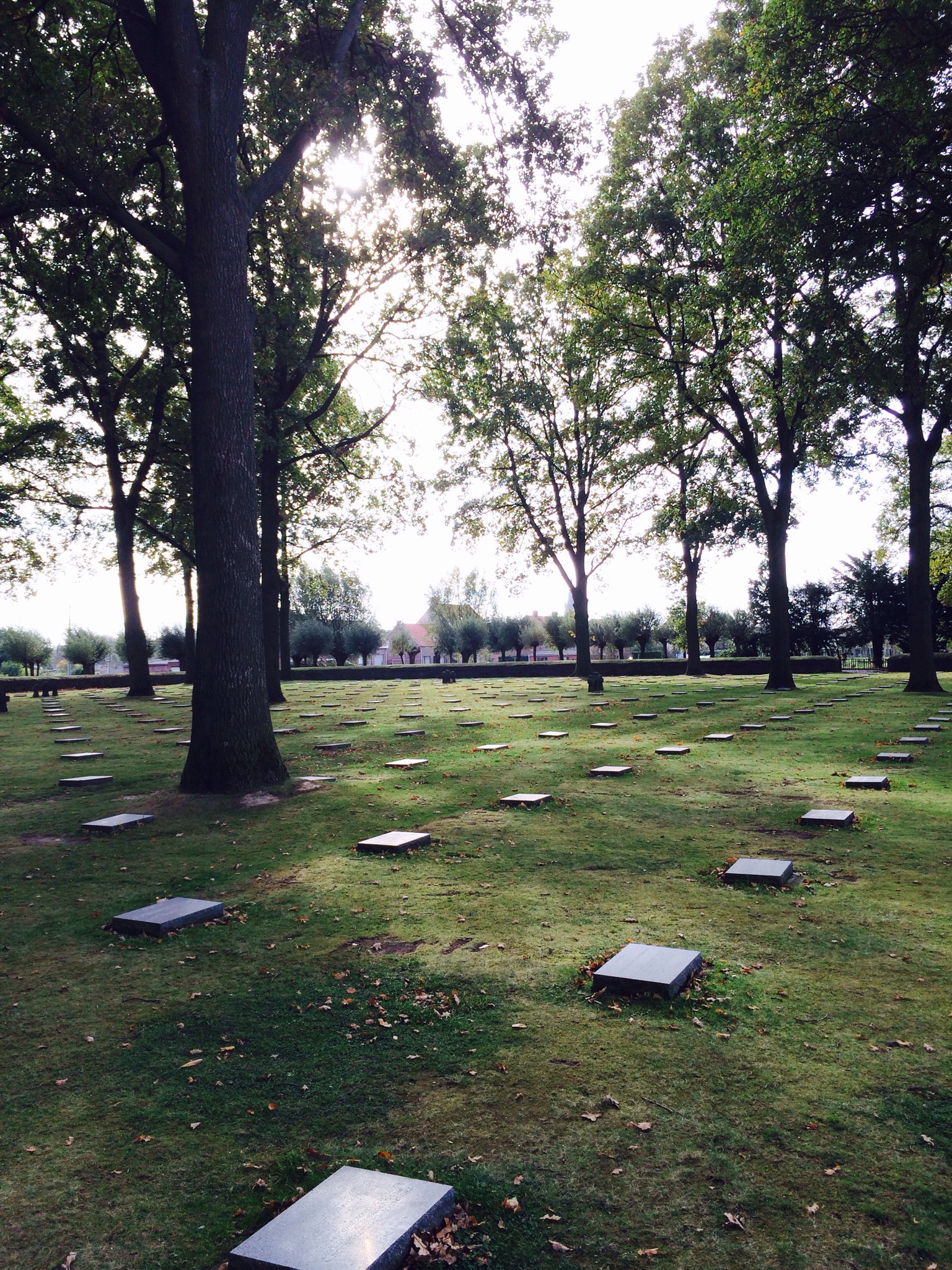
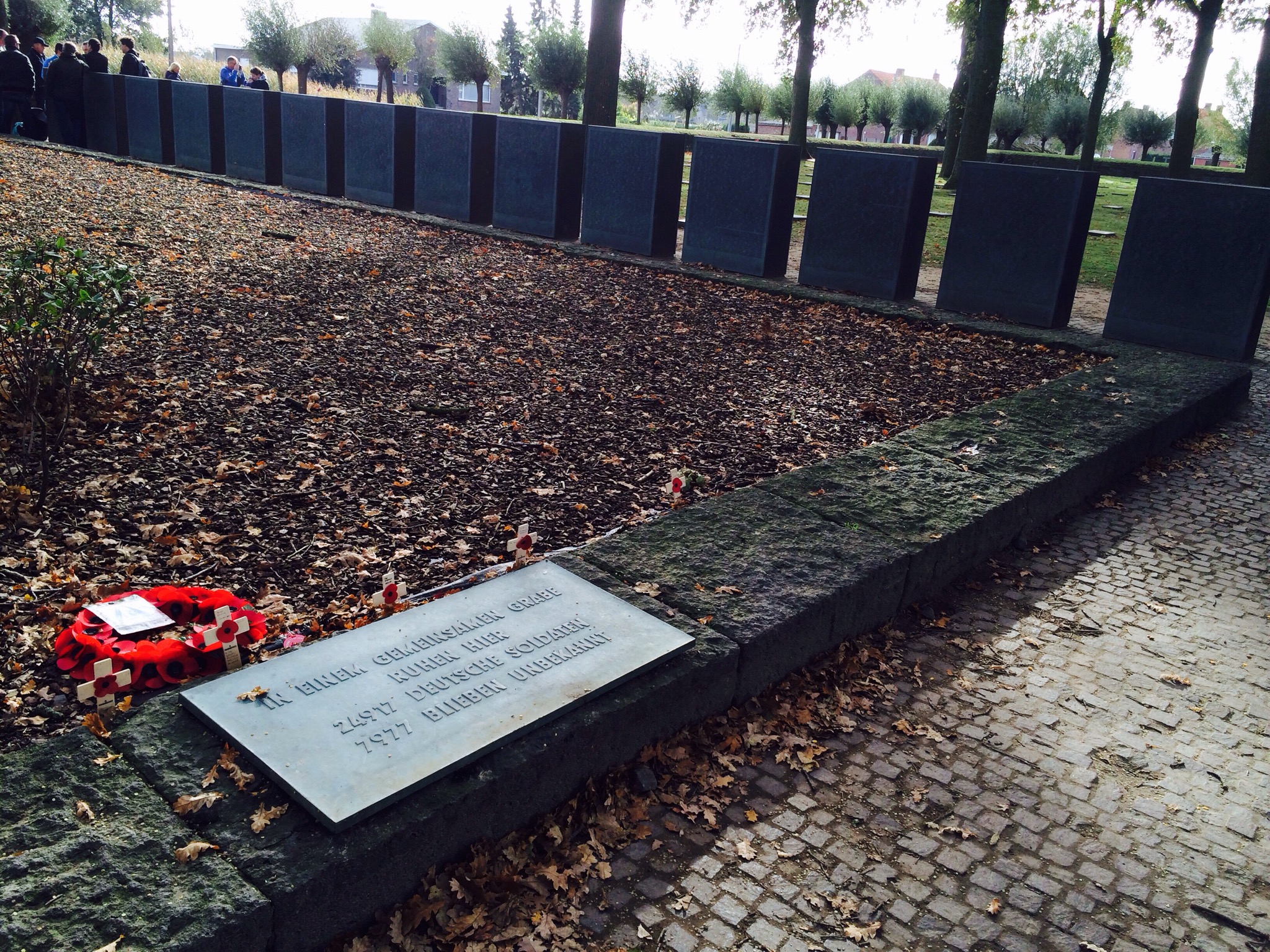
Then, we took a surprising break from viewing Allied cemeteries. Carl took us to a German cemetery a few miles away. I was shocked by the difference between the two. In every allied graveyard that I had seen, the dead were buried in individual graves, and each soldier, identified or not, had a smooth, white headstone that displayed either a cross or the star of David. Flowers, mainly poppies, can always be found on my many of the graves. The Germans on the otherhand, buried their dead in Flanders in mass graves. This particular cemetery had one large mass grave, which was surrounded by large, black, square headstones that displayed the names of the known dead. Behind the mass grave were many other smaller graves, and each flat, black headstone showed that 2-4 men were buried in each grave. 24,000 German soldiers were buried in the large mass grave alone.
It felt extremely sad, in a way that was almost menacing.
According to Carl, its appearance is due to cultural differences. In the allied countries, individualism has long been the foundation of our culture, and the dead are therefore treated with the respect they would demand as an individual. We also designed the graveyards to console the living, and to thank the dead for their sacrifice. In Germany however, the Motherland was placed above the individual; Duty above Sacrifice. Soldiers were seen as one unit, one body, and they were therefore buried all together where they fell. I was also fascinated by the importance of oak trees in the graveyard. Oak trees are sacred in German mythology, and they signify death. This graveyard was designed to be sad; the Germans saw no need for consolation. Needless to say, Carl provided a very interesting perspective.
The Brooding Soldier
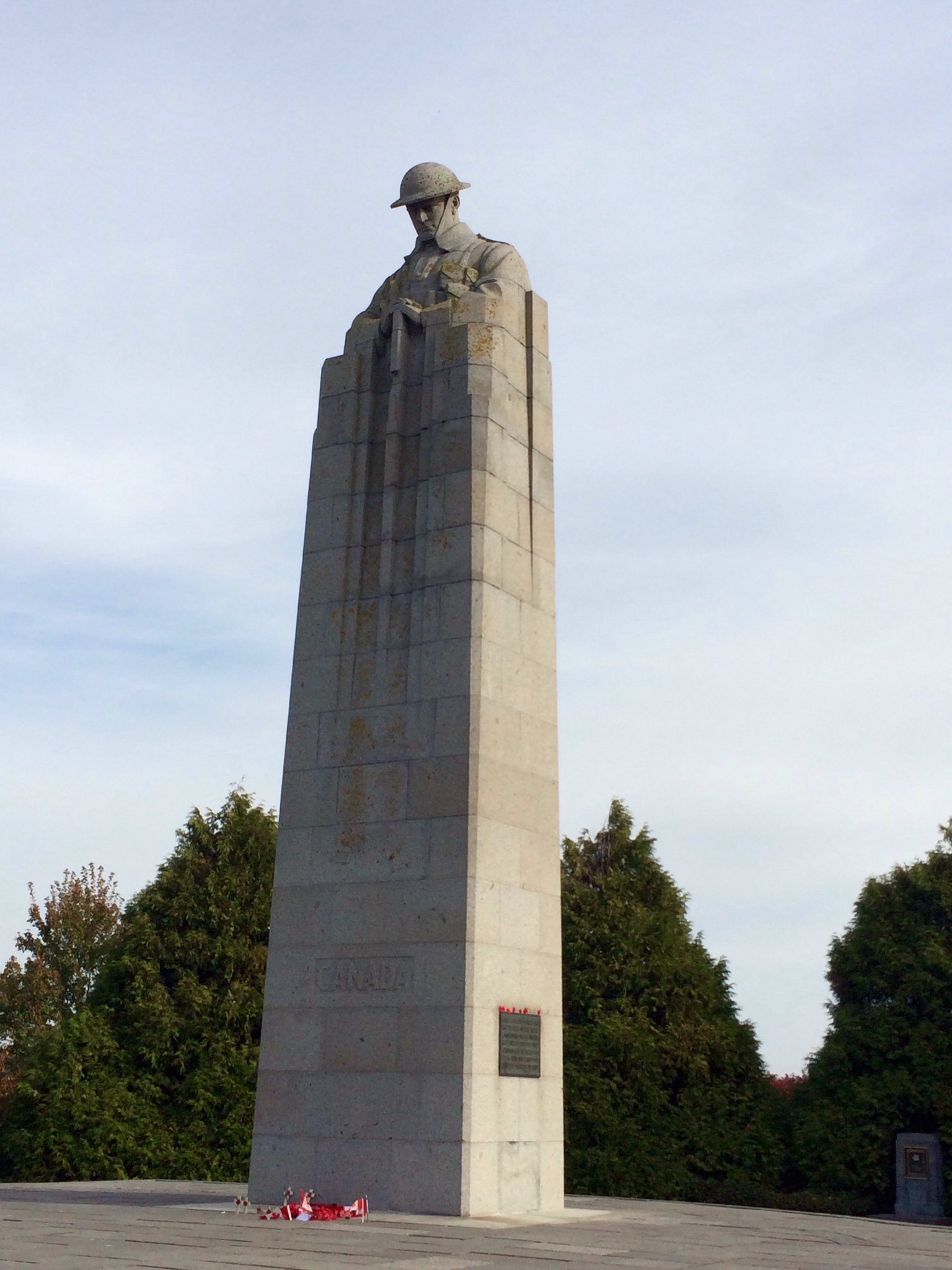
The third stop was the St. Julien Canadian Memorial. From the 22nd-24th of April 1915, 18000 Canadians held their position when the Germans released their very first gas attacks on the French and British ranks to the left of them. 2,000 men died. More would have died, but one of the soldiers happened to be a chemist, and he discovered that a wet cloth held to the nose and mouth would dissolve the toxic gas.
Next to their graves stands the Brooding Soldier. With his sad expression, and crossed arms over his rifle, he represents the truth of war.
There is no glory, only death.
Tyne Cot Cemetery
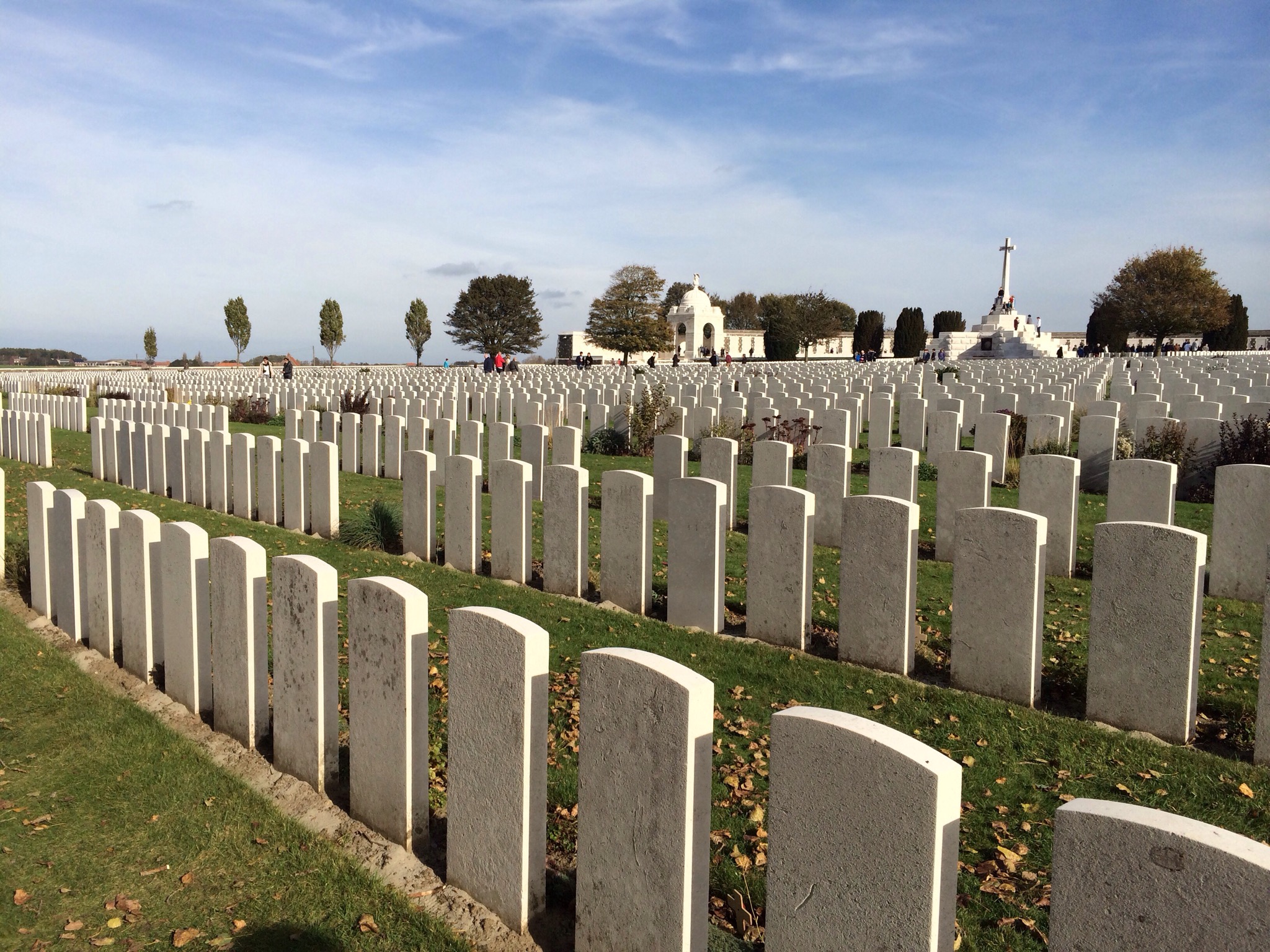
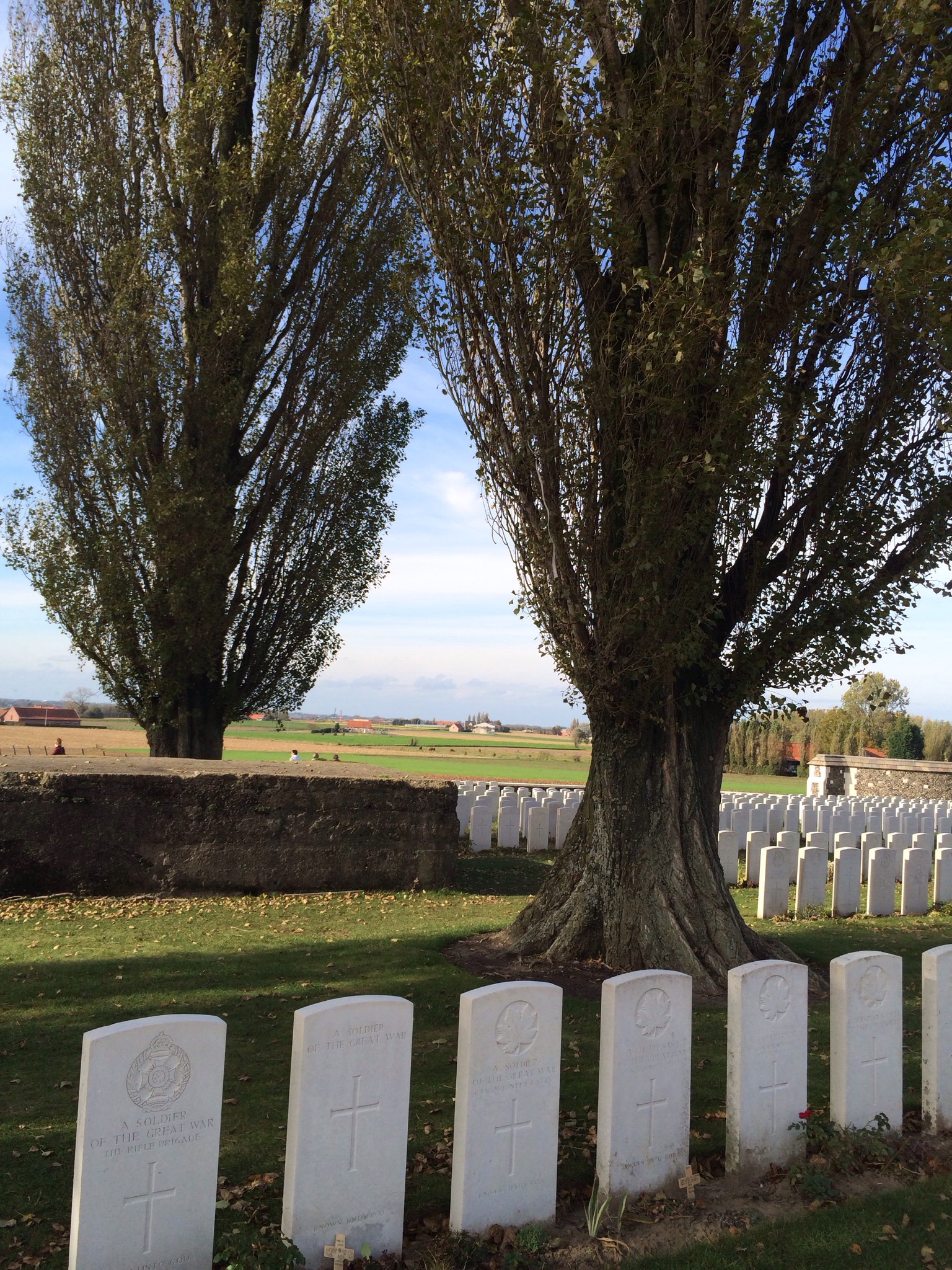
The fourth stop was memorable, due to the sheer expanse of the cemetery. It is the largest Commonwealth cemetery in the world, of any war. As most Americans know, we do not leave a man behind, and we bury our dead in America when possible. The British however, have always buried their dead where they fall. More than 11,000 British and Commonwealth soldiers were buried here.
According to Carl, so many men died here because the British calvary attacked the Germans as if machine guns did not exist.
Hill 60
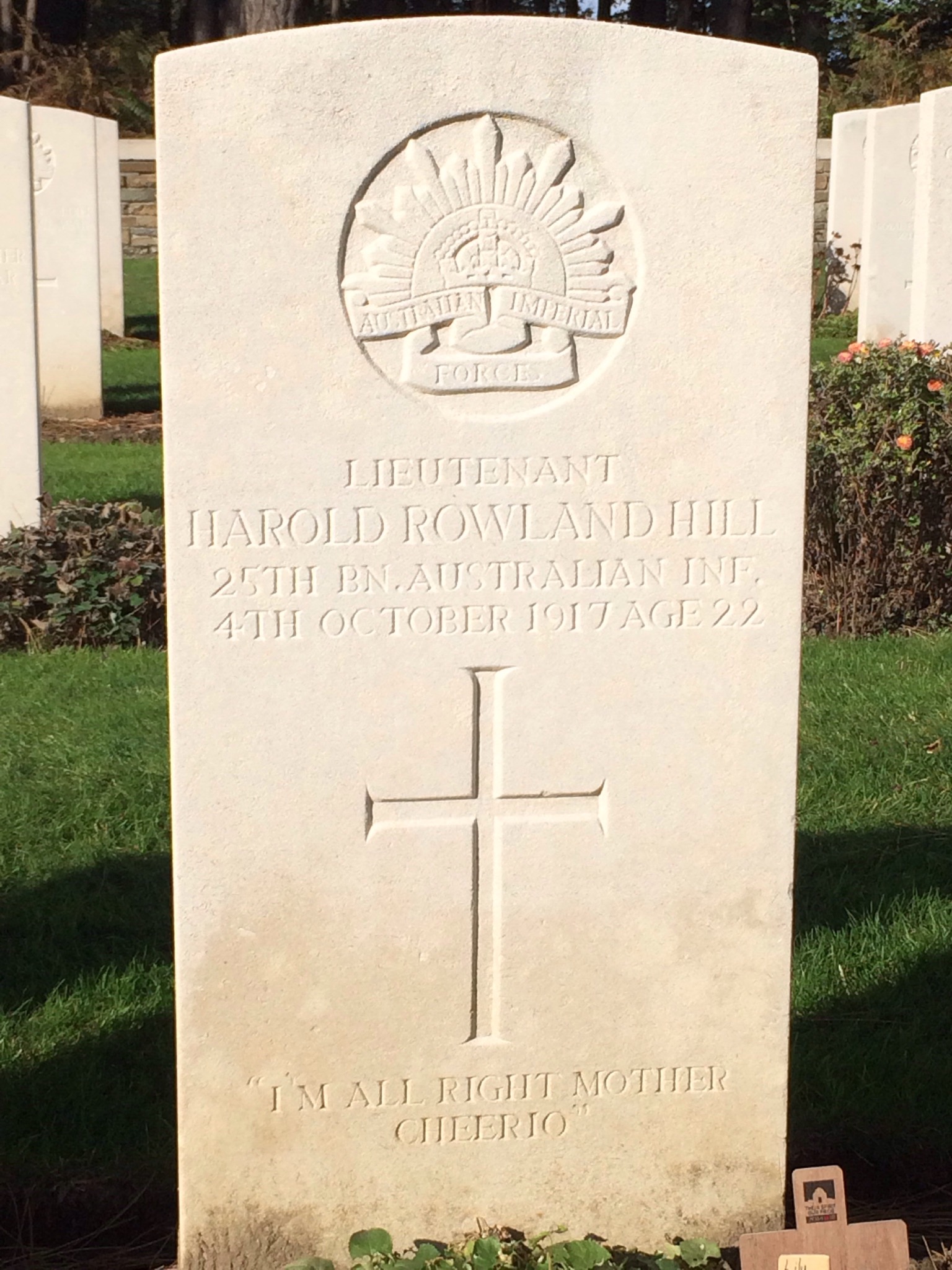
The fifth stop focused on the Australian cemeteries. Again, this is a side of the war that I have never really learned about. It’s a shame that Americans don’t know more about Australian history. We stopped at Thyme City Cemetery. Our new Australian friends searched for their relative among the graves. Carl showed us one grave that was especially heartbreaking. It was of a young boy, of only 22 years, and his grave was inscribed with the last words from his last letter to his mother. I thought of my own brother, and I had to fight back tears.
I’m all right mother. Cherrio
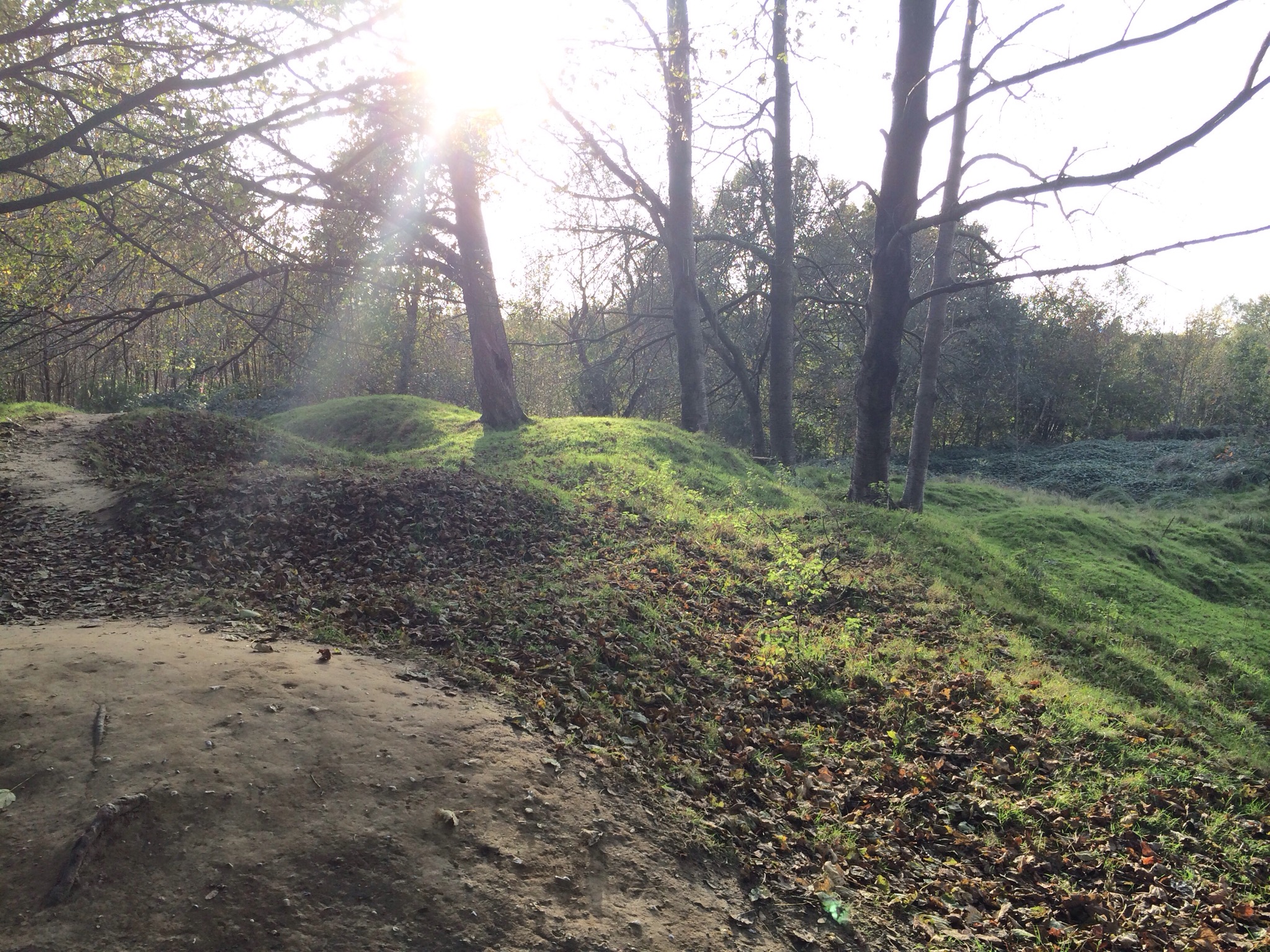
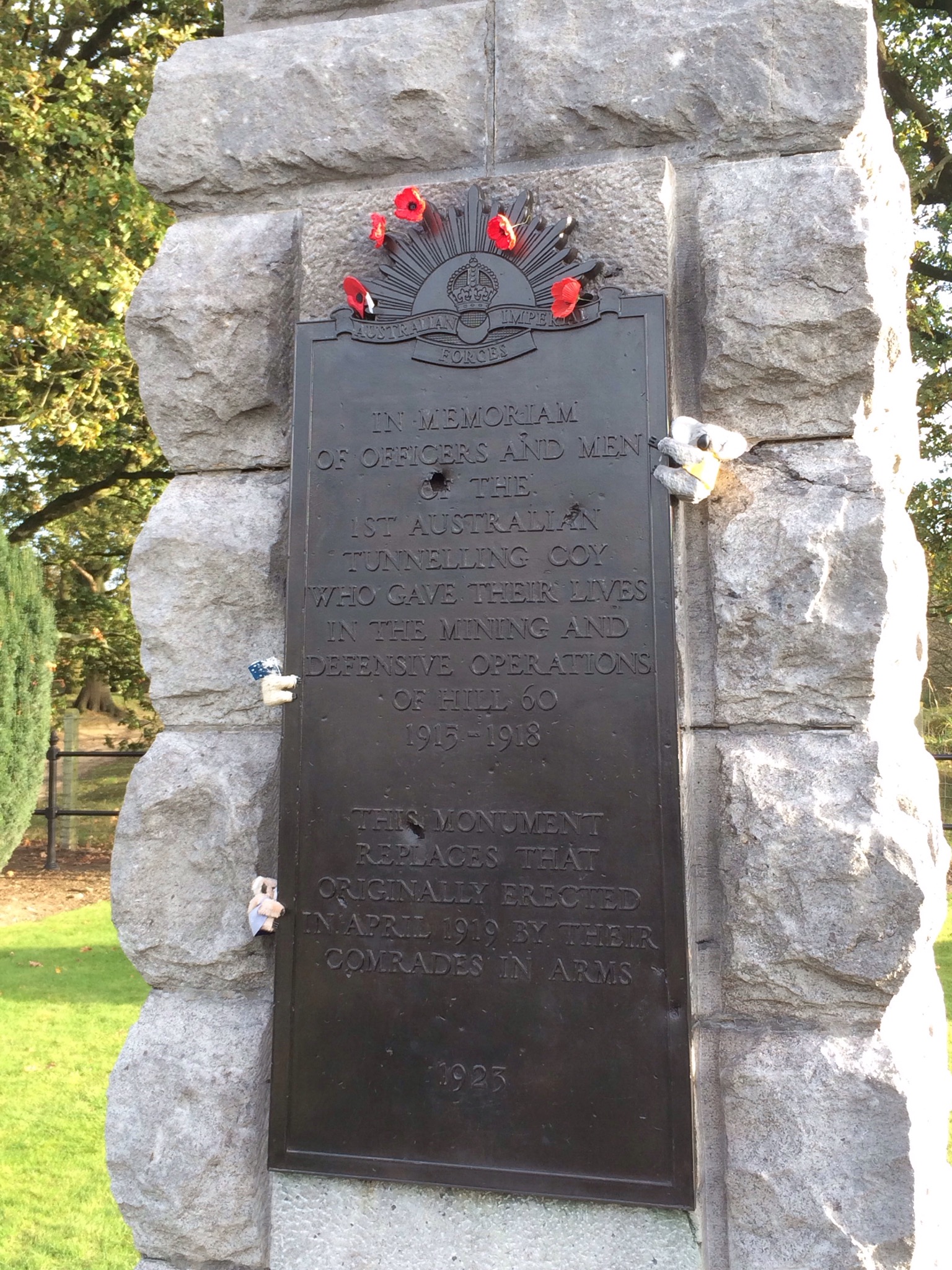
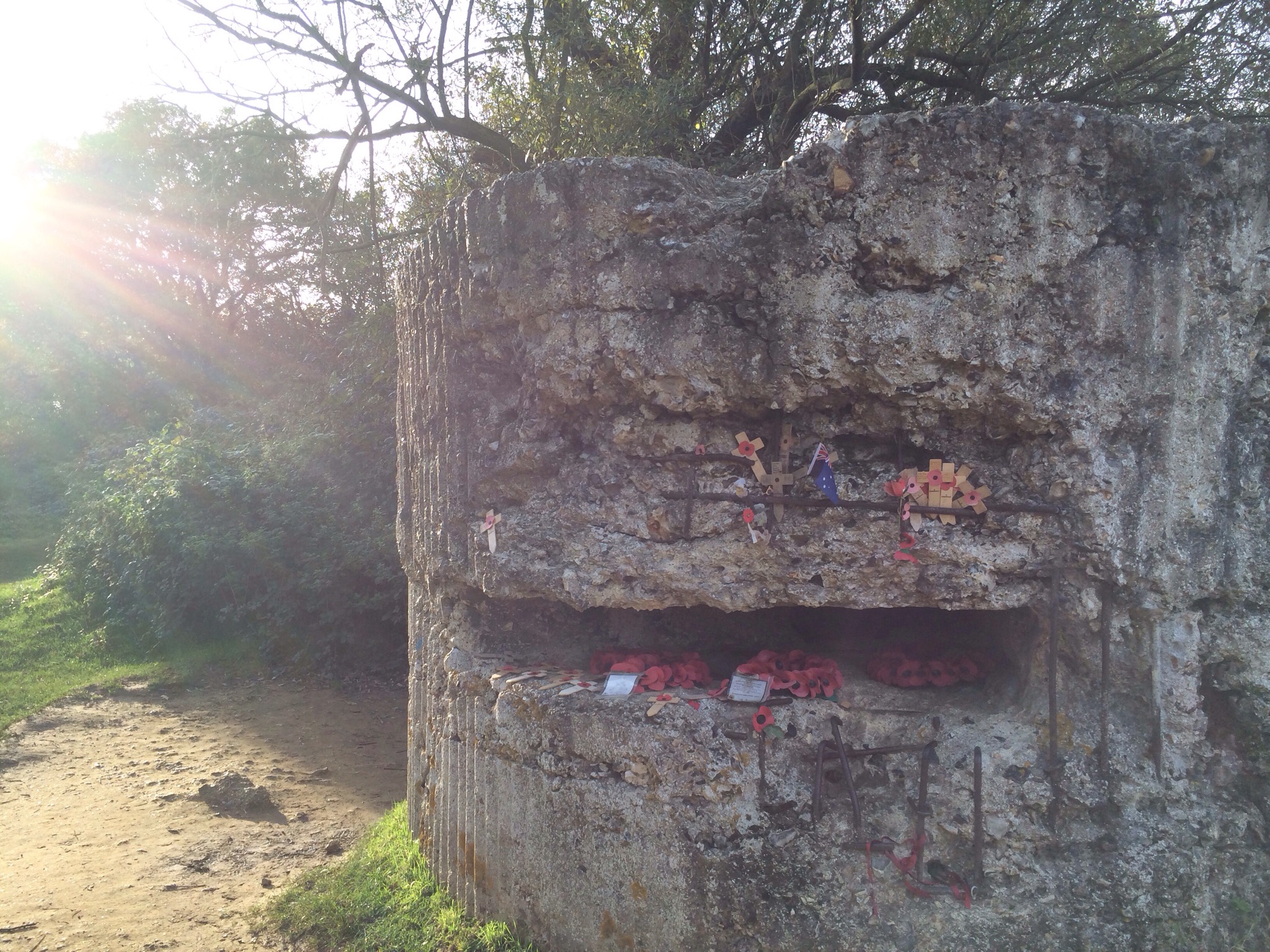
From there we toured the site of Hill 60. I immediately wondered why it was called a hill, and why it was important. It was more of a slight rise in the landscape than an actual hill. Carl said that it is considered a hill in the extremely flat landscape of Belgium. Any raised area of land would have given the soldiers the benefit of higher ground. The hill was a strategic site, and the allies sought to take it from the defending Ottomans. 750 Australians arrived as reinforcements on August 22 in 1915. They were fresh, inexperienced recruits and they had to attack the Ottomans at dawn, using only their bayonets. They lost more than 1/3rd of their men.
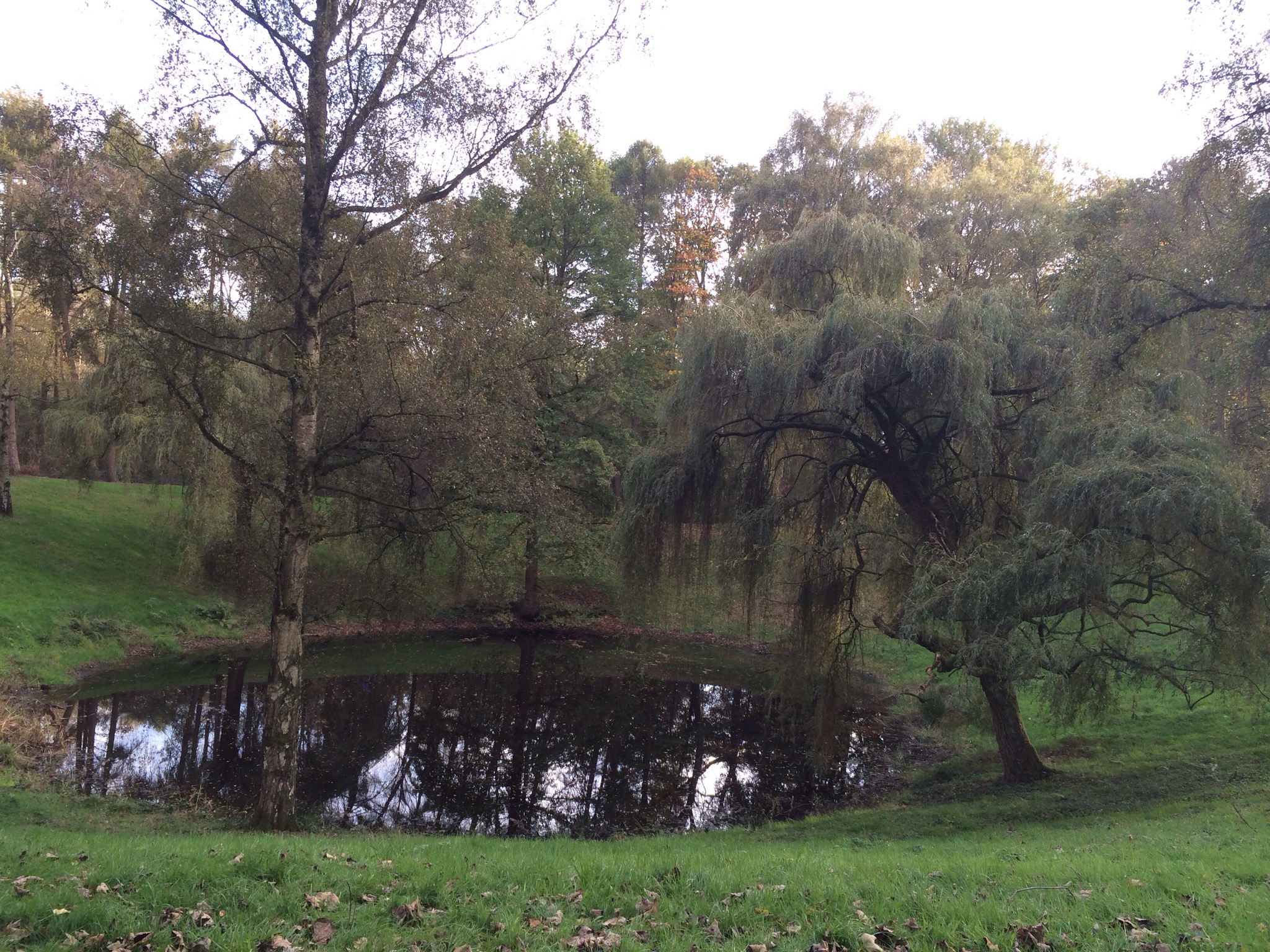
The landscape around the area was mutilated by bombings and trench-digging. One explosion created a little pond near the hill. There are also numerous bunkers scattered about.
American Memorial
By the time evening fell, I was exhausted. I felt drained more emotionally than physically.
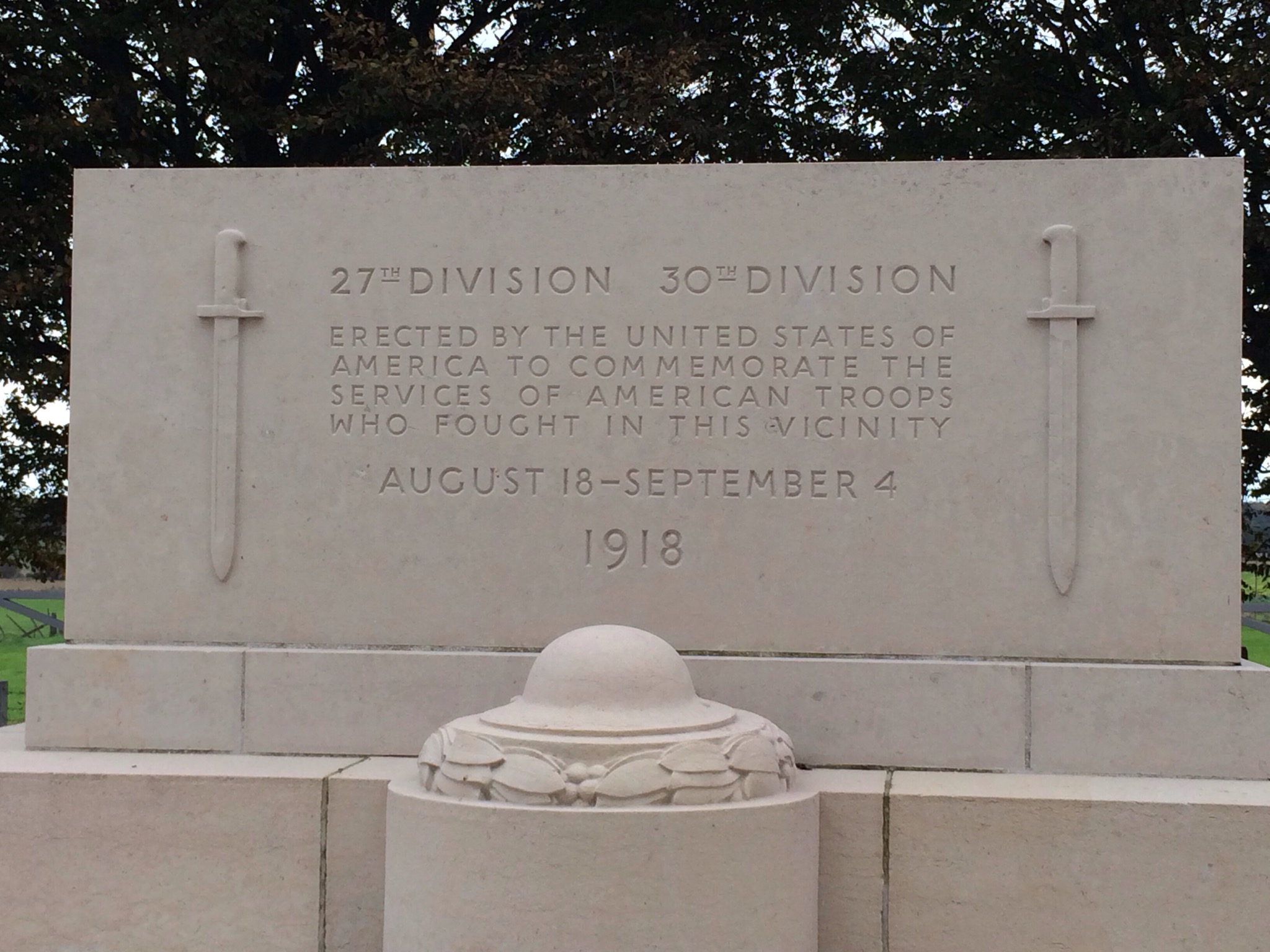
Although I was glad to have seen the British and Commonwealth sites, I couldn’t help but feel a little disappointed that there weren’t any gravesites for Americans. Suddenly, Carl revealed that he was making one final stop. The American memorial wasn’t located in a graveyard. In fact, it was placed right next to a small country road. Nevertheless, it provided a respectful memorial to the Americans who died in the vicinity and to all of the 110,000 Americans who died in Belgium.
Menin Gate to the Missing
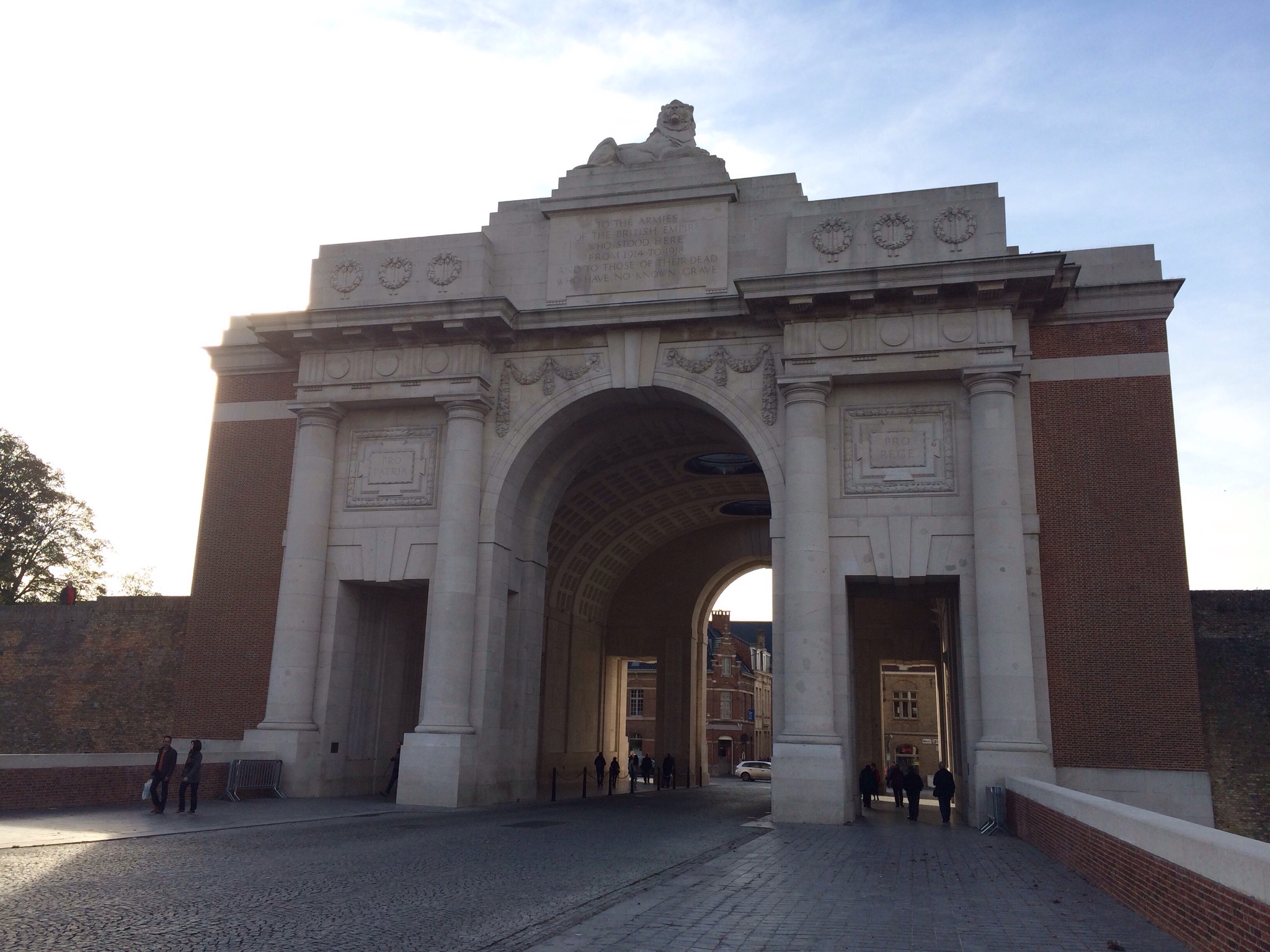
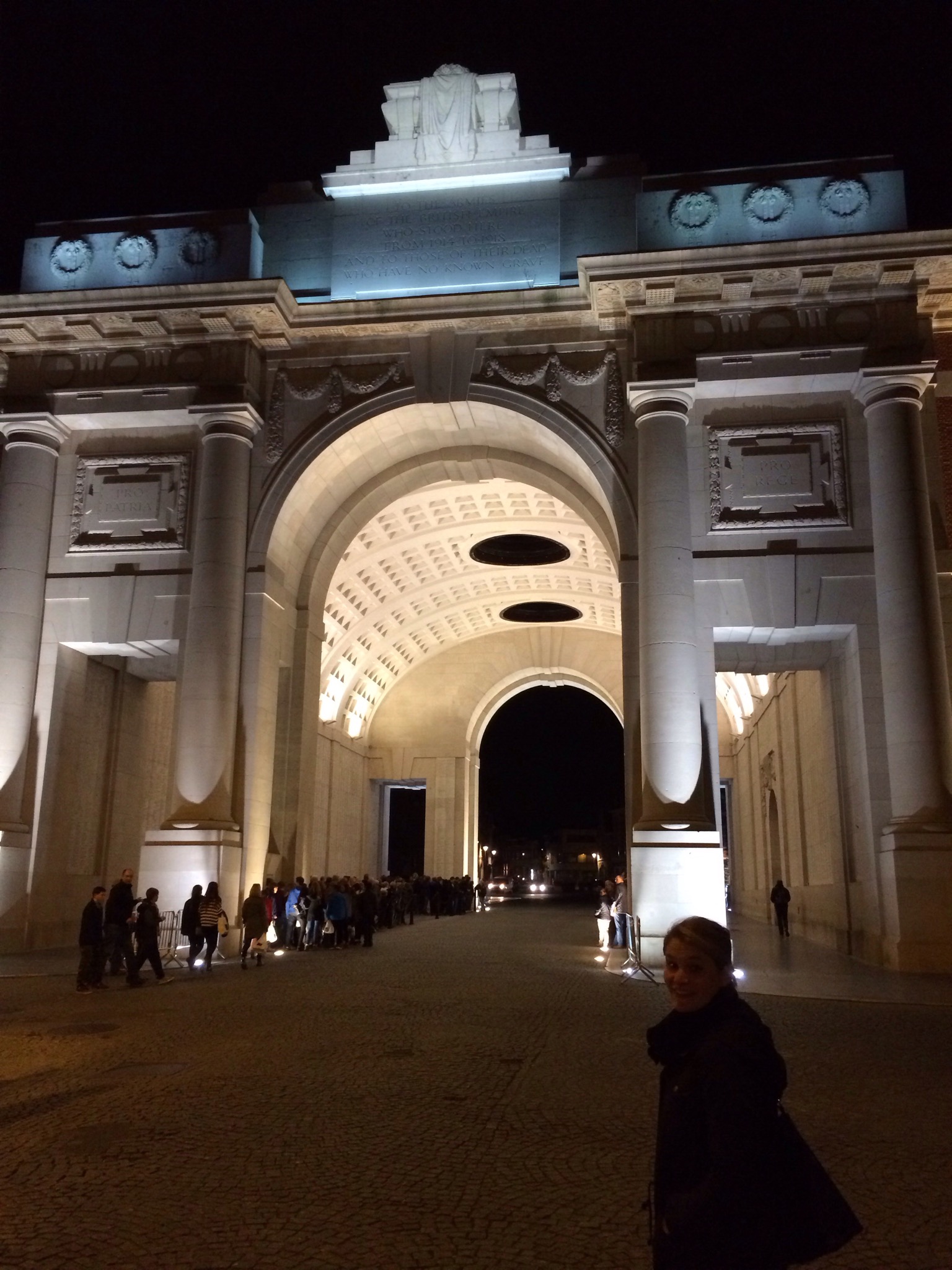
After a long day, night finally fell. We drove into the town of Ypres, and explored the very modern WWI museum. Then we waited to enter the incredible Menin Gate. It is situated along a main road that once dangerously led soldiers to the front lines. It serves as a memorial to all of the missing soldiers of Great Britain and the Commonwealth. The proud lion of both Britain and Flanders sits on top of the gate, and the inside of the entire archway is inscribed with the names of those who do not have a grave. The inscription on the gate is as follows:
Here are recorded names of officers and men who fell in Ypres Salient, but to whom the fortune of war denied the known and honoured burial given to their comrades in death
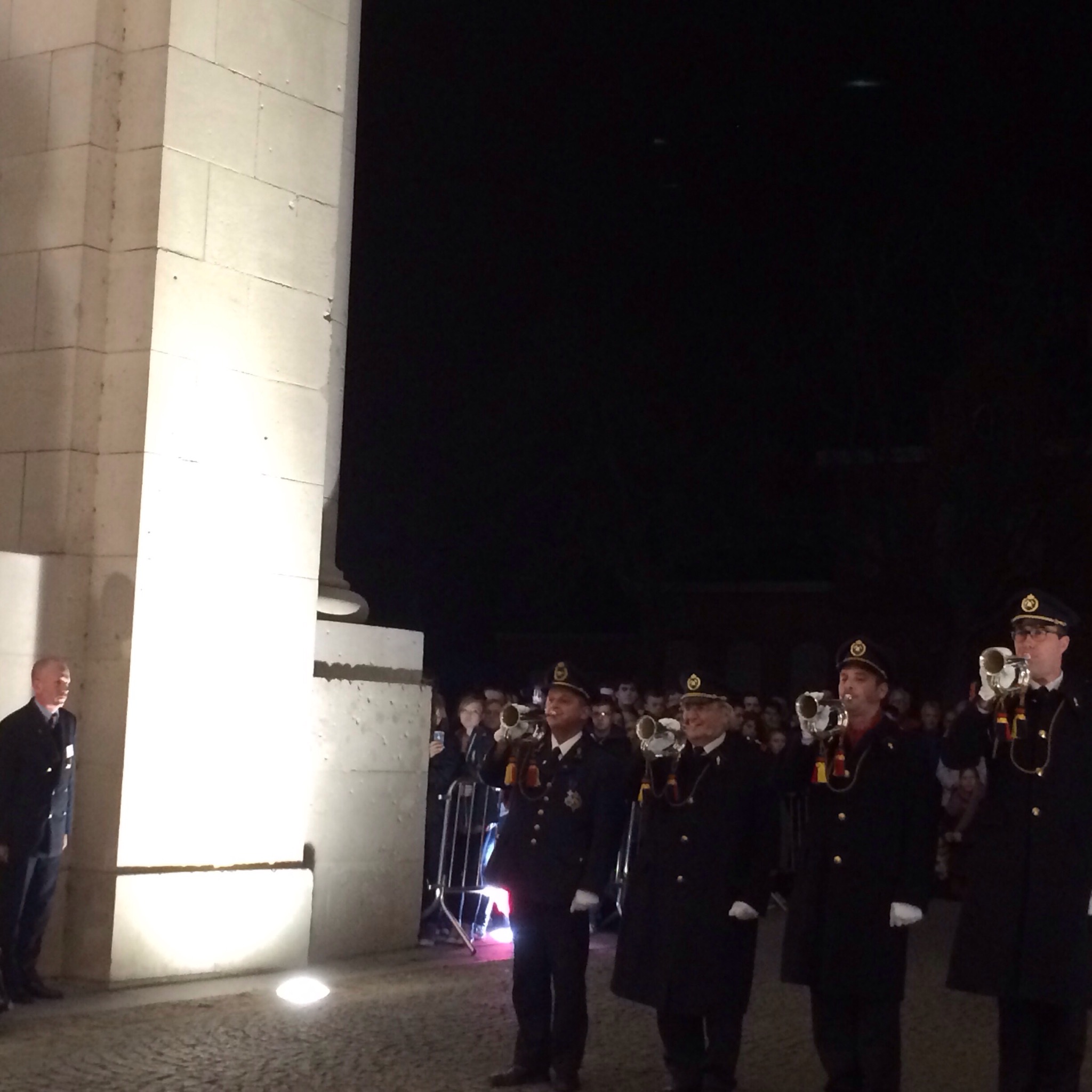
Every night at 8pm, buglers arrive to sound the “Last Post” bugle call. A moment of silence follows. Then a procession of red poppies and wreaths are placed in the gate.
This was a fantastic tour. In fact I’d say that it was the best tour I’ve ever been on, and I would do it again if I ever return to Belgium. I could have gone to Belgium for the tour alone. It is rare when we get to shut the history books and walk where important events took place. Now that I have done it, I don’t think that you can fully grasp the events that shaped WWI until you have walked where the soldiers fought, and kneeled next to their graves.
P.S.
Carl also runs a biking tour along the entire Western Front. That has become one of my new life goals. Anyone want to join one day?
 thewanderingfellows