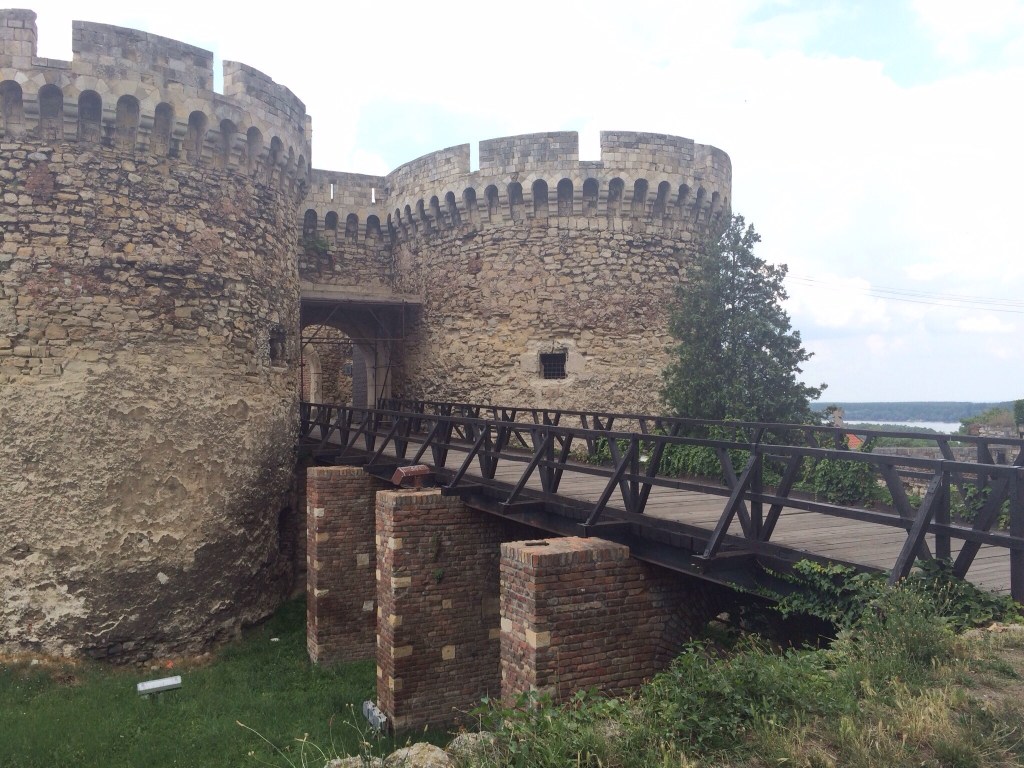
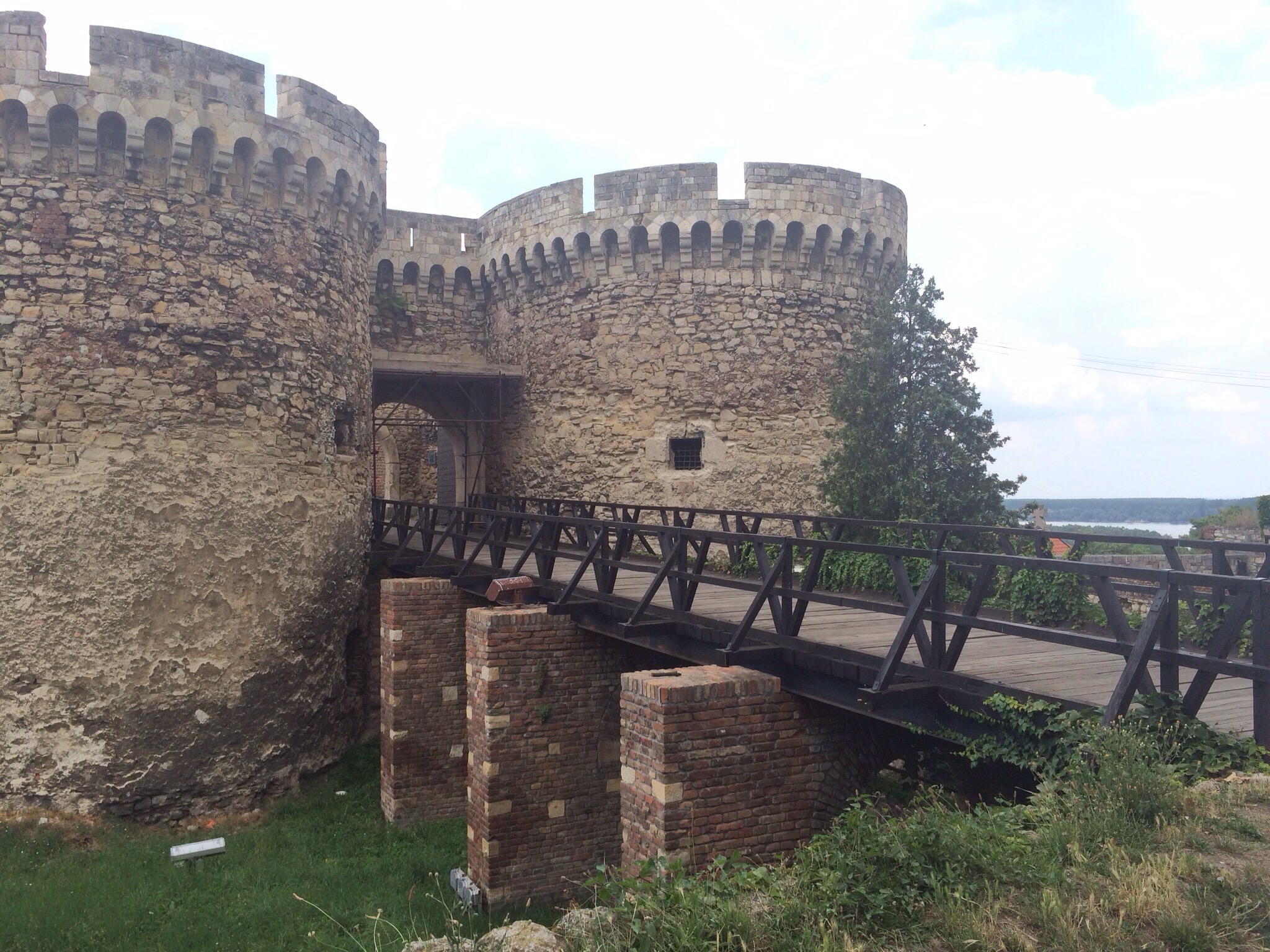
Legend says that when the Slavs landed on the Danubian shores of present-day Serbia, they were stunned by the beauty of an ancient, white-stoned fortress on a hill. They proclaimed, “We will live in this white city.” Thus, Beograd, or the White City, was born. I recently gazed upon the white city myself, and like the Slavs, I was more than impressed.
I am currently on a two-week exploration of the Balkans. I say exploration because I feel that I am learning something new everyday. This part of the world is filled with so much history, and much of it happened when I was a child. I have spent much of my time here talking with Serbians and Bosnians who lived through the fall of Yugoslavia and the terror of the Bosnian war. Receiving first-hand stories has been an incredible experience.
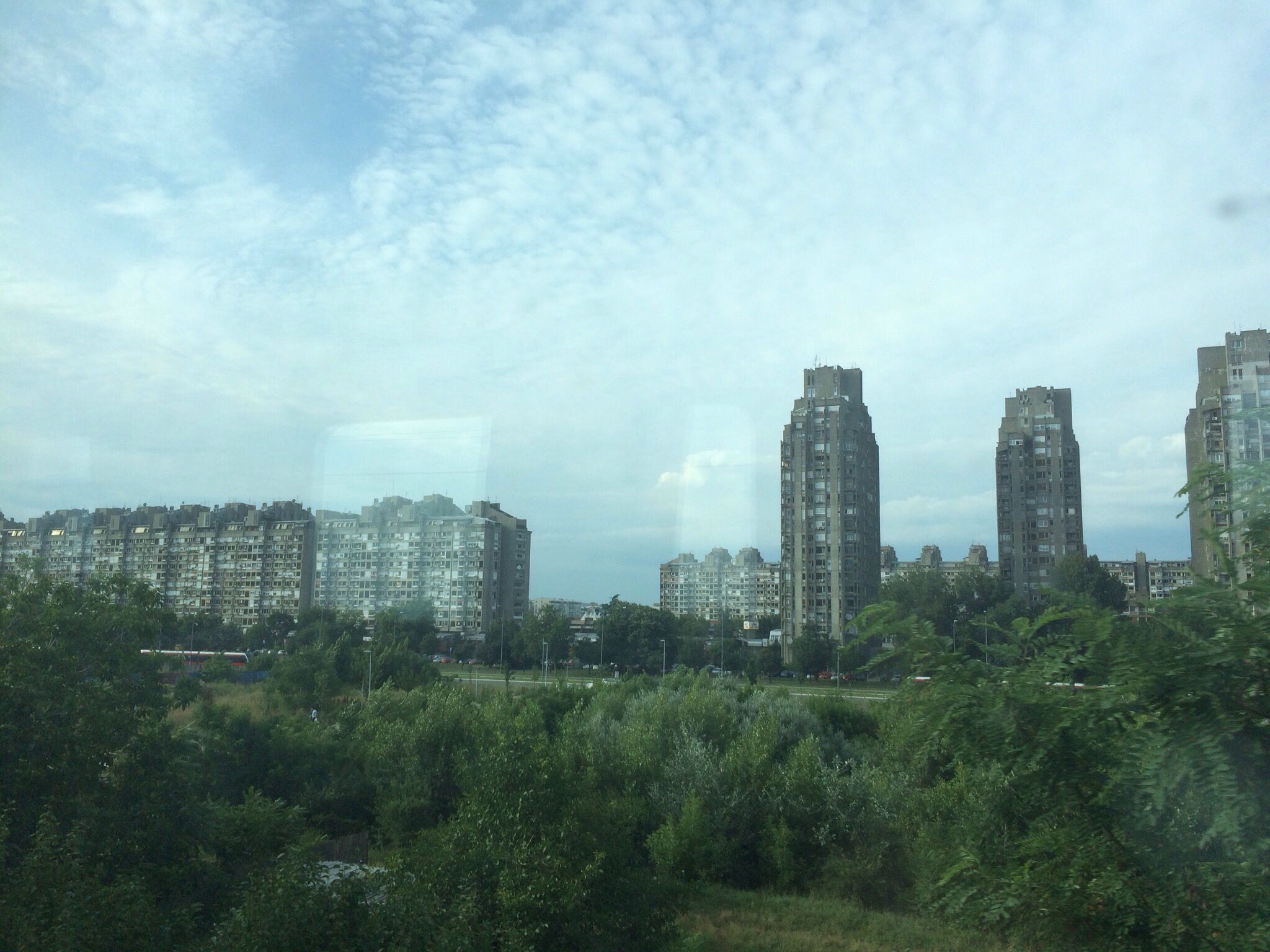
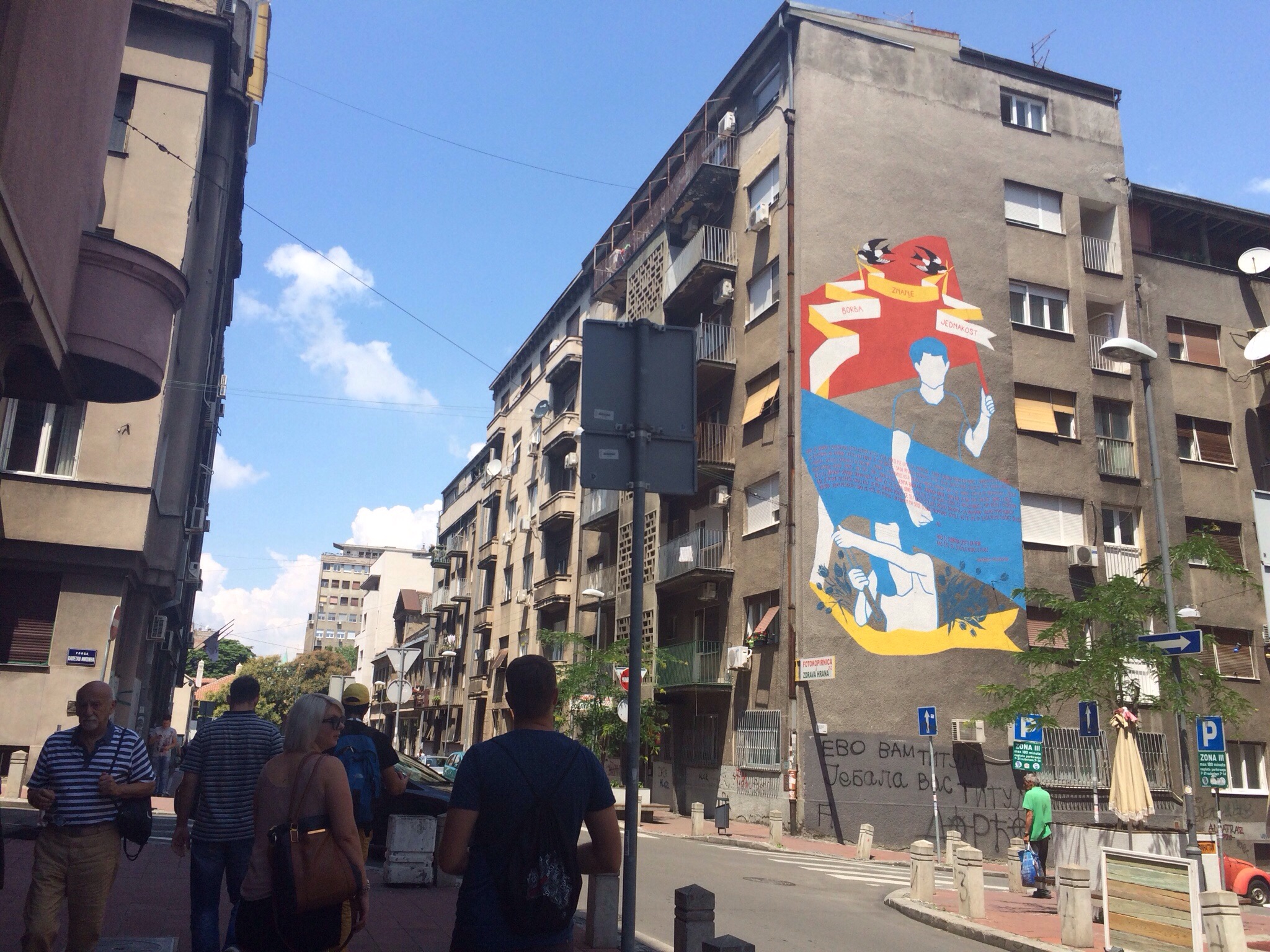
My trip began on an excruciatingly slow train ride from Budapest to Belgrade, Serbia. After seven long hours in which I went through my entire music playlist on my phone (that’s a first), we finally arrived in Belgrade. You don’t judge a book by it’s cover, and you shouldn’t judge any city by the area around the train station. That is one valuable lesson that I have learned since I’ve been in Europe, and the rule definitely applies to Belgrade. I was disappointed to see the horizon disrupted by rows of grey soviet apartment buildings, and the streets were in desperate need of a good scrubbing. I hopped onto a red tram car that looked like it had just rolled out of the 1980s. I held onto hope that the city centre would be beautiful.
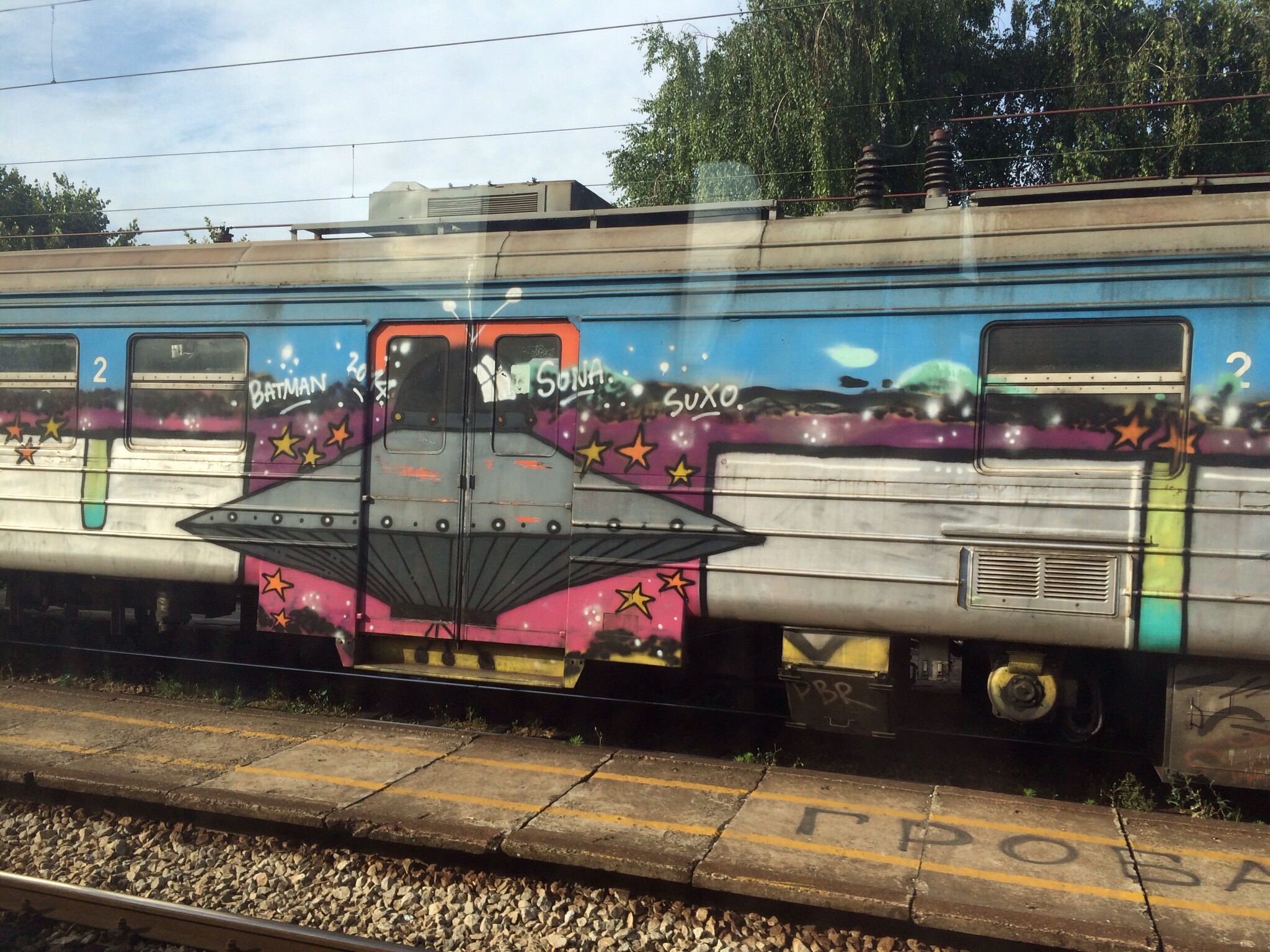
We weren’t 100% sure (to put it lightly) where the tram was going, or what stop we needed. You try reading cyrillic! Serbians are the only ones in the Balkans who read and write in both cyrillic and latin alphabets. The street signs are often written in both. Fair warning though; the tram maps and stops are all in cyrillic. We finally got off at a stop and realized that we had to walk back two stops to find our hostel.
I was excited to see that our hostel was located next to Skadarlija, the Bohemian Quarter of Belgrade. All of Belgrade’s famous poets, writers, and painters met, worked, and partied together on this cobblestoned street. In short, it is an adorable little street that is lined with pubs and market stalls. Our hostel was lovely. I highly recommend El Diablo hostel. It is a small hostel, and it has a very cozy feel to it. One day Meret and I had the hostel to ourselves. We spent the evening discussing Serbia’s history and language with the friendly hostel receptionist. He gave us a mini-history lesson on Serbia’s relations with Bosnia and Croatia and of the possible causes of the Bosnian war. Among other things, I learned about the shocking Croatian concentration camp, Jasenovac, where hundreds of thousands of Serbs were killed.
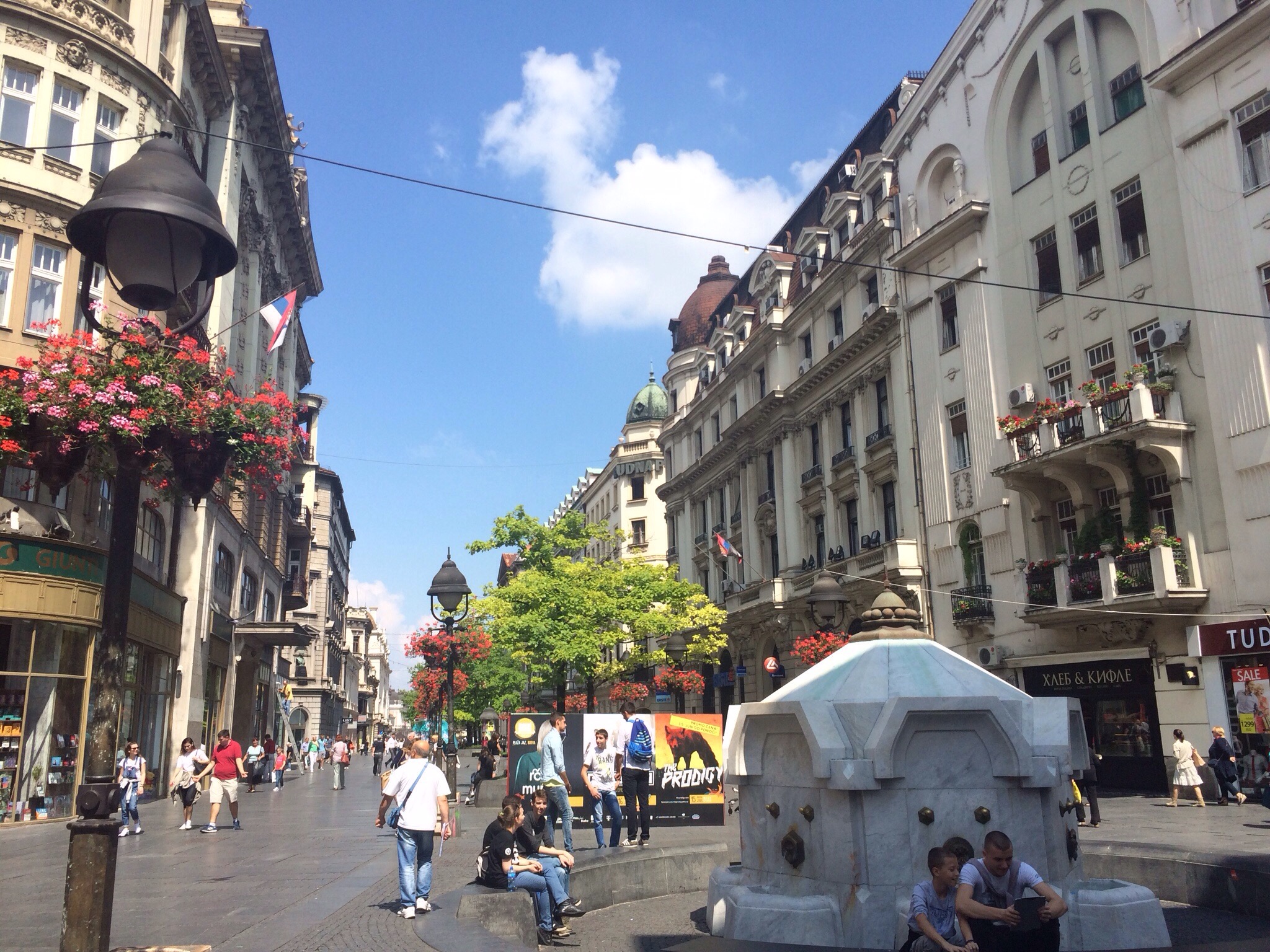
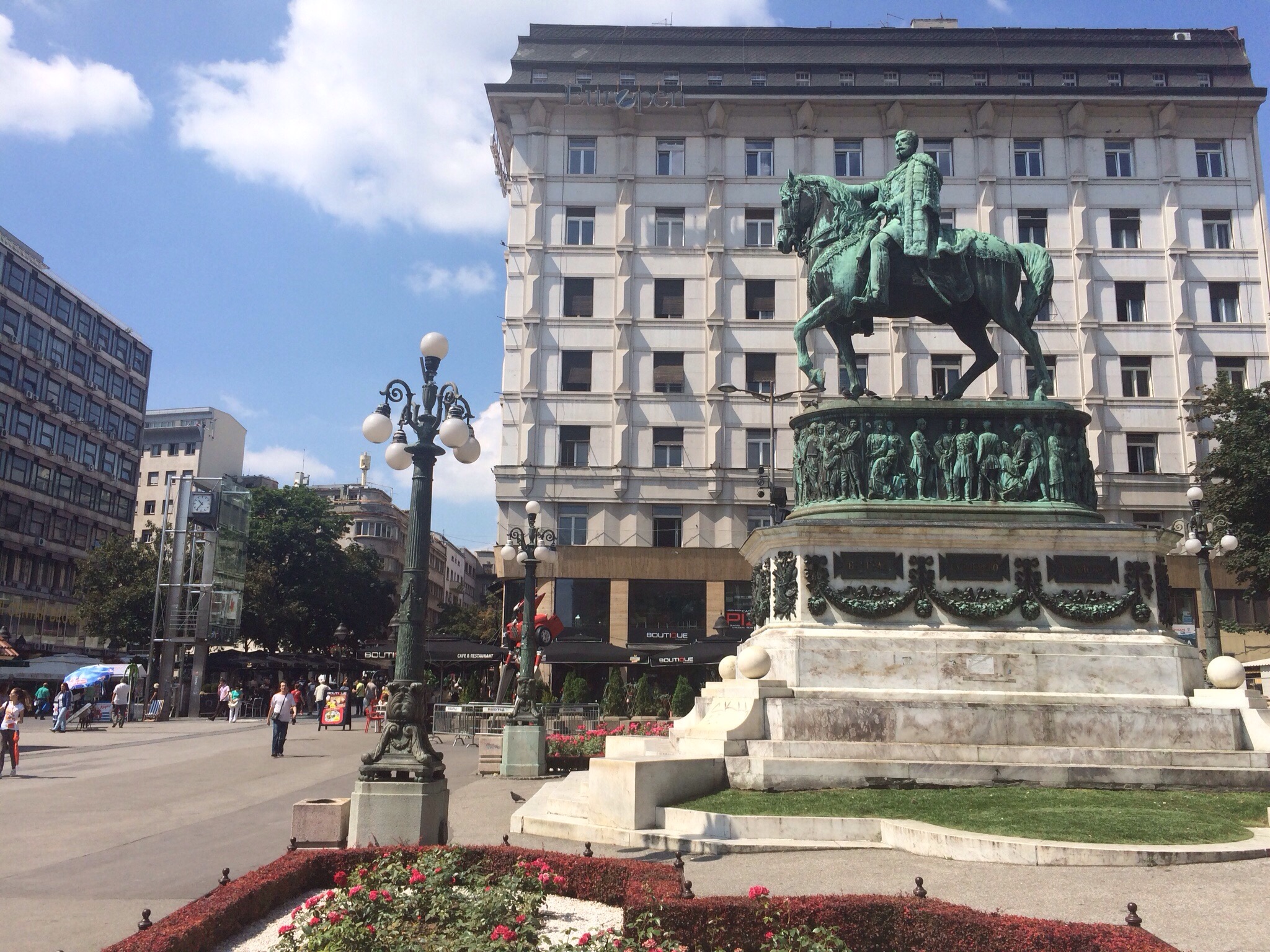
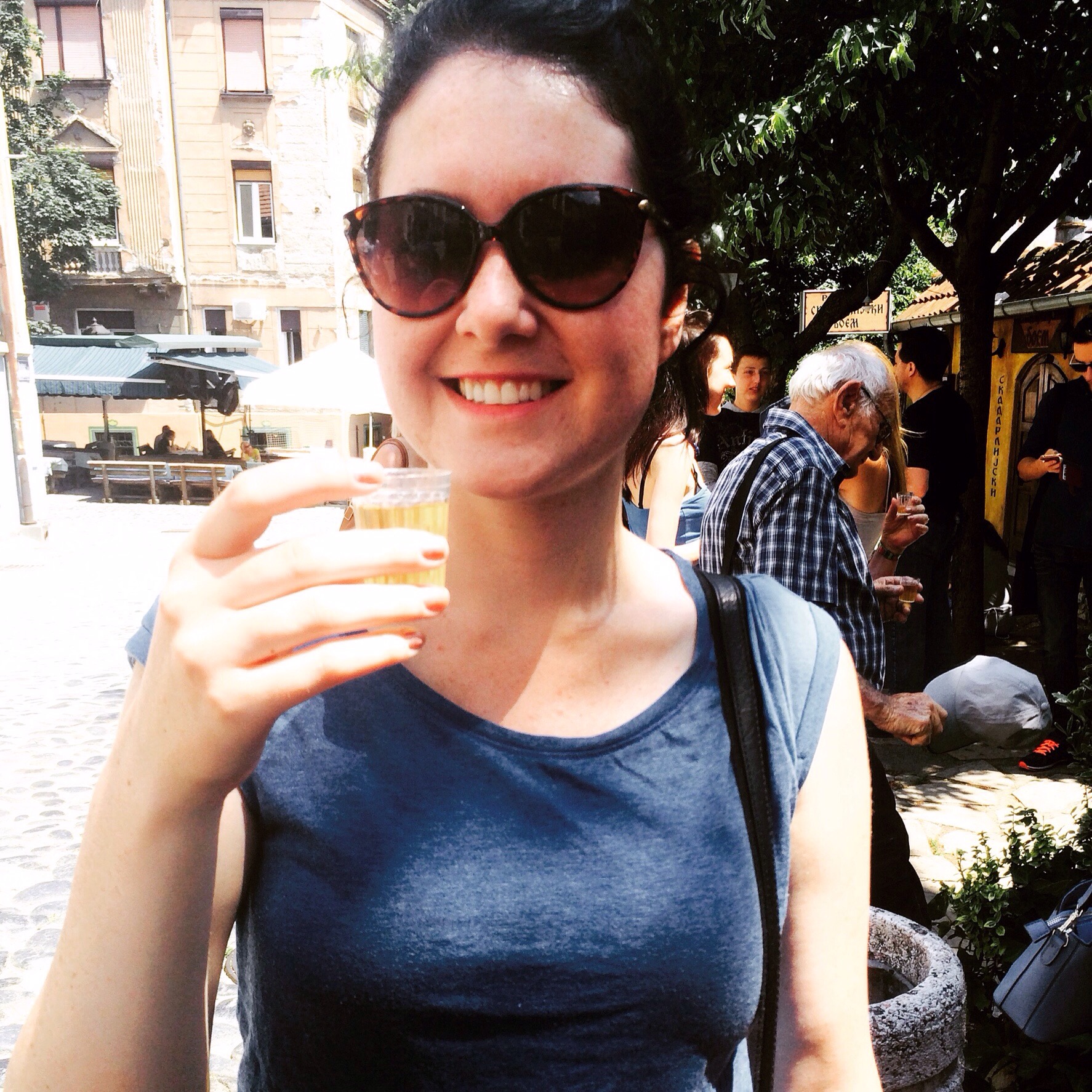
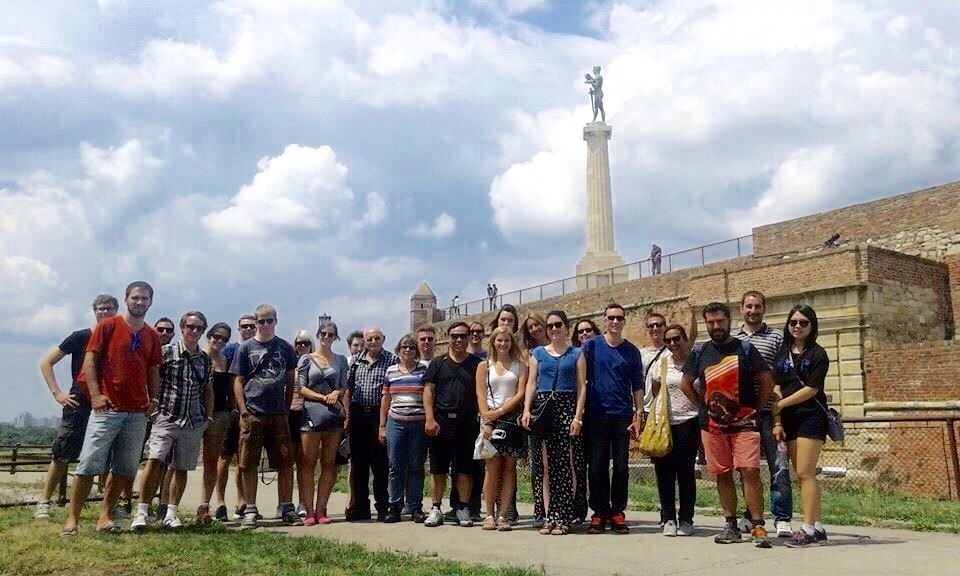
On Tuesday morning, we went on a free walking tour through the city. Our guide was a young Serbian, who clearly loves his city. He led us through Republic Square, where we stood under the statue of Prince Mihalo on his horse. Prince Mihalo is loved by Serbians for kicking the Ottomans out of Serbia. Next we strolled through Skadalija, where we all took a free shot of Rakia, Serbia’s signature drink. (I recommend the honey rakia! NOT the grape or plum.) We then hiked up to the Belgrade fortress.
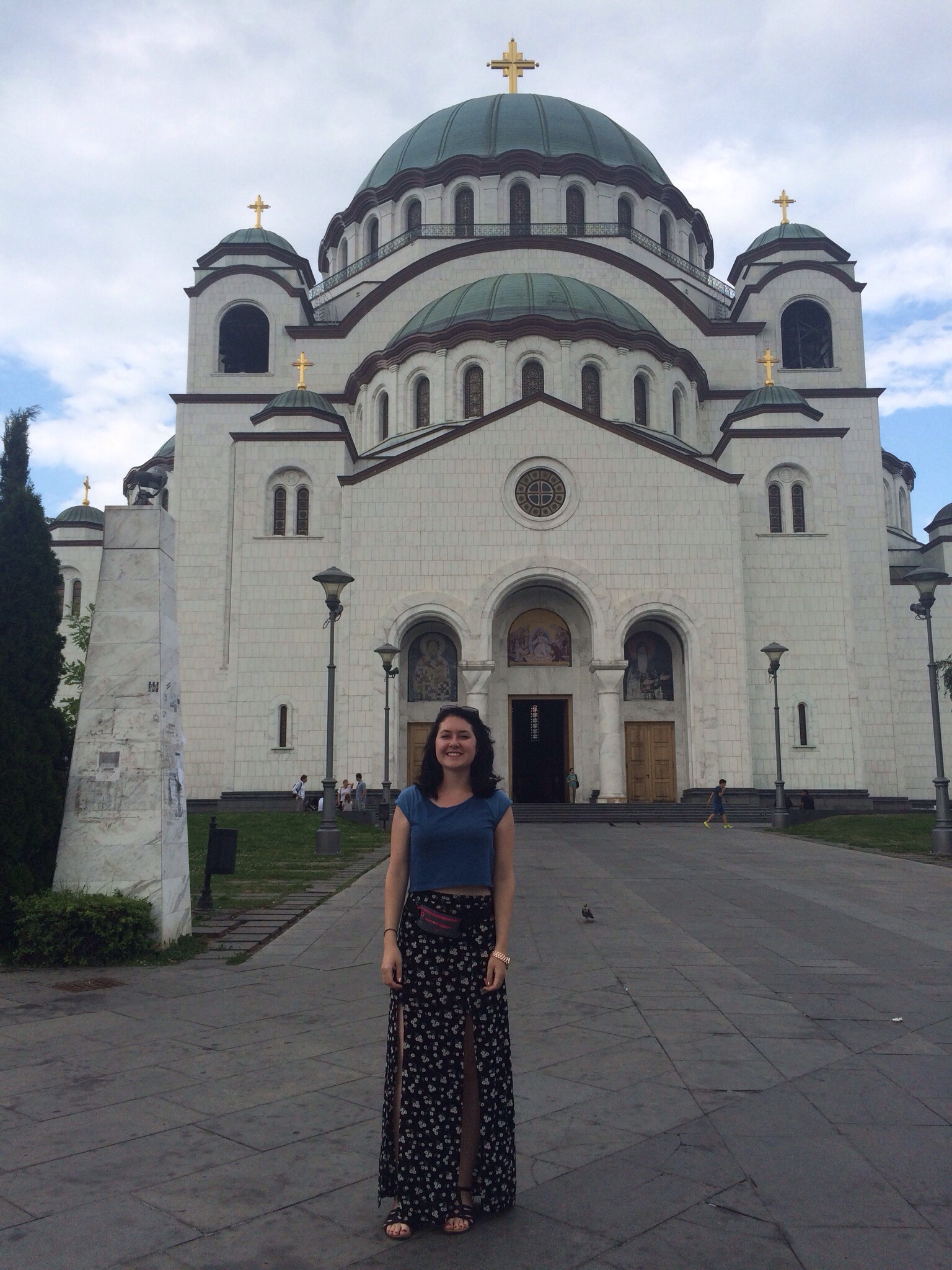
After the tour, we set off to find the famous Serbian Orthodox Church of St. Sava. Construction on the church started in the 1930s, and the interior remains unfinished. I was not aware of this, until I stared dumbly at the bare, concrete walls inside. The exterior however, is gorgeous.
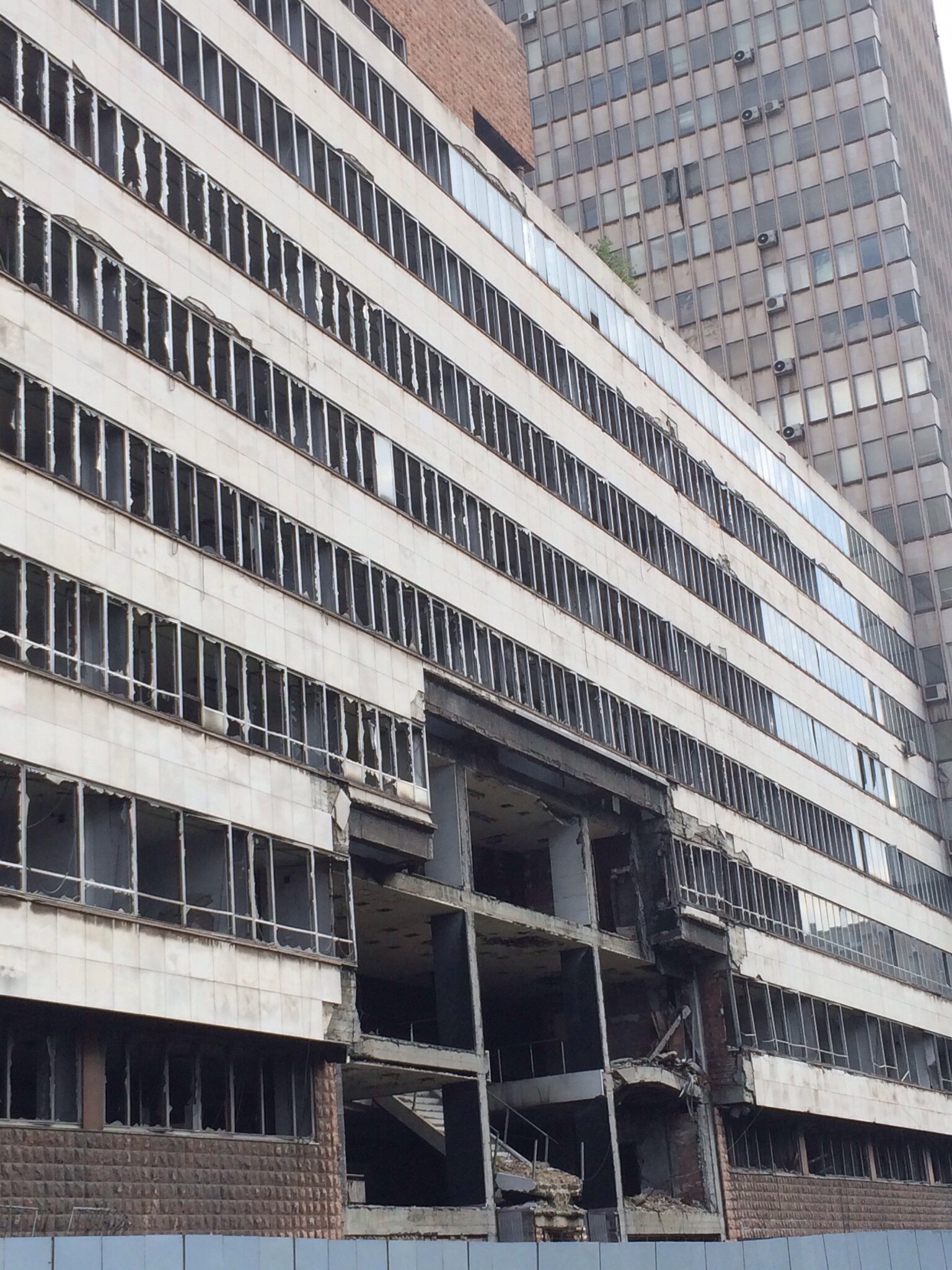
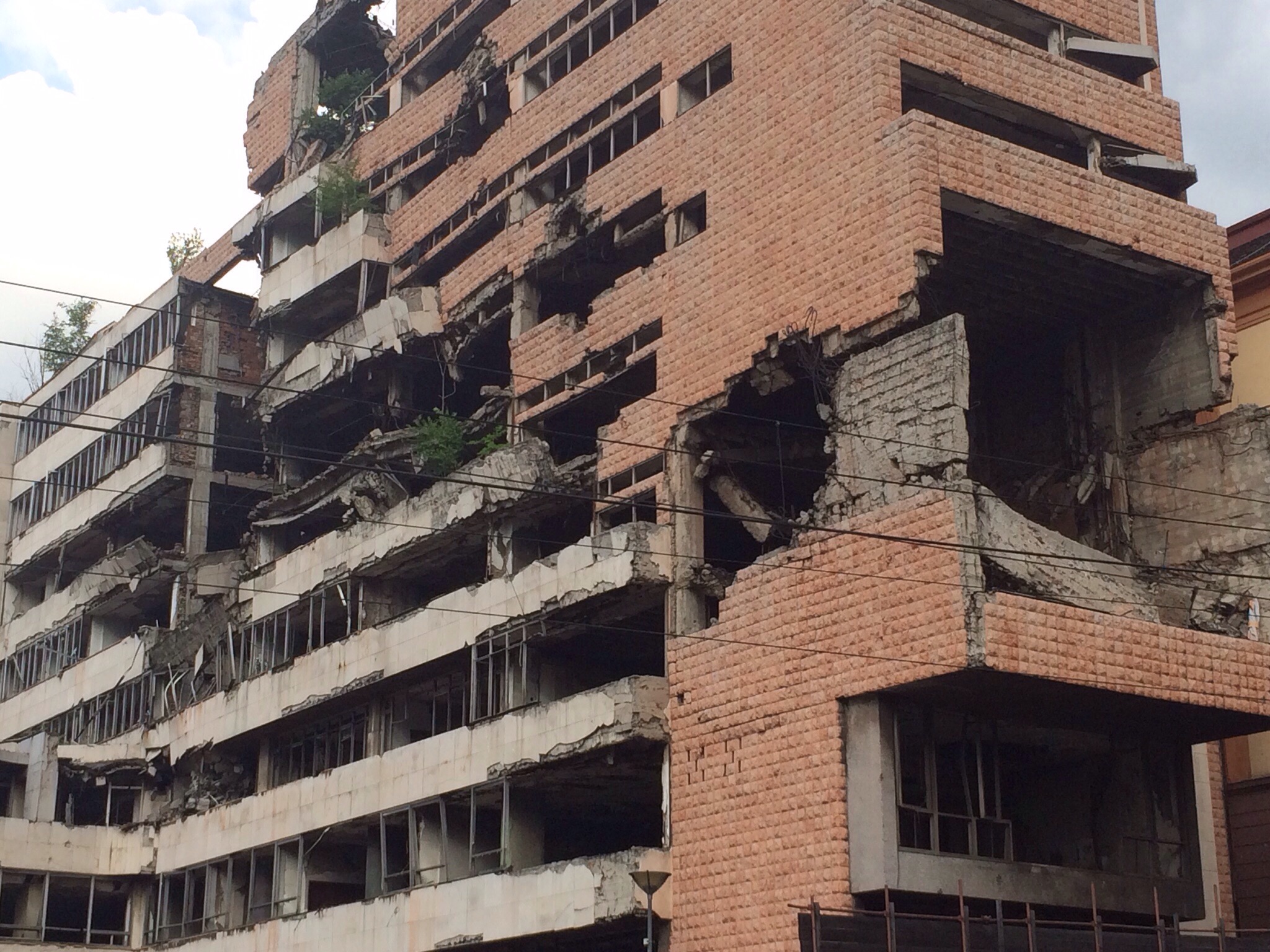
We walked a short distance from the church to find Belgrade’s bombed buildings. The Serbian Federal Ministry of Defense and the Serbian Radio and Television station were hit by NATO bombings in 1999, in effort to end the Kosovo war. As an American, I am proud of our role in ending the war. However I can’t imagine life during war, wondering when the next bomb will fall. Seeing these buildings only intensified my newfound interest in the history of the Bosnian/Kosovo war.
My final day in Belgrade began with a kayak tour around the enormous Great War Island. What was once an important strategic point in WWI is now a huge bird sanctuary. Ducks were everywhere, along with a couple herons. The island is smack in the middle of the confluence of the River Sava and the Danube, and we were able to see a great expanse of the Belgrade river banks. Halfway through we stopped at a beach on the island.
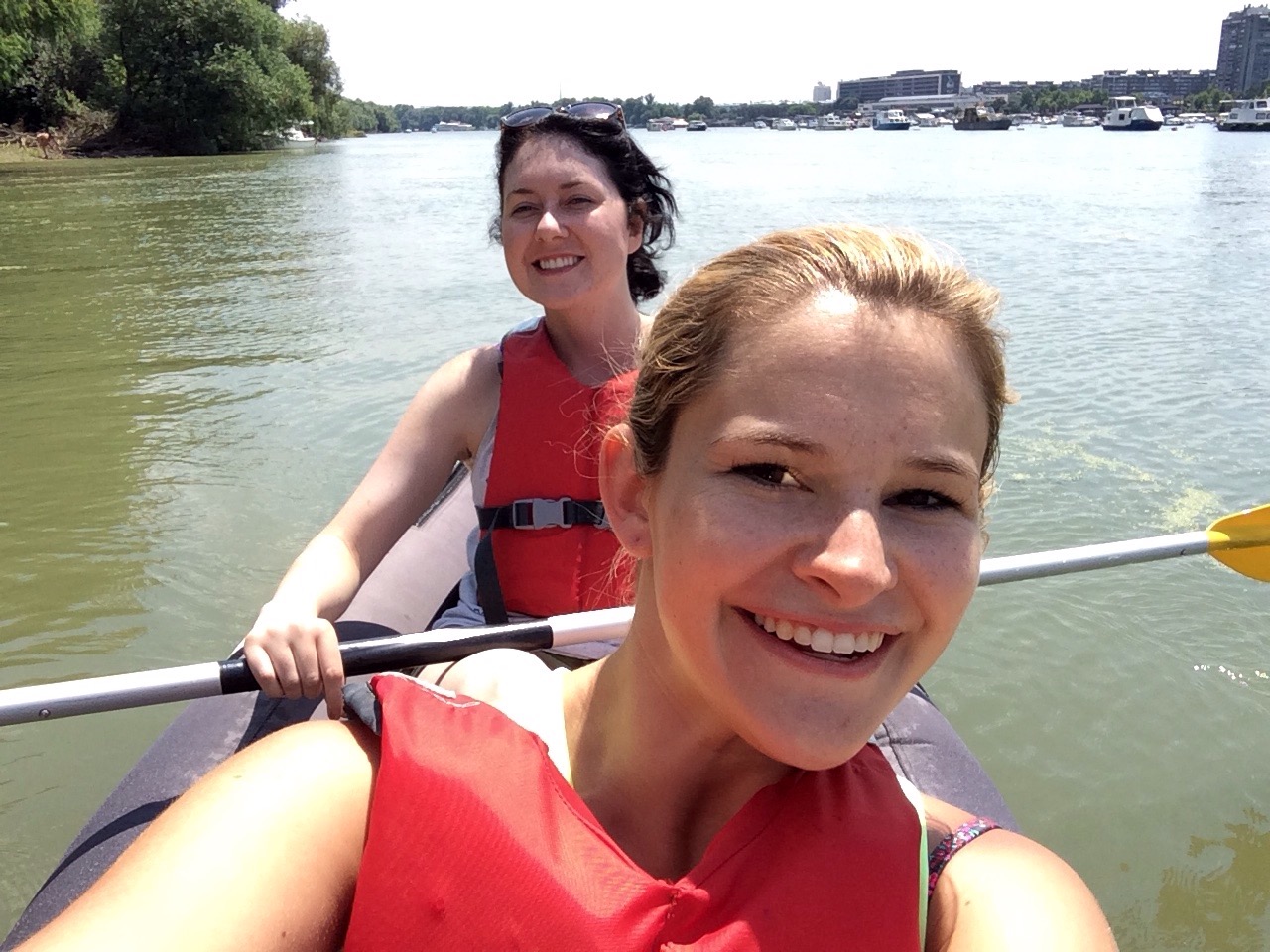
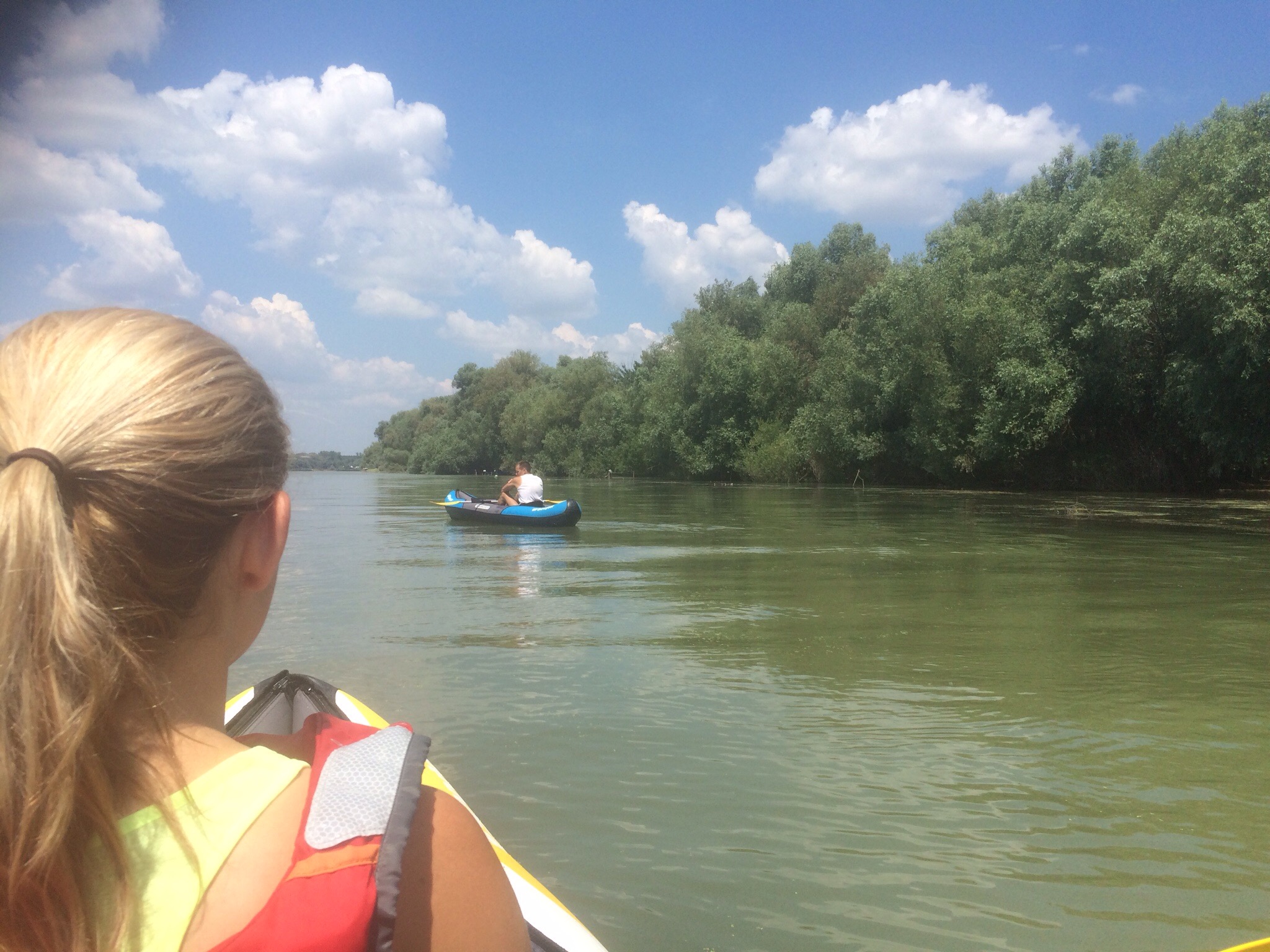

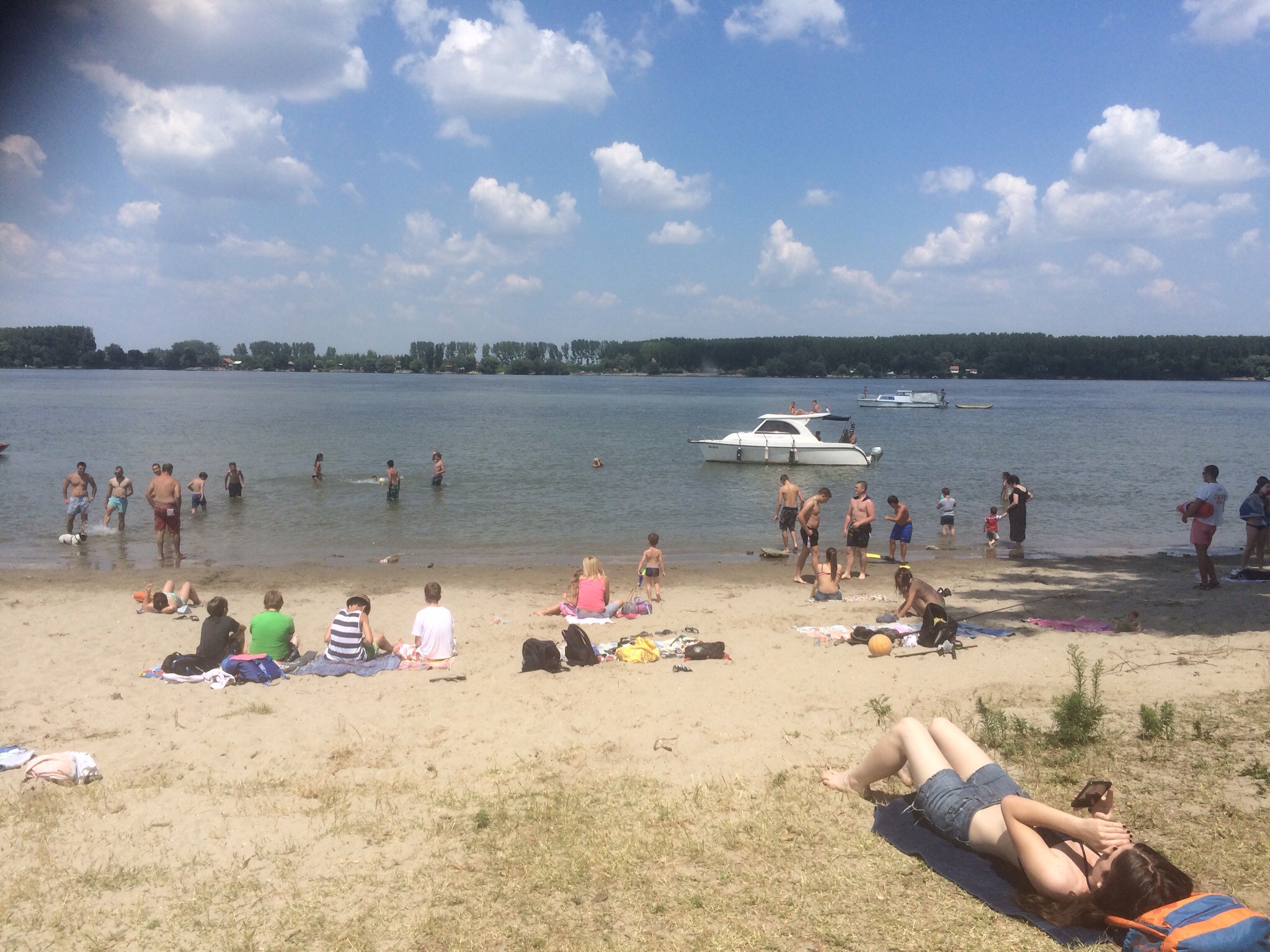
My trip to Belgrade ended with a view of the White Fortress from my kayak in the Danube. Belgrade is a wonderful city. My only regret is that I didn’t get to check out the nightlife on a weekend. Next time, I guess. 🙂
 thewanderingfellows