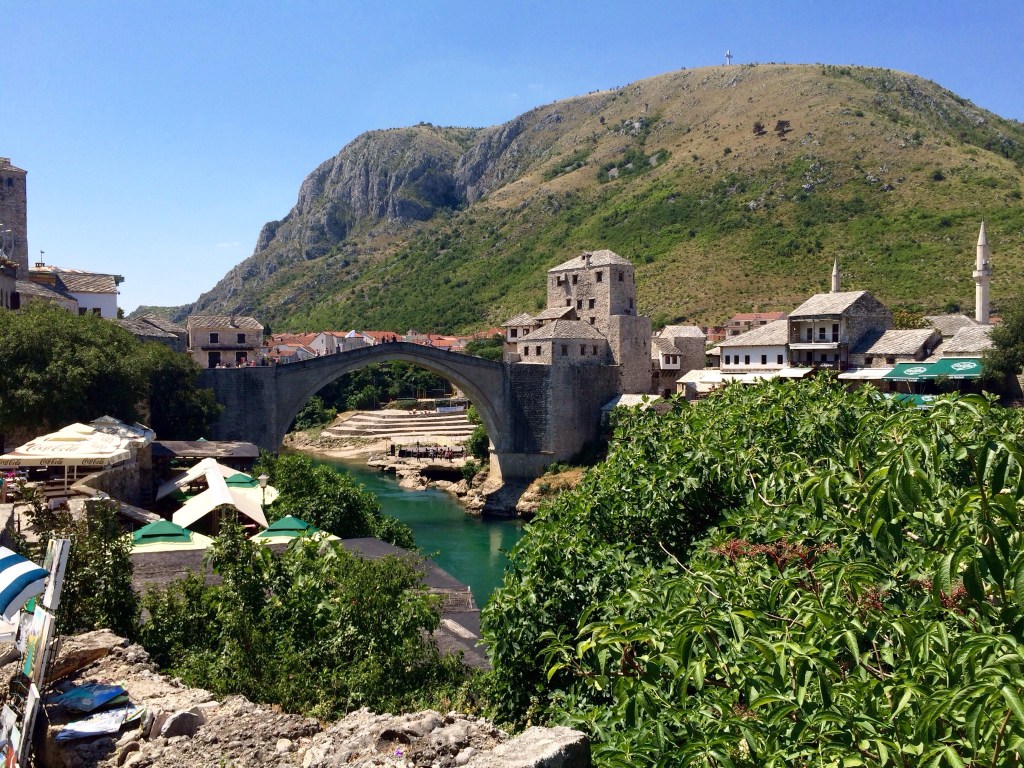
After two incredible and inspiring days in Sarajevo, I mentally prepared myself for yet another long day of traveling. I woke up early, and pursued the 7:15 am train with a destination of Mostar, Bosnia. This was set to be my final stop in Bosnia. Surrounded by mountains in a deep, green valley, Mostar is the famous cultural capital of the Herzegovina region of Bosnia. I was interested to see how this city would compare to Sarajevo.
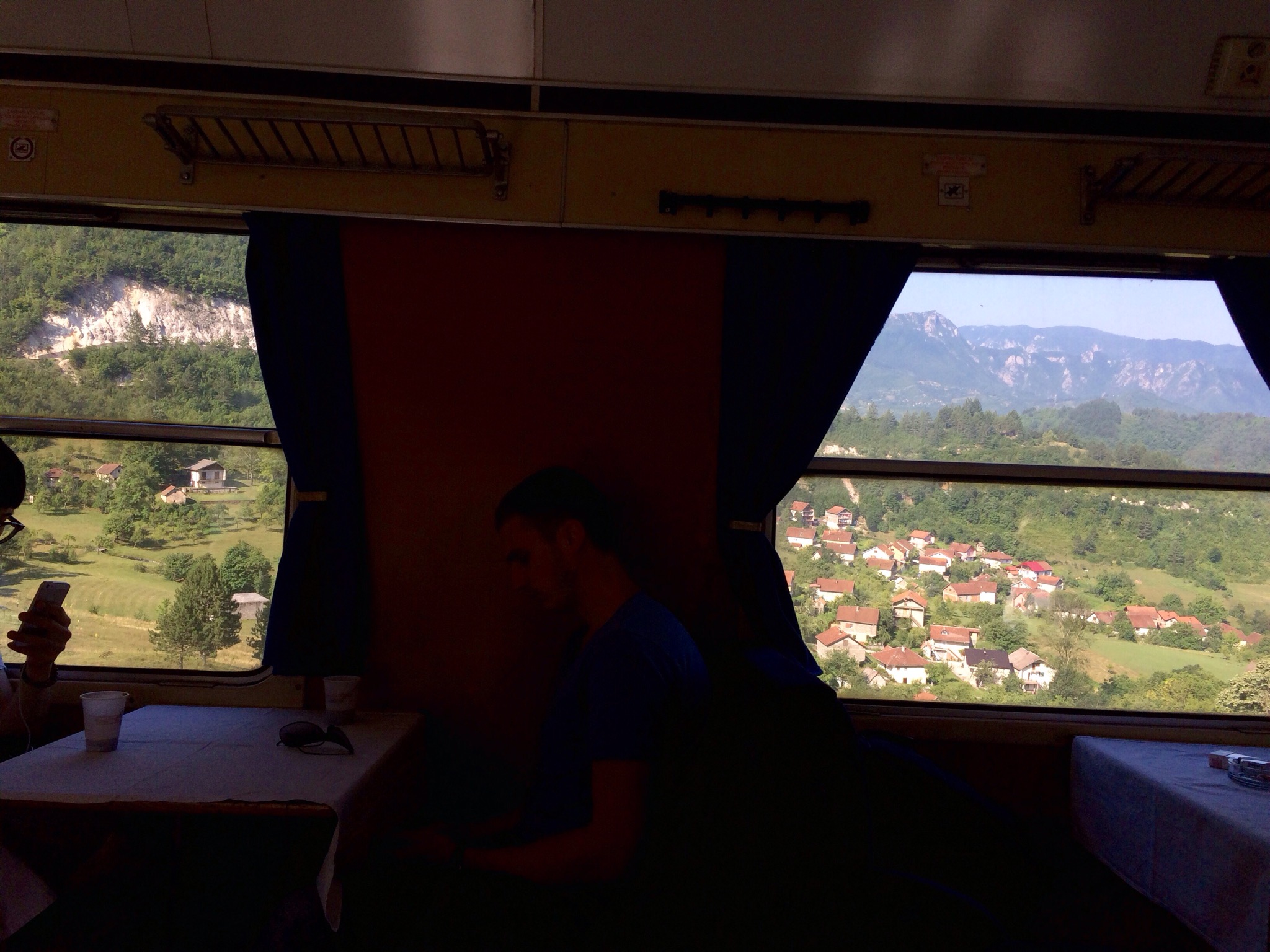
Once again, my adventure began on the journey to the city. I received a shock when I arrived at the train station. The train was old, older than any that I had seen in Budapest. This was straight-outta-the-history-books type of train. The type that shakes and shouts like a grumpy old man. The type that makes you vividly imagine your body being thrown around like a ragdoll when the train inevitably flies off the tracks.
I stepped onboard, and time seemed to stop. With every step I took, I fell deeper into a time warp. Unable to find any seats in the passenger car, Meret, Emily, and I sat in a booth in the dining car. The three of us took a few minutes to silently take in the sights of our time machine. The lights were dim, and the walls were dingy. The air was thick with cigarette smoke; a welcome gift from the group of wrinkly, fat men who all seemed to have a cigarette permanently glued between their fingers. The atmosphere in general reminded me of an old motel room. Were we in the 1980s? 70s? If only the fraying curtains and crumbling cushions could talk.
The older men in the booth next to us could talk however, and they occasionally threw a comment or two our way (in Bosnian of course). With their laughing eyes, we could only guess that they were making fun of the bleary-eyed American girls who clearly looked a bit lost. Luckily, we had happened to sit next to a Bosnian girl about my age, and she happily helped to translate for us. (Apparently we Americans are stingy, and we should spend more money in Bosnia. Good to know, right?) She also passionately discussed Bosnian identify and nationalism, and it was fascinating to hear her views of the war.
All this served to distract me from the sole reason why I chose to take the train and not the bus- the scenic route. Everyone said to take the train because it goes through the mountains. From my few glances through the windows, I could see that it was indeed beautiful. The train dove through tunnel after tunnel, dancing through the mountain range. Tiny villages were scattered about, and I again felt that I had a window into the past, into a world that was unfamiliar to me.
The country as a whole just feels so different from the rest of Europe. Culturally, it is very different. Conquered by the Ottoman Empire in the 15th century, Bosnians adopted Muslim religion and culture while their Christian neighbors resisted. I never mentioned in my Sarajevo post that Bosnia was my first Muslim country. The sight of minarets, mosques and muslim prayer sessions were all new to me. The culture shock did not let up by the time we finally arrived in Mostar.
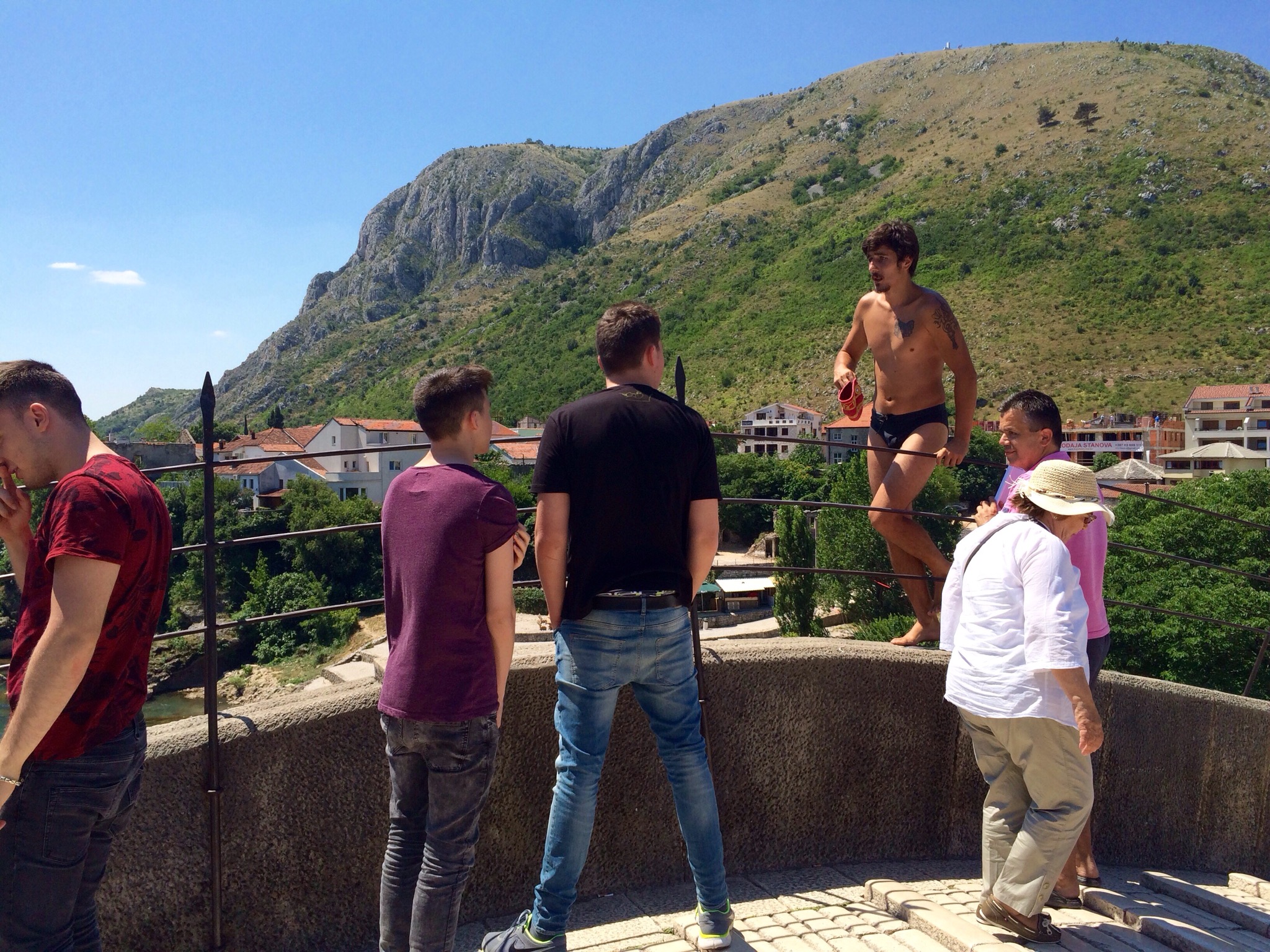
Mostar is absolutely gorgeous. Stone buildings cling to cobblestone streets, all outlining the curves of the surrounding mountain range. The emerald river Neretva cuts through the city, and flows calmly beneath the incredible Stari Most, the Old Bridge. The bridge itself is a work of art, and an important landmark in the city. It stood for 400 years before it was destroyed in the Bosnian war. It was rebuilt in the 90s, and remains a testament to the endurance of the Bosnian people. Mostar gets its name from the old word Mostari; a reference to the ancient bridge keepers who once guarded the city. Today, the bridge is guarded by jumpers- brave men in skimpy speedos who ask for money just to watch them jump the 24m height from the crest of the bridge into the cold water below.
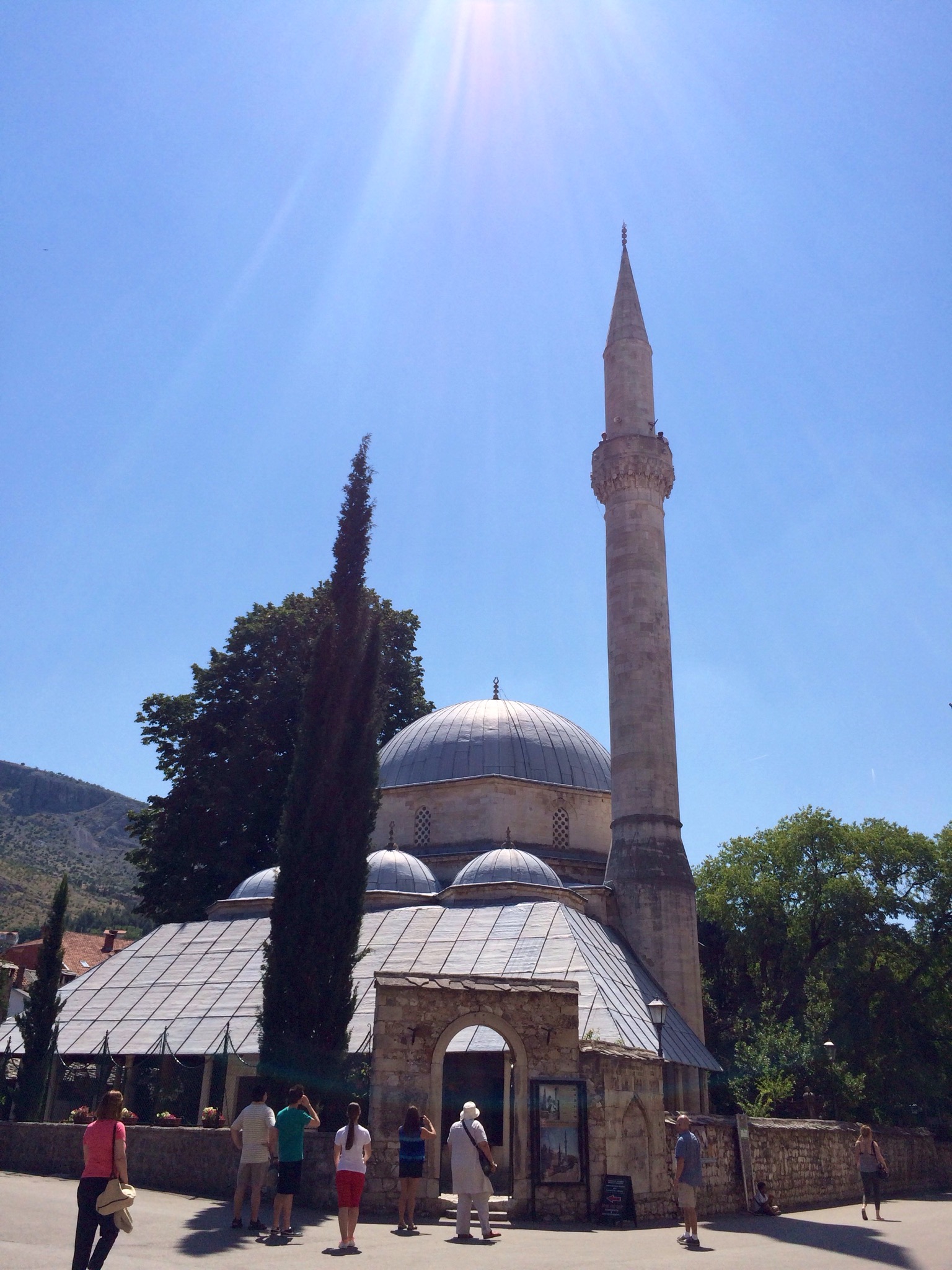
While watching the jumpers, I heard the alien sound of the call to prayer for the very first time, ringing loud and clear from a nearby minaret. I couldn’t understand anything of course, but it was beautiful. It was fascinating to explore muslim culture in this city filled with so much history. The Cejvan Cehaj Mosque and the Koski Mehmed Paša Mosque date back to the 16th and 17th centuries, and their alabaster walls remain in incredible, pristine condition.
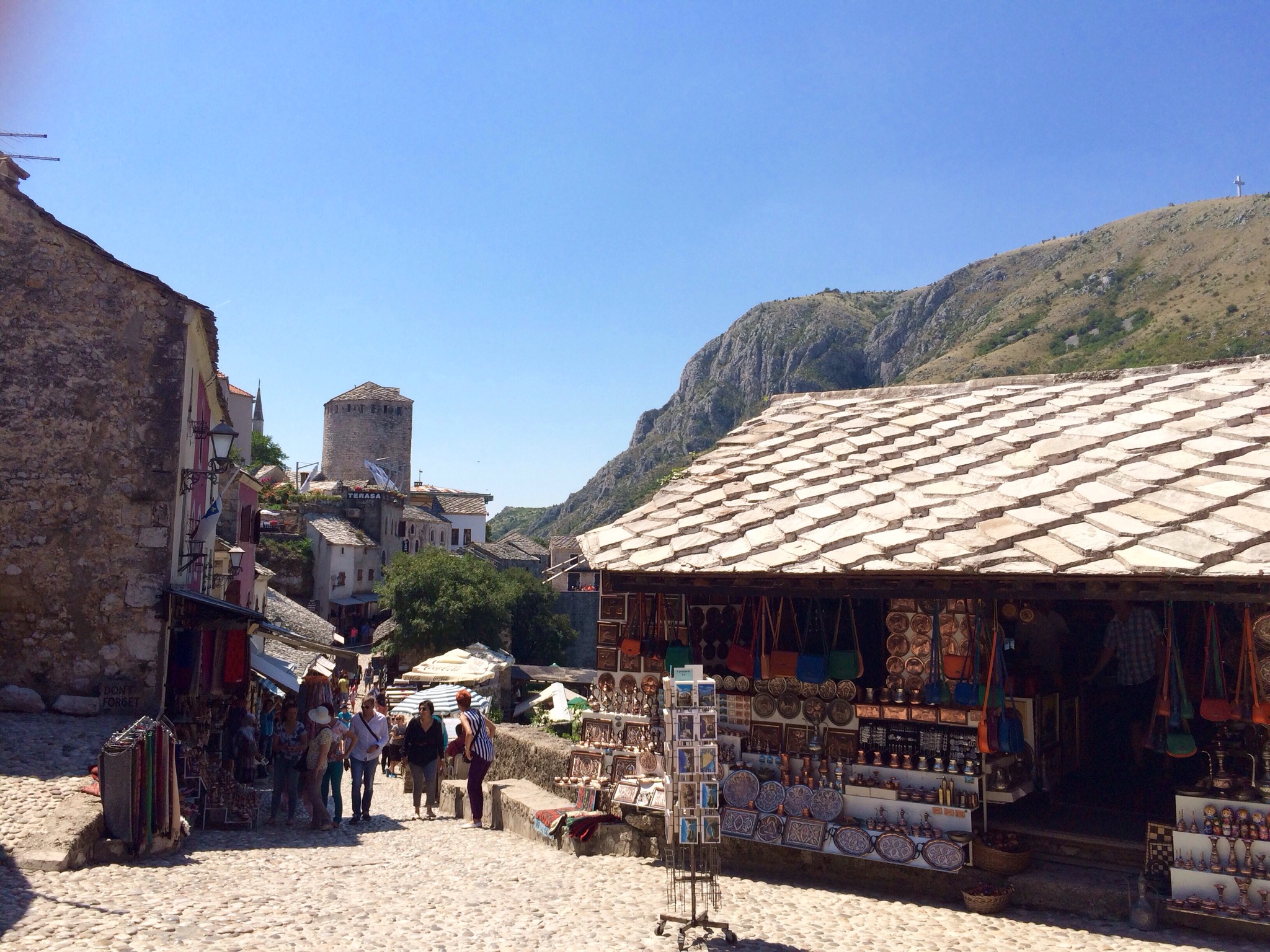
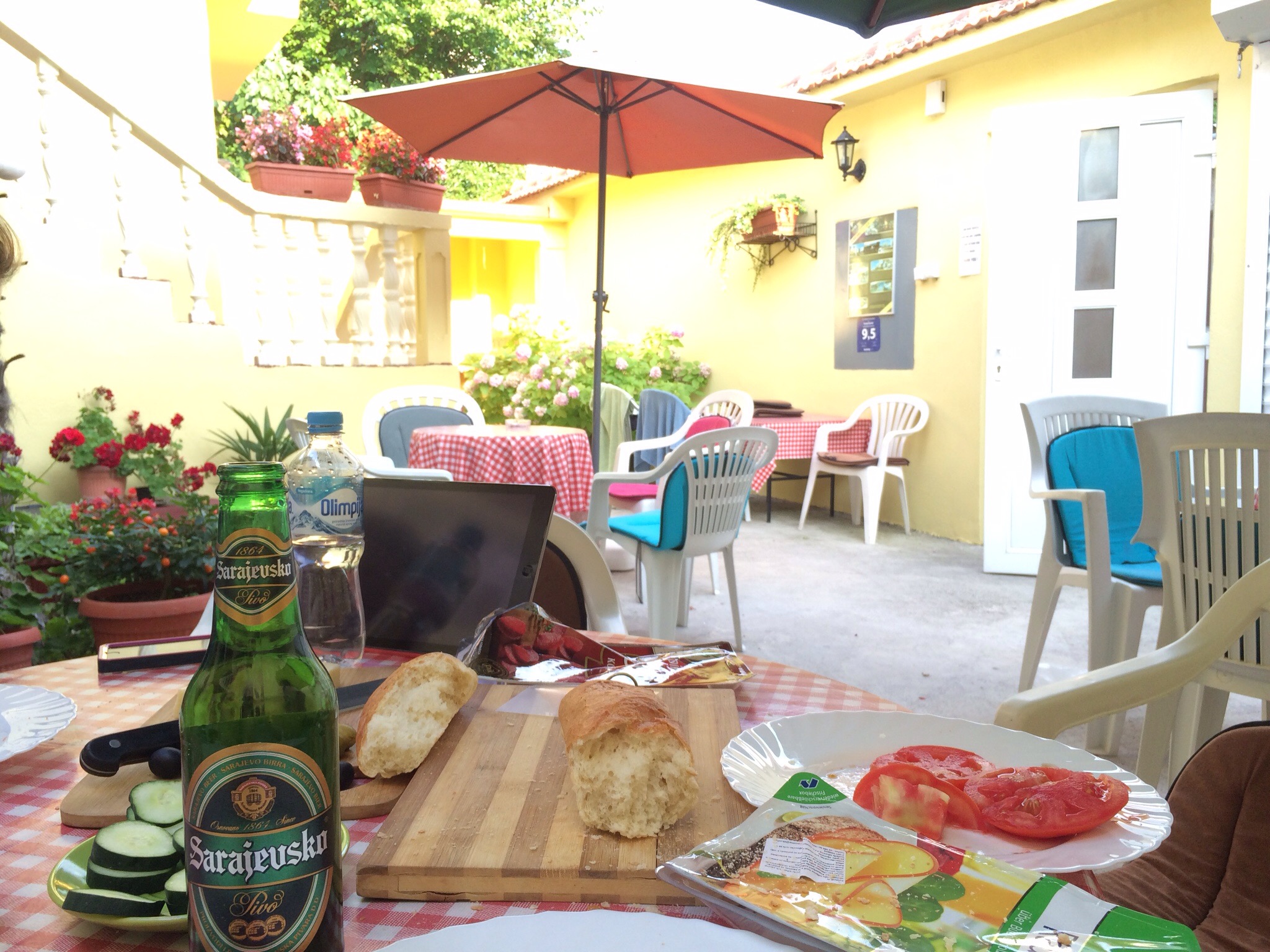
The city is quite small, and it only takes a short walk of about ten minutes to find Old Town Mostar from the train station. All in all, I was able to see all that the city has to offer in about an hour. Most of the streets are covered in tourist souvenir shops, which all offer the same items- copper plates and tea kettles, turkish lanterns, and brightly colored fabrics. Honestly it’s difficult to tell what souvenirs are traditionally Bosnian and which are Turkish- inspired. I didn’t buy anything, as I was in a desperate pursuit for a decent salad. -FYI, it’s near impossible to find a vegetable in Bosnia. – Due to the unbearable heat of the day, I was later forced to spend the rest of day reading my book and writing postcards on our cool, breezy, hostel porch. I definitely recommend David’s Hostel.
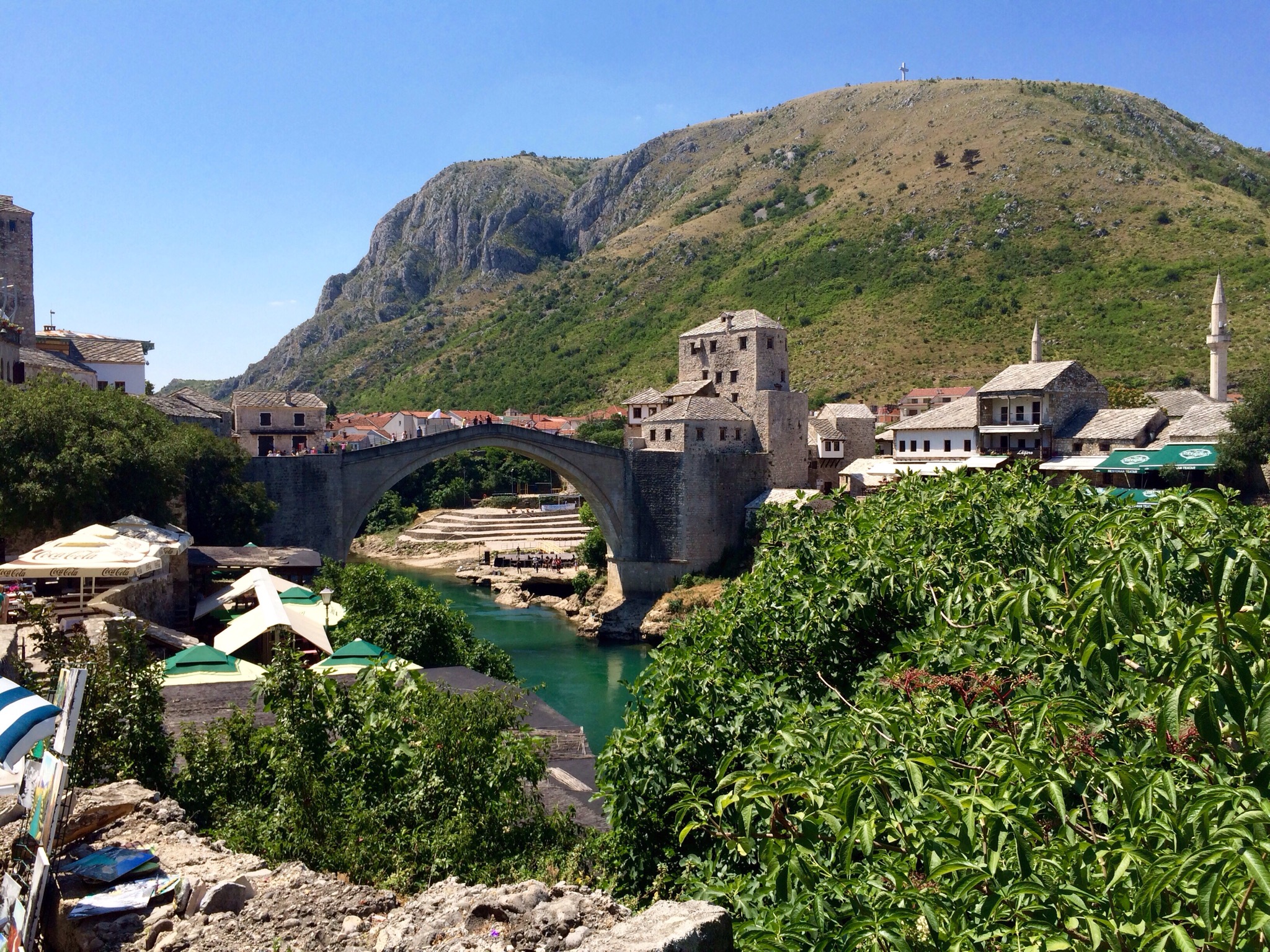
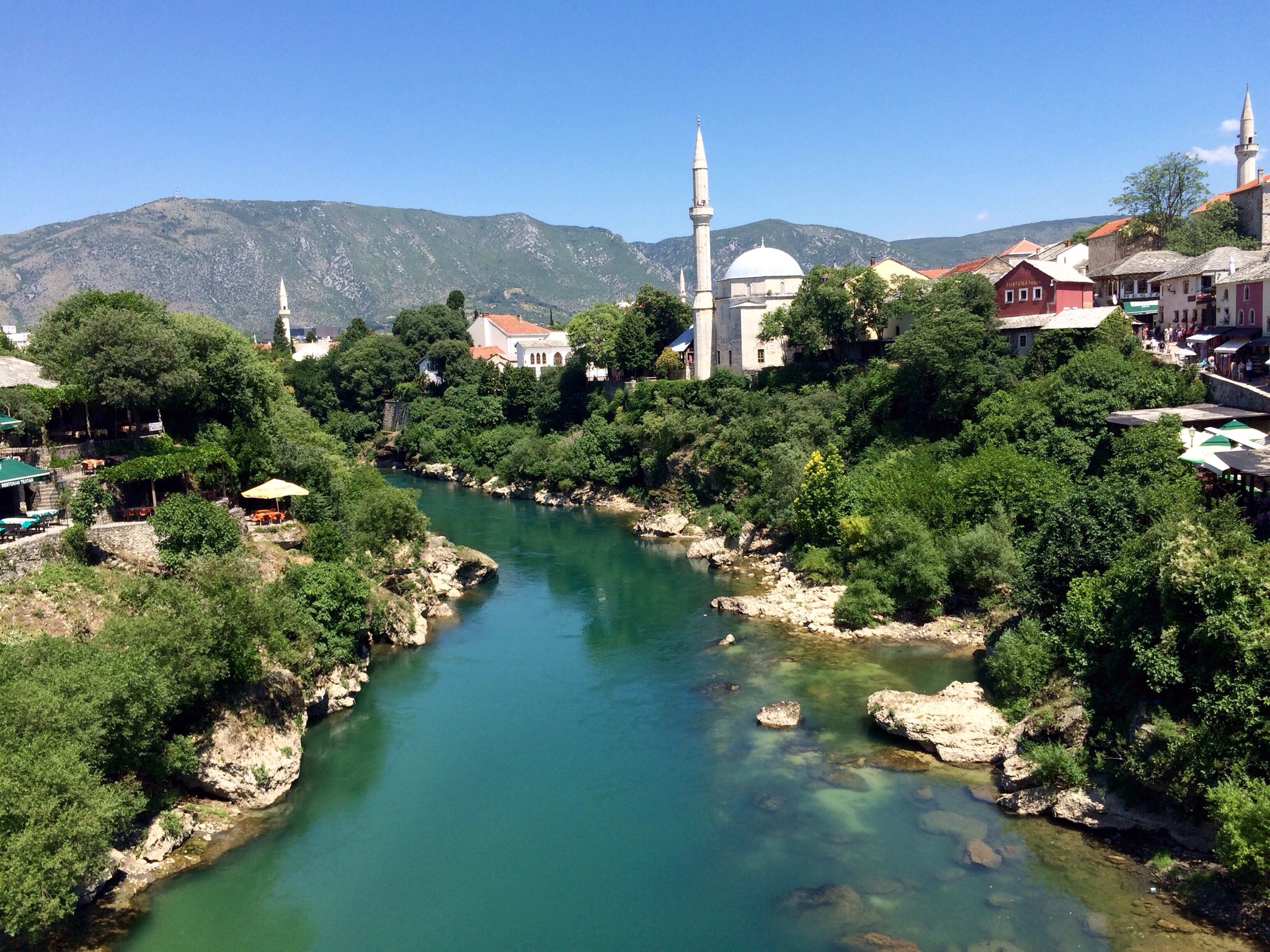
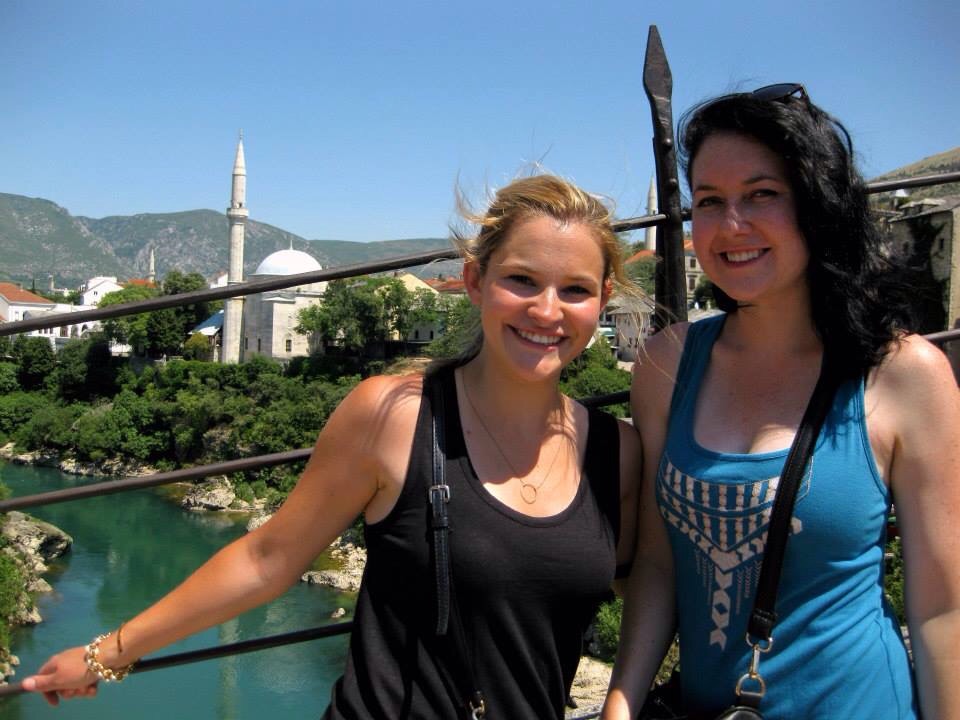
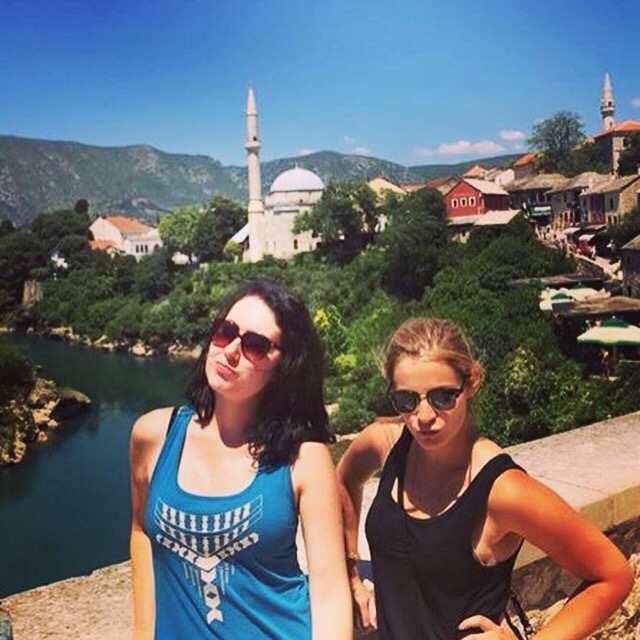
Mostar is a beautiful, captivating city that provides a clear window into traditional Bosnian culture. I spent two nights in this little city. With way too many Bosnian marks left in my wallet, I then said a sad goodbye to Bosnia and Herzegovina.
 thewanderingfellows
2 responses to “A Journey Through Herzegovina”
Spend that cash!!! Haha. Mostar sounds amazing. We just got back from Sarajevo yesterday! All of your suggestions worked wonders 👏🏽
LikeLike
Oh wonderful! I love the new blog post too. I can’t wait to hear all about your trip!
LikeLiked by 1 person