
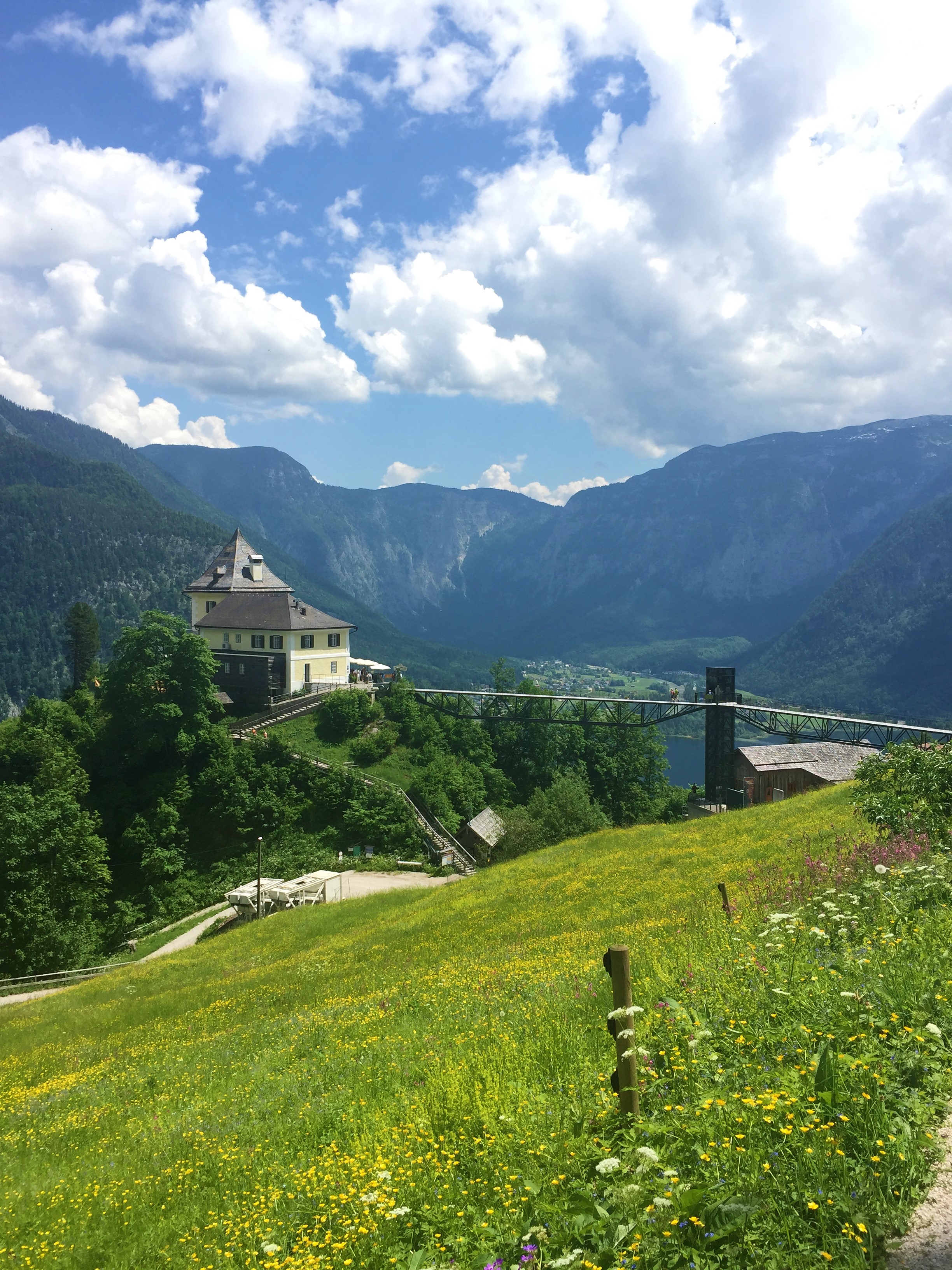
As we reached the last turn in the trail, I stopped to catch my breath. My eyes left the dirt and pebbles and took note of the sharp edge of the mountainside. It called to me, and I carefully drew near. Before me, the landscape shot out of the horizon in a frenzy of evergreen and turquoise. Here, the normally rocky Alps were covered in blankets of pine trees. They looked soft to the touch, despite their magnificence. At their feet, far below, a deep blue lake lay still, shining like stained glass in the sun. Toy boats lazily brushed the surface, and in following their path, my eyes fell on the toy village at the edge of the lake.
This was Hallstatt, the most picturesque mountain village in Austria, and arguably in all of Europe. From my perilous ledge near the top of Salt Mountain, I bore witness to its well-deserving title.
In early June, I spent 4 days travelling around the Salzkammergut, Austria’s lake district. My boyfriend and I were lucky enough to score a car for the road trip, a happy break from crowded buses and slow trains. Overall, the road trip from our home in Budapest, Hungary to our B&B in Gosau, Austria took about 5 hours.
As I’ve said before, the journey is often the best part of a trip. There are few sights as exciting as watching the flat, Hungarian landscape transform into the mighty Alps. The calm, easy drive took us along scenic routes past dreamlike turbine fields and pristine alpine villages.
Throughout the trip, we followed Austria’s famous Romantic Road, a winding, twisting route through the most beautiful landscapes in Austria. This is an absolute must when driving through Austria. My favorite moment was when we caught sight of castle ruins on a mountaintop in the Wachau valley. That fairy-tale picture stayed with us, later inspiring a last-minute adventure before returning home.
Stay in Gosau, Austria
Our trip to Hallstatt was planned rather last minute, which left us with poor accommodation options. We had the choice of an Airbnb in the middle of nowhere, or a room in a bed and breakfast in Gosau, Austria. Judging from the pictures provided by the B&B, Gosau initially appeared to be a deserted ski town. But, as it is only an 18-minute drive away from Hallstatt, we jumped on the offer.
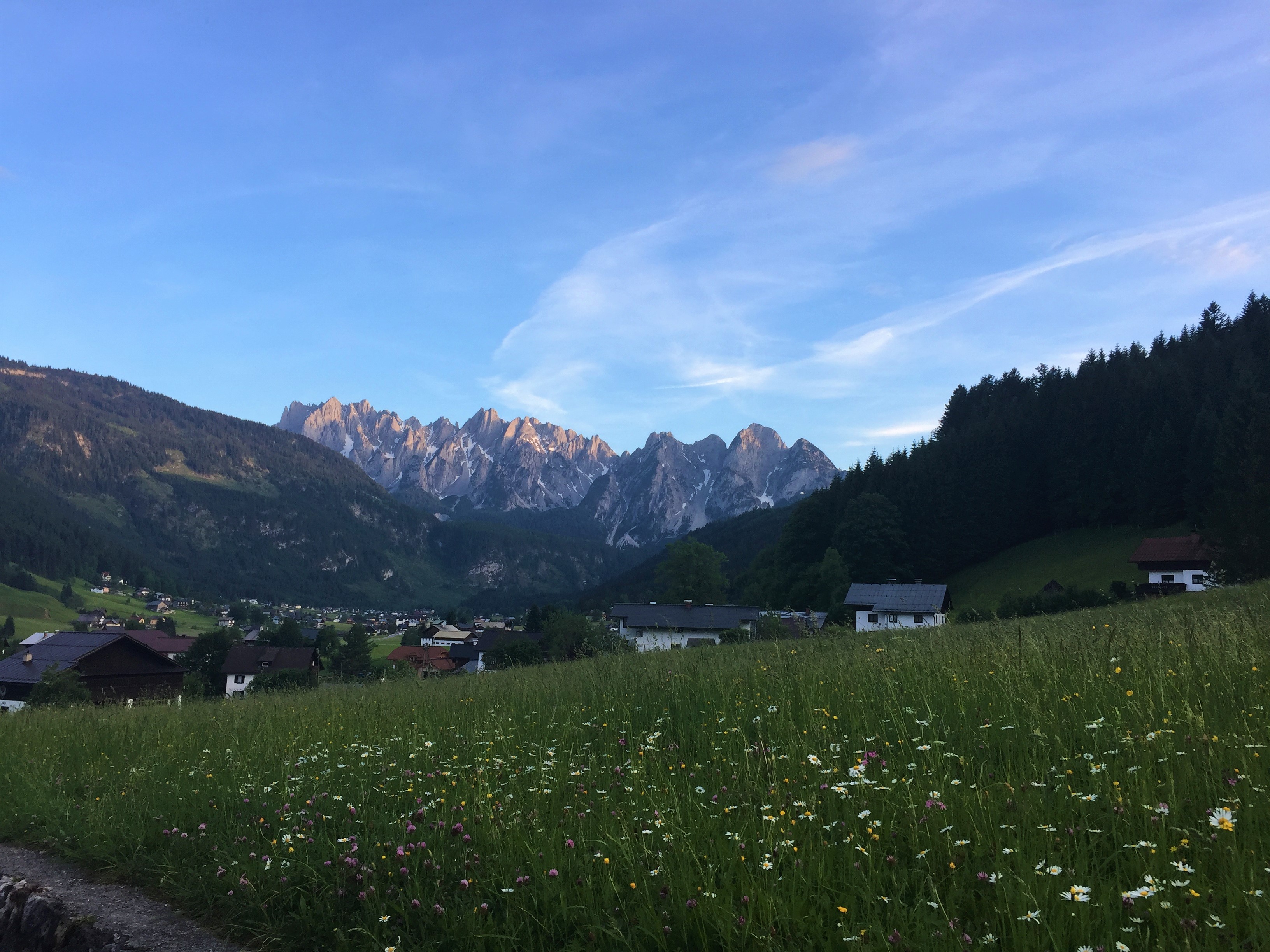
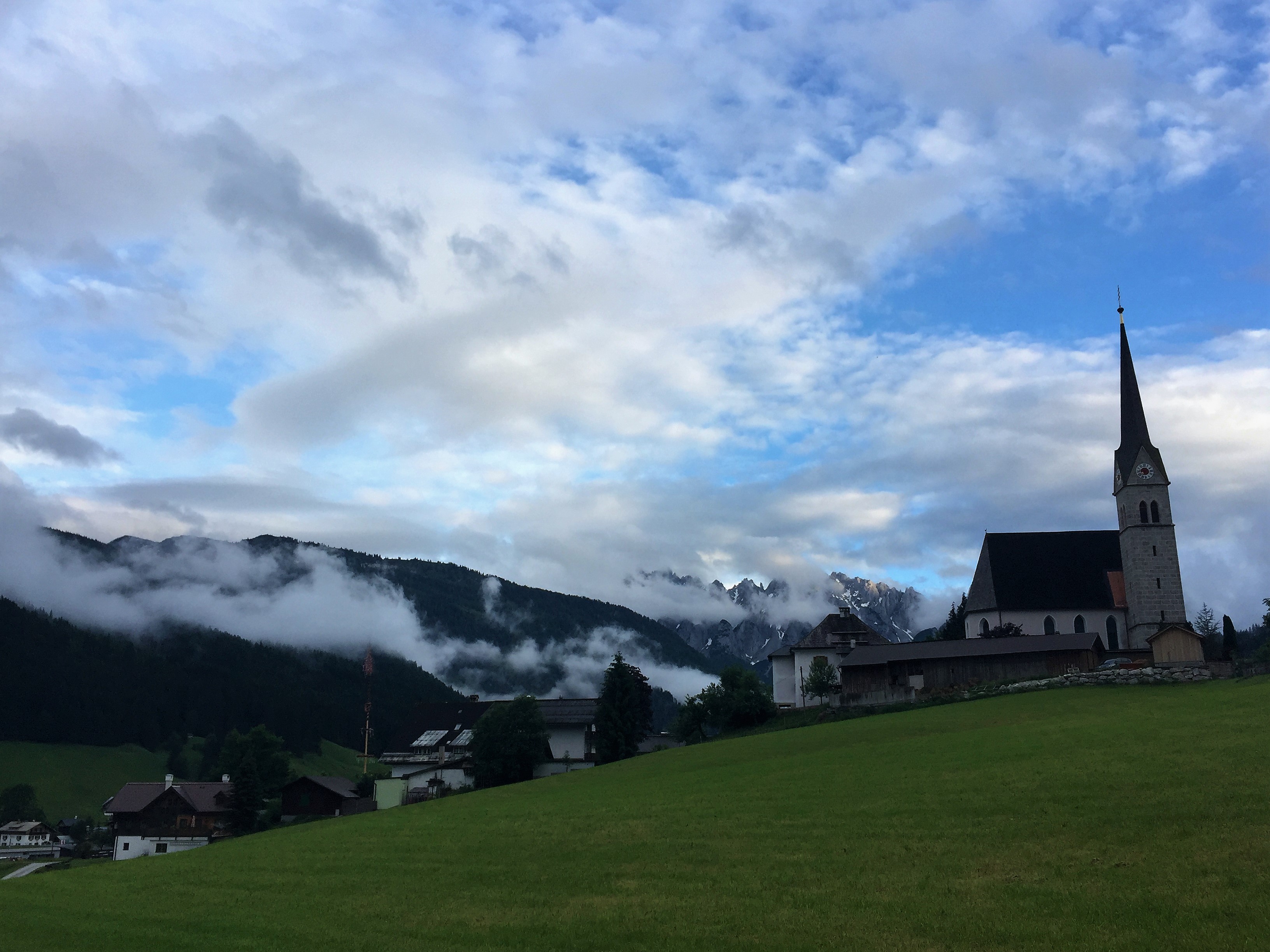
Gosau is a lesson in never judging a town from a picture. It is indeed a ski town, but it is far from dull. This sleepy village rests in a nest of wildflowers in a deep mountain valley. Cowbells and the baying of sheep welcome you home every evening, and the soft church bells of one perfect little chapel beg you to rise in the early morning. Bursting from this sweet landscape are the proud, snow-capped peaks of Dachstein Glacier, truly one of Austria’s most impressive hidden gems.
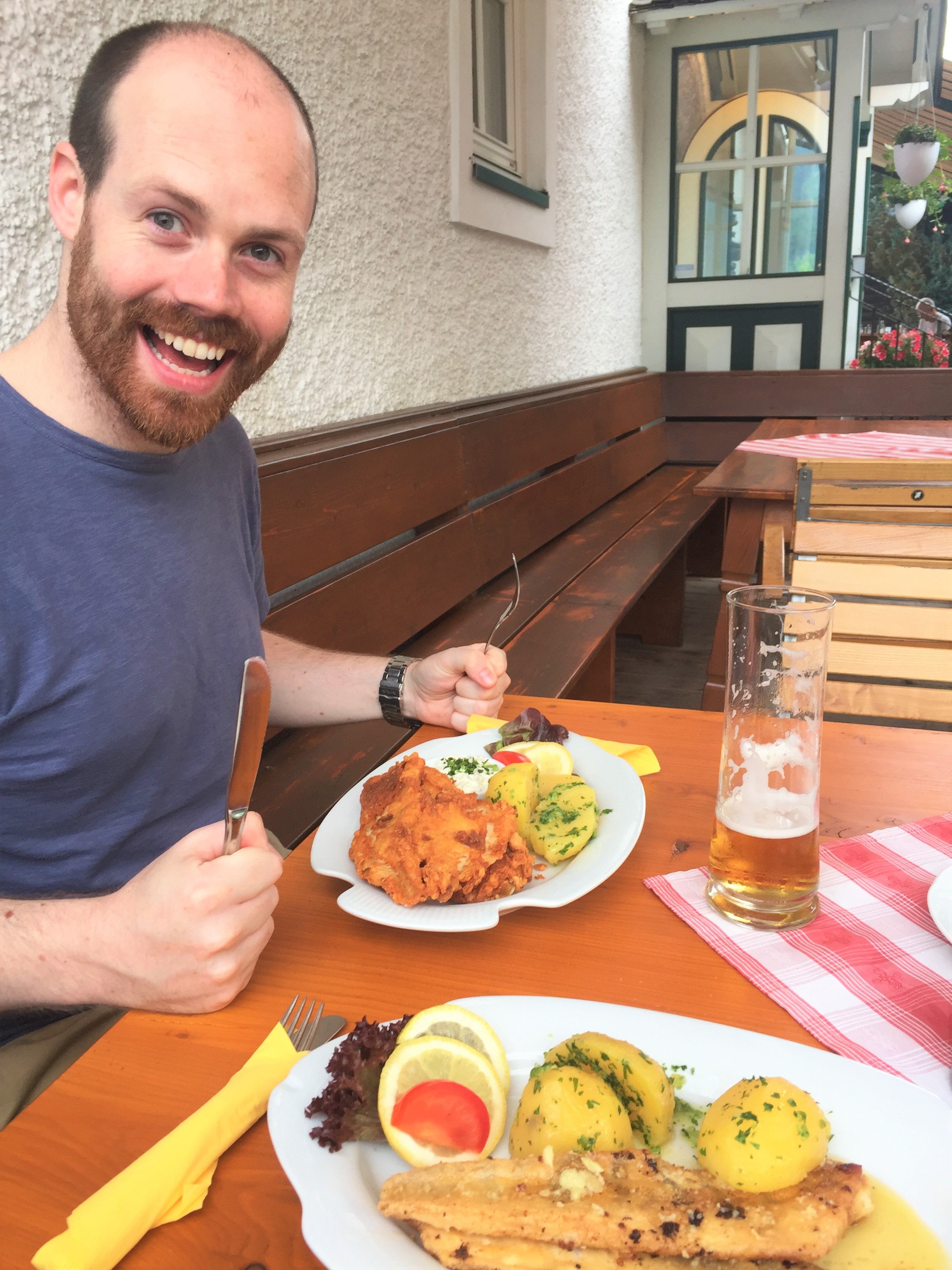
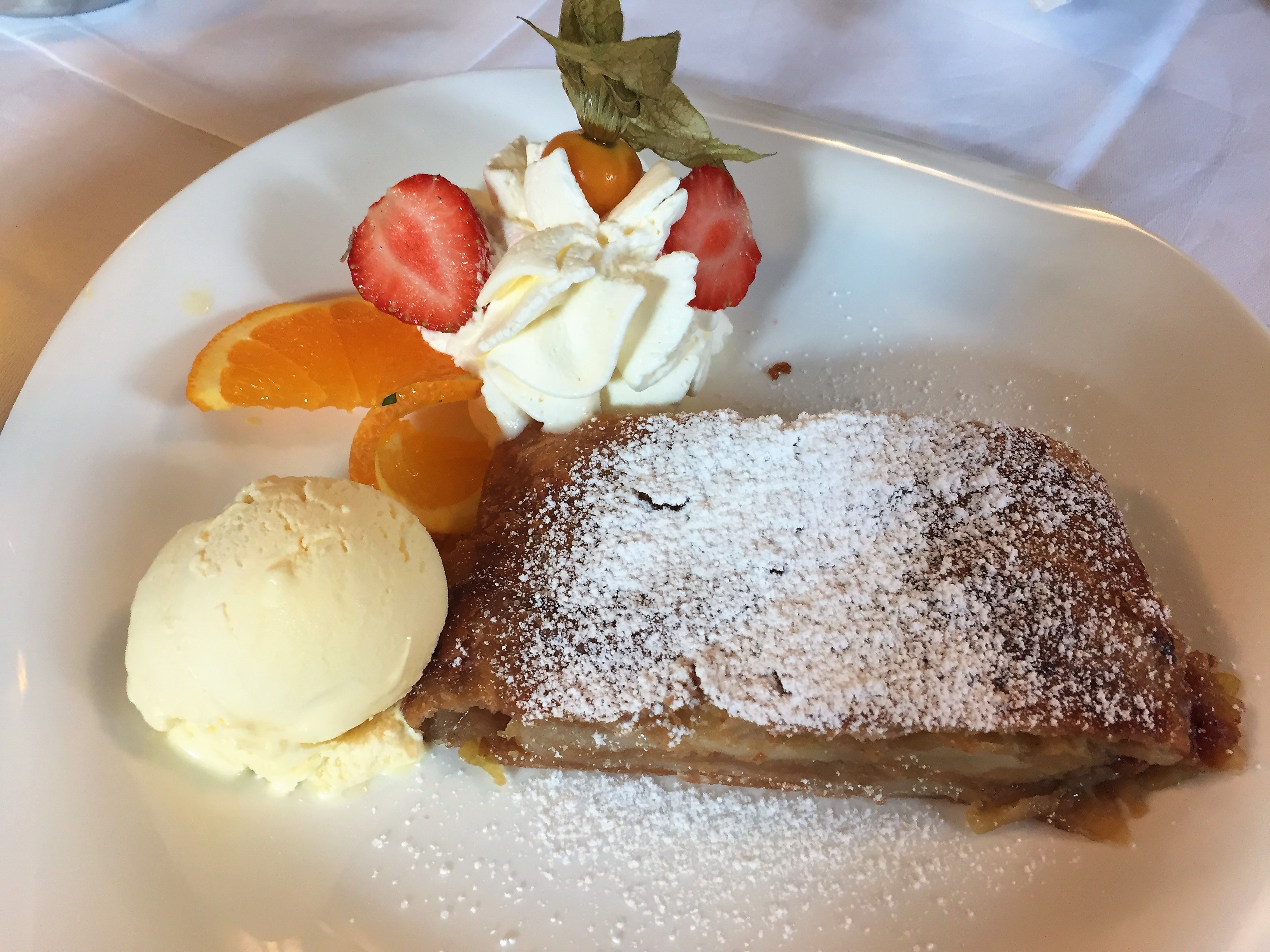
During our stay, we enjoyed serene evening walks to the local bar and restaurant, Gosauer Kichenwirt, which we later learned is famous throughout the region for it authentic Austrian dishes. The strudel really is to die for. Best of all, the outdoor tables offered an incredible view of the glacier. With a cold Austrian beer in hand, we watched that powerful giant disappear behind dancing evening clouds.

A day in Hallstatt
The short drive from Gosau to Hallstatt was a lucid dream through wild mountain valleys of crystal rivers and heavenly shores of sapphire lakes. We seemed to glide on the curving road beneath a perfect, clear blue sky and a canopy of silver birch trees.
Then, just when we thought a particularly long tunnel would swallow us forever, we suddenly found ourselves in Hallstatt. We parked just below Salt Mountain, and made a beeline for the shore of Hallstatt Lake. The scene was picturesque, made even more so when two swans gracefully drifted into the foreground.

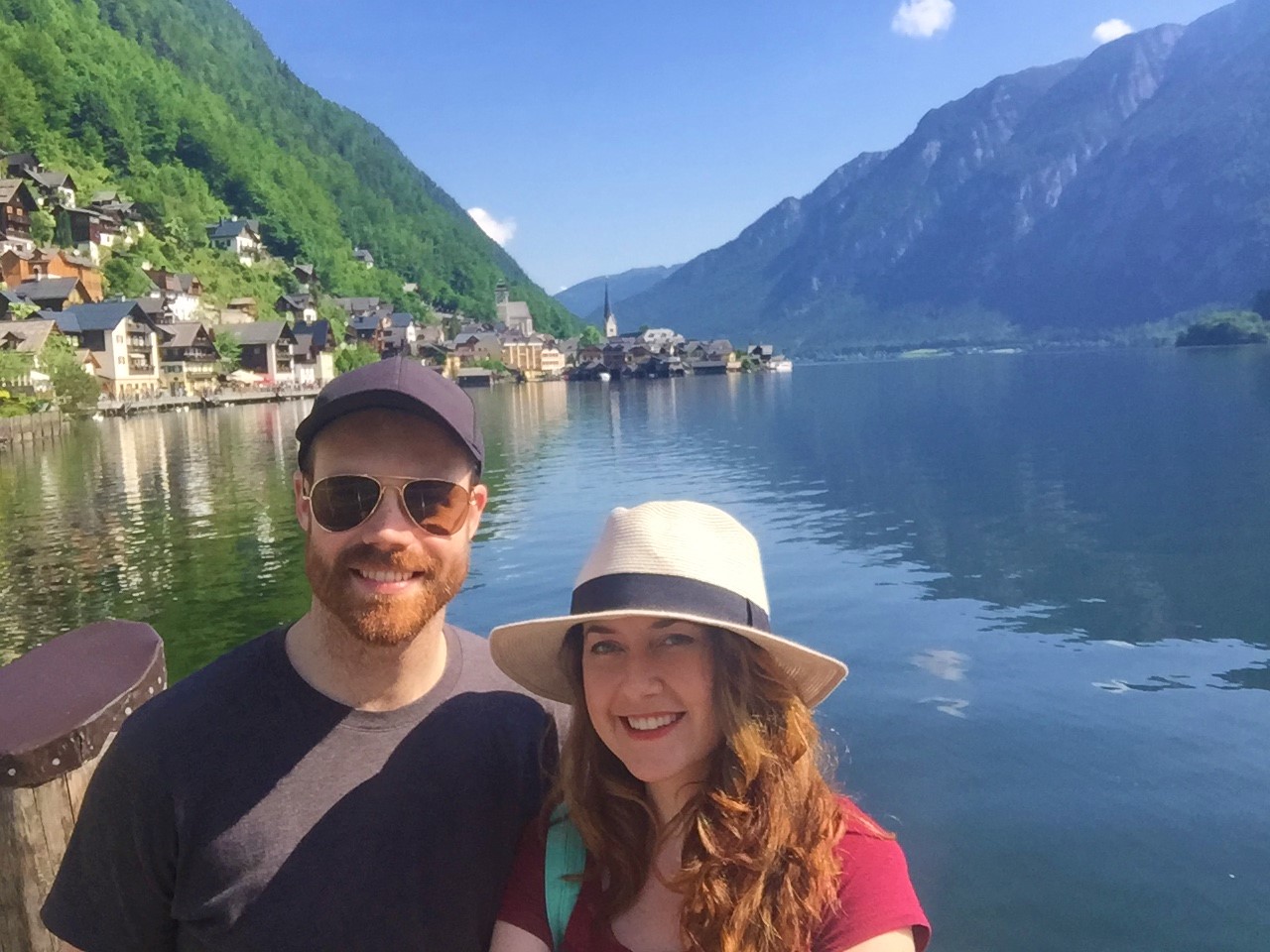
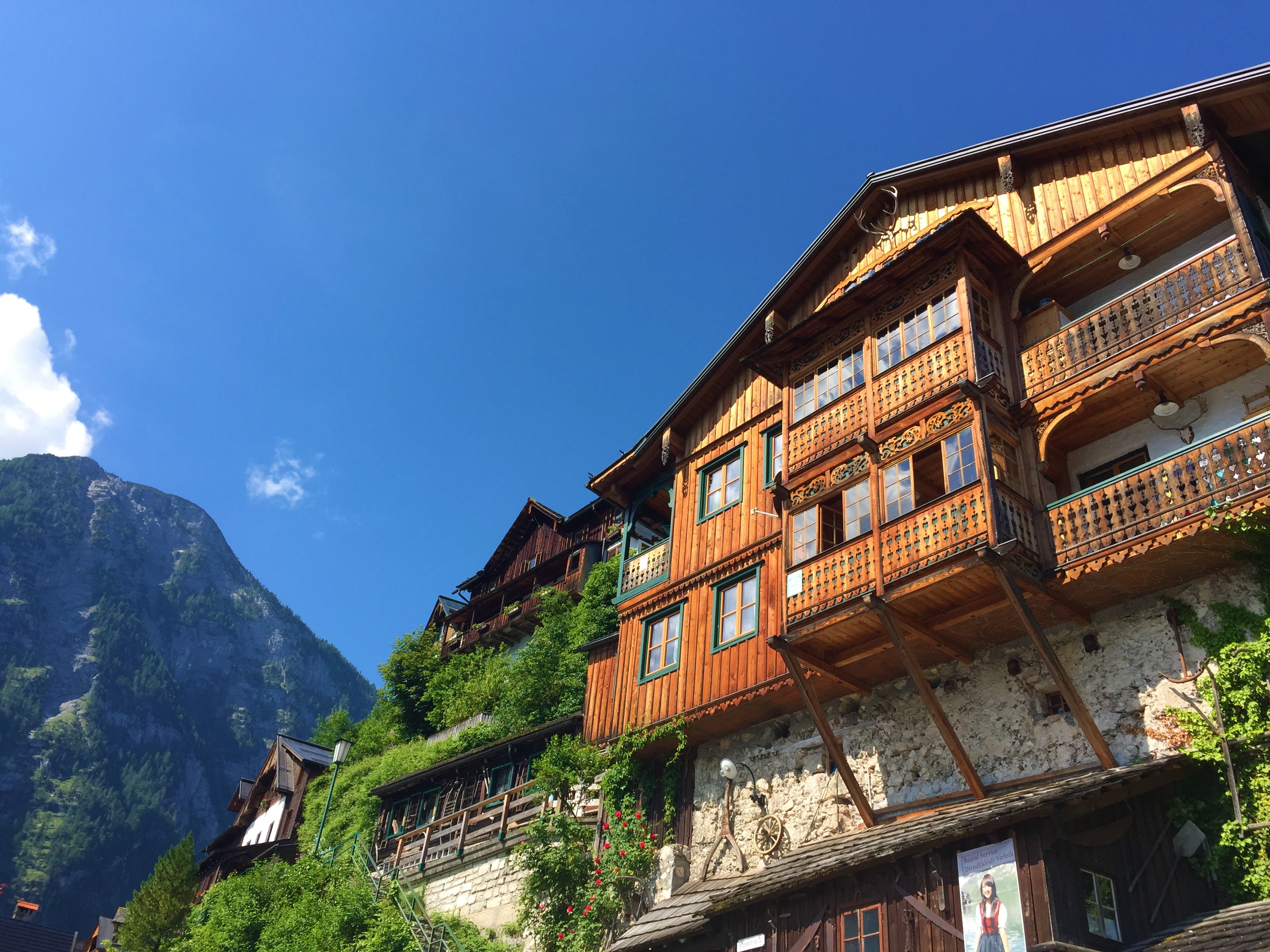
Every scene in Hallstatt could be a painting. I could picture Monet with his easel by the lake, and Van Gogh in Market Square, where the rocky mountainside and colorful buildings somehow blended together in surreal harmony.
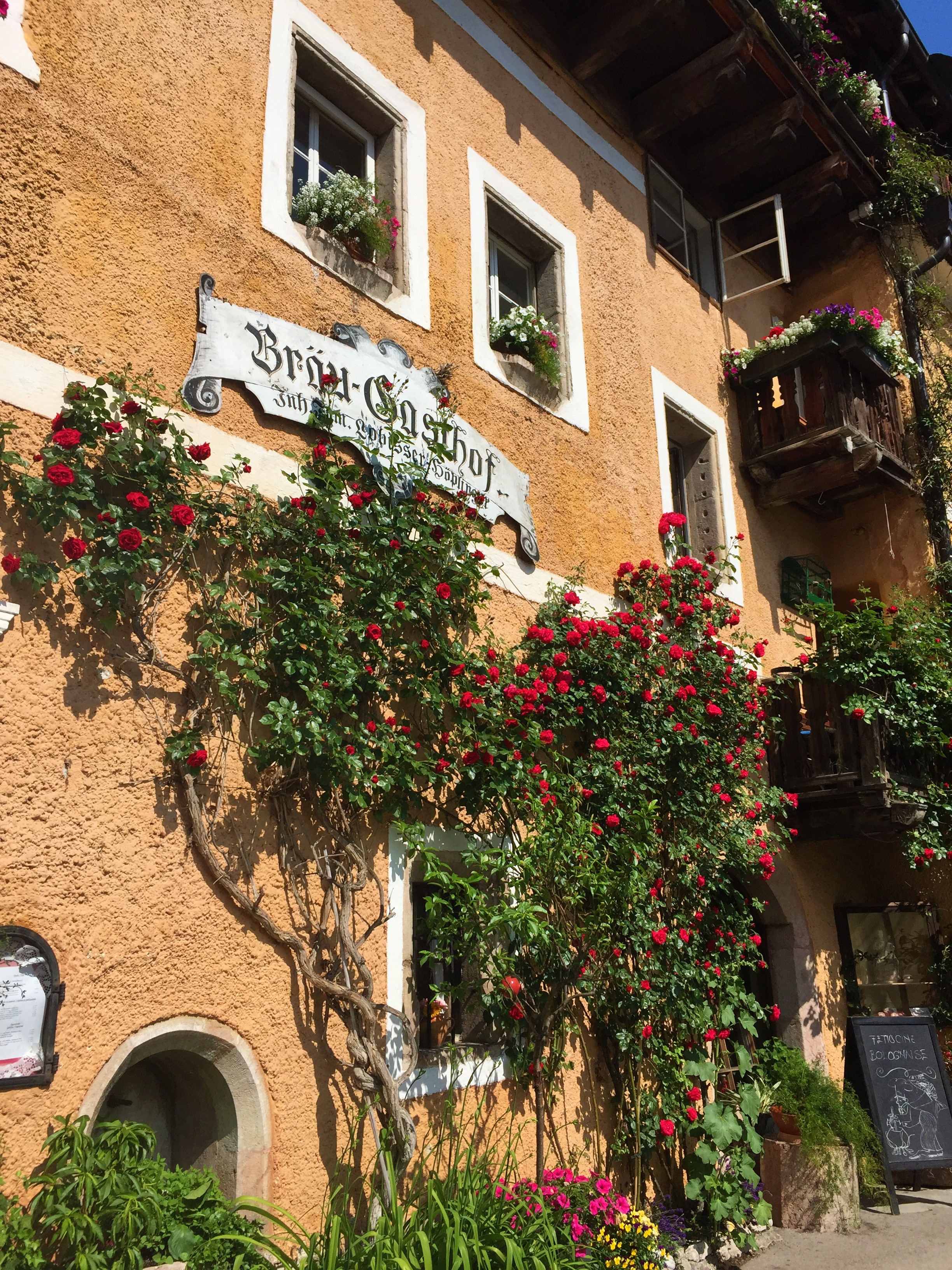
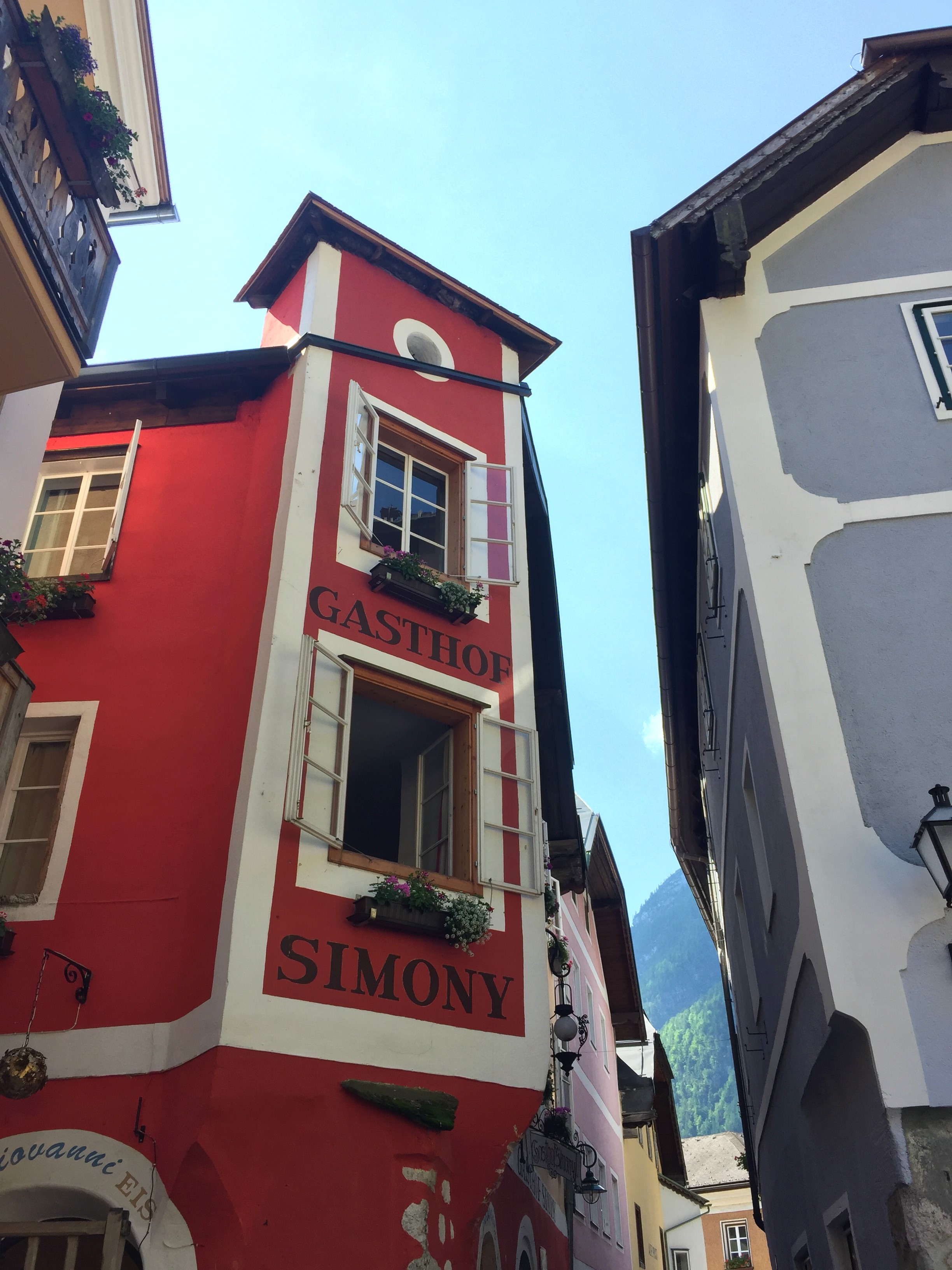

Luckily, we had listened to reviewers that recommended visiting Hallstatt in the morning. Absolutely make an effort to arrive in the village before noon. We managed to avoid most of the crowds during our stroll by the lake, leaving us with plenty of breathing room to take in the famous postcard view of Hallstatt.

On the mountainside near Old Town is a mysterious set of stairs leading up to the Catholic Church of of Hallstatt. This Gothic church dates back to 1505 AD, with a Romanesque tower built in 1181 AD. While the Evangelical Church of Christ may have a more famous spot in postcards, this church is a must-see in Hallstatt, with an excellent view of the lake and village below. To the left side of the church is perhaps the most beautiful cemetery I’ve visited. As is tradition in Austria, each grave is decorated with a wooden cross and a bed of flowers.


And while this pleasant cemetery may bring happy, comforting thoughts of the afterlife, there is another tradition here that is sure to give you goosebumps. The Charnel House is a seemingly inconspicuous chapel that is filled with 1200 skulls – painted skulls. In the 18th century, the small cemetery became overcrowded and bodies were exhumed to make room. Having only been buried for 10-15 years, the bodies were bleached in the sun, and their skulls were placed in the Charnel House. Soon after, villagers began to lovingly paint the skulls of their deceased relatives, with birth names and dates, laurels and roses. And so began an eerie but beautiful tradition, and a testament to love and life after death.

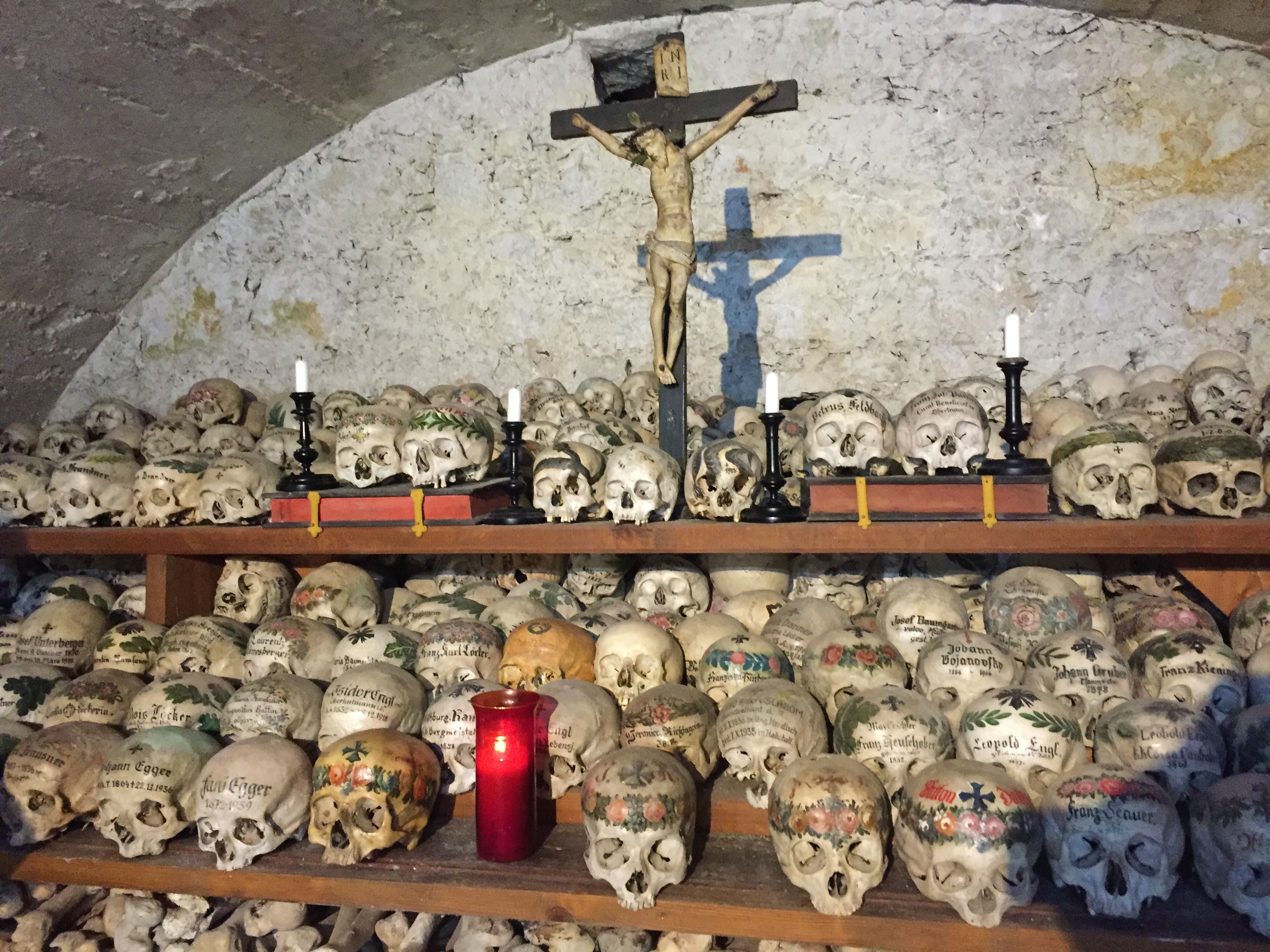
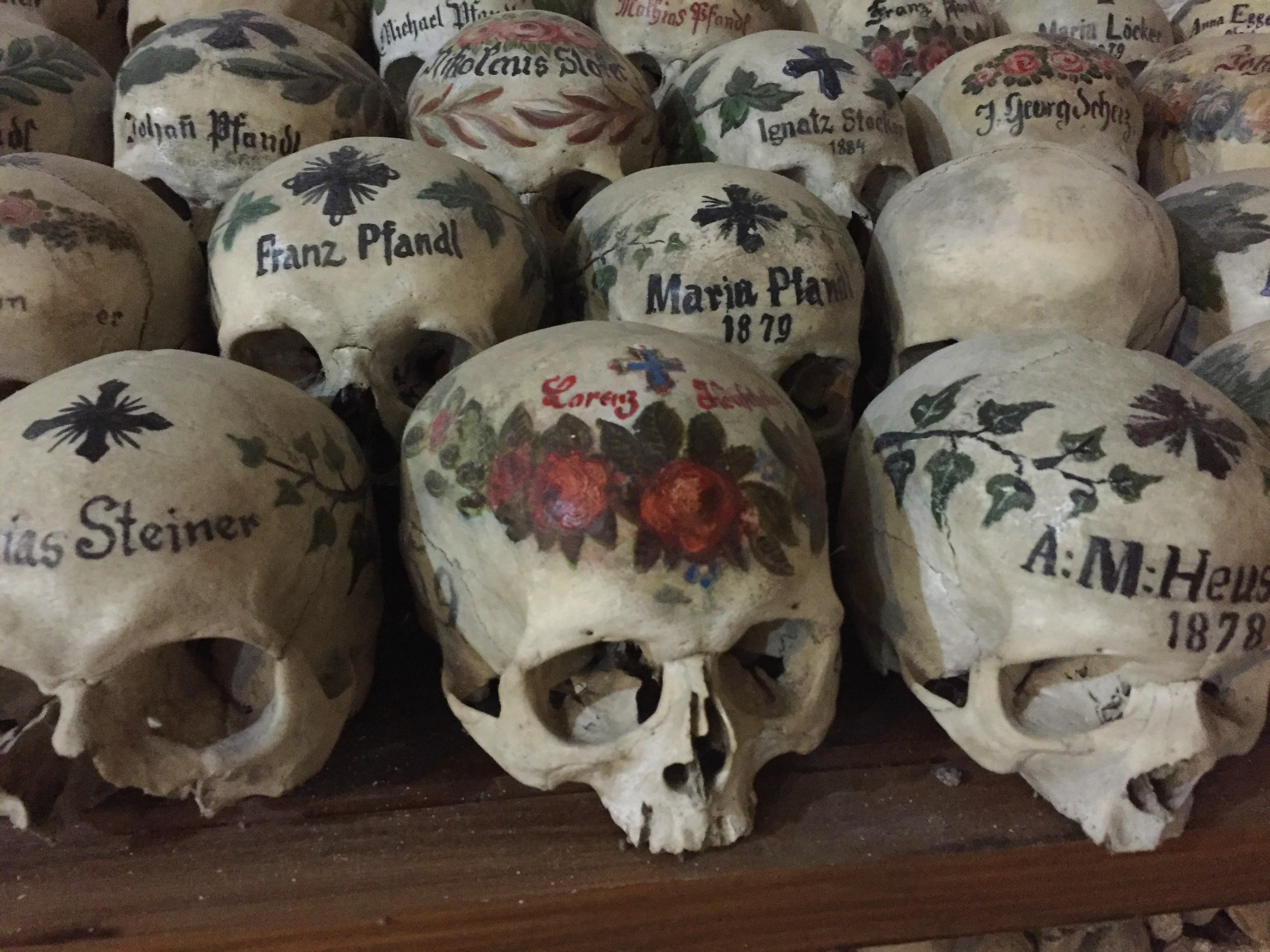
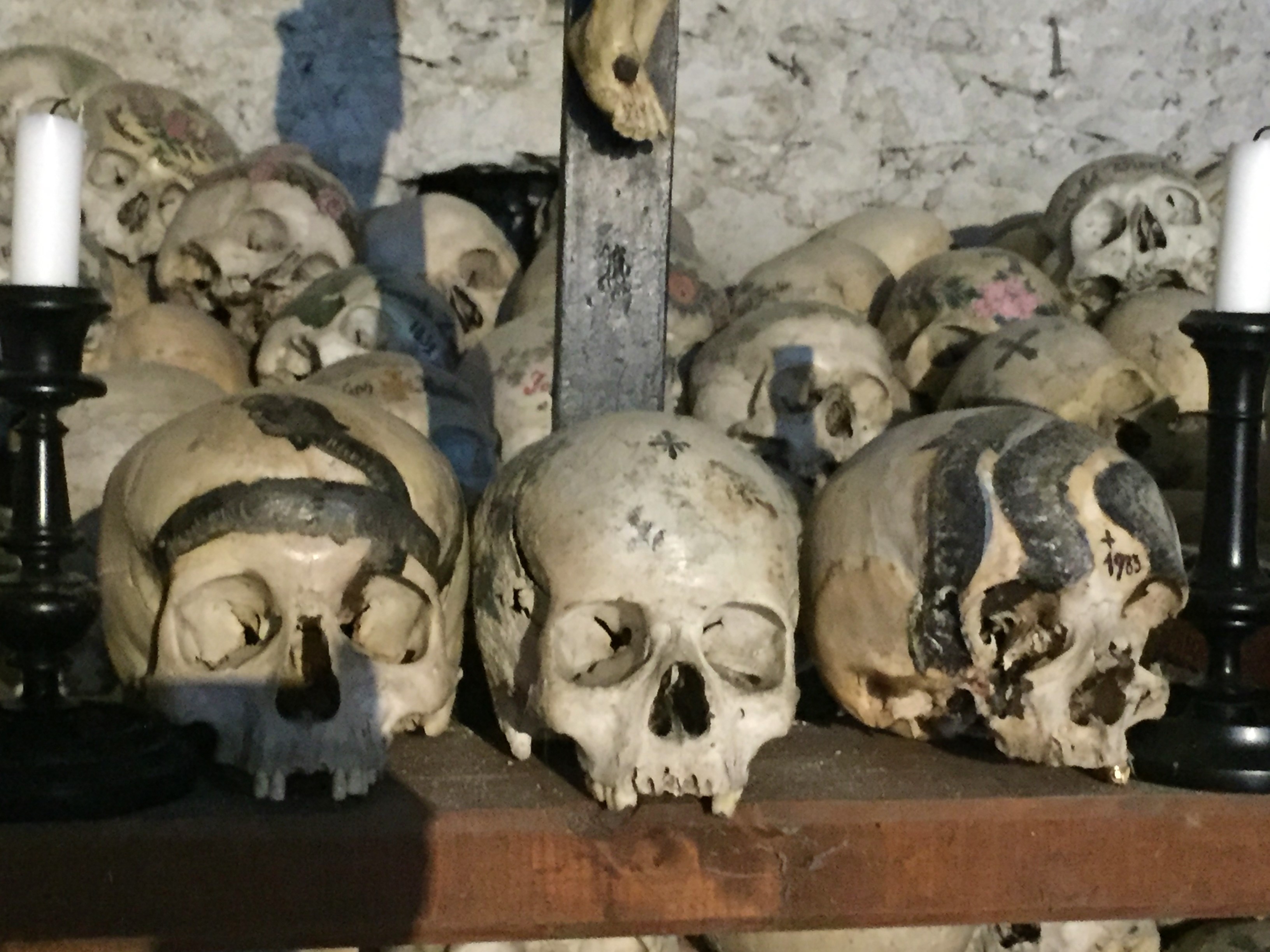
Satisfied with a few hundred photos of skulls adorned with painted snakes (eek), we shook off the goosebumps and began our hike up Salt Mountain. We opted for taking the scenic Brine Trail, rather than the cable car, and I highly recommend it. The first stop on the trail was at the base of a waterfall directly above the village. From there on up, the trail zigzagged up the mountain. We pushed on through soaring temperatures and treacherous trails on the edge of the mountainside. Every turn of the trail offered a stunning view of Hallstatt, which grew ever more breathtaking as the altitude increased.
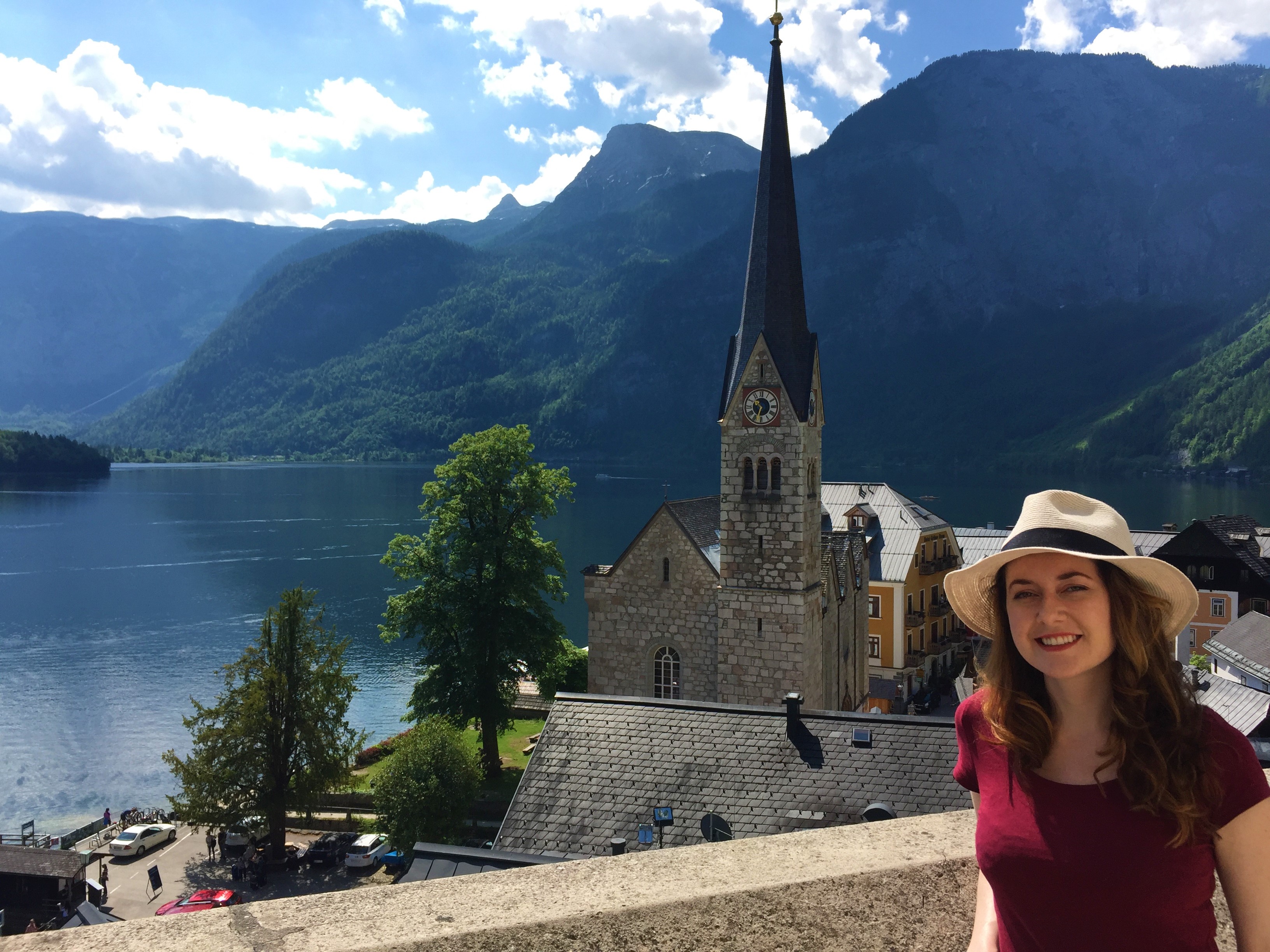

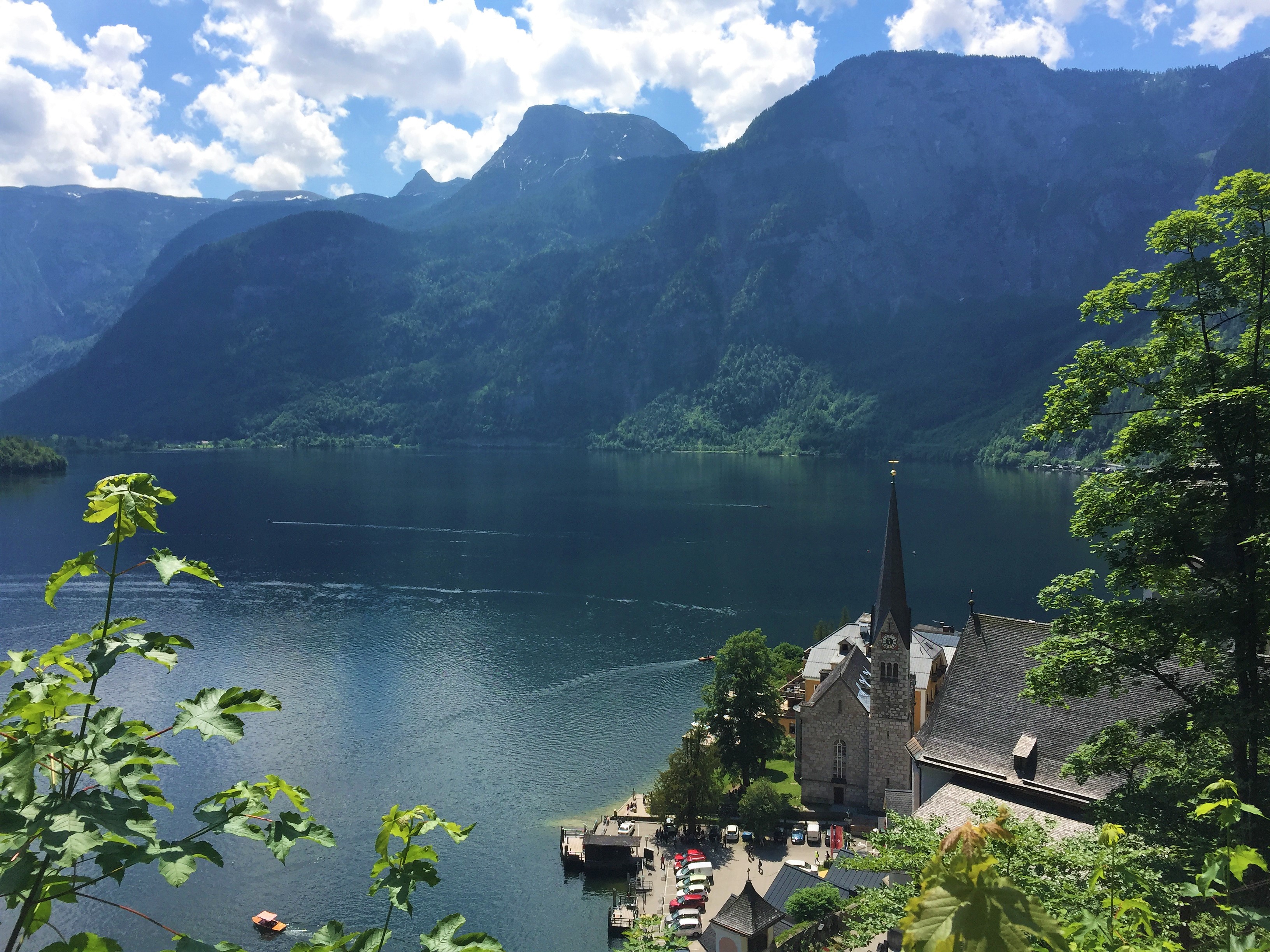
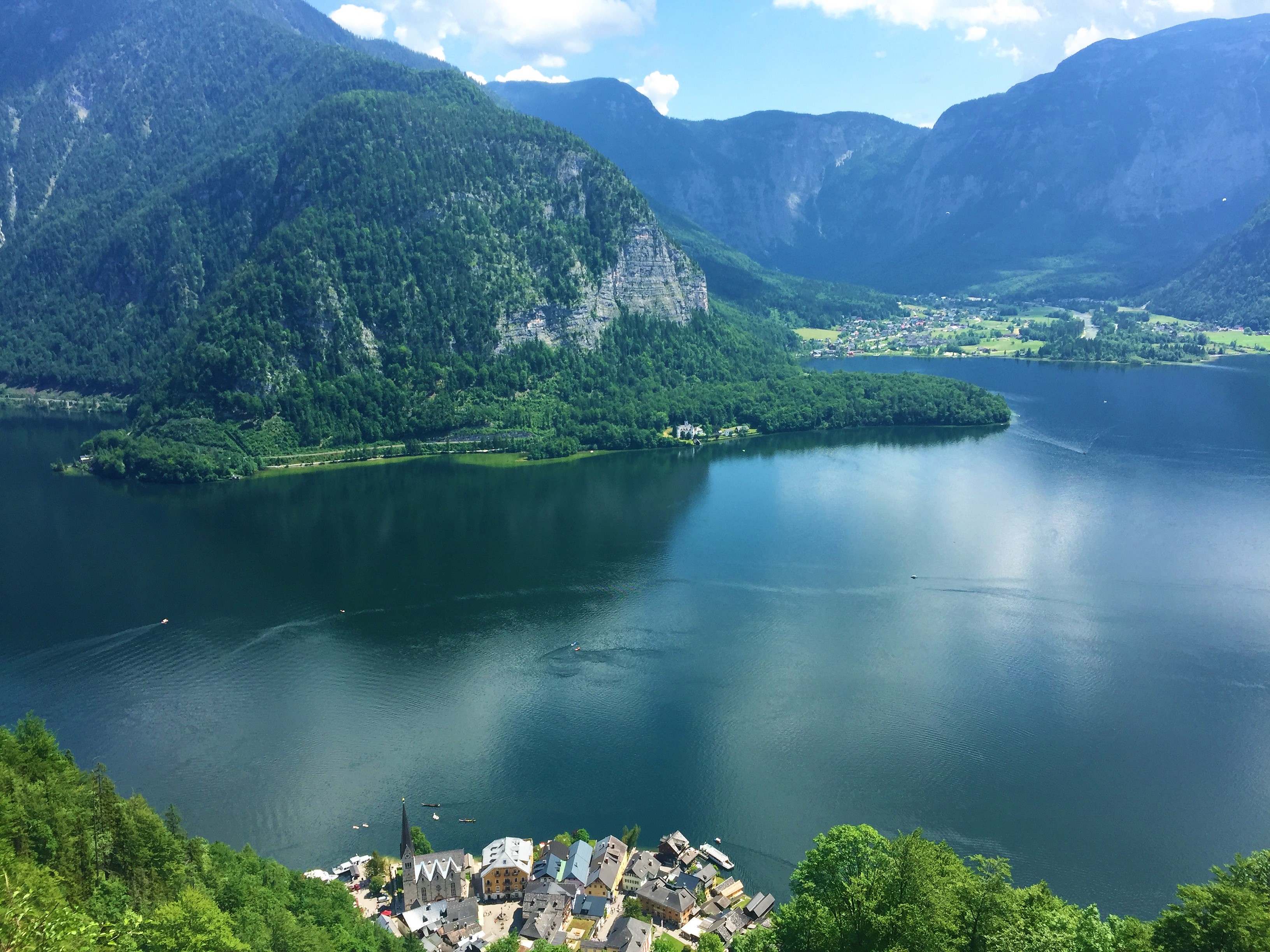
Once we finally reached the top of the mountain, we stopped for a much-needed break at Skywalk Lookout by Rudolph’s Tower. At 350 m above Hallstatt, it’s a view I’ll never forget.
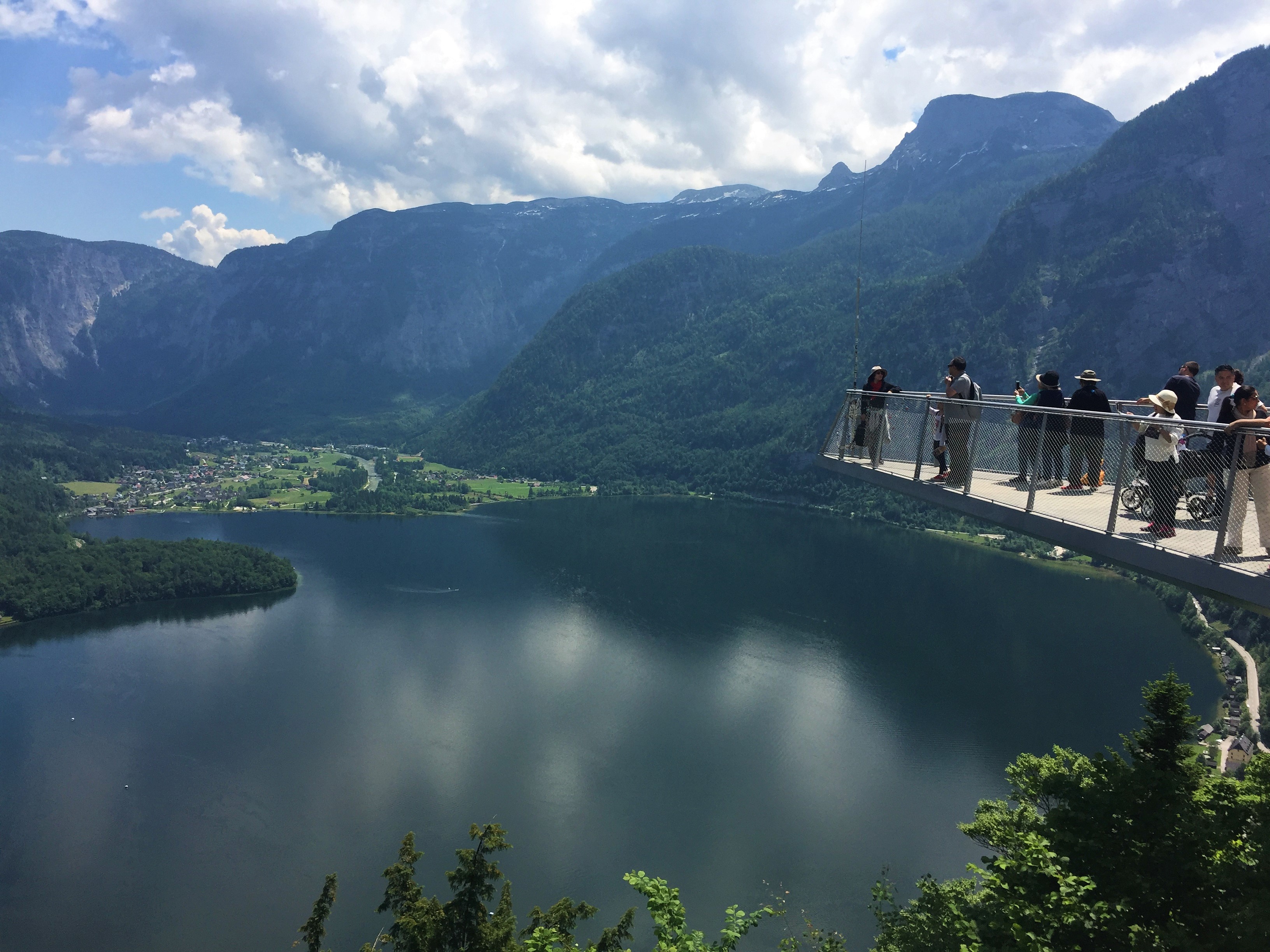
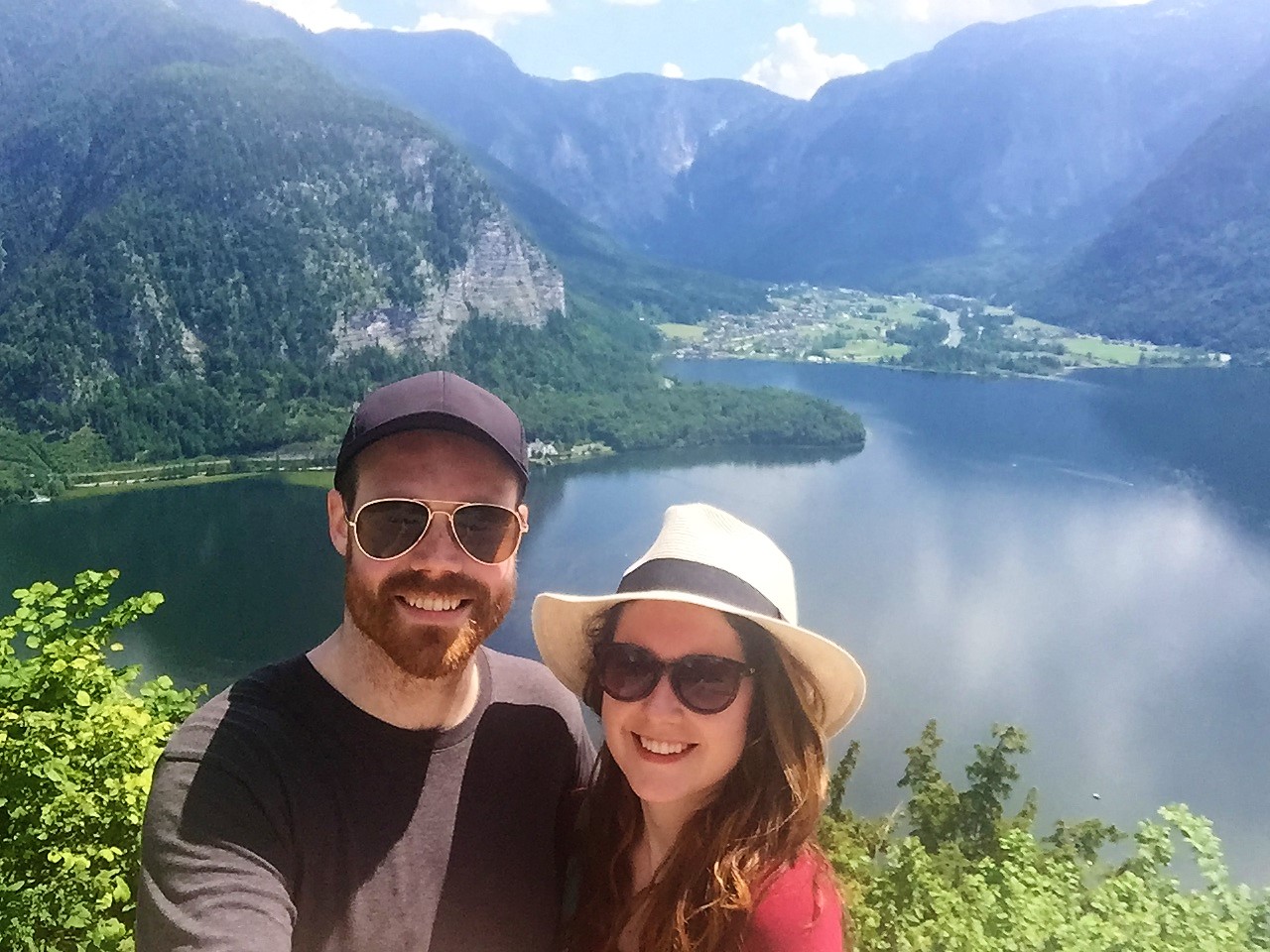
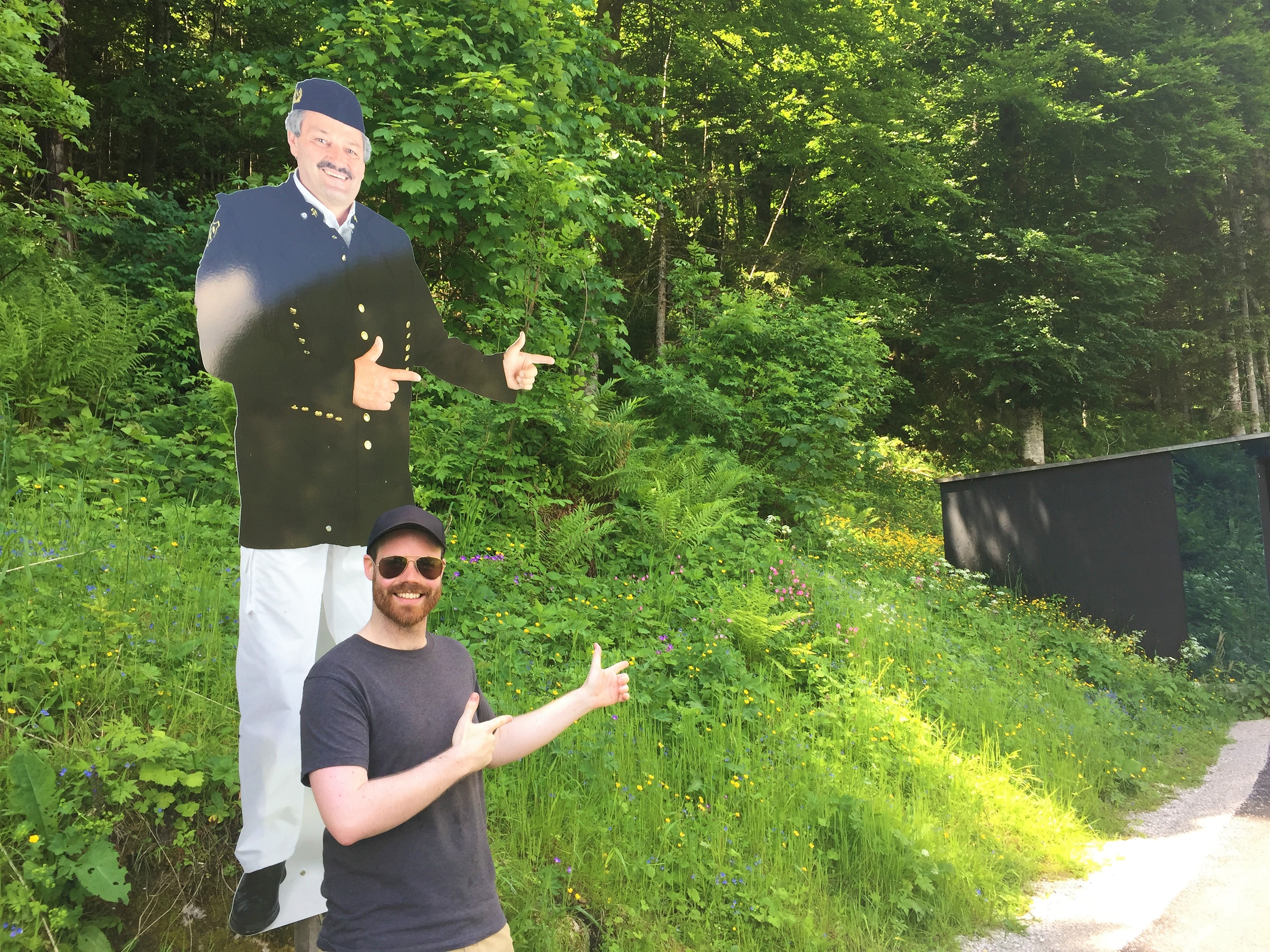
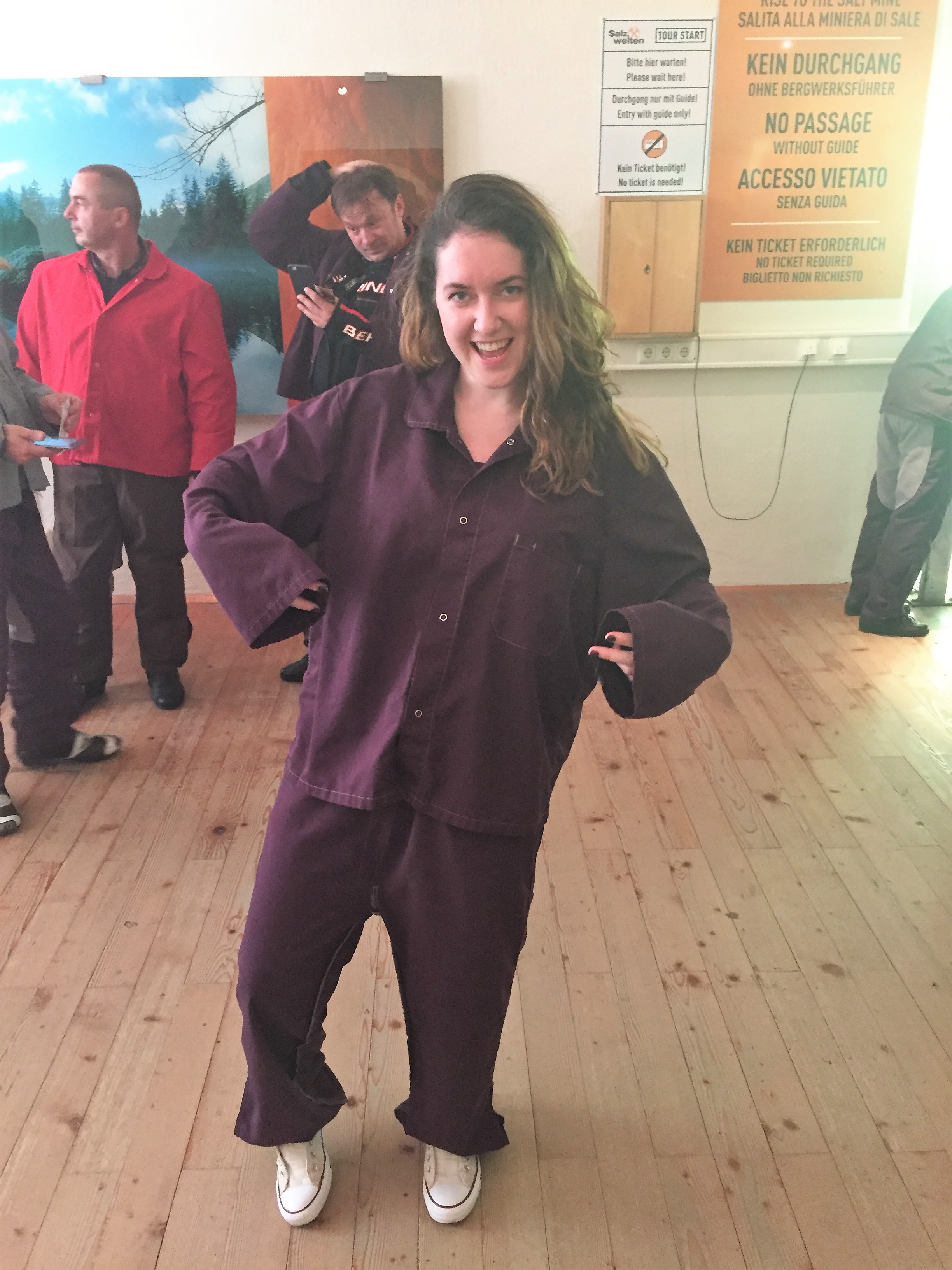
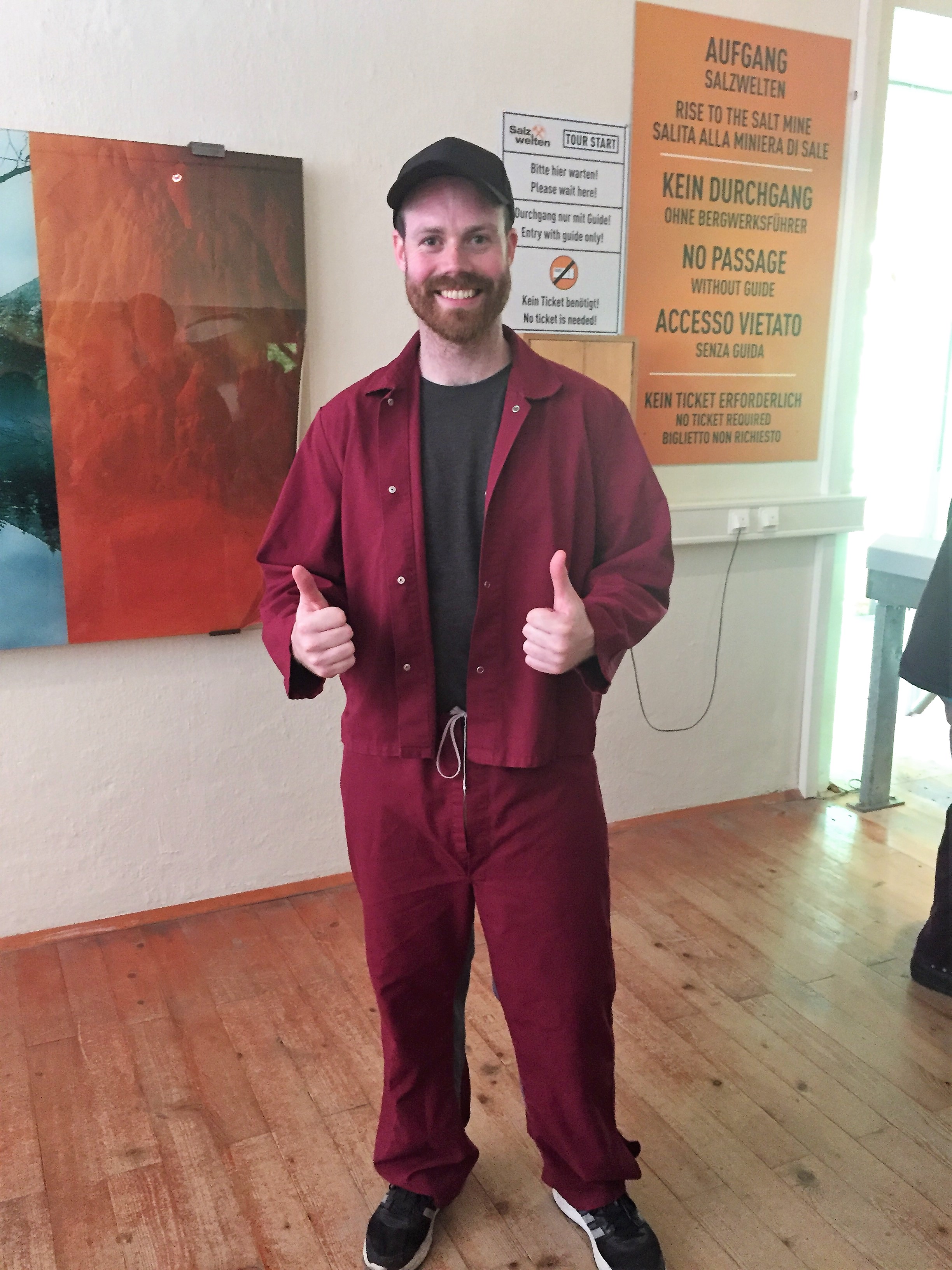
With our energy wasted, we sought sanctuary from the sun’s glare in the deep, cool caverns of Hallstatt Salt Mine. Hallstatt Salzwelten is 7,000 years old, making it the oldest salt mine in the world. The tour itself was a unique experience – we were outfitted in stylish (ha) mining gear, and we took slides once used by actual miners to reach deep levels of the mine. Sliding down two-by-two, we reached heart-stopping speeds – a rollercoaster ride through darkness.
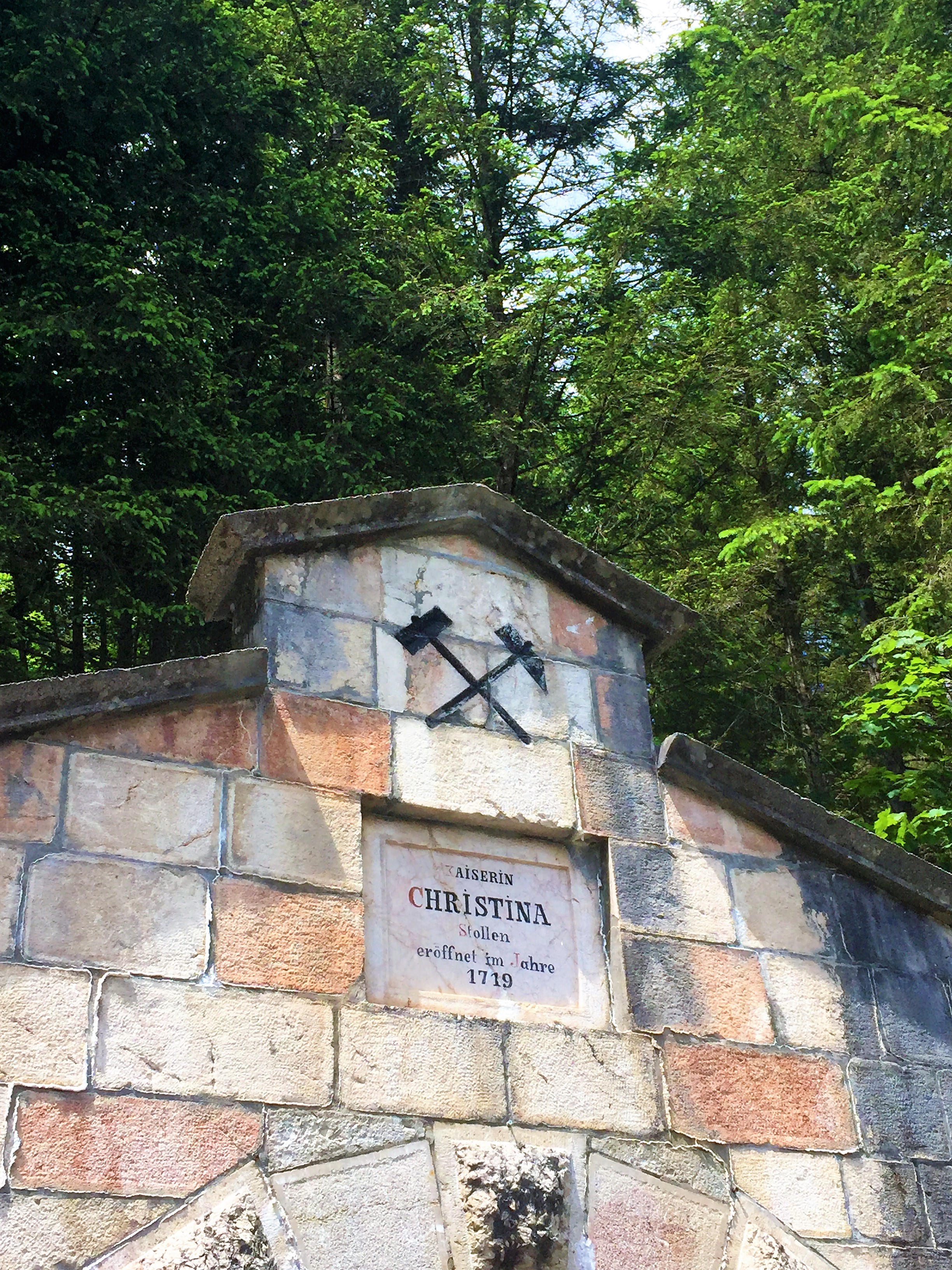
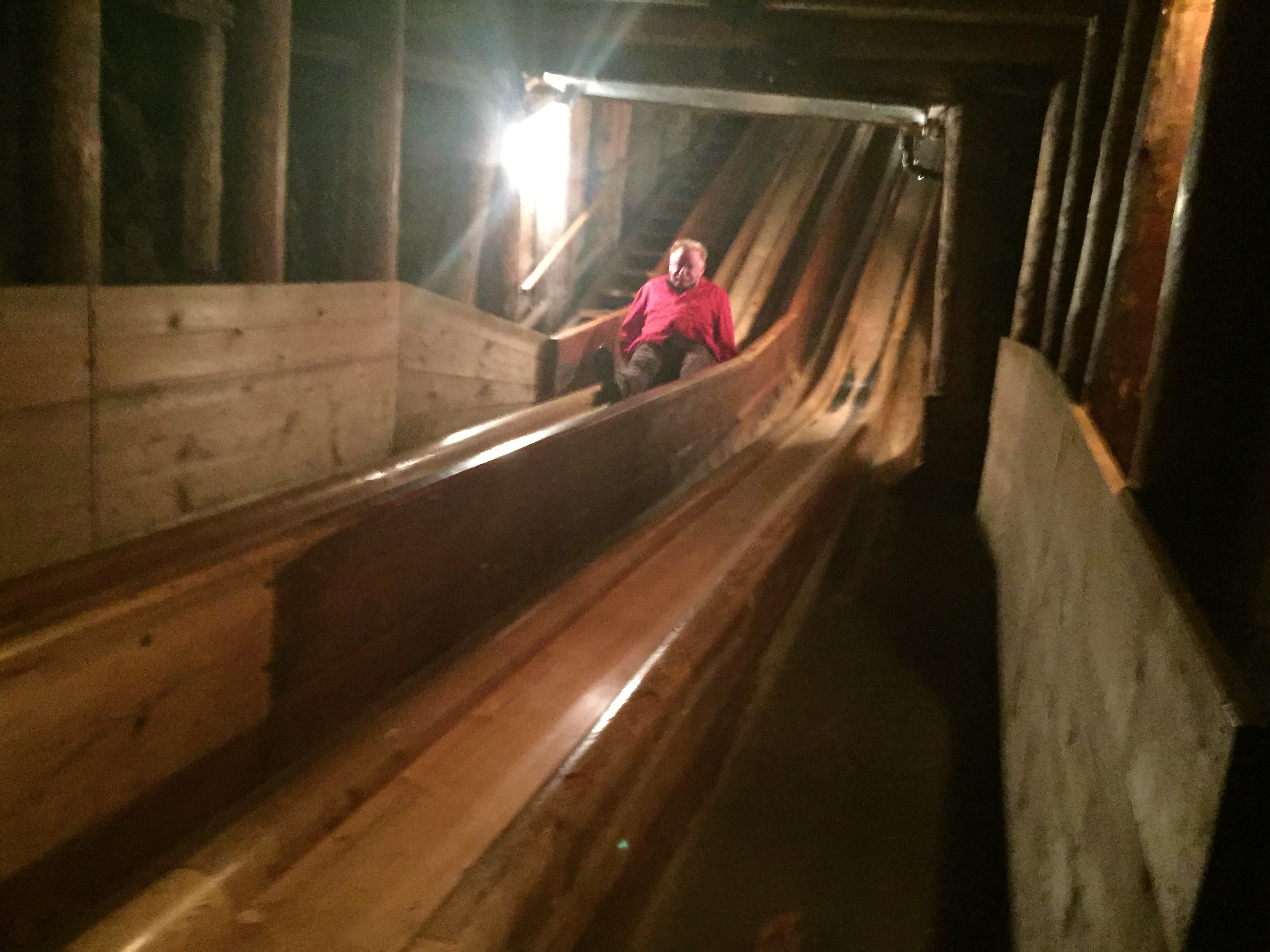
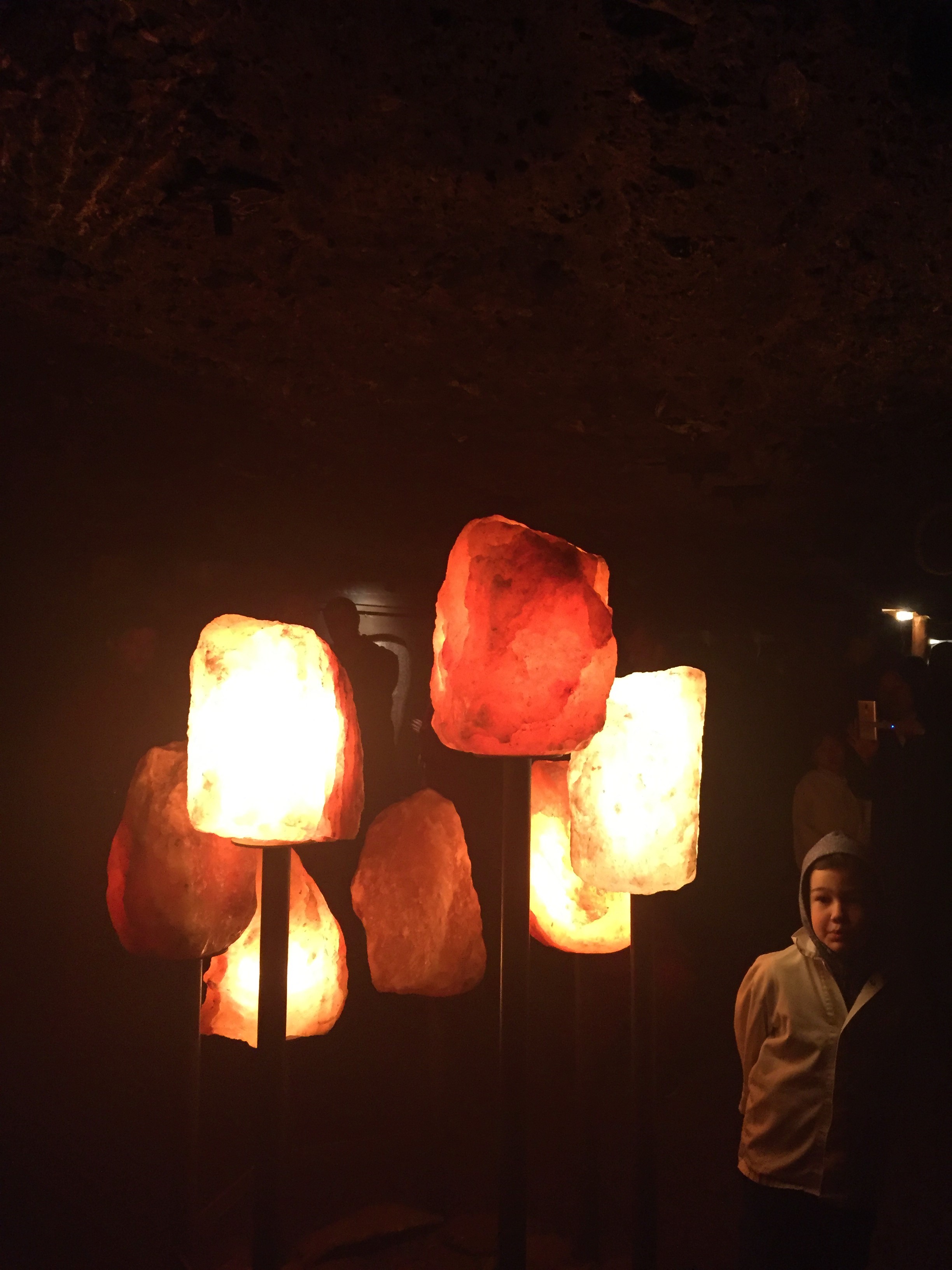
A little funicular train brought us merrily back to the surface. After two hours in the mine, the glaring sun had finally fallen behind clouds, and a storm seemed to be approaching. Nevertheless, we decided to walk back down the mountain, again shunning the crowded cable car. It was a good choice too, as the hike down afforded more views of the village, this time in the shadows of heavy clouds.
The Sees of Austria
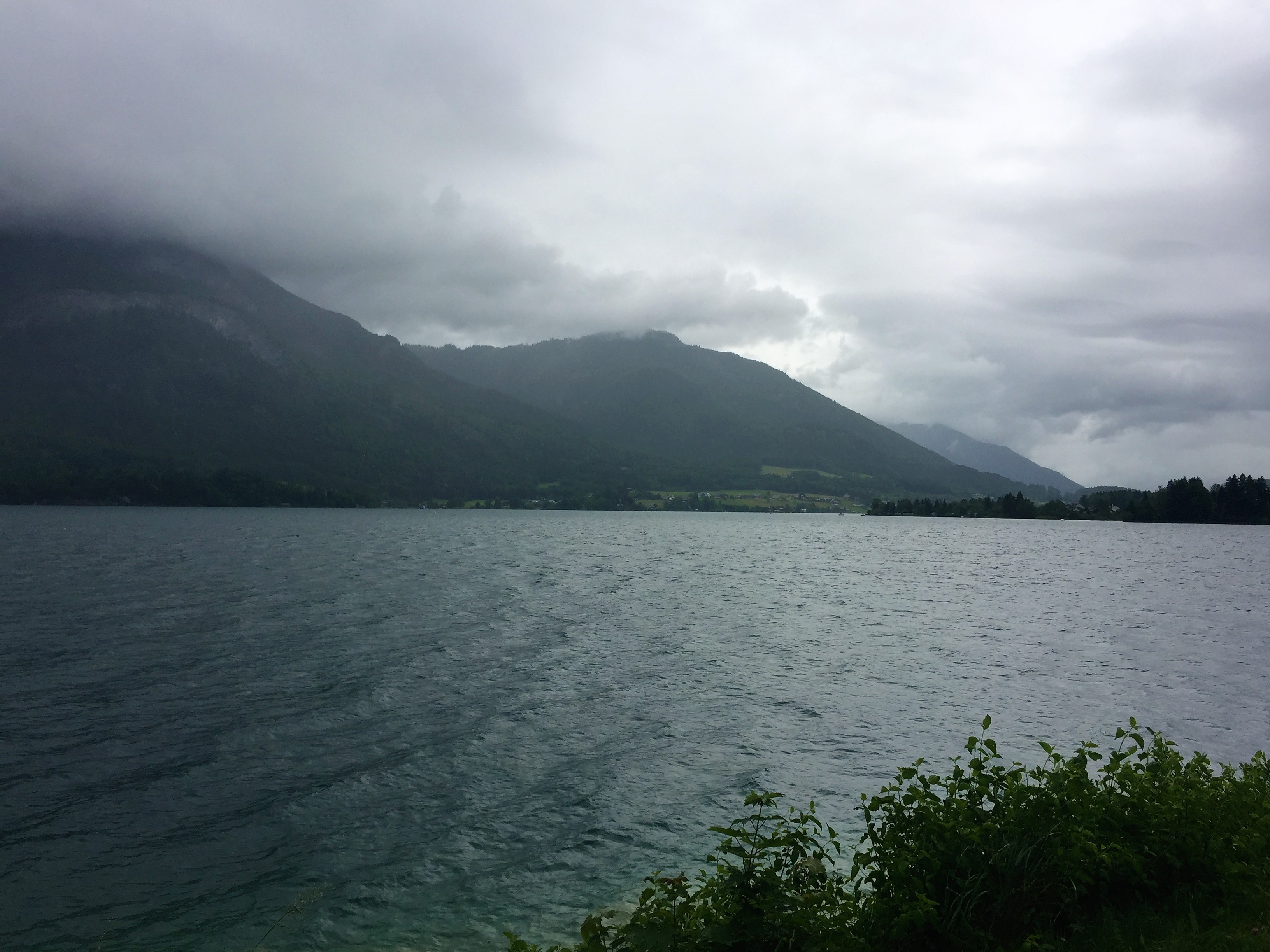
On our last day in Austria, we were resigned to the fact that no sight could compete with Hallstatt. We attempted to see Salzburg but once we arrived, an angry storm rolled in. Already tired and sore from our hike the day before, we decided against seeing Salzburg in the rain, and instead set off on an impromptu tour of the lakes, or “sees” of the Salzkammergut. Once again taking the Romantic Road from Salzburg to Gosau, we saw Fuschlsee, Wolfgangsee, Krottensee, Mondsee, Attersee, and the other side of Hallstattsee. The winner of the bunch by far was Gosausee, the alpine lake of Gosau, our very own little ski village. Surrounded by mountains and Dachstein Glacier, it is known as the Eye of God.
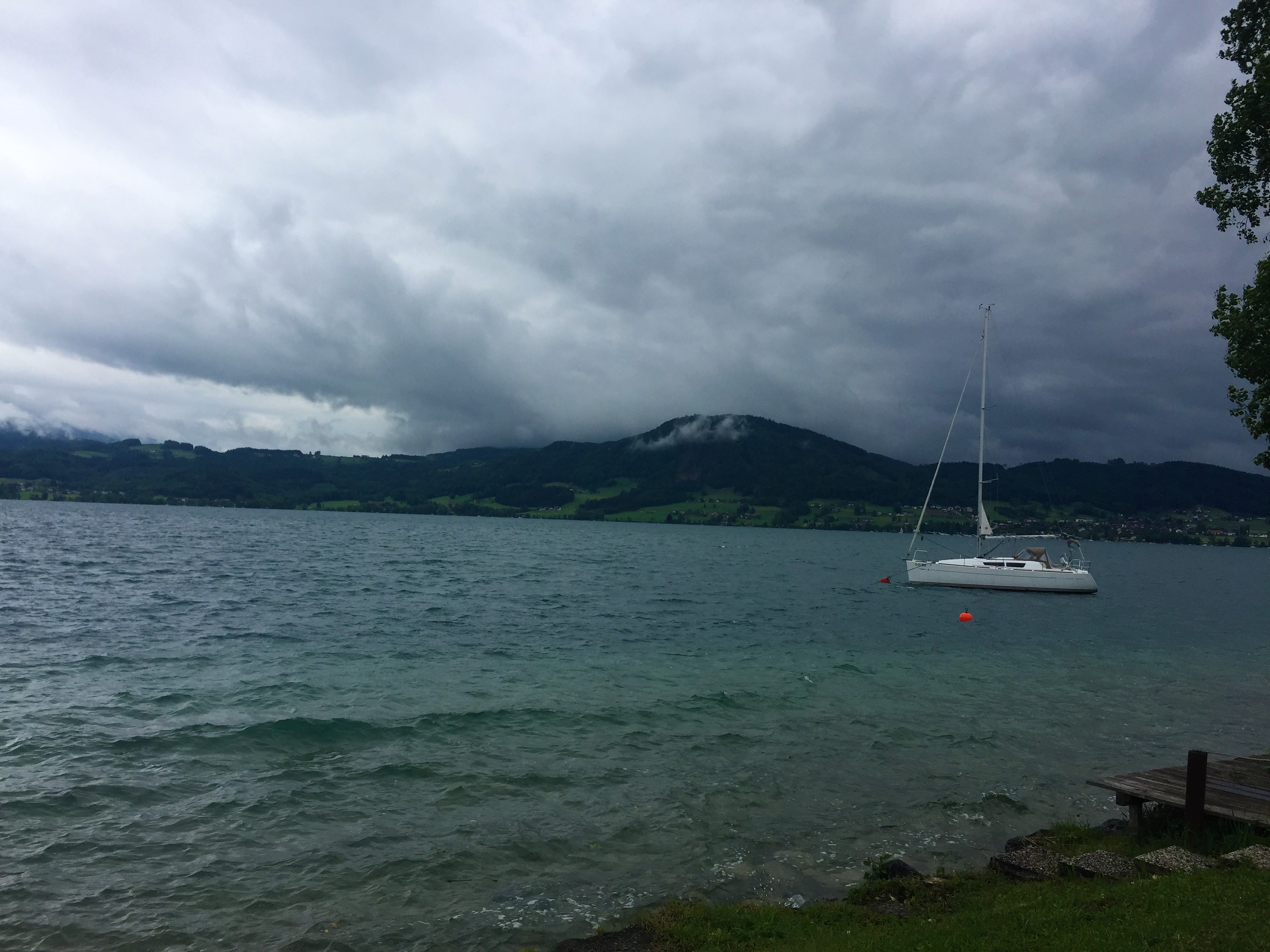
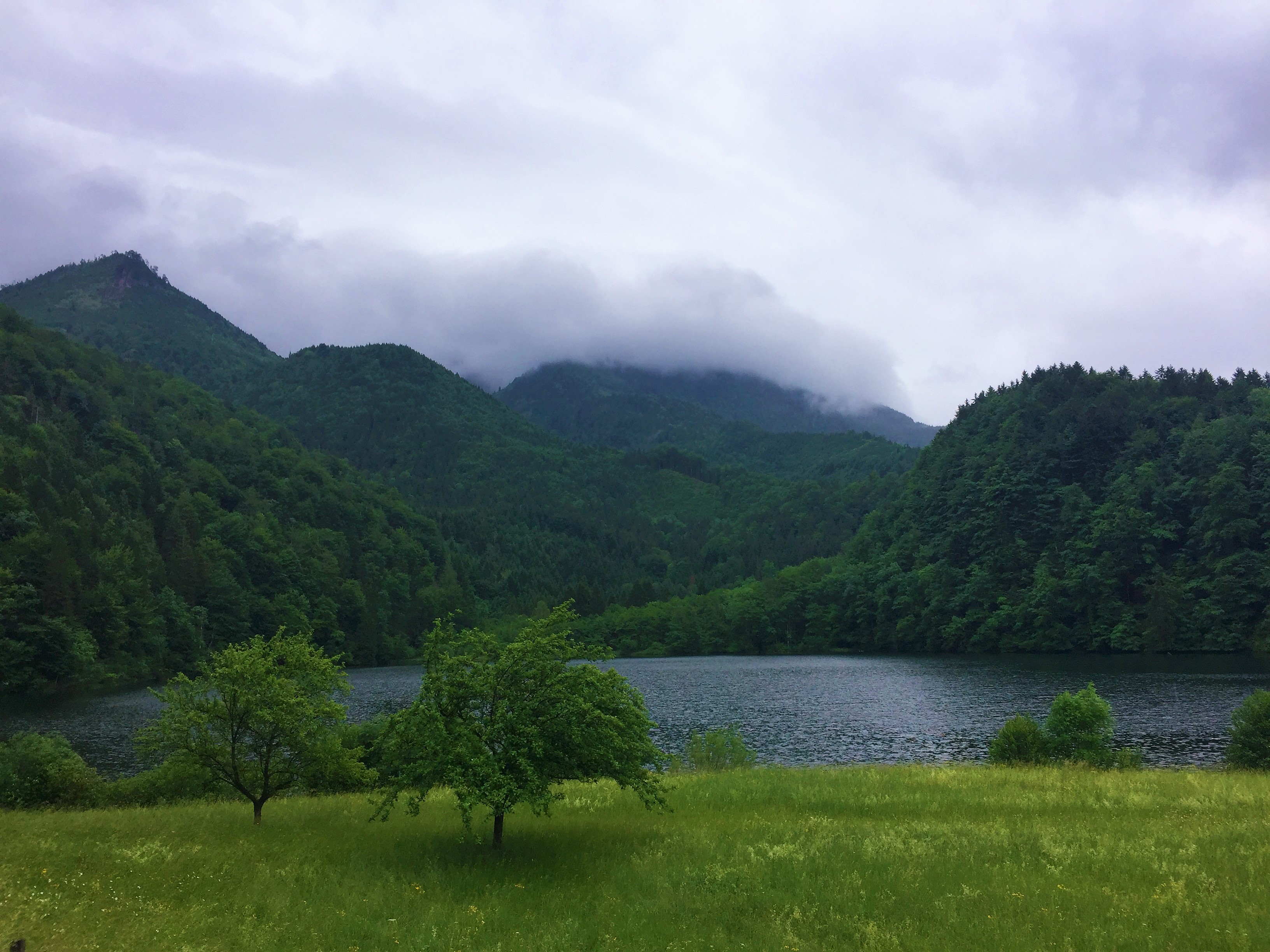
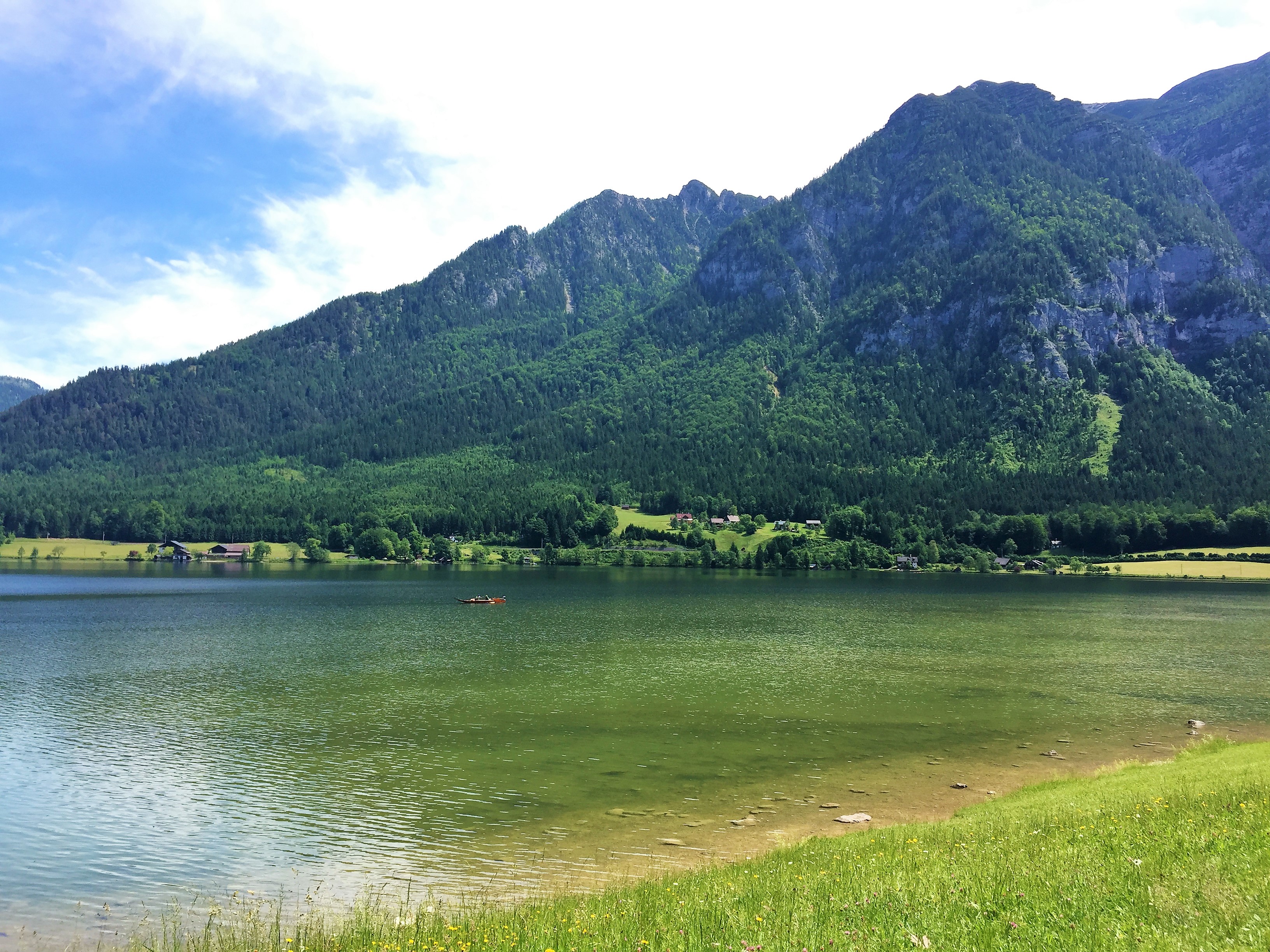


Burgruine Aggstein Ruins
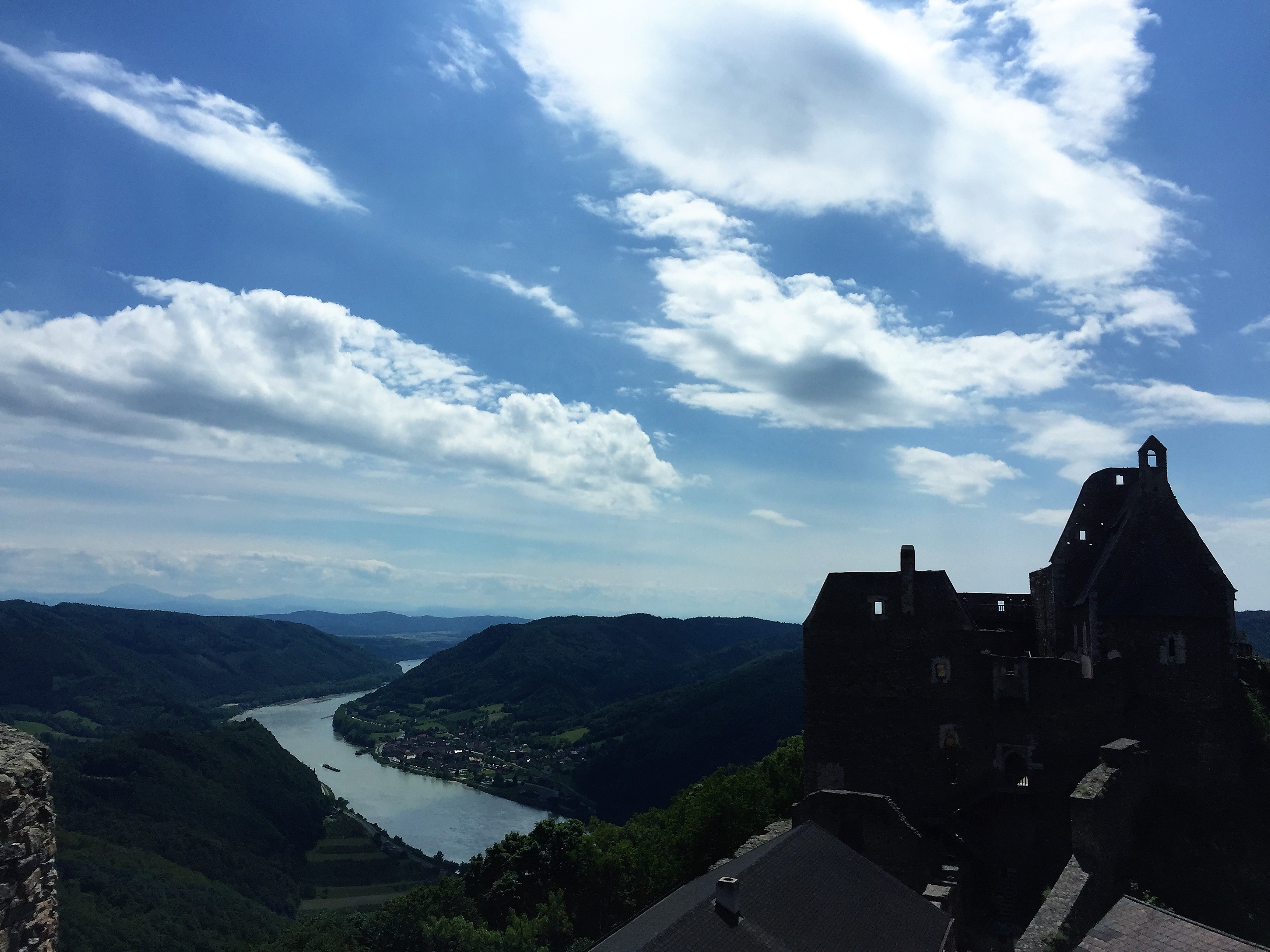
After two days of bliss soaking in mountain views and that fresh mountain air, I was dreading our return to city life. Thankfully, Patrick decided that our journey could not come to an end without seeing at least one Austrian castle. Back on the Romantic Road, we headed for the castle ruins that our eagle eyes had spotted on the way to Gosau.
The 12th-century ruins of Burgruine Aggstein stand 480 m above the banks of the Danube river and the Wachau valley. In a journey that gave us countless views of gorgeous landscapes, the view from the castle ruins held its own against the competition. As the afternoon sun drifted on by, we savored one last sweet view of Austria. A fitting end to an unforgettable trip.
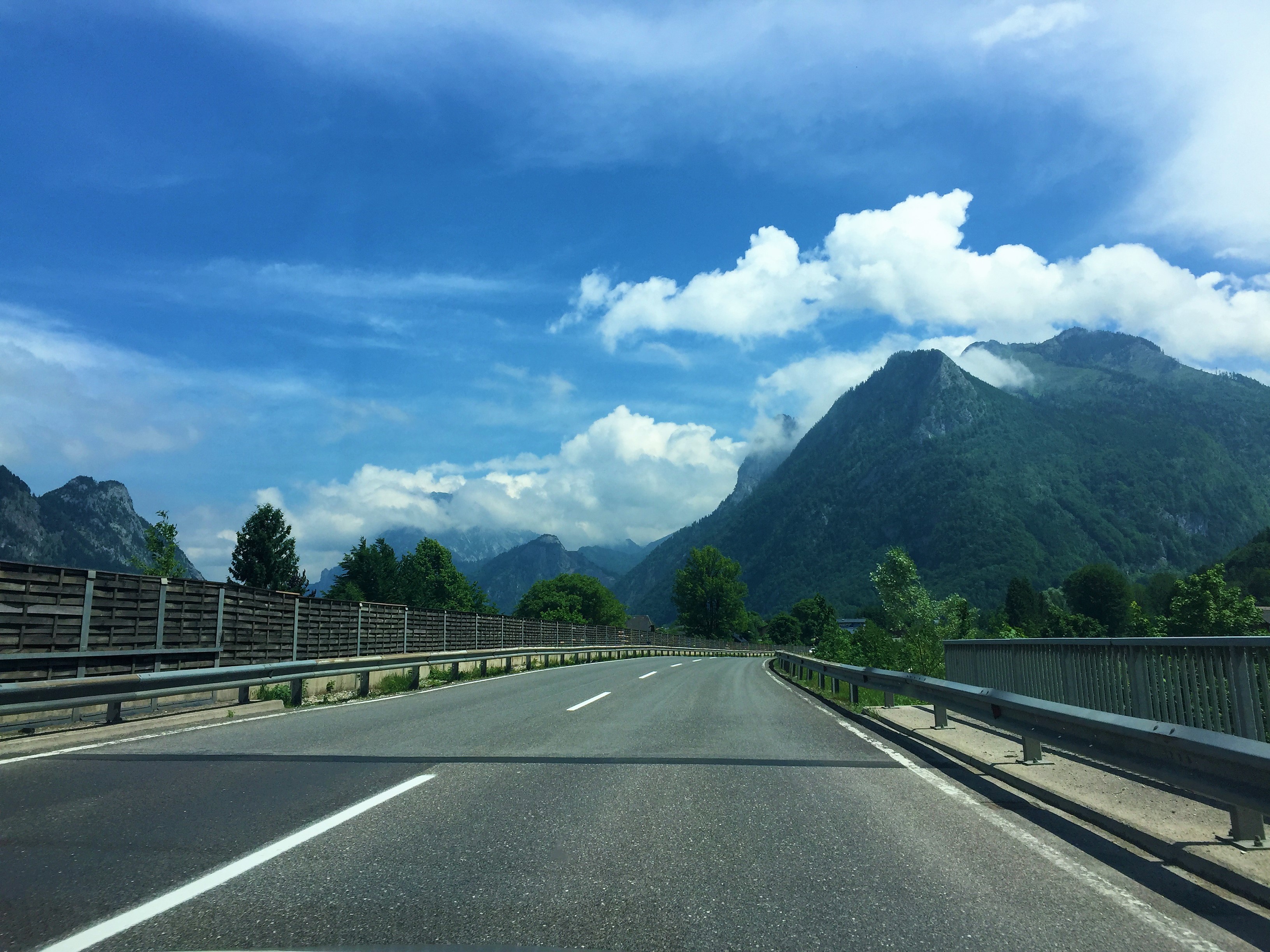


Budapest-Gosau: 5 hours, 542.9 km on M1 and A1. Tip: Need a game to pass the 5 hours? Play the license plate game! By the end of the trip we had found more than half of the license plates in Europe! 😀
Highway passes: 11 euro in Hungary, 8.50 in Austria. Purchase online or in gas stations.
Gosau-Hallstatt: 14.9 km via Pass Gshutt Str. / B166 and Hallstätter Landesstraße.
Brine Trail: 45-min to 1-hr hike to Skywalk Lookout.
Salt Mine Tour: 20 euro / ticket without cable car.
 thewanderingfellows