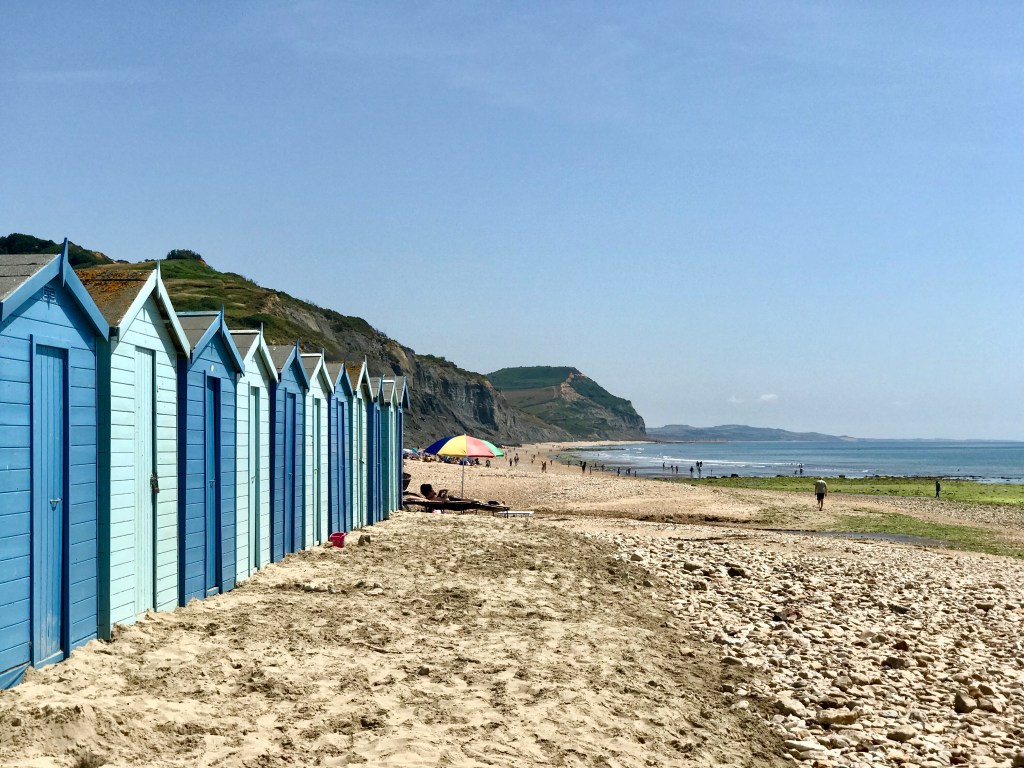
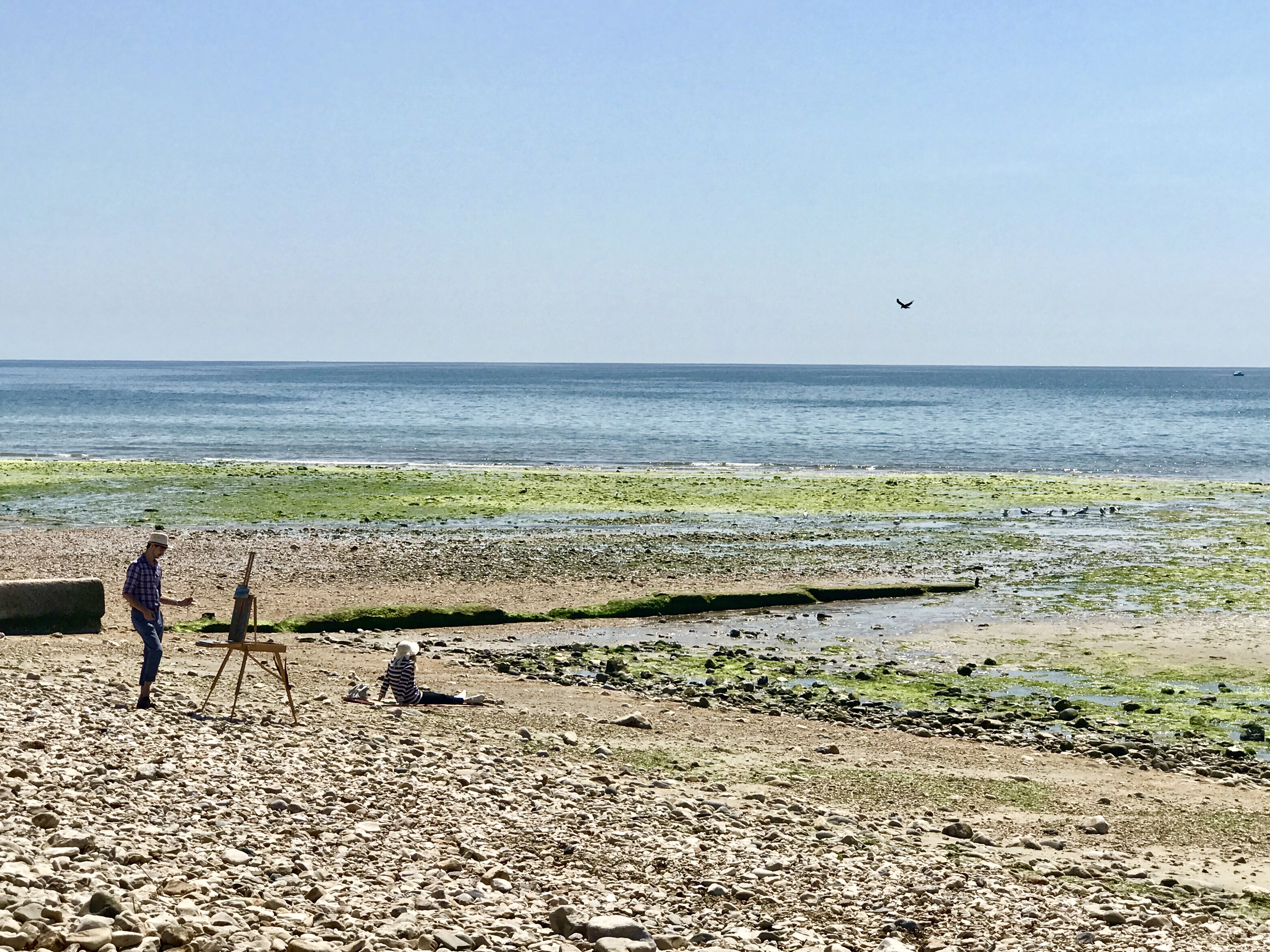
Just after 12:30 on a Tuesday afternoon, the English Channel dutifully retreated at the calling of Low Tide. From the shallow pebble beach we watched as grey waves sunk wearily to the horizon and left bare the slippery sea floor.
I took a few careful steps into the muddy wasteland, leaping over puddles lined with small crabs and snails. Slick seaweed and slime clung to rocks and coral like moss on old oak, and each step commenced a perilous balancing act.
We took our time walking along the beach, eyes scanning the exposed sand inch by inch for the slightest sign of ancient life — bone, tooth or shell — the fossilised remains of sea creatures from a time long forgotten.
When we first began planning our road trip along the Jurassic Coast, I was dead-set on going fossil hunting. Out of all the ‘fossil beaches’ on the Jurassic Coast, we chose to visit Charmouth for its history and fame as a fossil treasure trove. Visitors are encouraged to freely take any fossils they find along the beach — the reasoning being that with so many left on the shore after low tide, it’s better that they’re collected and enjoyed than destroyed by erosion.
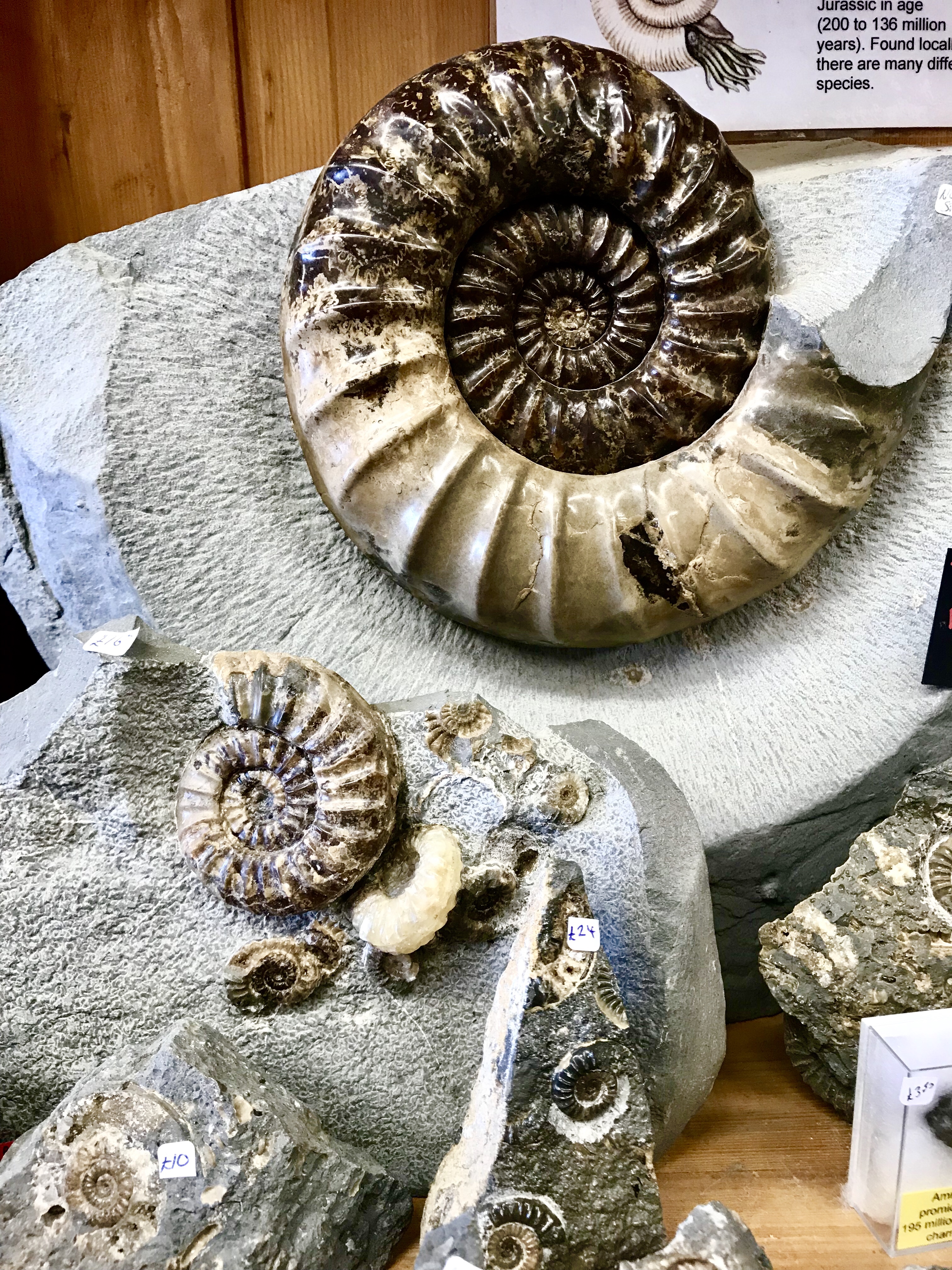
As we nearer Charmouth, I started dreaming of unearthing the fossil of a great sea monster, making the headlines with my discovery. I was keen to find an Ammonite, the most common fossil found at Charmouth. These alien, squid-like mollusks lived between the Jurassic and Cretaceous periods of history. Today, all that’s left of them are their spiral shells, ranging in size from tiny to gigantic. It’s said that you can easily find them lying in the sand, black and shiny in pyrite, or encased in clay or other sedimentary rocks.
Of course, what I wanted most was to find the fossil of an Ichthyosaur. I had read about these massive sea creatures of the deep and was fascinated. Although they once resembled modern-day dolphins, their sheer size and shark-like rows of teeth conjure up images of sea snakes and dragons. In fact, one of the most famous ichthyosaur skeletons is called Attenborough’s Sea Dragon, which is on display in the free Charmouth Heritage Coast Centre

Alas, our hunt at Charmouth was far from newsworthy — no ammonites and certainly no ichthyosaurs. However, I did find what appears to be petrified wood and a some sort of mollusk or clam fossil. And, to satisfy my new obsession, I bought a beautiful ammonite fossil from the Heritage Coast Centre.
I might not be Indiana Jones, but fossil hunting was a great time at the beach, a true learning experience and a salute to my childhood dreams. Don’t miss Charmouth Beach if you’re around the Jurassic Coast.
Fossil-hunting tips I wish I had followed:
- Read about Mary Anning, one of the most prolific fossil hunters in history. She was the inspiration behind the tongue-twister, ‘She sells sea shells by the sea shore’, and many of her discoveries were made at Charmouth and Lyme Regis
- Try to visit just after a storm, as it will have churned up the sea floor and exposed more fossils at low tide.
- Visit the Charmouth Heritage Coast Centre before you start, to learn the best techniques for identifying fossils and cracking open rocks
- Rent a hammer from the Centre to crack open those pesky rocks that might be hiding fossils
 thewanderingfellows