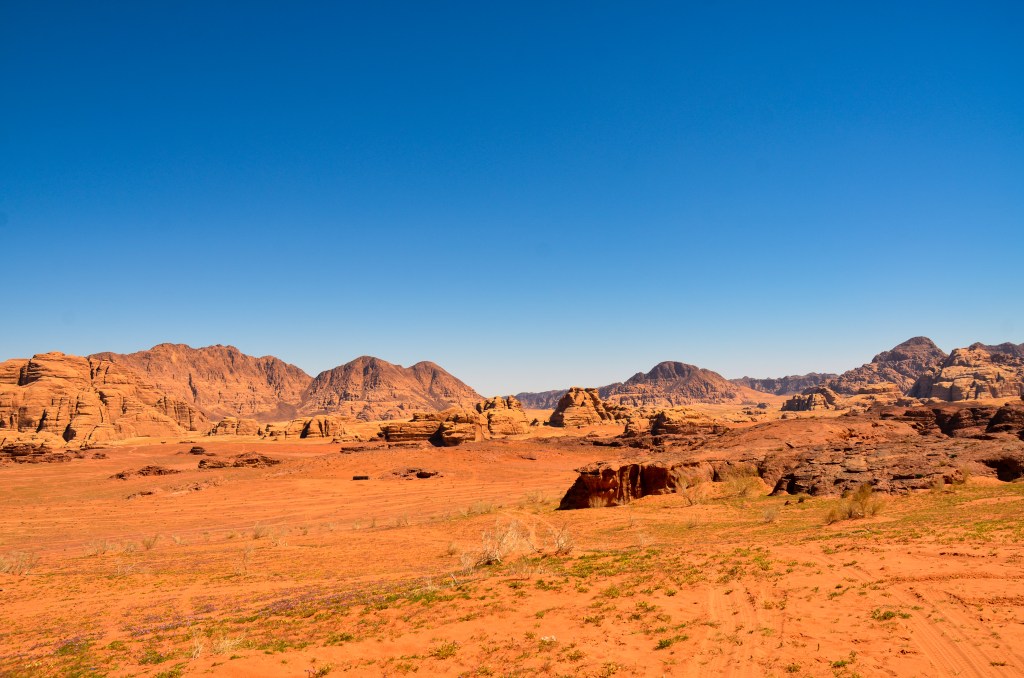
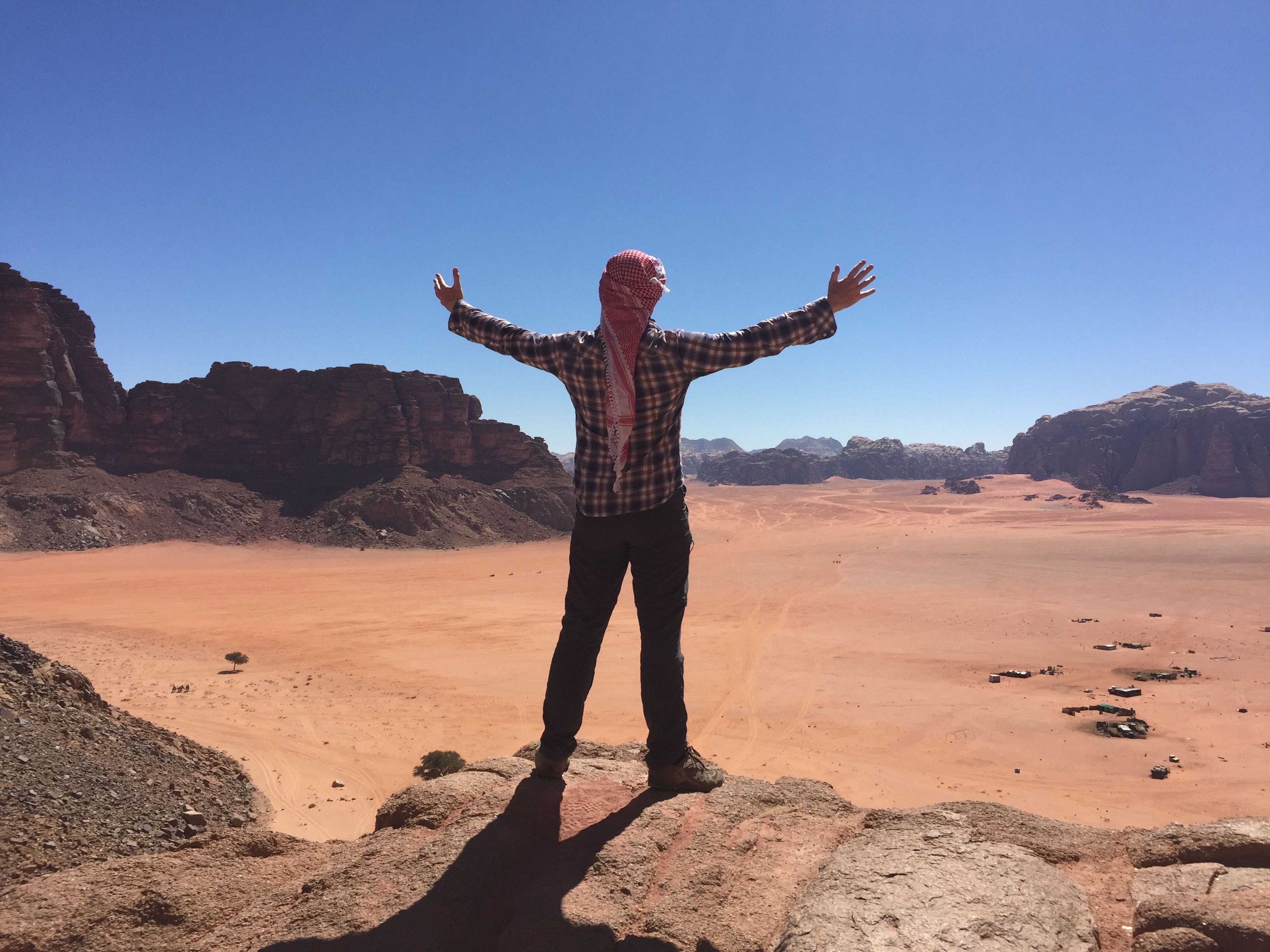
At the top of the canyon stood one lonely fig tree. Bleached and skeletal, ancient and weather-worn, its bowed branches pointed to the horizon of a breathless red world of dust, sand, rock and wind. A pale guardian marooned on Mars. At its feet, wild herbs fought for room in the cool shade of the tree’s branches — the only greenery for miles. From there, they spread like branches of a vein, revealing the steady trickle of spring water flowing from the base of the canyon wall.

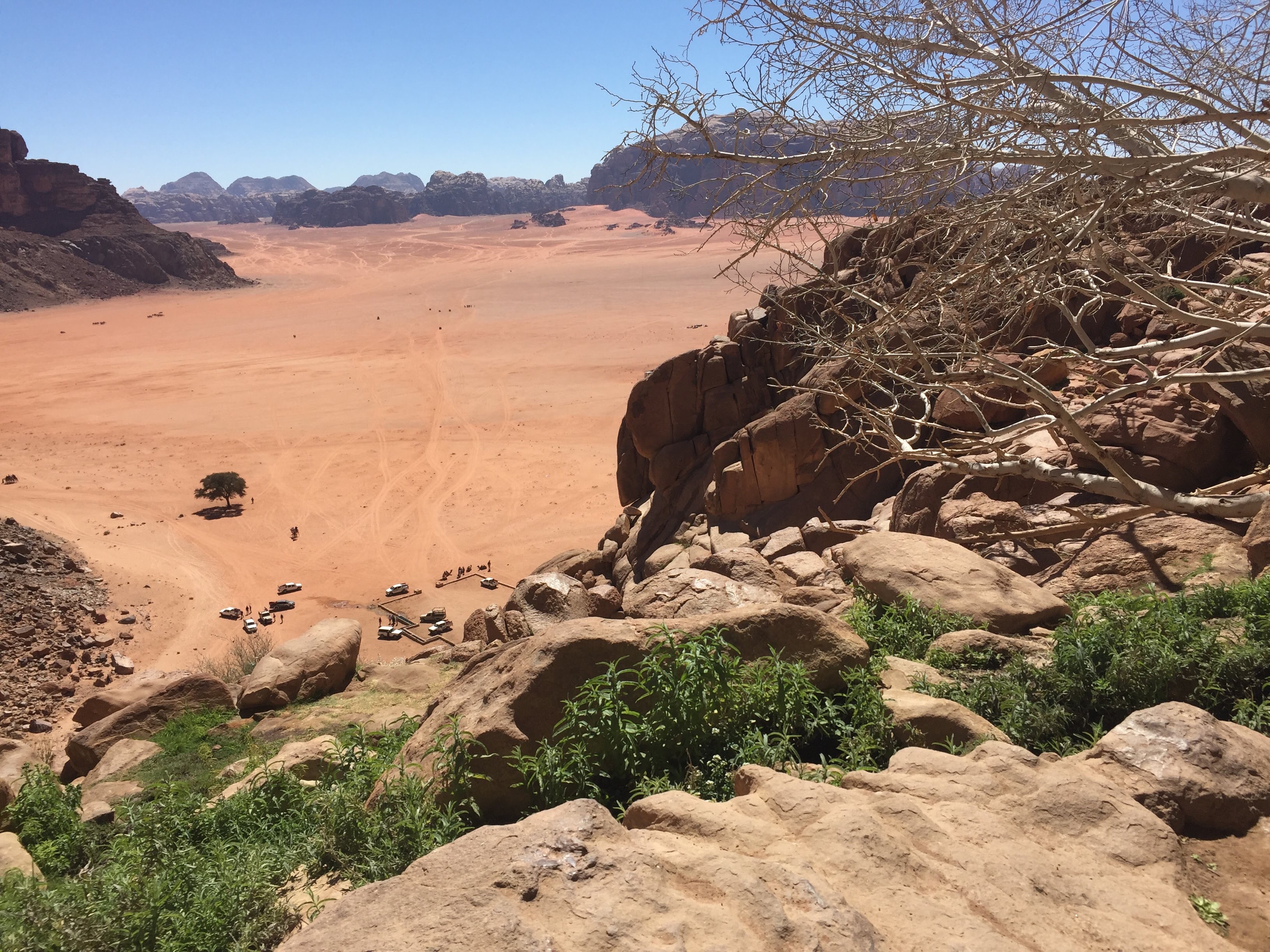
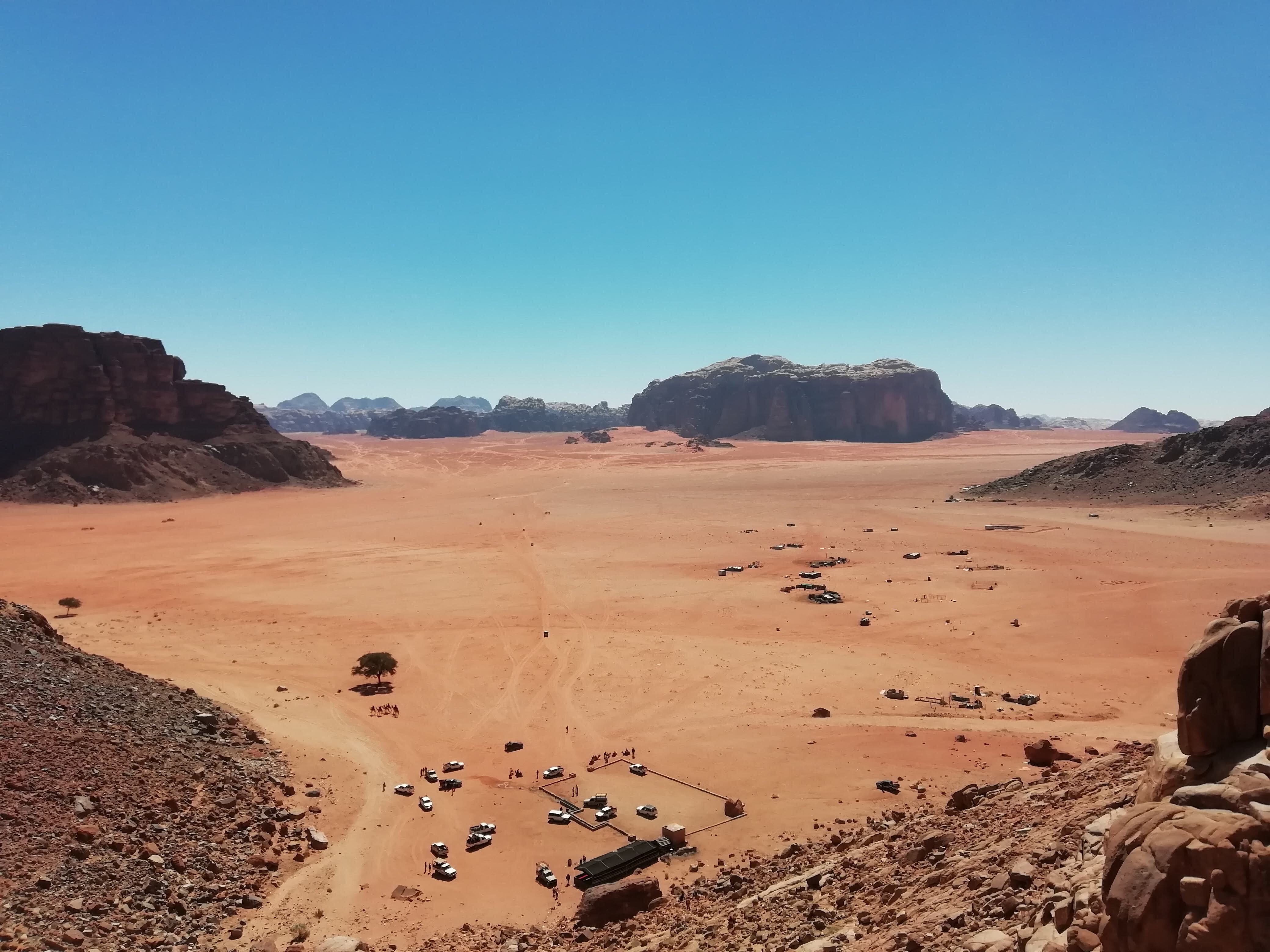
Down it flowed over the nooks and crannies of the canyon to the world hundreds of feet below. We watched miniature jeeps and camels move in slow motion, faces and bodies obscured by heatwaves and covered in red dust. But in 1917, our lonely tree and unassuming spring witnessed a different world entirely.
102 years ago, T.E Lawrence and Prince Faisal of Mecca stopped at the canyon to water their camels, not long before launching their attack against the Ottoman Turks at Aqaba base, a crucial moment in the Great Arab Revolt.
‘In front of us a path, pale with use, zigzagged up the cliff-plinth…From between trees, in hidden crannies of the rock, issued strange cries; the echoes, turned into music, of the voices of the Arabs watering camels at the springs which there flowed out three hundred feet above ground.’ – T.E. Lawrence, The Seven Pillars of Wisdom
And suddenly, as if in a dream, there I was exploring the same canyon and taking in the breathtaking view. Tracing the same petrogliphs with curious hands. Watering a very grumpy camel at the very same spring.
So how did I get here? I have my dad to thank for that. A passionate student of history, he used to recount the adventures of Lawrence of Arabia better than any book or film ever could (but I do remember falling asleep to the epic film as a young kid — so epic it seemed it would never end). Back then, I didn’t understand the history, but the idea of a vast, wild desert and the beautiful cultures of the Bedouins and Arabs stuck with me.
Inspired by my father, I set off to explore the famous Red Desert of Wadi Rum, Jordan. Last March, my fiancé booked an incredible one-day tour with Bedouin Directions. Lawrence’s Spring was the first stop of many, and we climbed over sharp boulders and battled loose clay to reach the top of the canyon. The view was incredible. The perfect introduction to Wadi Rum.
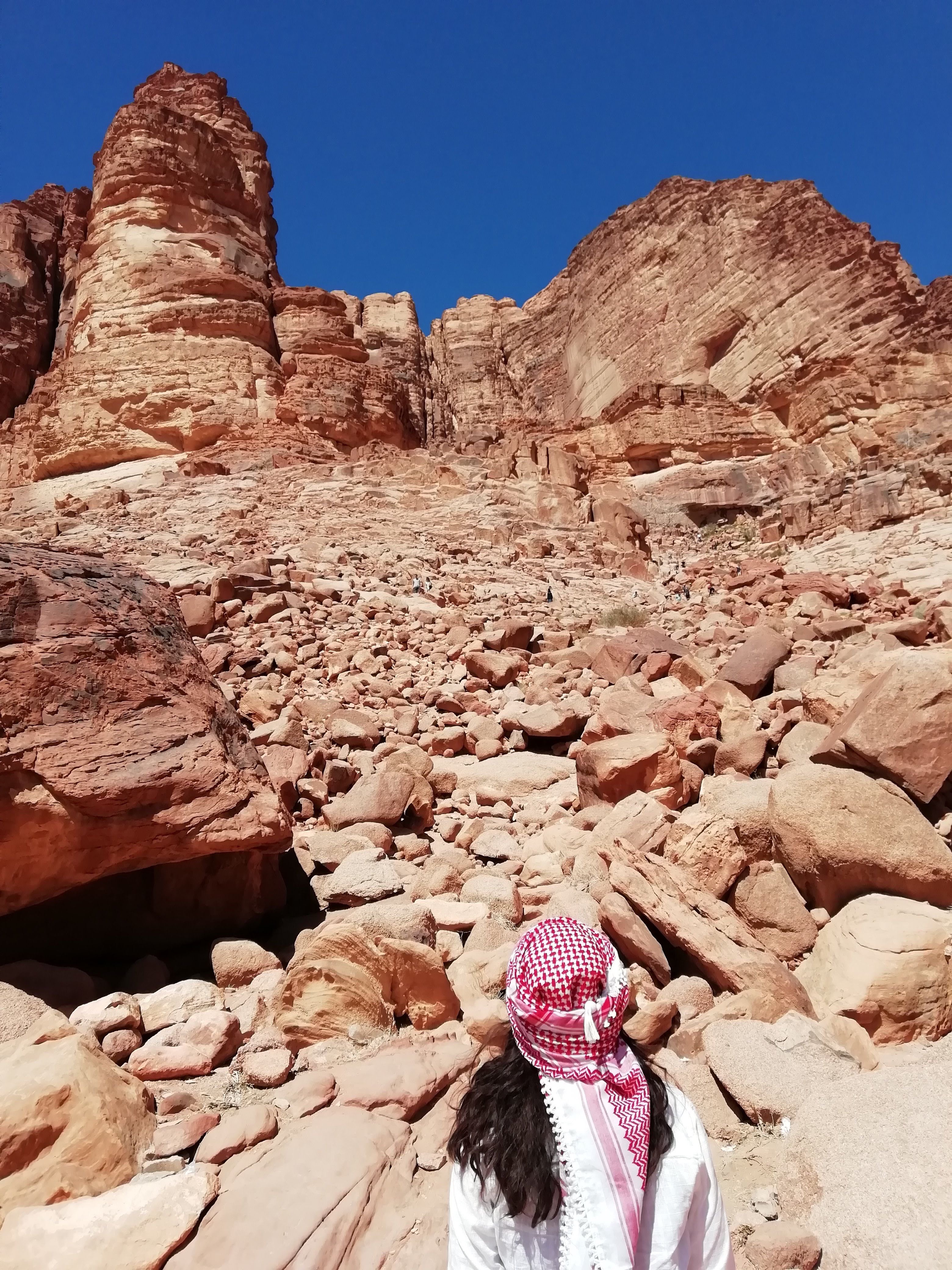

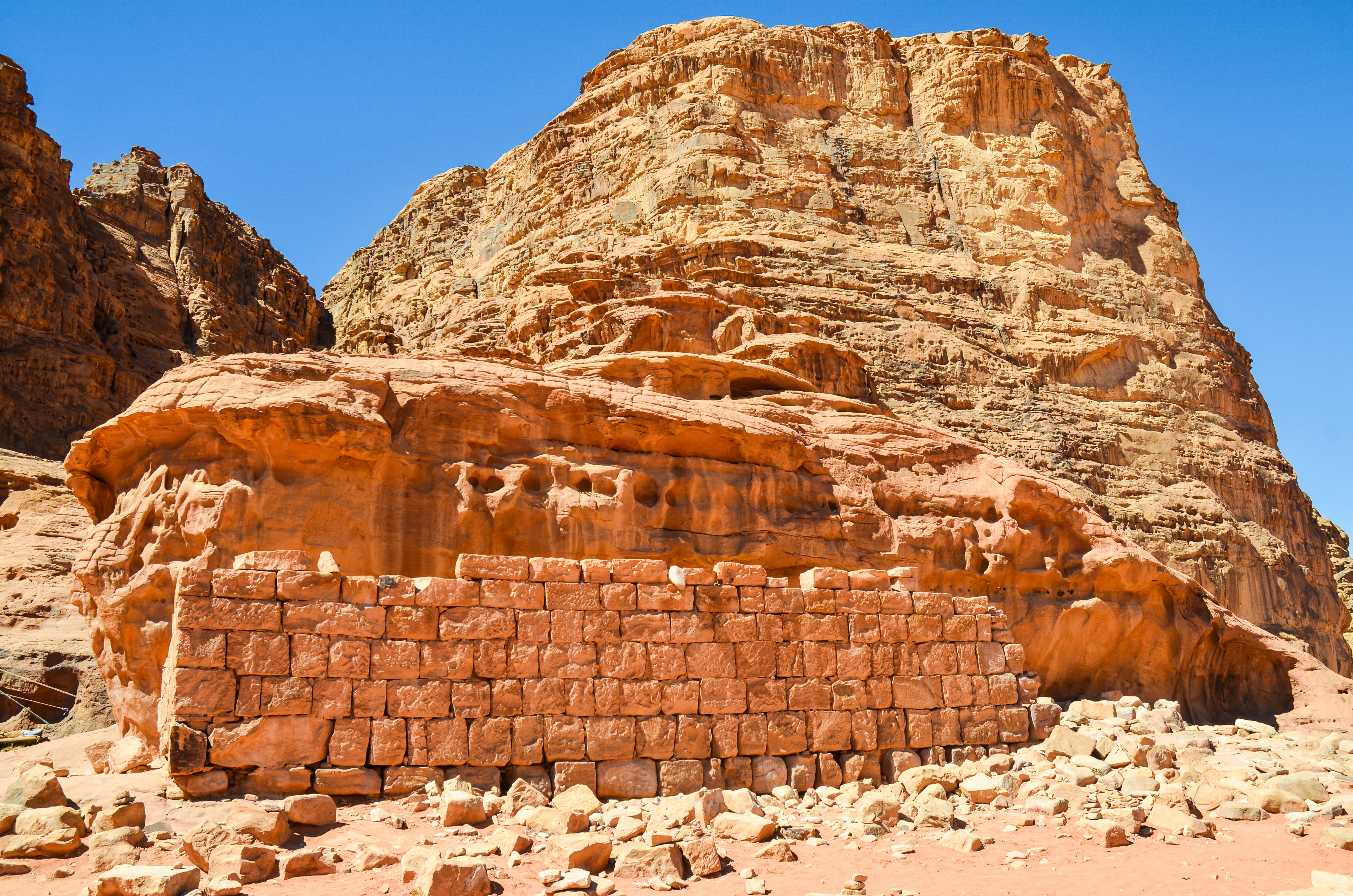
Later on in the day, we stopped at the House of Lawrence, a crumbling wall of clay bricks that shone like gold in the sunlight. Humble as it seemed, these bricks were all that remained of ancient Nabatean ruins. Lawrence reportedly stayed here for some time and used it as a storage unit for ammunition during the revolt.
Step by step by camel
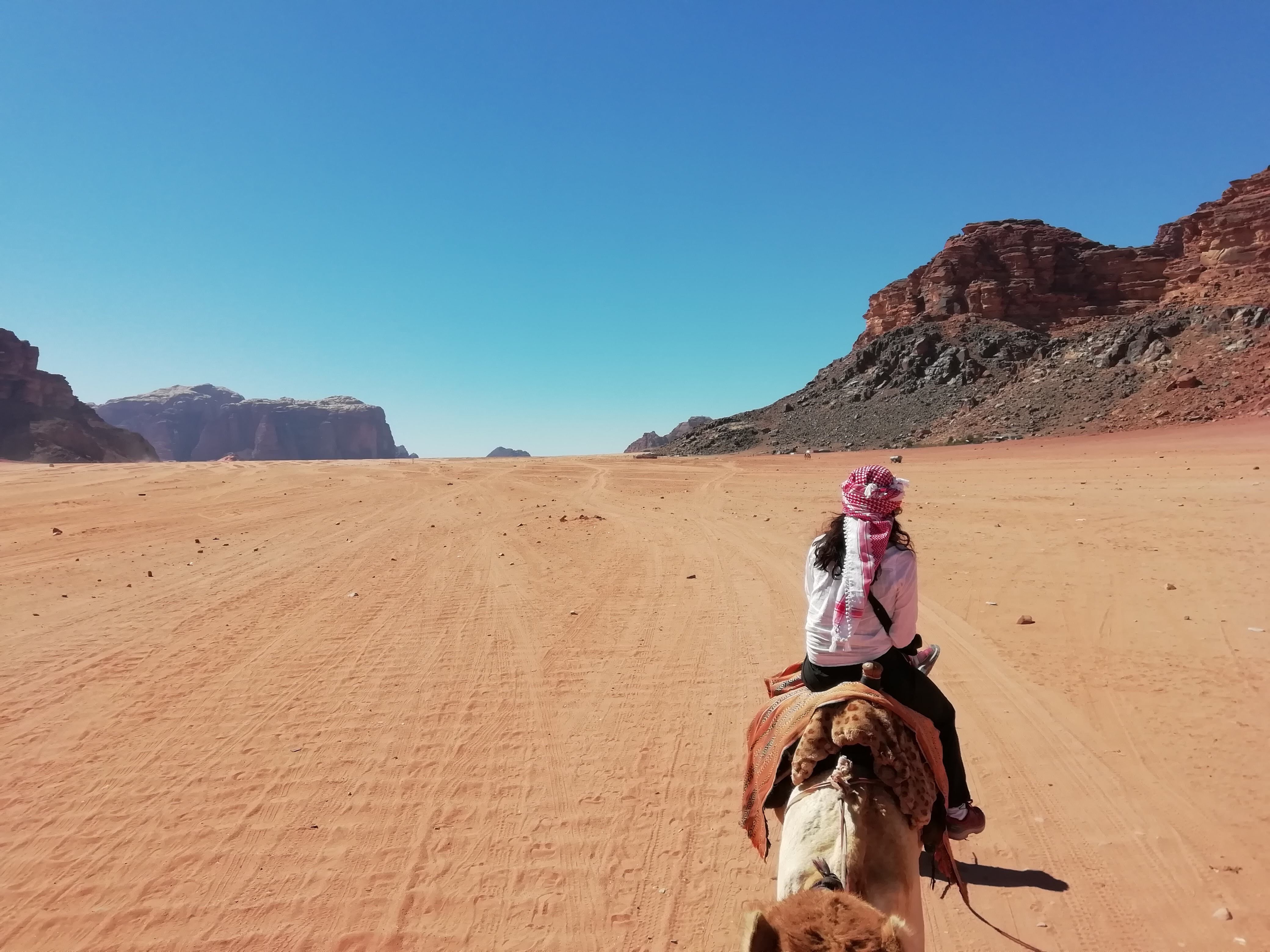
Lawrence travelled by camel throughout his time with the Bedouin and Arabs, even claiming to have ridden 1,400 miles on camelback in June of 1917 alone. While the majority of our time in Wadi Rum was spent in a bouncy jeep, we did enter the desert by camel.
And what an entrance it was! “Clop, clop, bloughoughga, clop clop.” I’ll never forget the sound of our camels — their heavy, flat hooves in the soft sand, the tiny bells banging against the saddles…and the disgusting sound my camel made every time we approached another camel party!
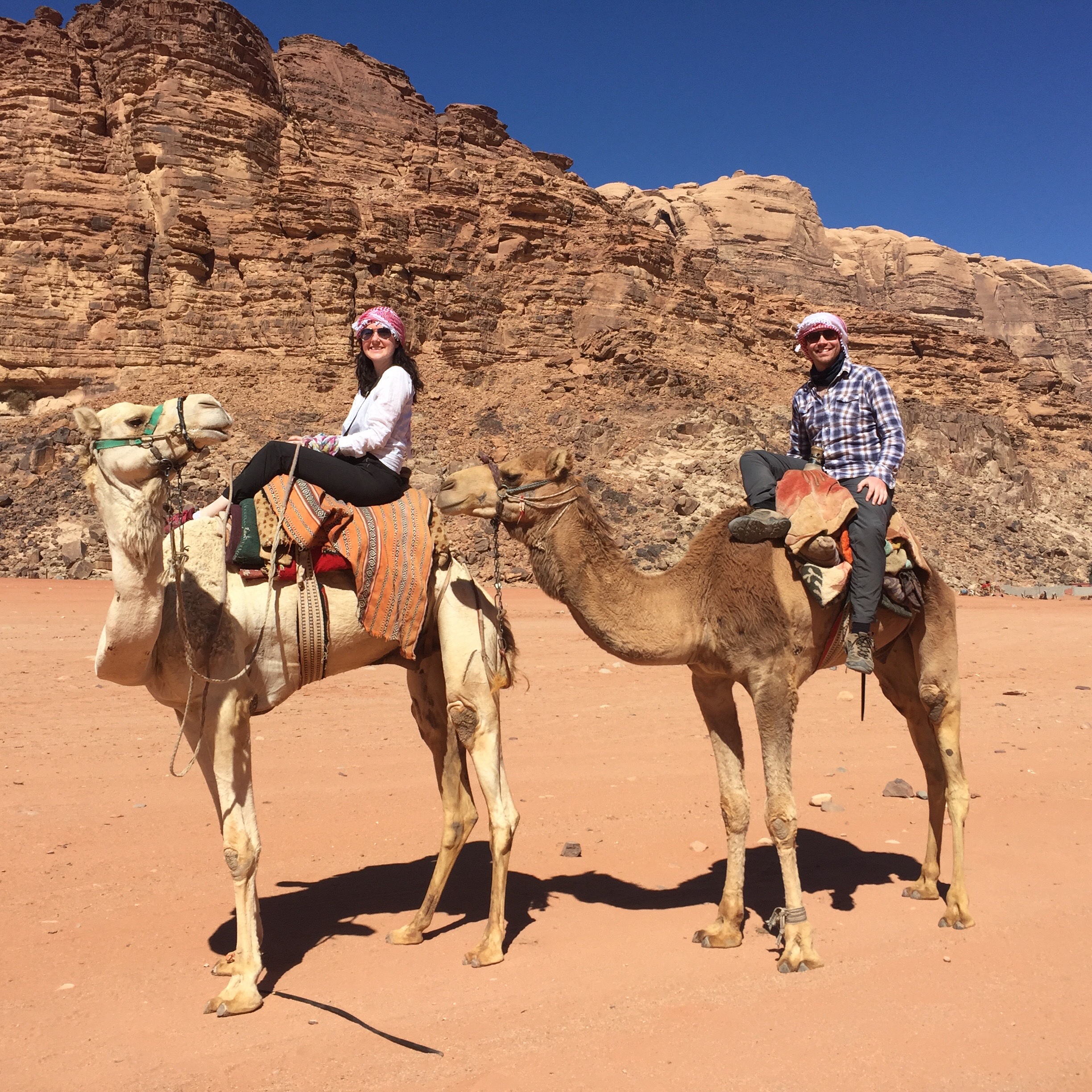
In the end, we didn’t brave any battles or sand storms, nor did we suffer quicksand or thirst, but I like to think that we embraced the desert of Wadi Rum as Lawrence might have so long ago. We took off our shoes to feel the hot sand between our toes and sipped spiced tea with the Bedouin. We ran up massive sand dunes just to run back down, and scrambled up smooth canyon walls just to stand on top of the world. In many ways, the desert of Wadi Rum, the desert of Lawrence of Arabia, hasn’t changed and I hope it never will — remaining always a window to history.
 thewanderingfellows
One response to “In the sands of time”
[…] Next up: More on Wadi Rum in the Sands of Time […]
LikeLike