Searchers after horror haunt strange, far places.-HP Lovecraft
The big city calls your name. Its lights are alluring, completely transfixing and ultimately treacherous. In the safety of the light, the senses weaken and the mind grows dull. It’s not long before desire for adventure creeps in, and a throbbing ache to see the stars again becomes all-consuming. Darkness, shadows, the opaque mist in the mountains; they call your name too. It’s a different call, a siren’s call, but no less alluring.
Step away from the security of the lights. Close your eyes and let the world fall away. The senses awaken, and from the depths of an inky black abyss emerge crawling, ancient, primal fears. Perhaps we fear the dark because it is the best source of inspiration. It is in the dark when we dream up the best stories; thrillers, ghost stories, and nightmares of alien visitations. The distant whispers and prickly goosebumps remind us that our world isn’t always as it seems.
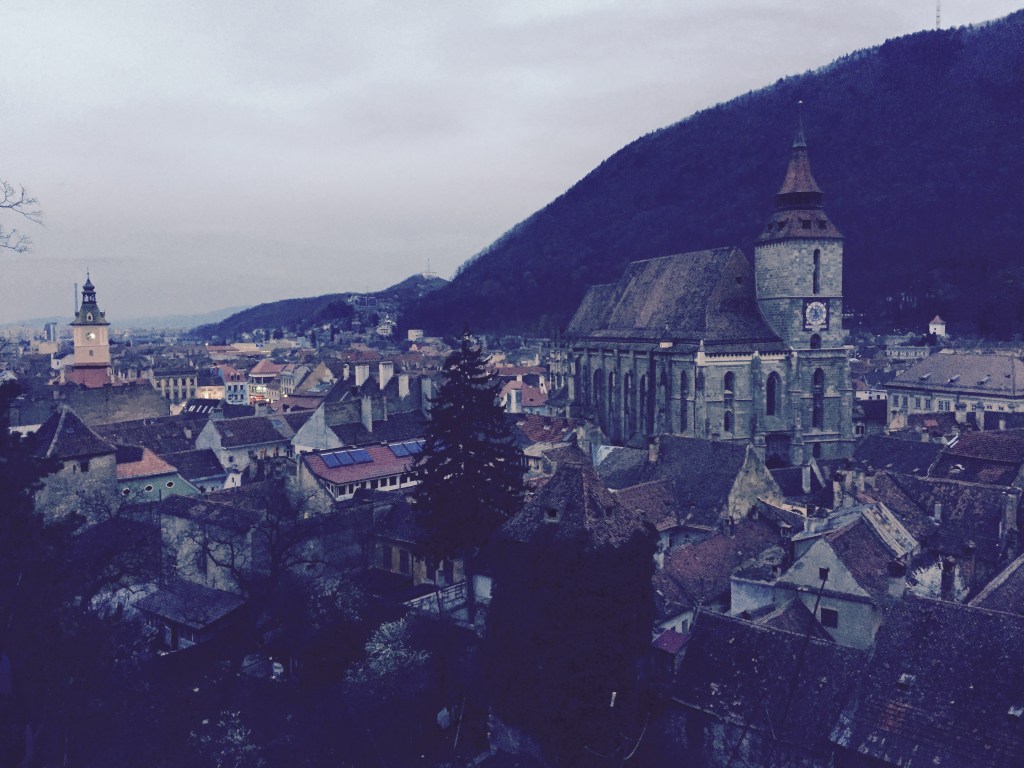
I went to Transylvania in April 2016 to chase shadows. I had hoped to draw inspiration from the region best known for the very best of monsters- vampires, werewolves and the walking dead. I wanted to walk through a forest where the shadows grew long. And I did. Transylvania was everything I had hoped for, and so much more.
Hidden away within the Carpathian Mountains in the center of Romania, it is a region steeped in mystery, built upon a rich history, and blessed with unspoiled wilderness. Ruled by Hungarian kings for centuries, it has always been Erdő-elve, now Erdély; the land beyond the forest. Saxons were invited to settle the land and to stand guard against the Ottoman invaders. To this day, seven cities in the region bear the striking influence of Saxon architecture and culture. Centuries later, Erdély was given to Romania, but the Hungarians never left. Today it is a land of three very different, but interweaving cultures.
Cluj-Napoca
I have two very vivid memories of this little university town: The first, is standing in the darkened nave of the Dormition of the Theotokos Cathedral. A faintly lit chandelier gave off the only source of light, most of it focused on a faded picture of the Virgin Mary. Then, out of the shadows appeared the weathered features of desperate souls, and I have never before witnessed such sincere and intense devotion as when they knelt before the altar, some of them on all fours.
The second, is the colors. The world in Transylvania is painted with bright blues, vivid reds, and dramatic yellows. From daffodils in the Easter market to ornately-tiled rooftops, every street seemed to burst with color and life.
Hostel: Retro Youth Hostel. 3/5 stars. Very cute, central location with free breakfast, but absolutely ridiculous service. We were given one key for a room of 6 people. Needless to say, we got locked out twice, and the host didn’t seem to understand why we were annoyed.
Best pubs: Joben Bistro Steampunk pub (may need a reservation), Submarine Steampunk bar (notice a theme here?) and Moonshine.
Restaurants: Matai Corvin for traditional Transylvanian/Hungarian cuisine


Day Trips from Cluj-Napoca
Beware the Strigoi!
Tales of UFO’s, ghost sightings and other unexplained phenomenon have turned a seemingly normal forest into a national treasure and tourist hotspot. Locals have long refused to enter the forest, out of fear of supernatural beings, or mainly, the ghosts of peasants who died in the forest. They also warn their children of the Strigoi; the original inspiration for our modern-day vampires. These are the walking dead who silently wander the earth and prey on the living.
Today Hoia-Baciu is known as the “Most Haunted Forest in Europe.” Visitors to the forest tell tales of mysterious rashes and scratches, auditory hallucinations, and electromagnetic activity. It is said that the air sucks the energy out of the living, and, out of mobile phones.
While I wasn’t brave enough to choose a night tour, the daylight did little to banish the goosebumps. Every step only seemed to bring me closer to the clutches of the shadows. Garishly twisted branches with finger-like thorns seemed to claw at me in the thick, suffocating silence of the forest.
Those who choose to explore the forest alone should be wary: There are no clear trails and the woods go on for miles. And, there are more than Strigoi in these woods, as we stumbled upon a few campers (who did not look too pleased to see us). Stick with a guide from Hoia-Baciu Tours.


Dating back to antiquity, this underground treasure served as a valuable source of table salt for Transylvanians until the late 19th century. After its closure, it became a reliable -if not creepy -bomb shelter during WWII. Today, its deep mines and eerie black lake make for a top tourist attraction just 40 minutes from Cluj-Napoca.
My friend and I skipped the amusement park rides, but we were eager to explore the largest chamber in the mine. We crossed a bridge, 90m high, to look down into Maria Terezia mine, 120m (394 feet) deep in the heart of the earth. Once we made it to the bottom, we paid a small additional fee to take a row boat around the bizarre little island composed of salt waste and odd wooden structures.
Drifting over the inky water, we let our fingers brush against the wet, salt-covered walls.
I closed my eyes and for a brief moment, I imagined that I was alone in the mine, trapped in the endless darkness, drifting through a silent, black abyss.
The mine truly feels like an alien world.


Step into a science fiction novel and explore the area around Cluj-Napoca, Translyvania. Bask in the colors, dance with the shadows, and let the world fall away for a while.
Stay tuned for Part Two: Dracula’s Castle!
 thewanderingfellows
One response to “Chasing Shadows in Transylvania: Romania, Part One”
Ooo, looks so picturesque!!
LikeLike