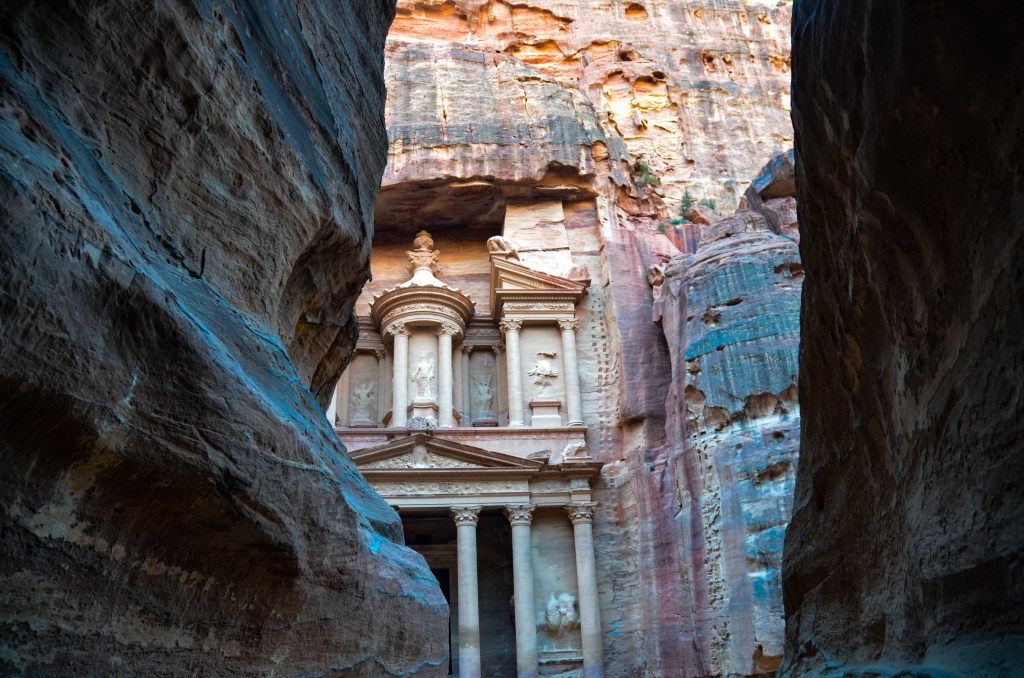
The sun was newly born in the dry, morning air but the land felt older than time. It stretched out around us for miles, the horizon running away, rising and falling over sandstone boulders, dashing behind distant red-clay cliffs. Each step in the dusty sand took us farther back to another age. Ancient dwellings and forgotten temples of stone called out from the rock from which they were bound. Whispers of a civilisation long dead — left to the wind and desert.
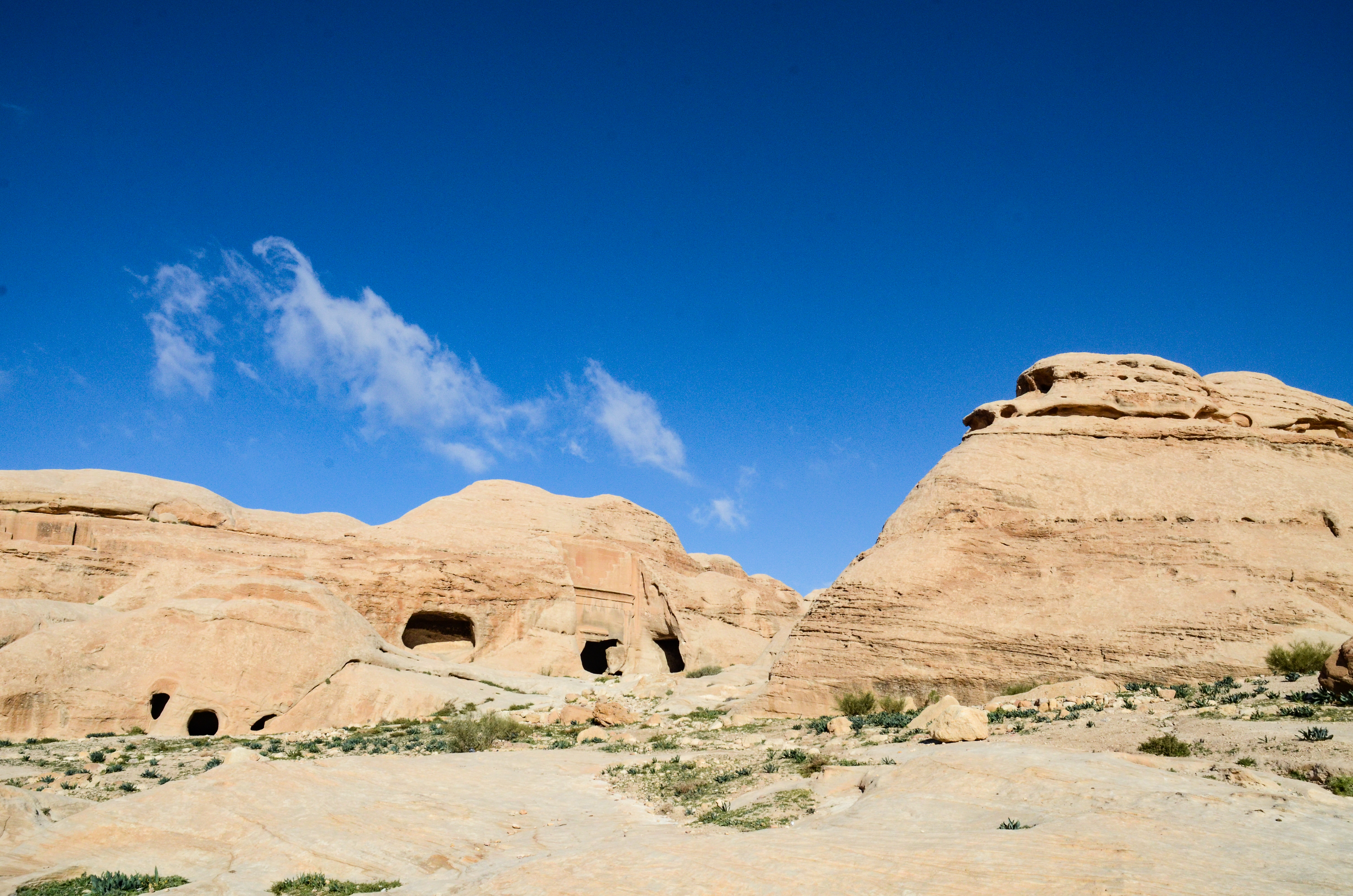
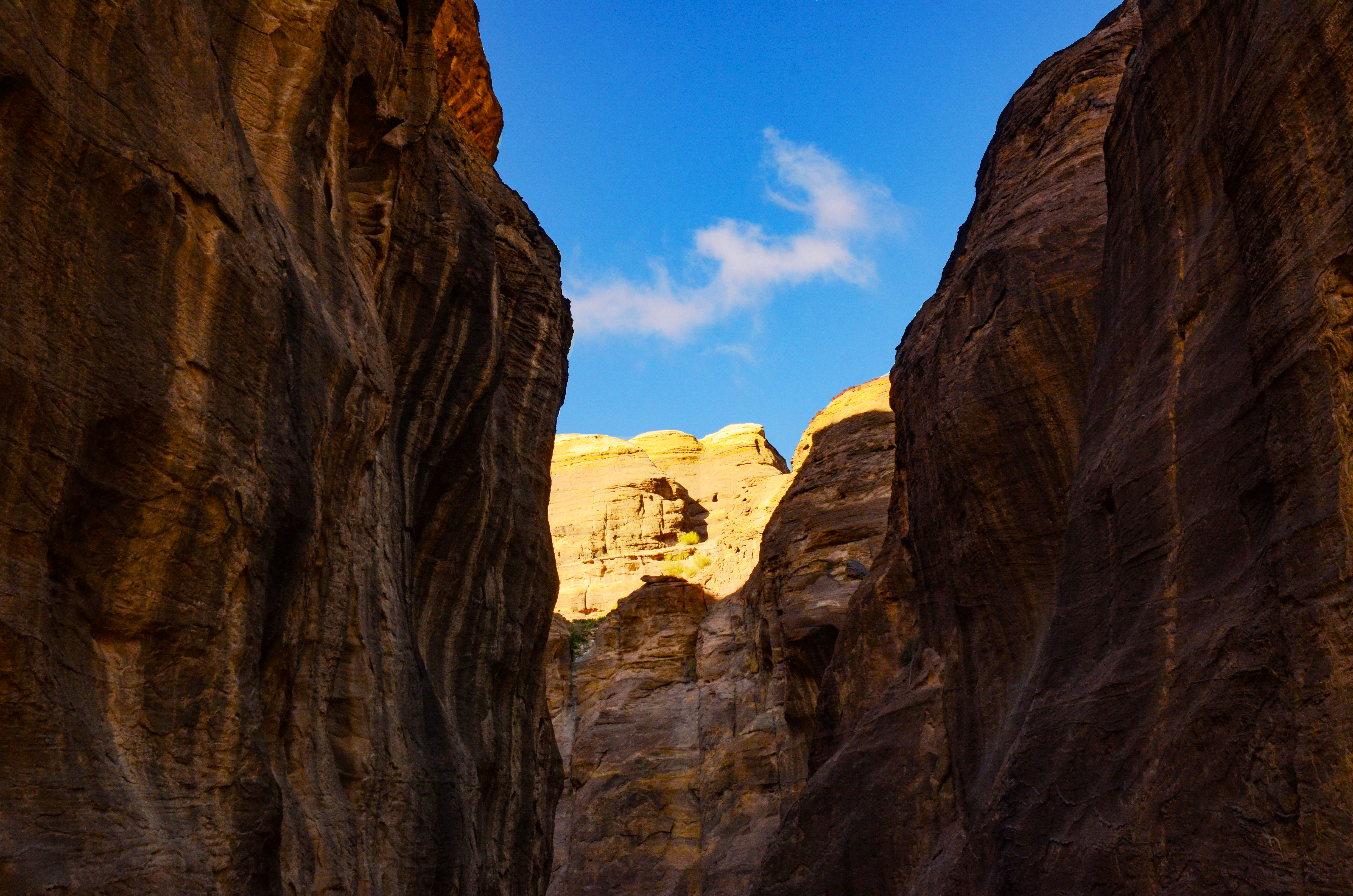
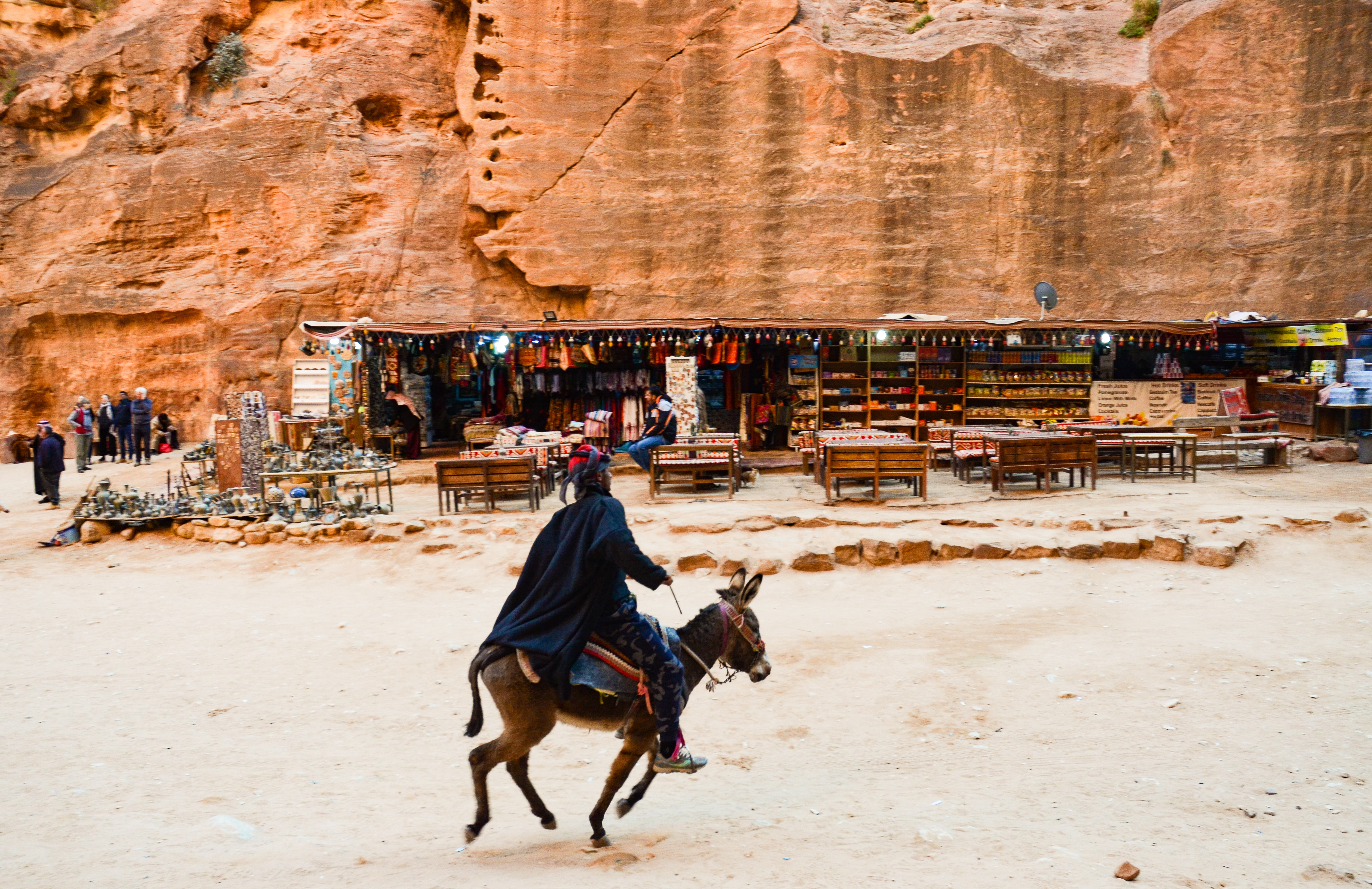
We entered the belly of a deep, narrow canyon called the Siq (‘the shaft’ in Arabic). The path led us through curves and bends in which the canyon would narrow or widen, either opening up into a great big blue sky, or closing inwards to blanket us in shadow. It felt like a secret path, all our own, despite the other visitors around us. We passed by curious carvings in the rock and resting Bedouins, before making way for a speeding legion of camel, donkey and horse-bound tourist carts. Whether we went by foot or hoof, we were all following the time-worn road to the Rose City — the very same taken by the Romans, Byzantines and Crusaders long, long ago.
As we rounded a curve in the path, the Siq slowly and dramatically revealed Al-Khazneh, the Treasury. First we spied a column, then the roof, until the entire temple stood before us in all its glory. We stood captivated for some time, taking in the intricate details of the statues and carvings.
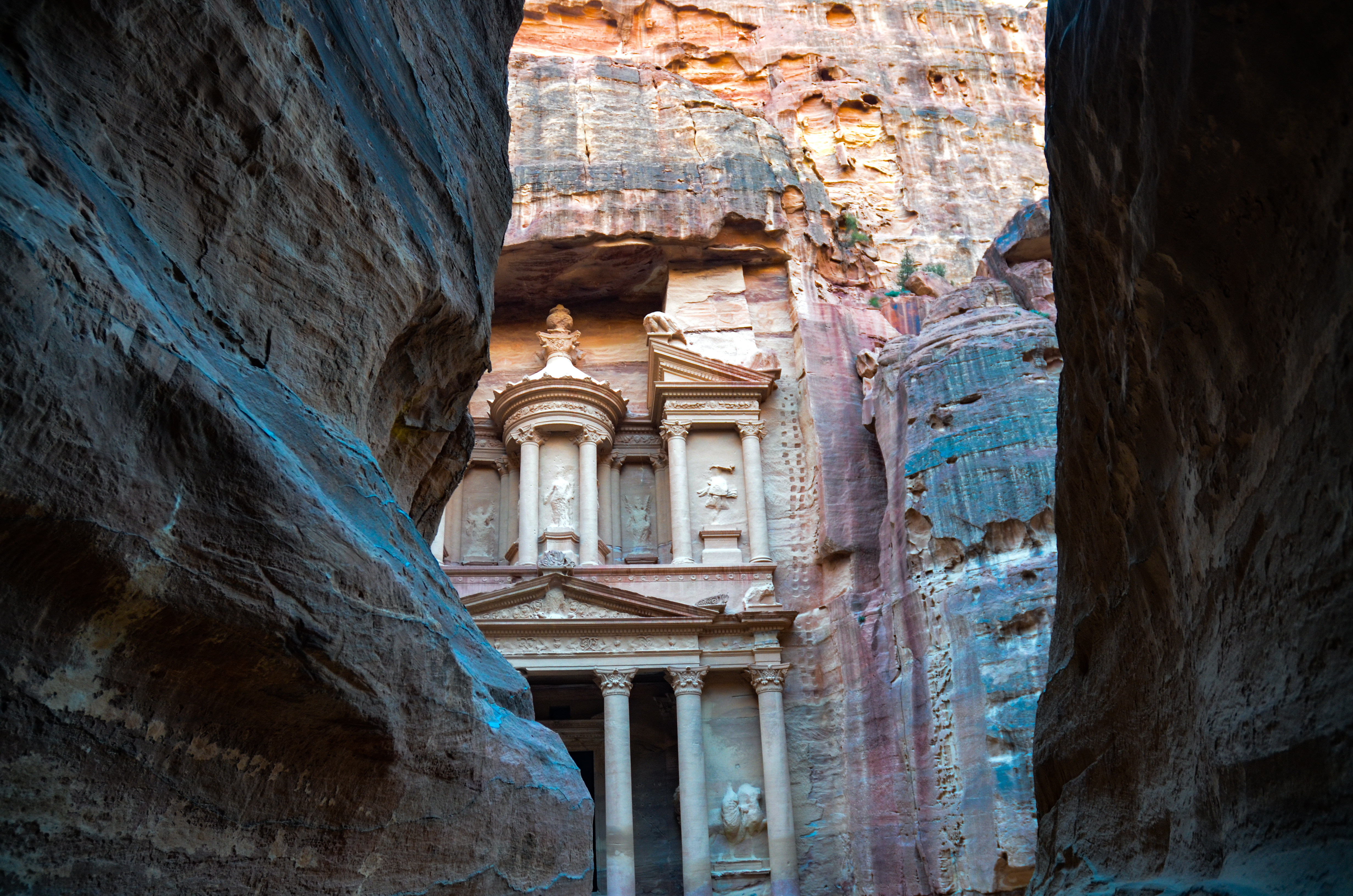
Years later, that scene remains burnt into my memory, just as vivid and spectacular as it was on that day. Knowing that I was staring up the same rose-coloured temple that the Nabateans had so masterfully carved into the cliff thousands of years ago, was a wonder to behold.
In March 2019, Patrick and I spent two incredible days in Jordan’s ancient city of Petra. After a stunning road trip from the capital city of Amman along the King’s Highway, we arrived at the Sharah Mountains Hotel in Wadi Musa late into the evening. That night, we ventured out into the desert just after dark and visited Petra by Night, an incredible experience.
In our bright and early hike the next day, we saw all that we had missed in our candlelit experience the night before. The sun-drenched path took us past the first of the many Nabatean ruins on the trail leading into the Siq — the incredible Obelisk Tomb. Built in the first century BC, the four obelisks and centre statue represent the the five people buried within. Walking past it in the day gave me goosebumps, just as it did the night before, and I wondered who lay within those heavy stone tombs.
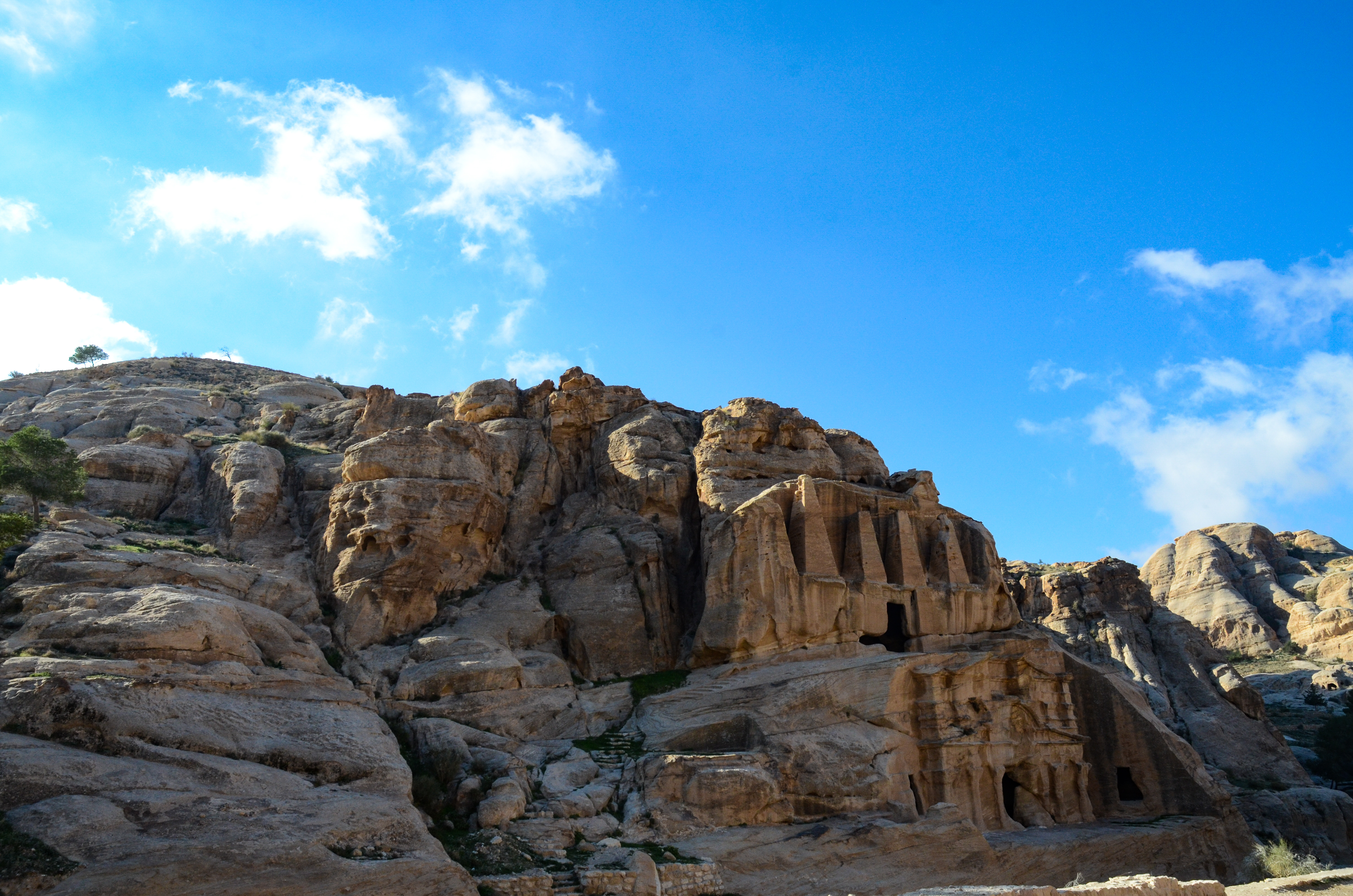
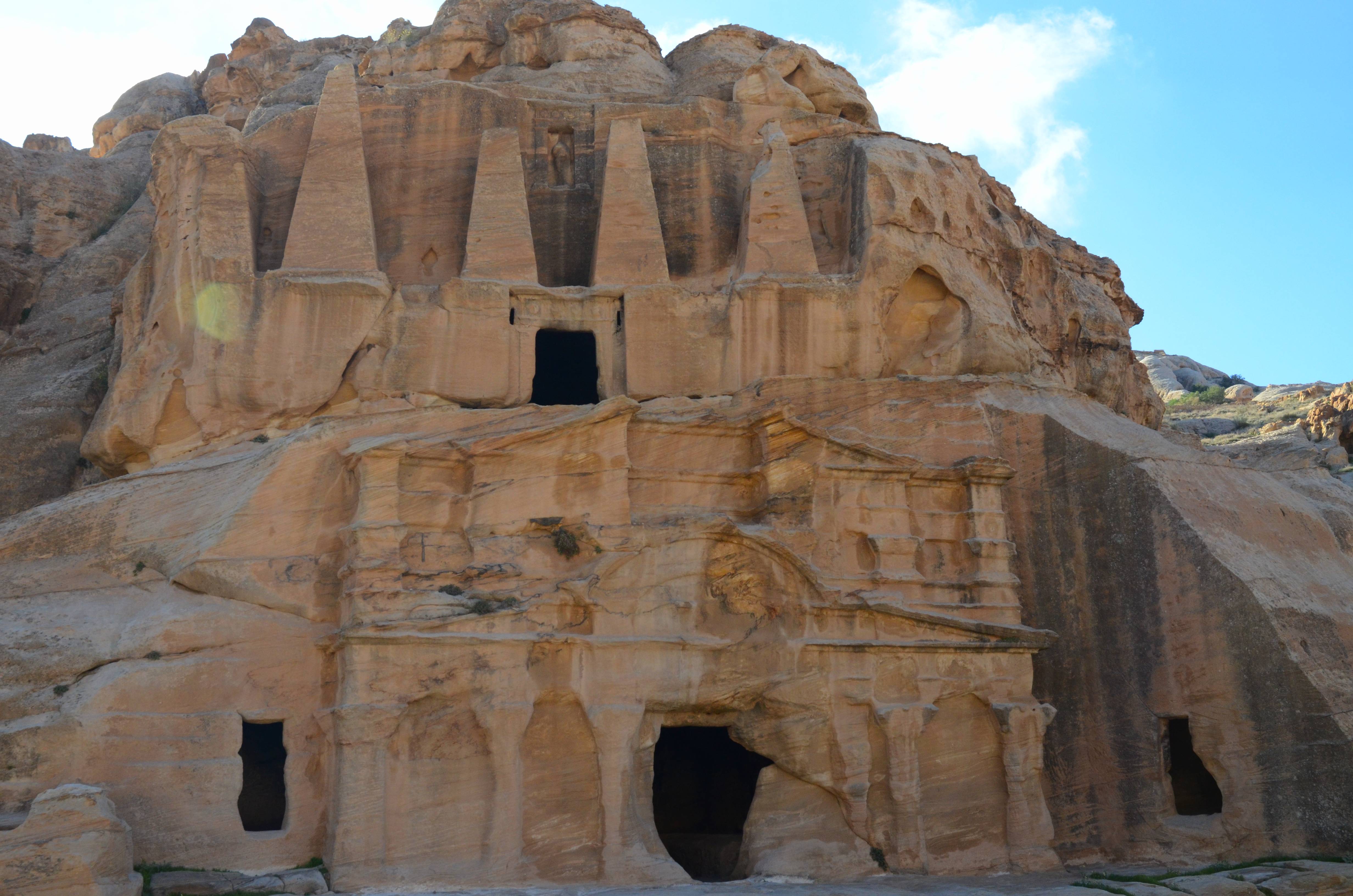
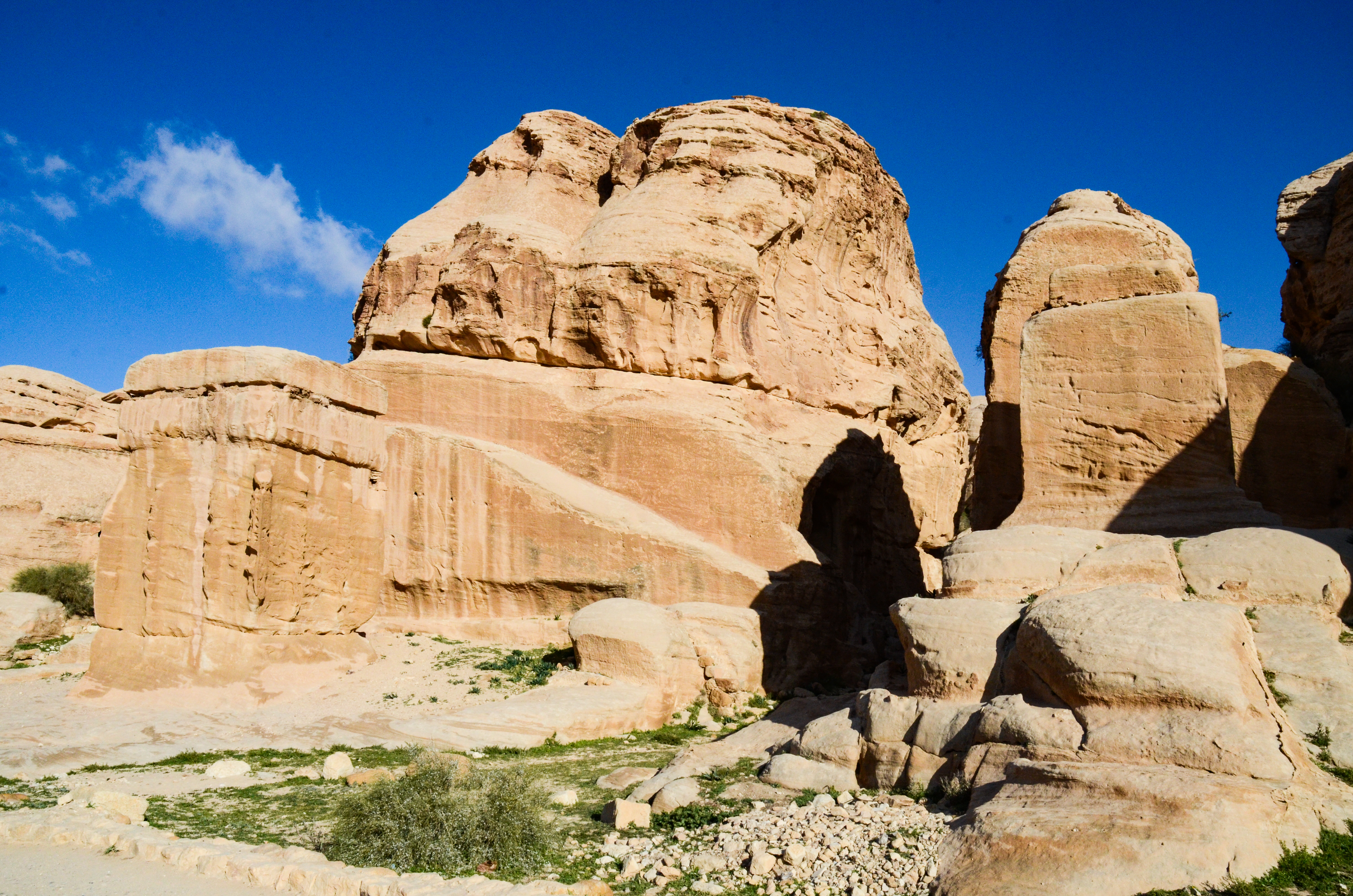
Next, we saw the three monolithic Djinn Block Tombs shoot out of the desert before us. Tall and almost perfectly square, it’s a wonder how the Nabateans were able to so expertly carve them out of the rock. The Bedouins gave them their name, as they see them as the home of the ‘djinn’ — what we might call ‘genies’ in English. Looking at them from below, it was easy to see how they might harbour an angry or mischievous spirit.
The Siq alone is a natural wonder to behold. Slicing right through the red canyons, this beautifully curved gorge makes for a fantastic hike. But even here, we were able to spot remnants of Nabatean innovation. Aqueducts that once brought vital drinking water and irrigation to Petra still line the path through the Siq — along with eerily eroded statues.
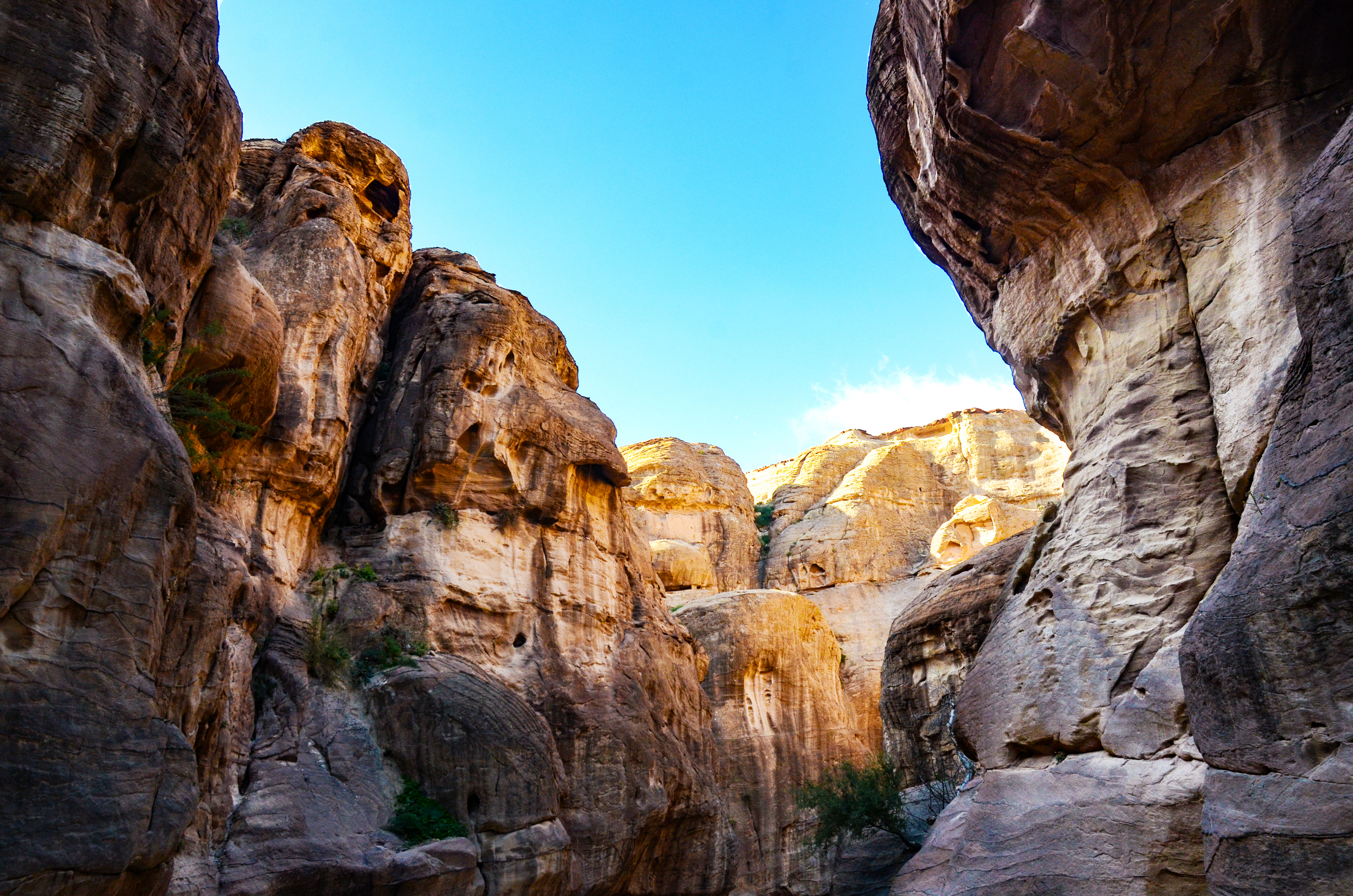
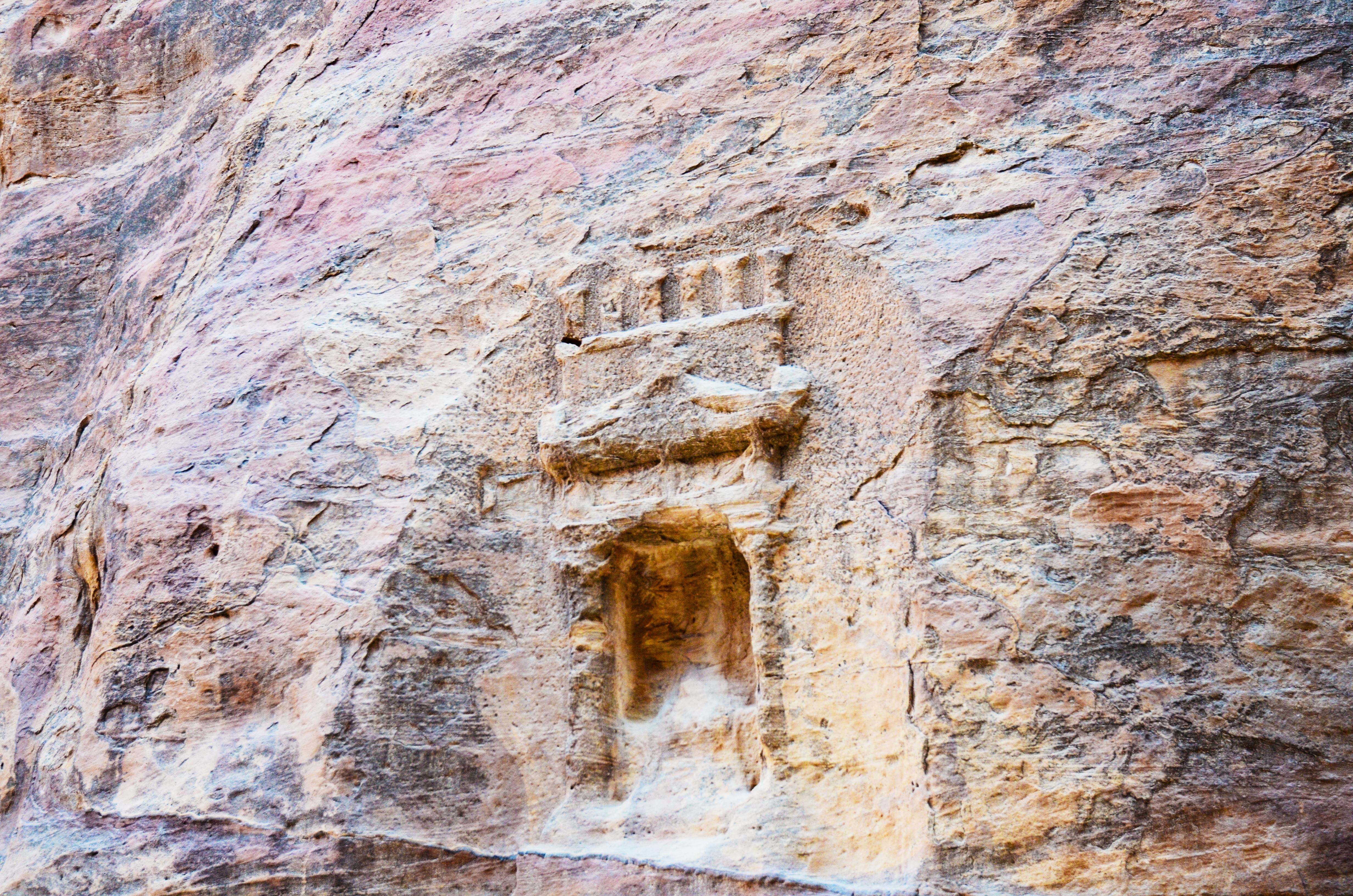
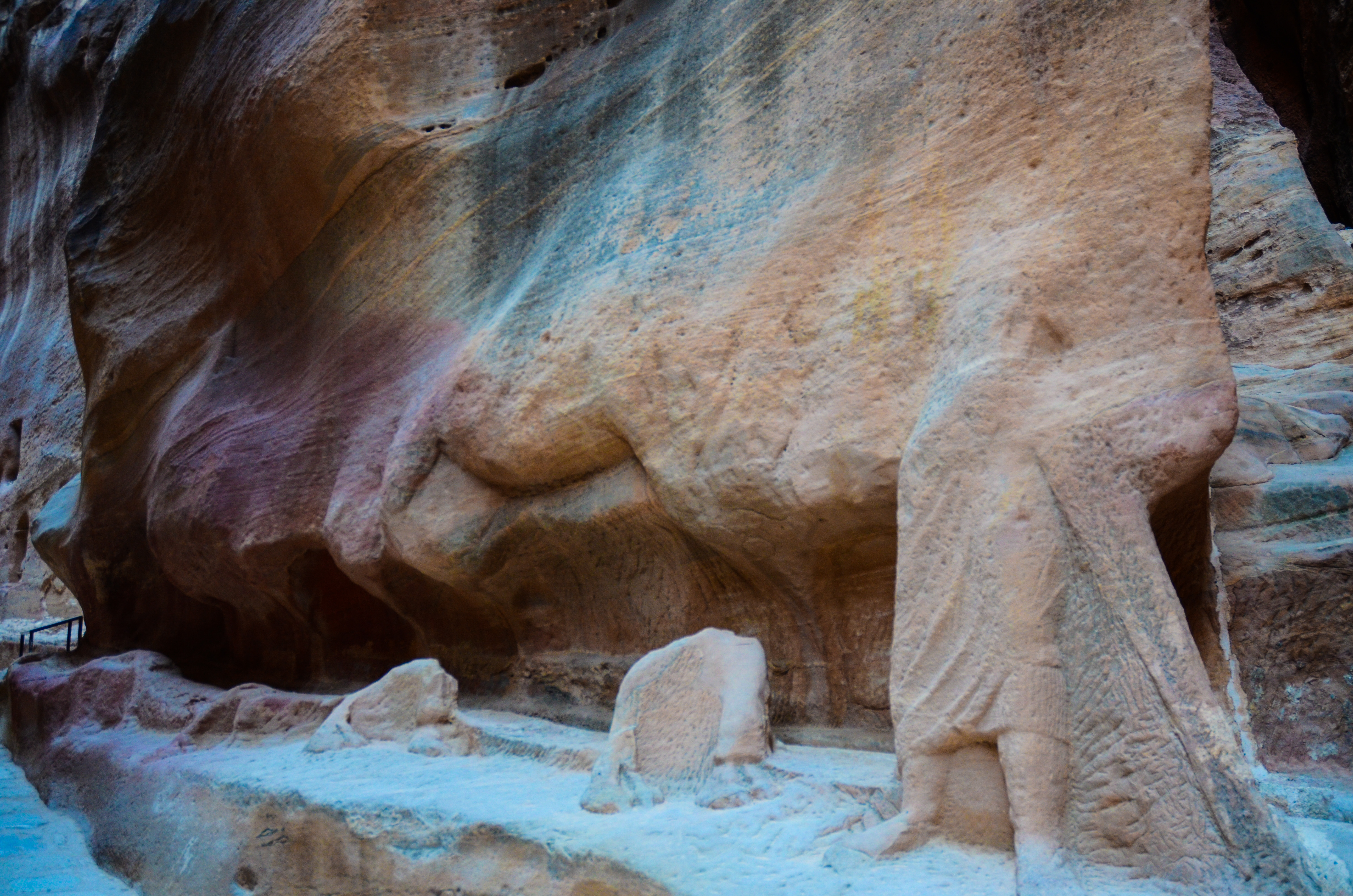
The entrance to Petra
Like many, I grew up idolising Indiana Jones. That famous scene where Indie first sees the Treasury put Petra at the top of my travel list. Seeing that very same scene with my own eyes was indescribable.
Called the Treasury by the Bedouin who now live in the outer caves of Petra, it is thought to have once guarded ancient treasures. But historians today believe that it may have been a library of sorts. Whatever it was used for, it remains the most beautiful of all the Nabatean ruins in Petra.
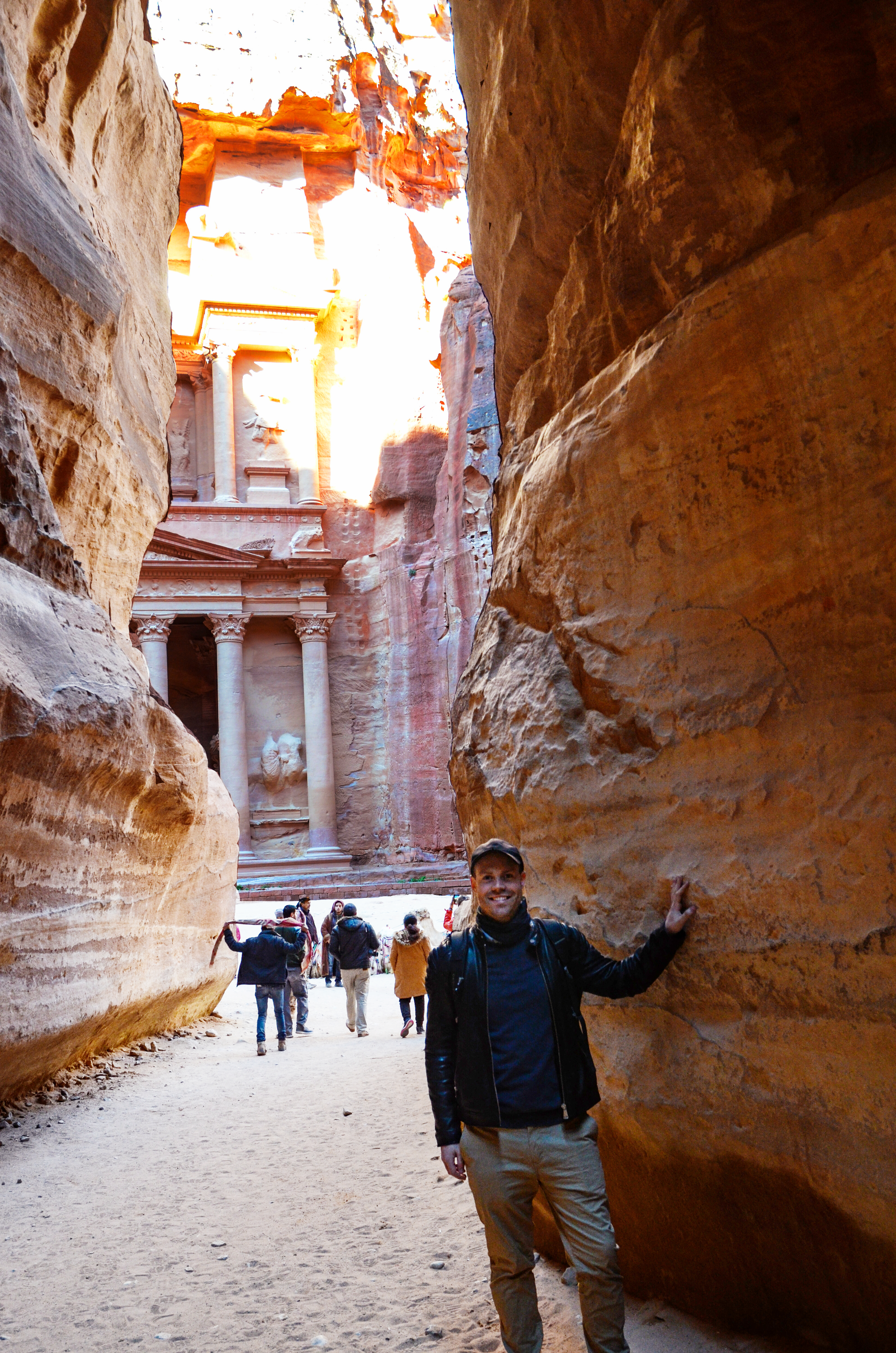
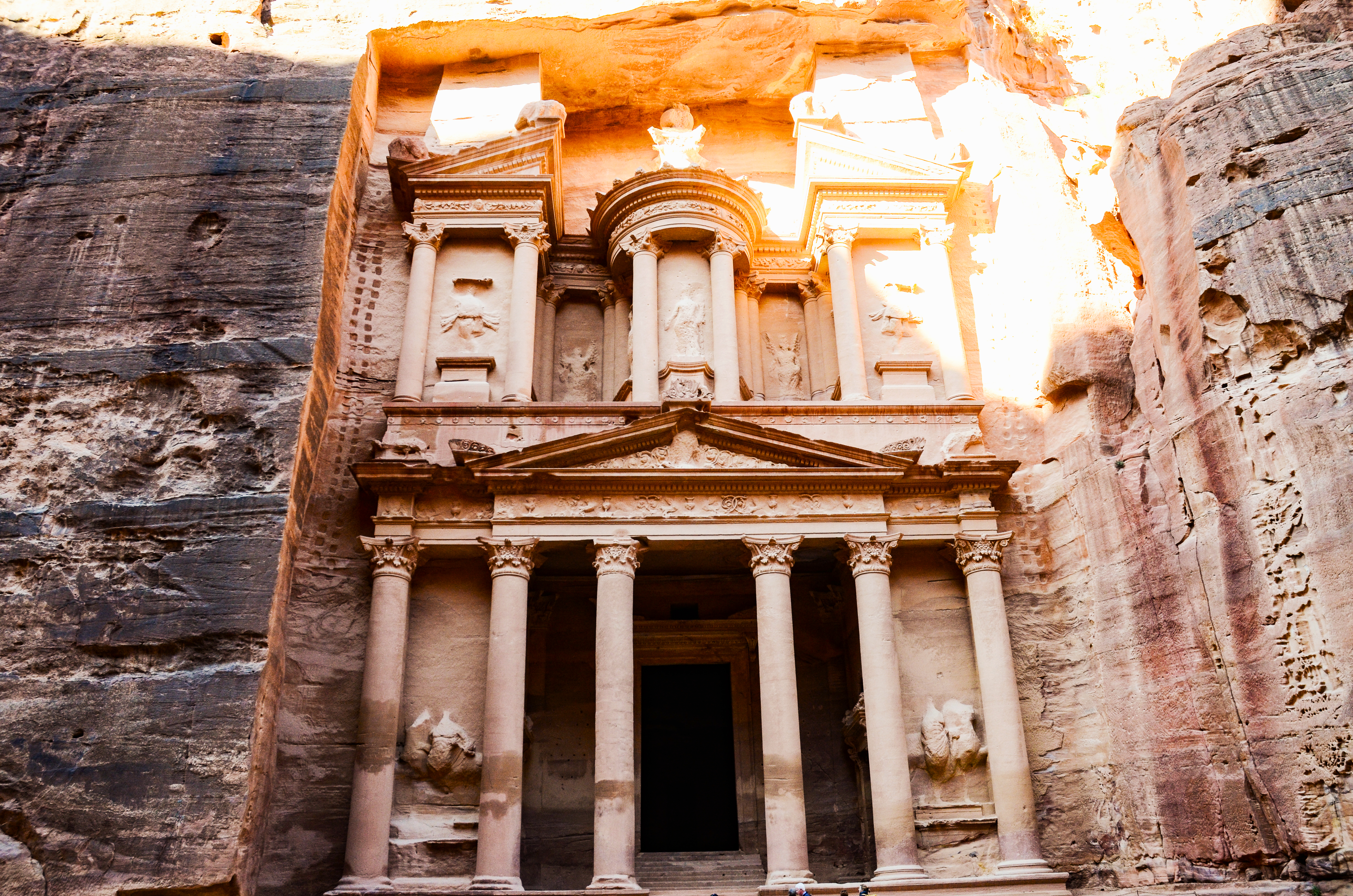
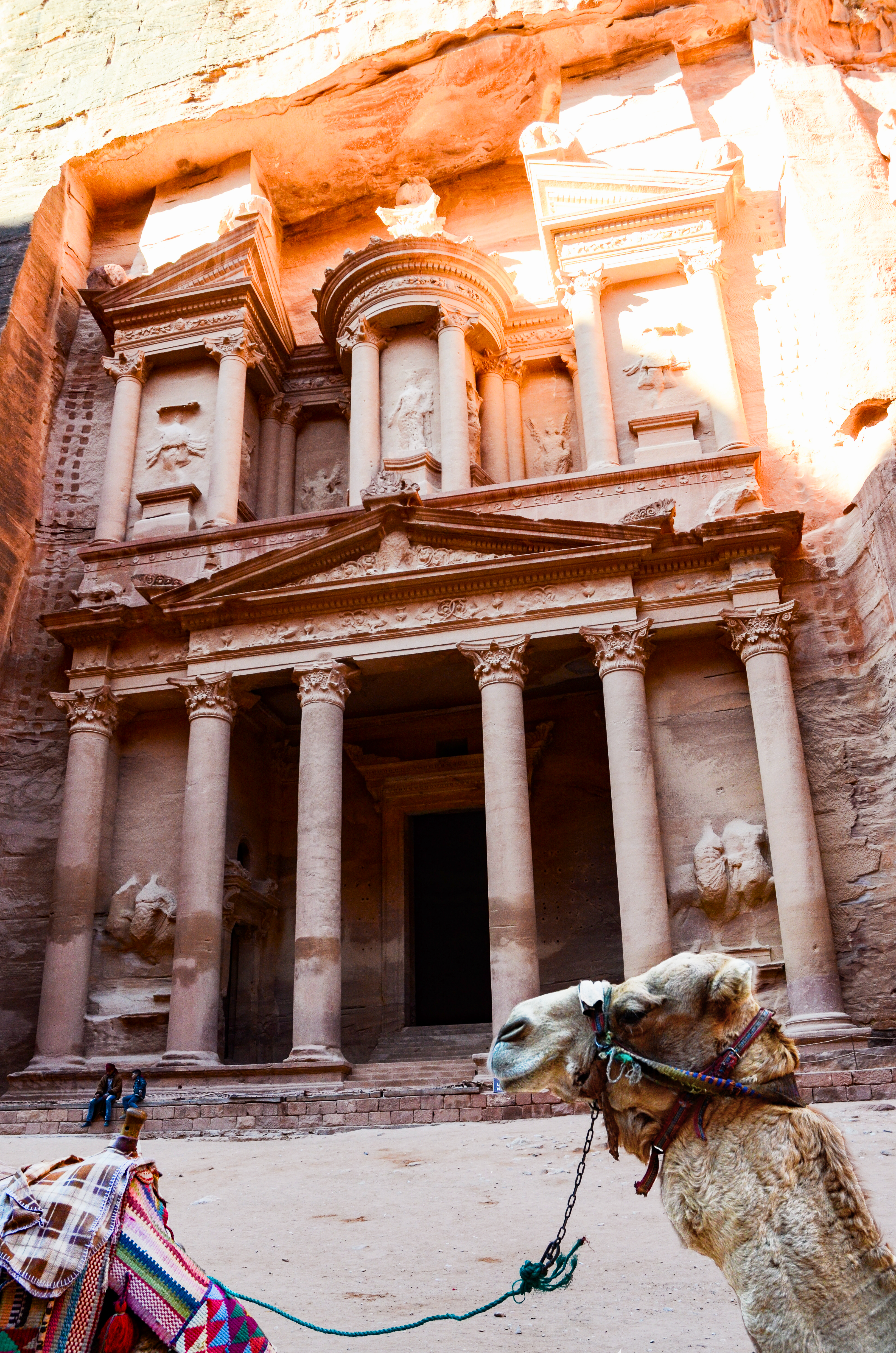
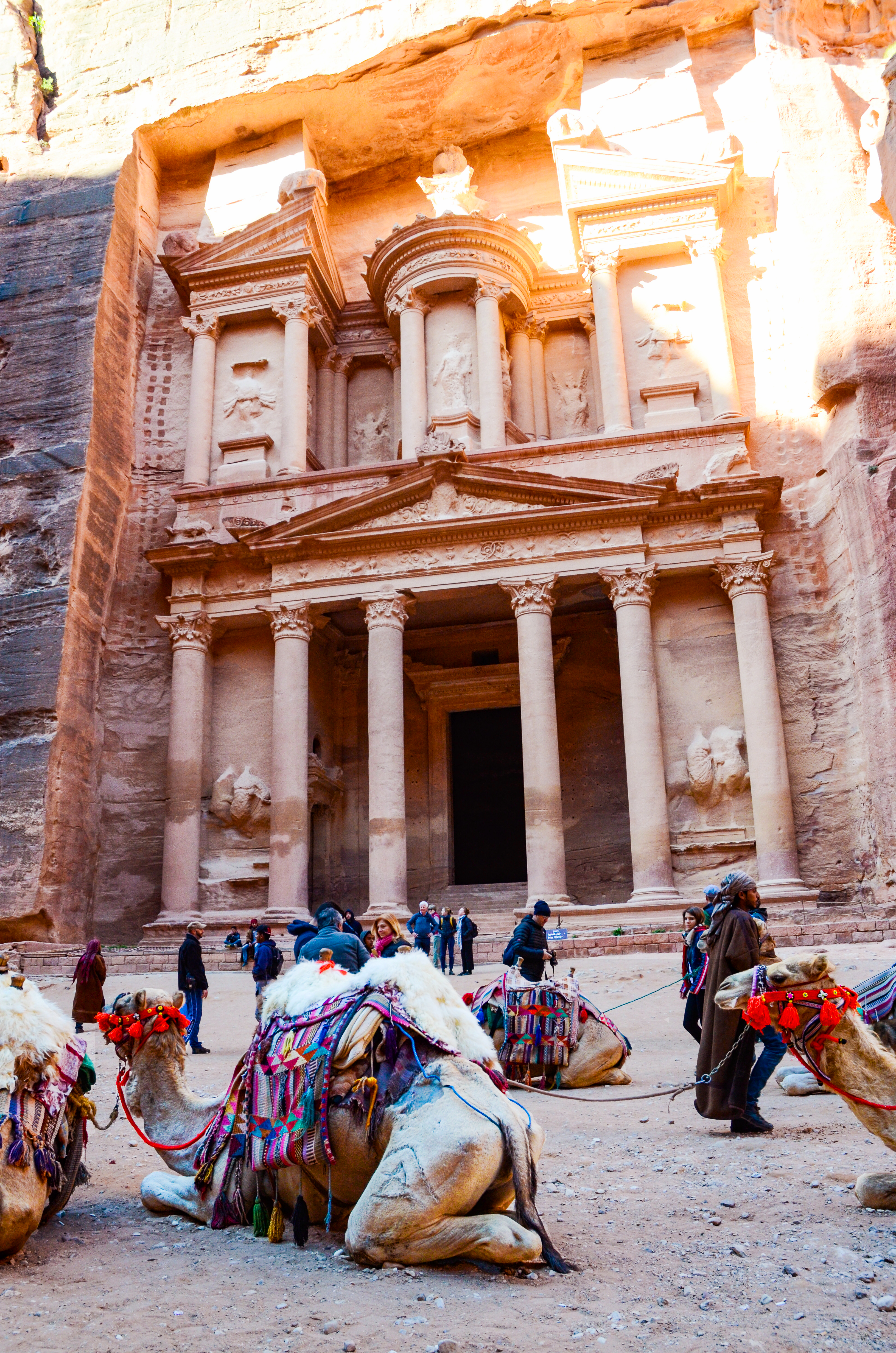
One of the Bedouin guides pointed out the foot-holds on the sides of the building, which the Nabateans would have used as a ladder as they carved the Treasury out of the rock. These go all the way to the roof, past the statues of Greek gods, to the striking Nabatean eagle-gods perched on the tallest columns — a dizzying height.
A different view of the Treasury
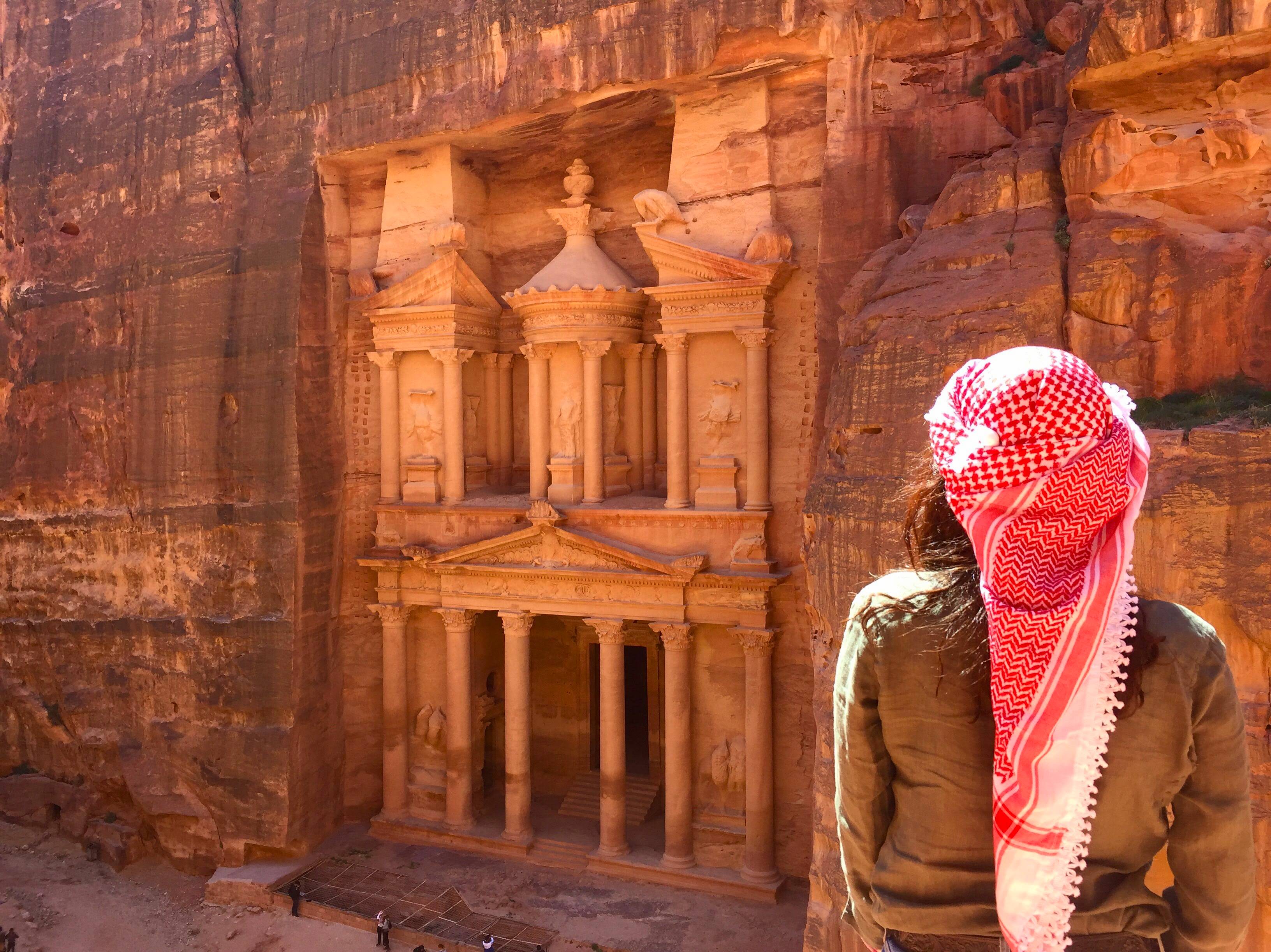
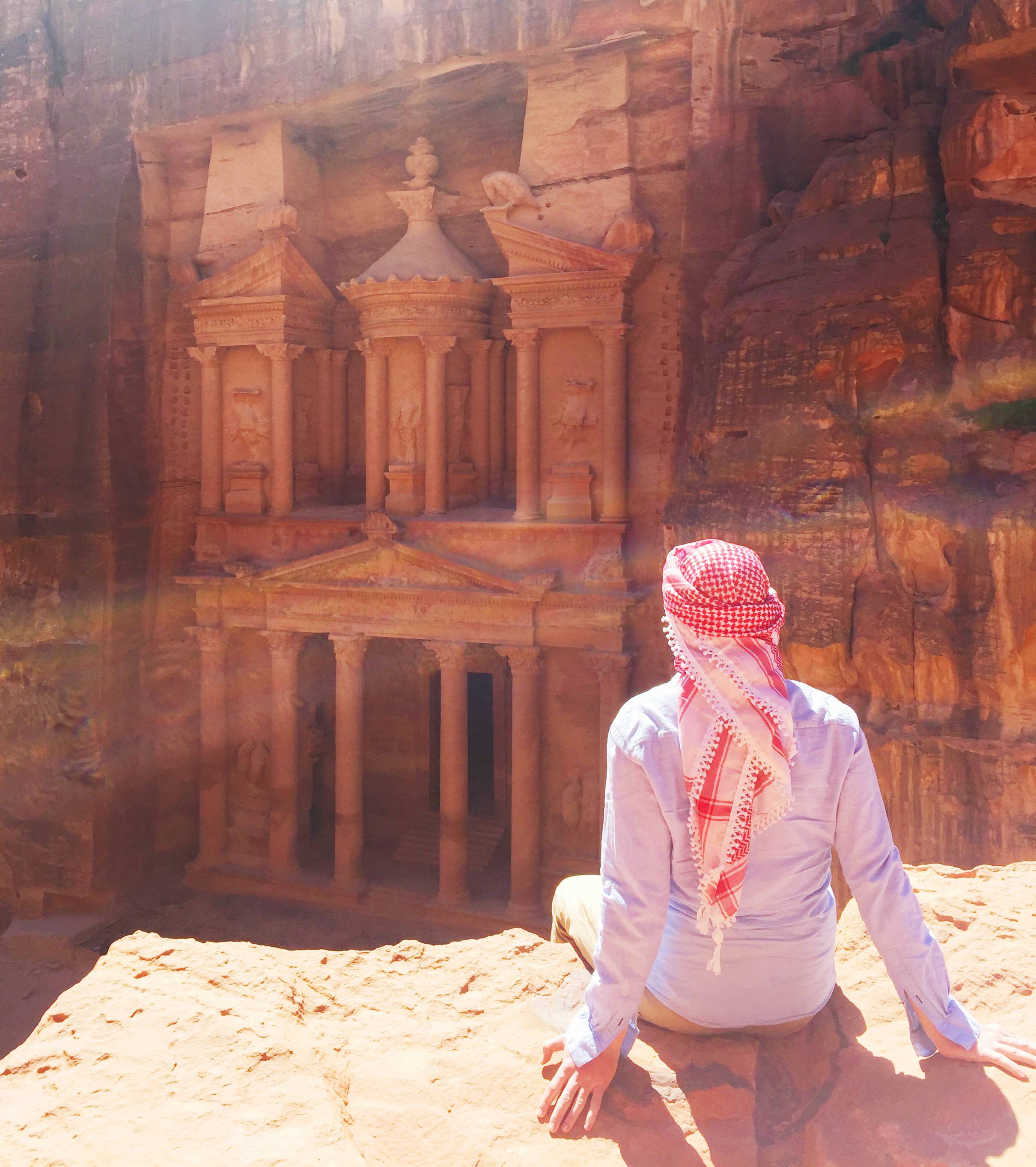
Just to the right of the Treasury, we saw a couple Bedouins climb up a large boulder. We decided to follow them, and it proved to be the perfect spot for admiring the Treasury above the crowded Siq entrance.
A walk through time on the Street of Facades
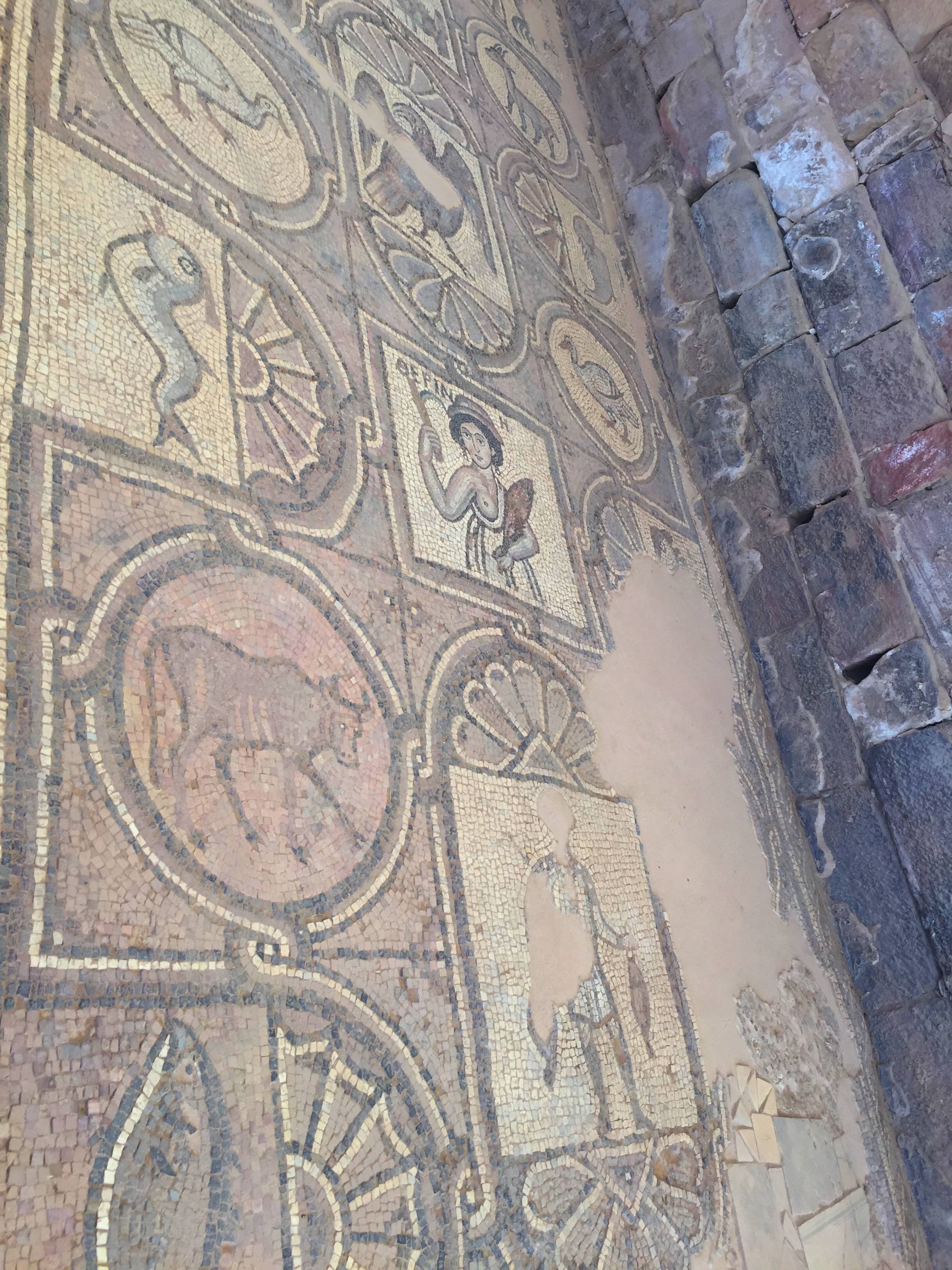
From the there, we took the path leading behind the Treasury and into the heart of Petra. As we went, we explored ruins of the old market, countless tombs, a Great temple and a Byzantine Church adorned with beautiful mosaics, among many other incredible sights.
Petra was once the powerhouse of its time, a great trading city that quickly became the envy of the ancient world. It was attacked for its riches by invaders, most notably the Greeks in 312 BC. But the Nabateans used the wild landscape to their favour, fighting in the canyons and hiding in the nooks and crannies of the rocky cliffs.
The land continues to protect the legacy of Nabateans. Nestled within the canyons, safe from the howling winds of the desert, their greatest structures remain as magnificent as ever. The best of them can be seen on a simple stroll down the Street of the Facades — a journey that feels like falling through time.
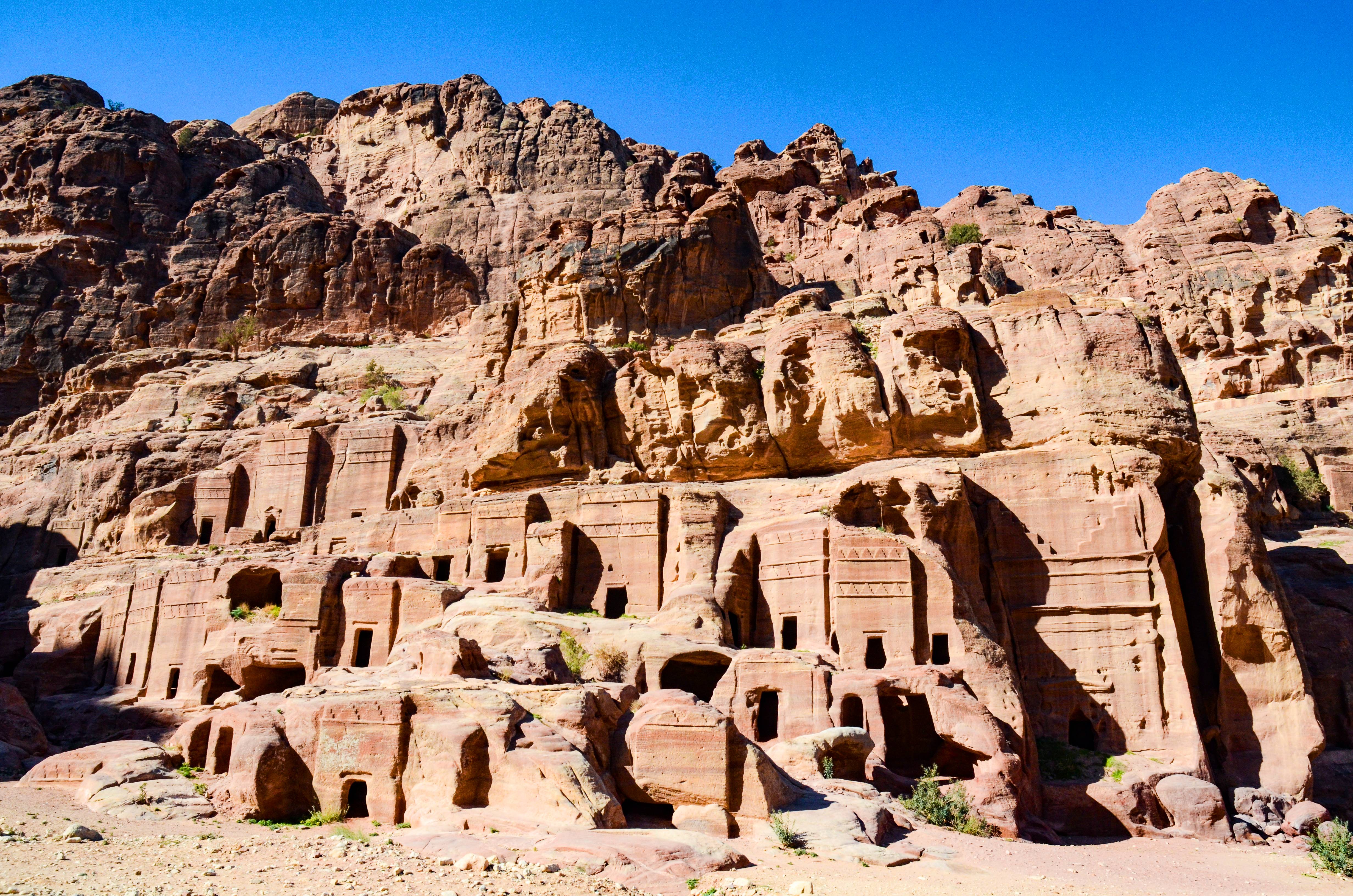
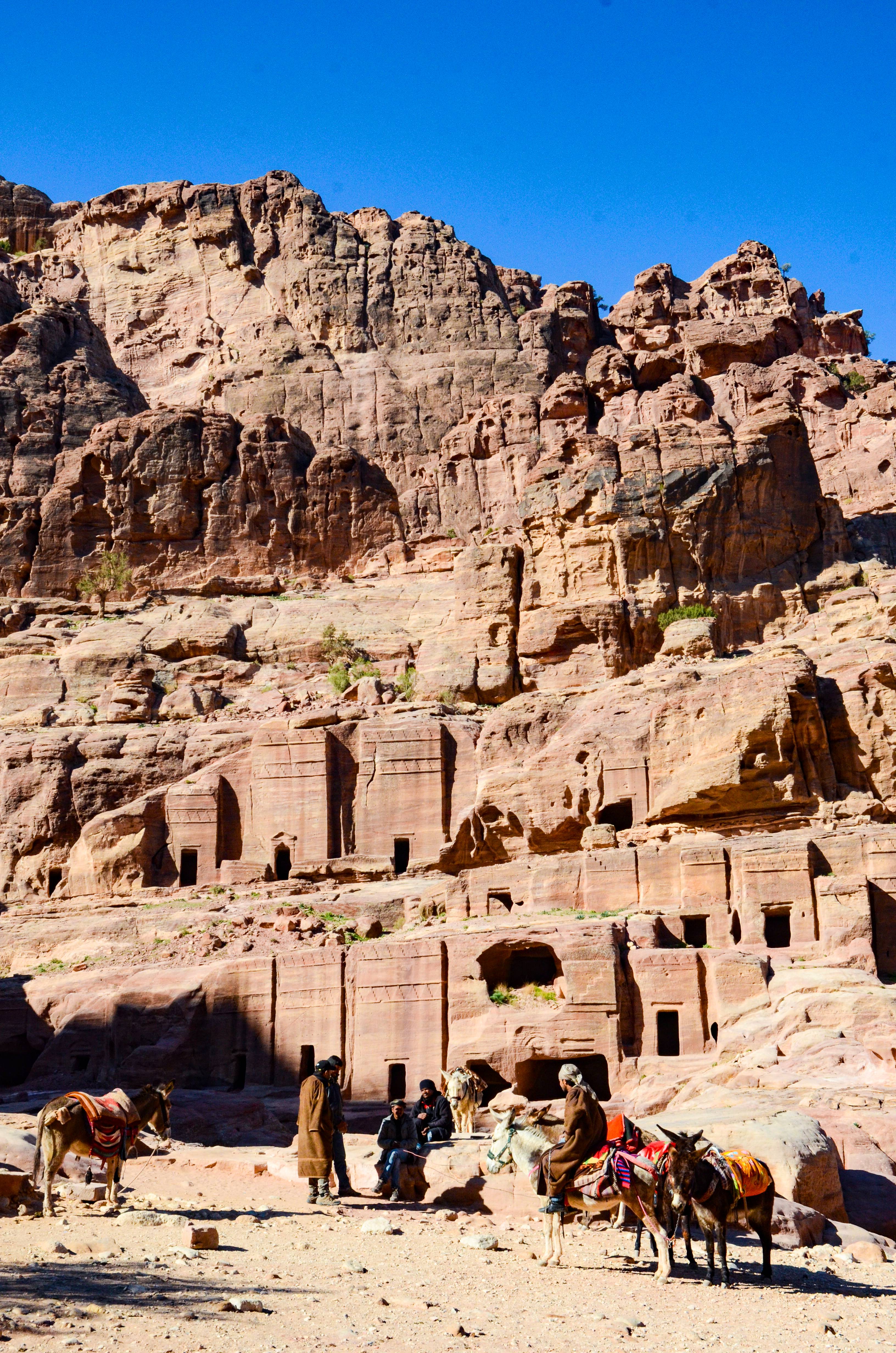
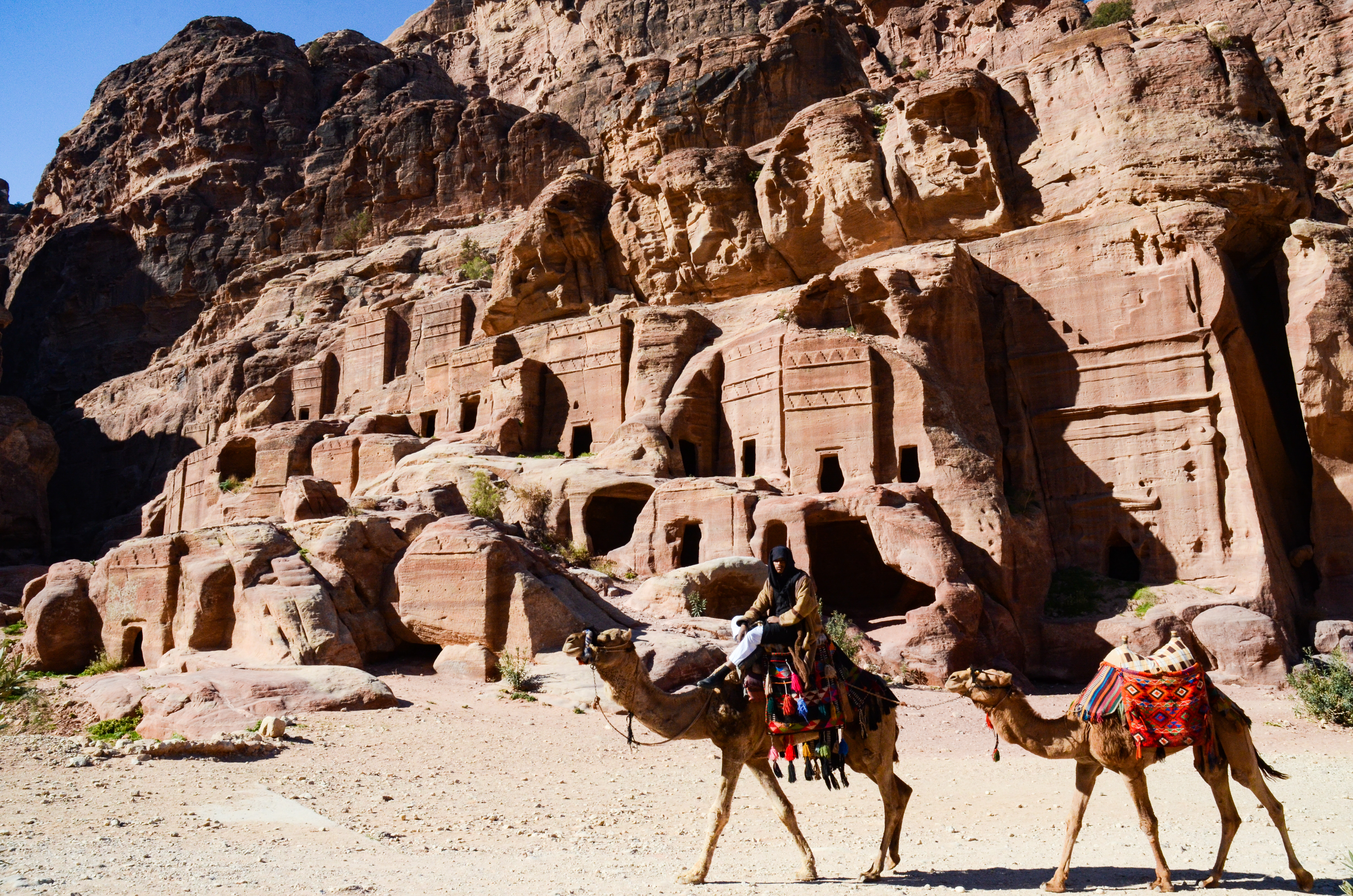
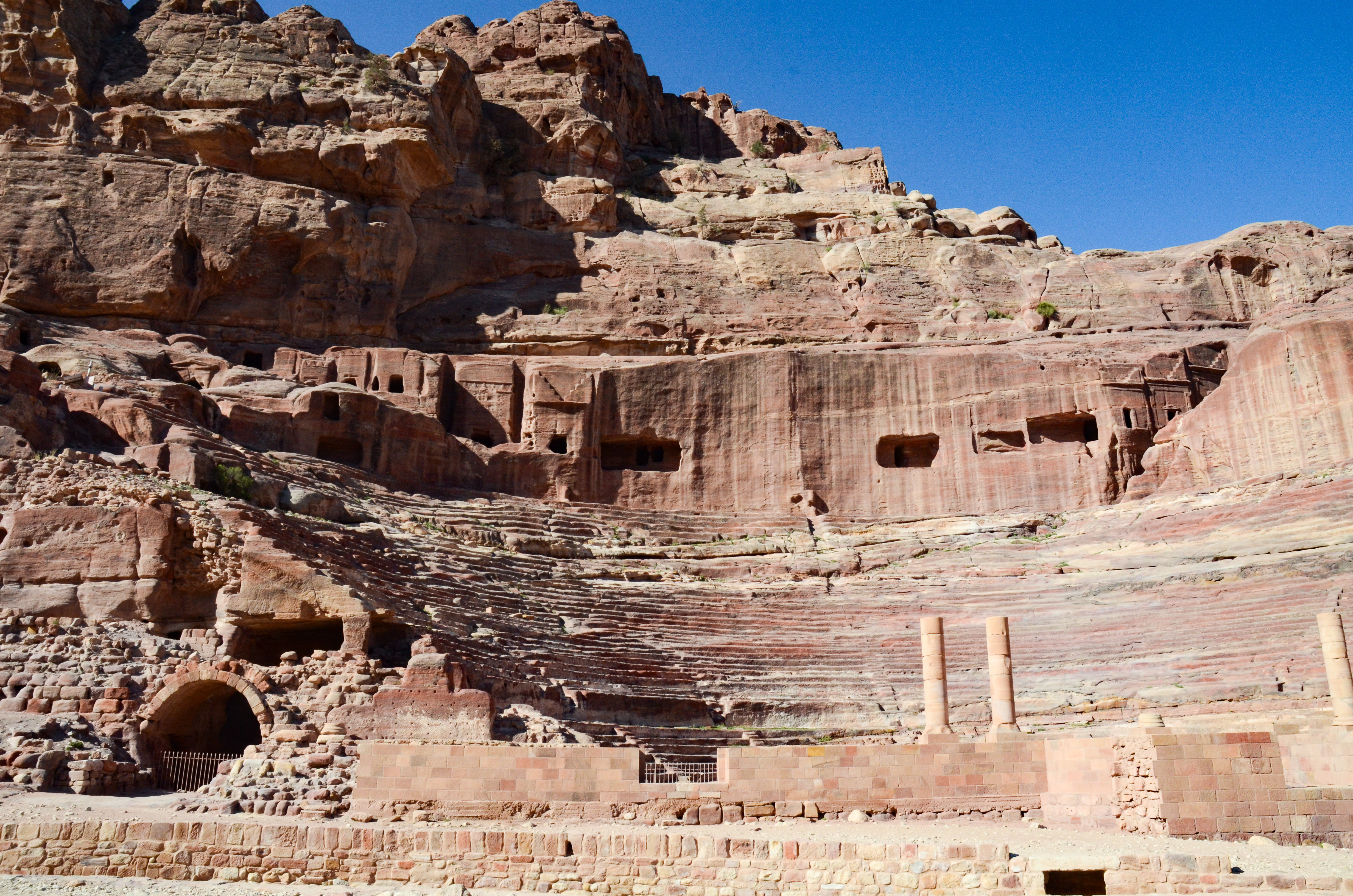
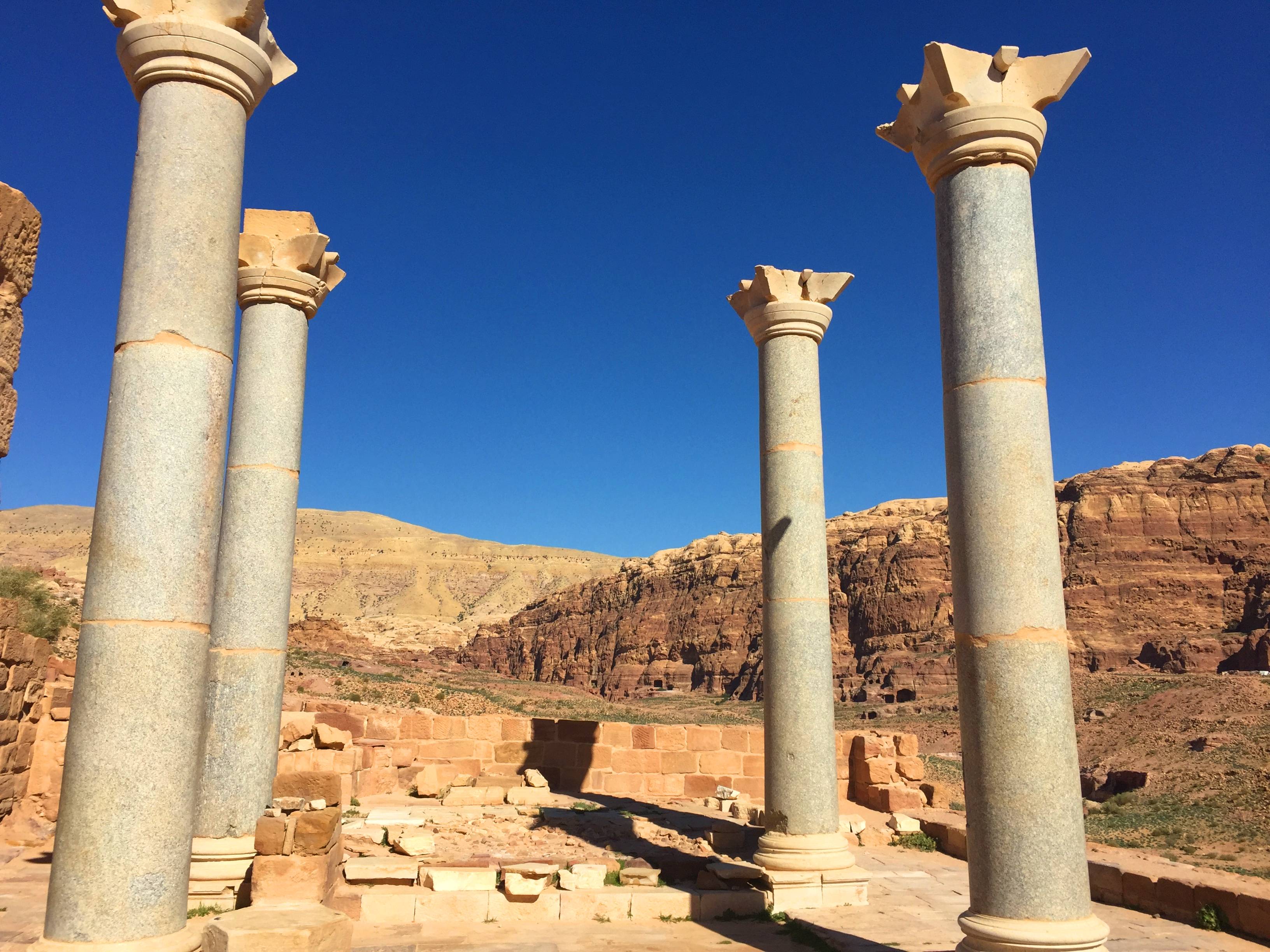
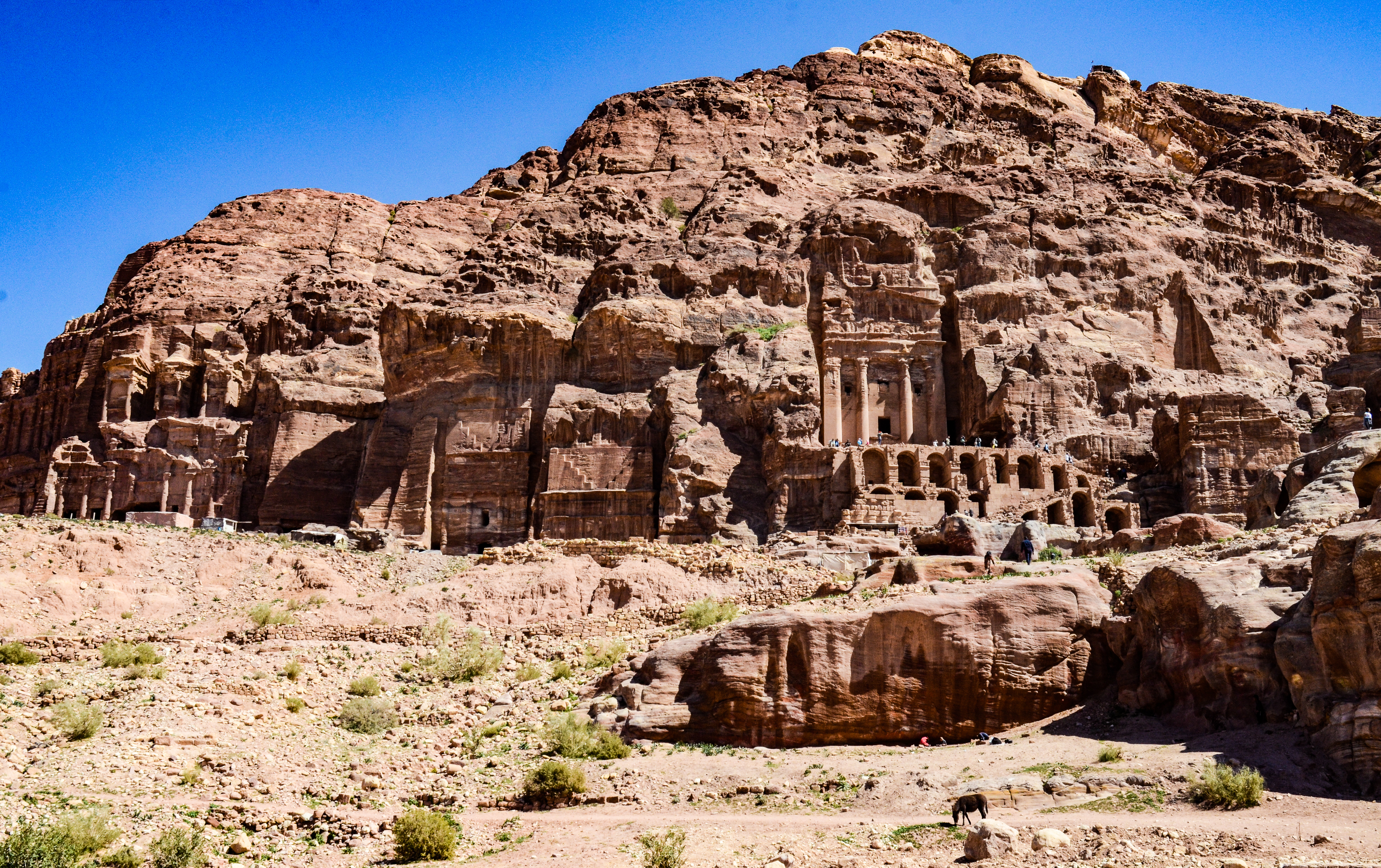
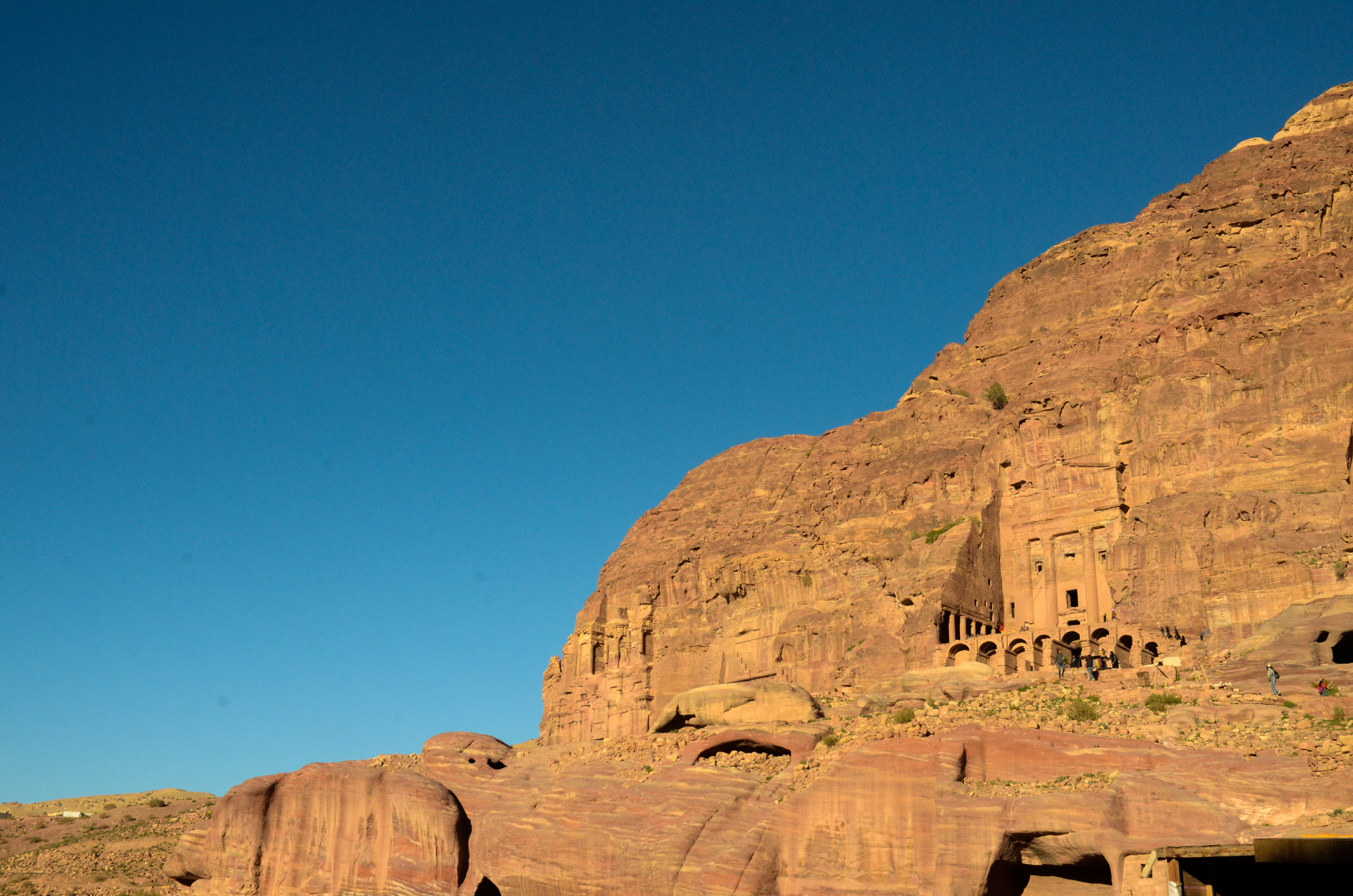
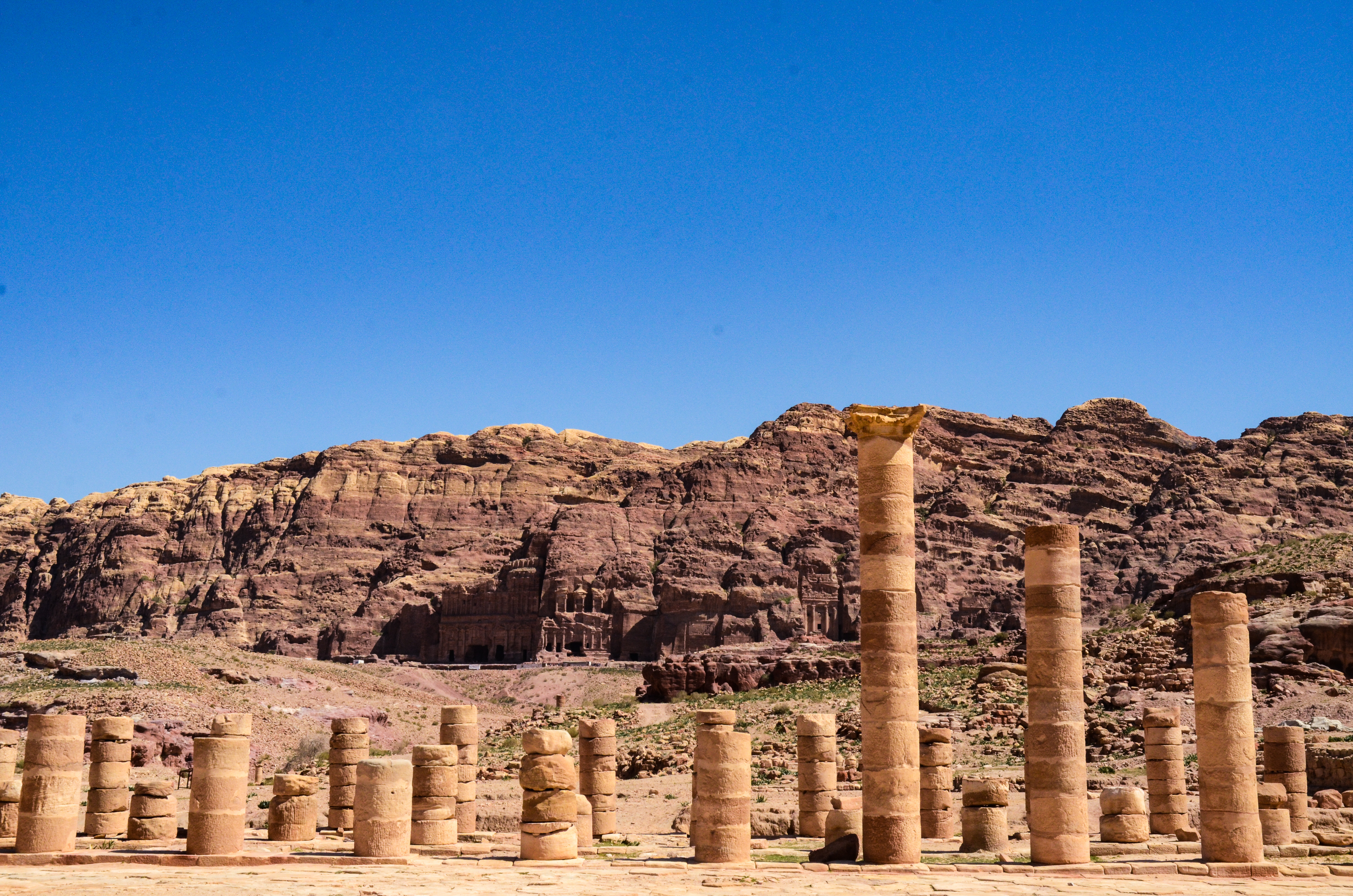
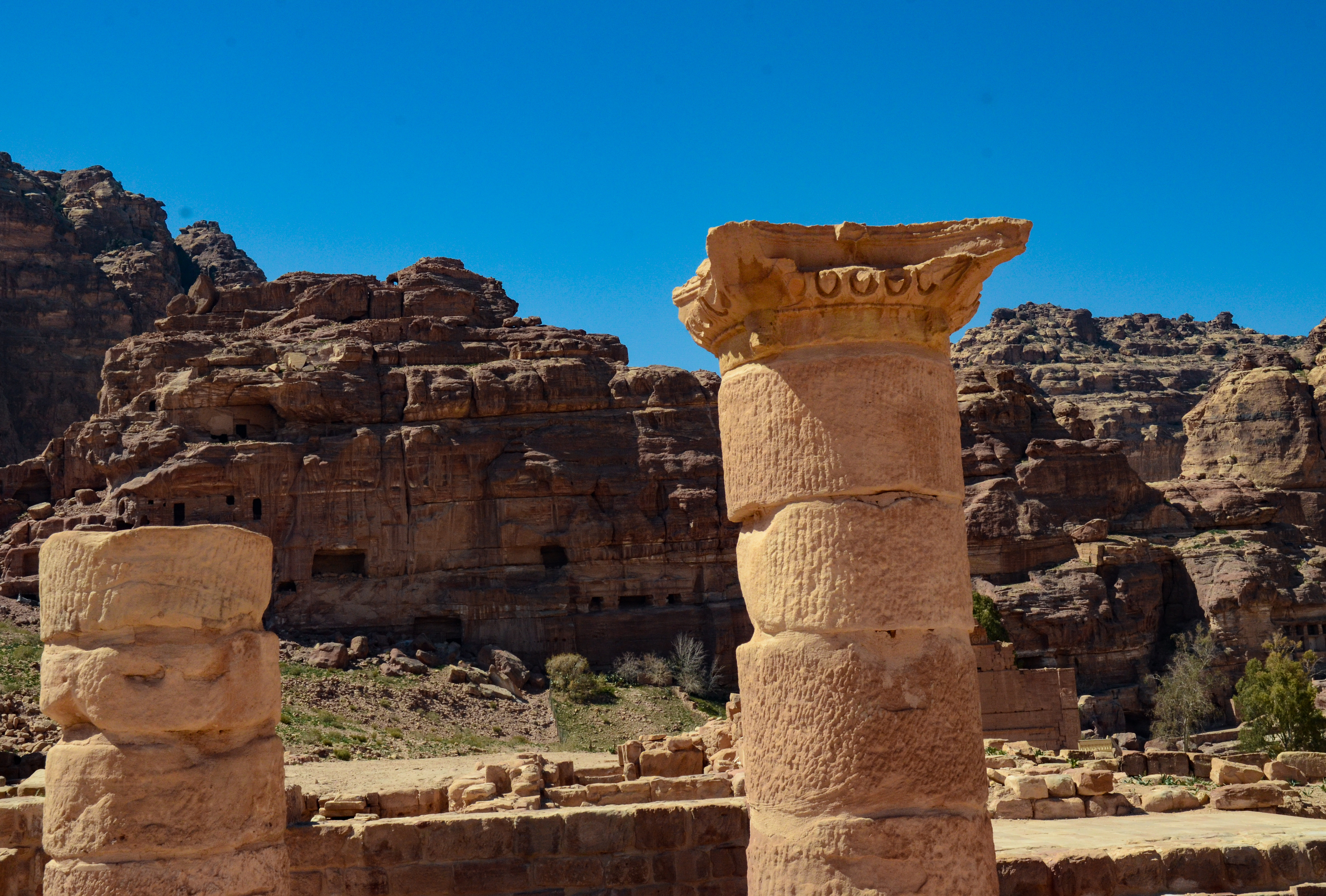
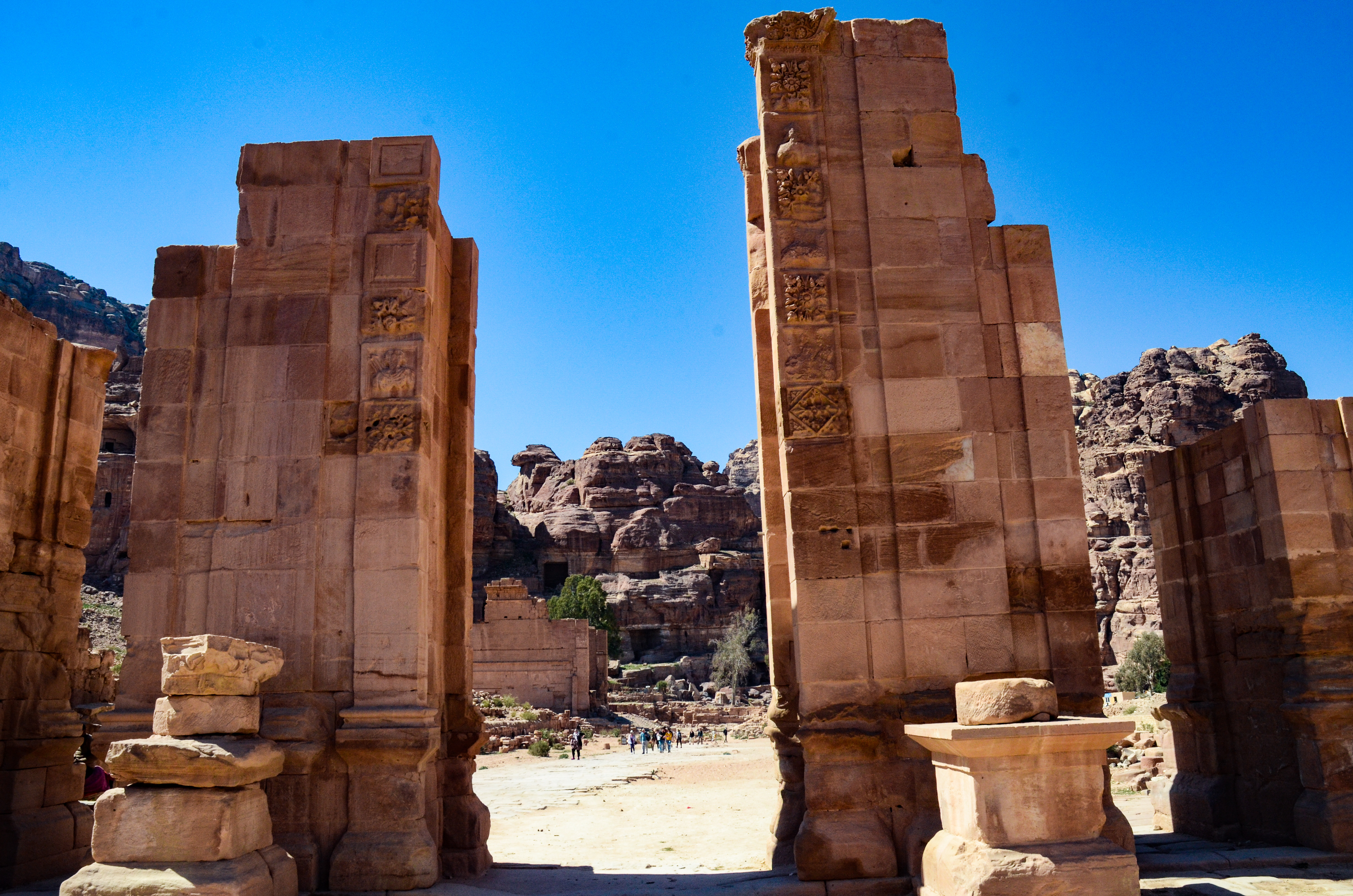
As we walked in awe and wonder, we leapt from the age of the Nabeatans to that of the Romans. The Street of Facades transformed into Colonnaded Street, and suddenly we found ourselves tripping over cobblestones and surrounded by an army of mighty Roman columns.
Despite the Greeks failure to conquer Petra, the Romans invaded in 106 A.D. The power and strategic supremacy of Rome proved to be too much for the merchant city. For 250 years, the Romans ruled over Petra, and they certainly left their mark — but no matter who was in power, the Nabatean temples and structures remained.
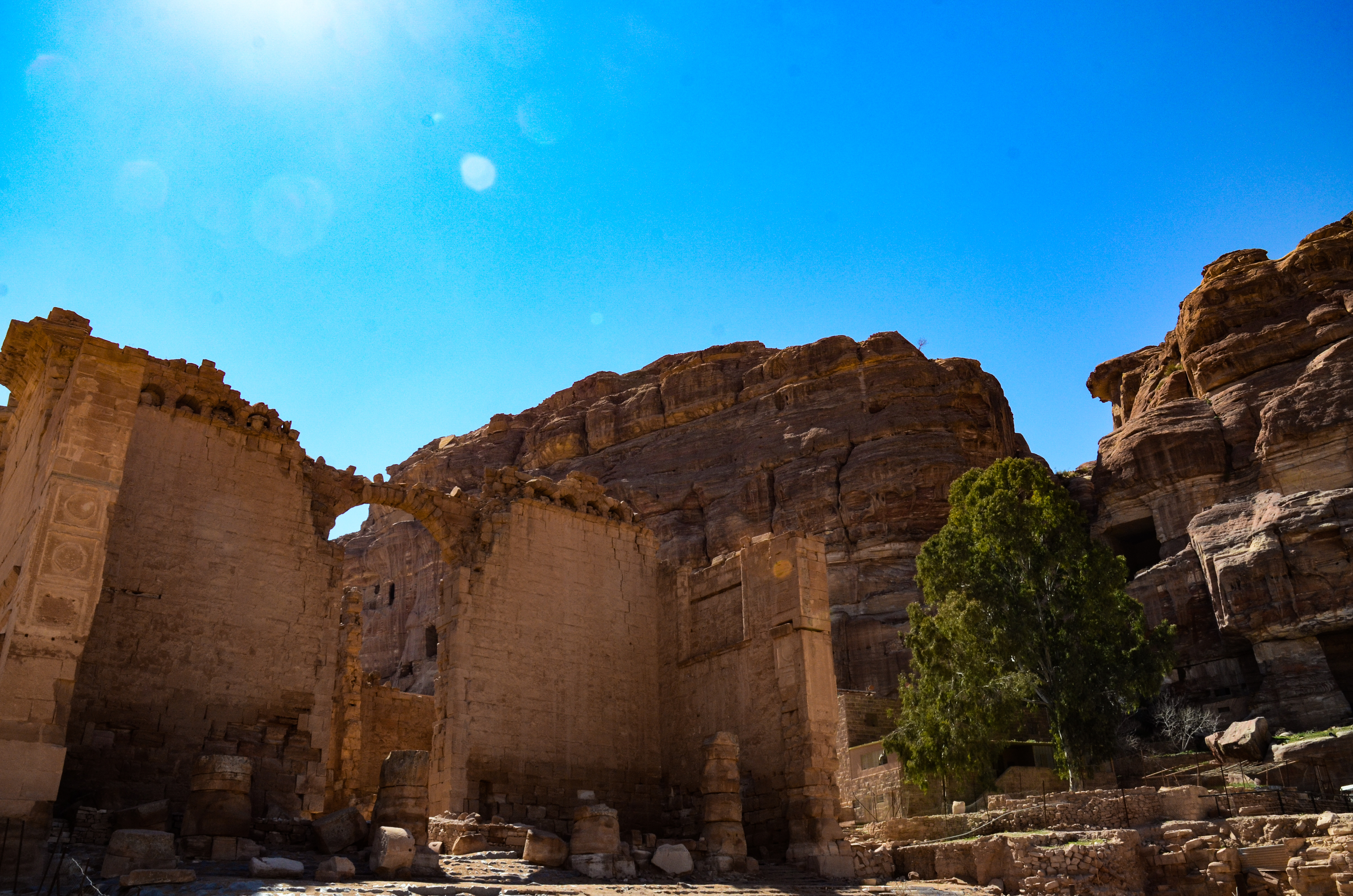
Passing through Hadrian’s Gate, we gazed up at Qasr Al-Bint, the incredible temple to the Nabeatan god, Dushara. Today it remains the best preserved free-standing structure in all of Petra.
To the Monastery
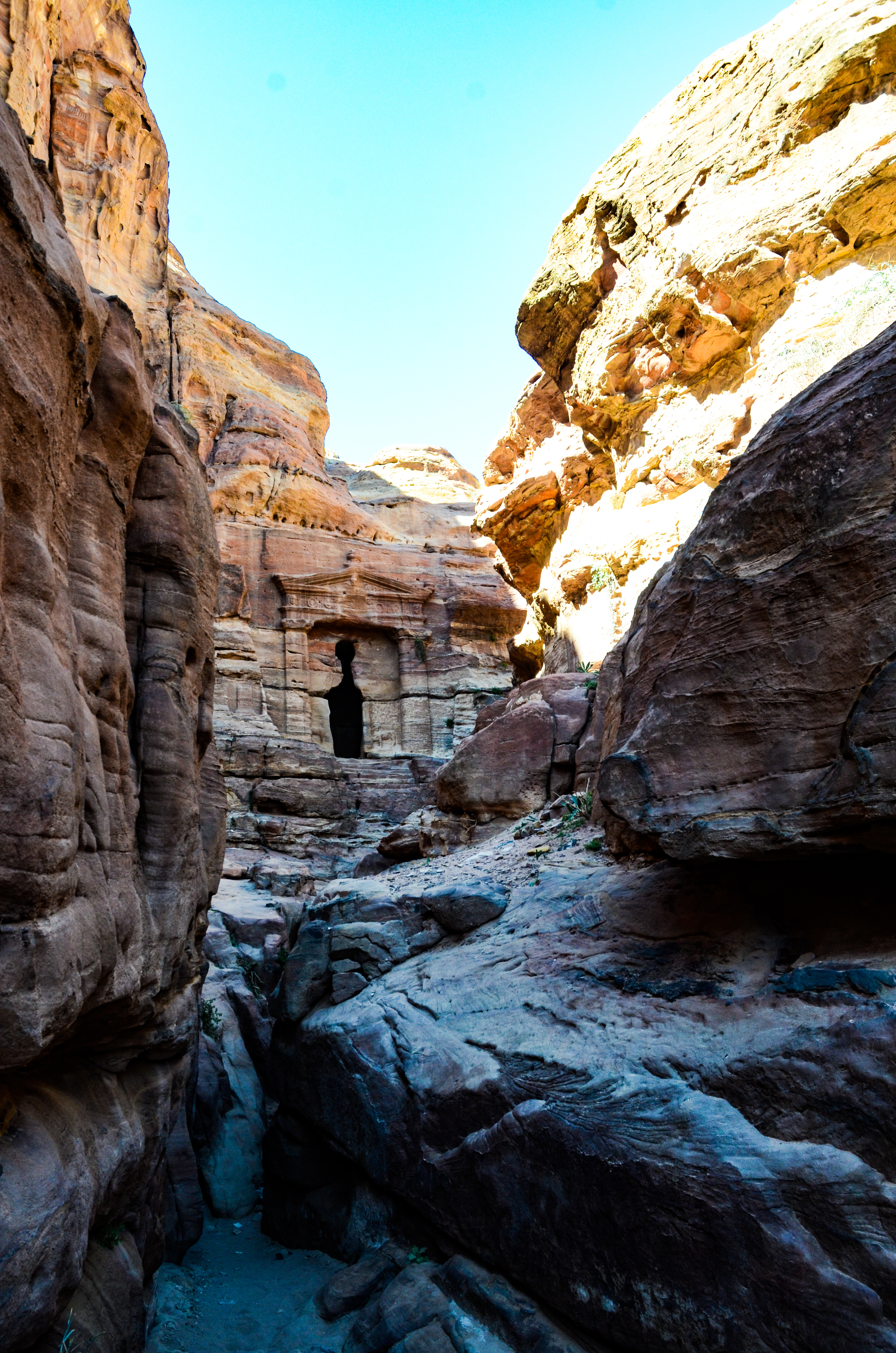
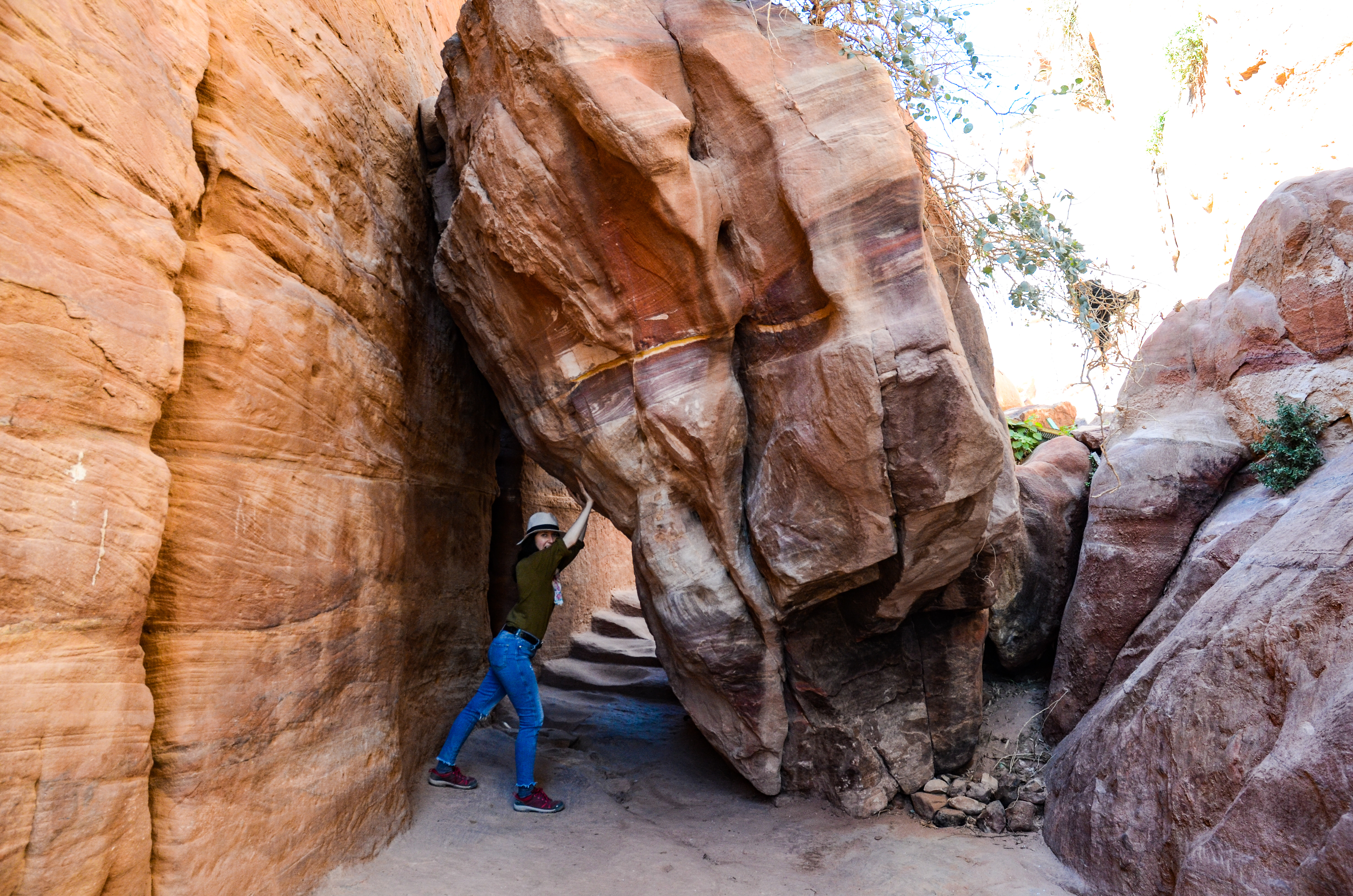
From Colonnaded Street, we began the long hike up to Petra’s second top sight to see — the Monastery. Over 800 stone steps led the way past rugged mountain scenes and hidden paths. Along the way, we saw a mysterious tomb within a narrow crevice. Inching our way in, we explored the small caves and climbed up to the Lion Triclinium, enjoying our time away from the crowded path.
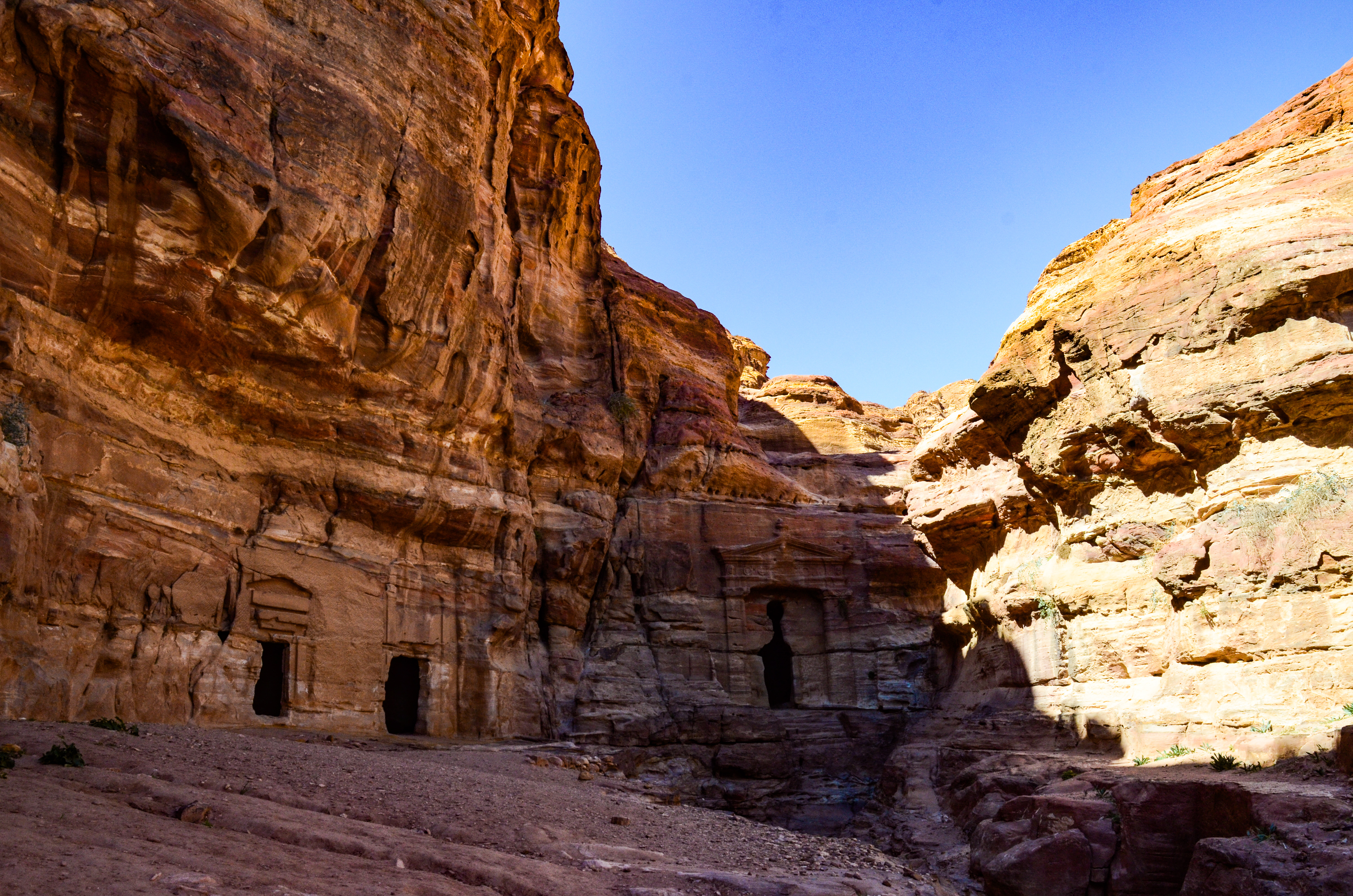
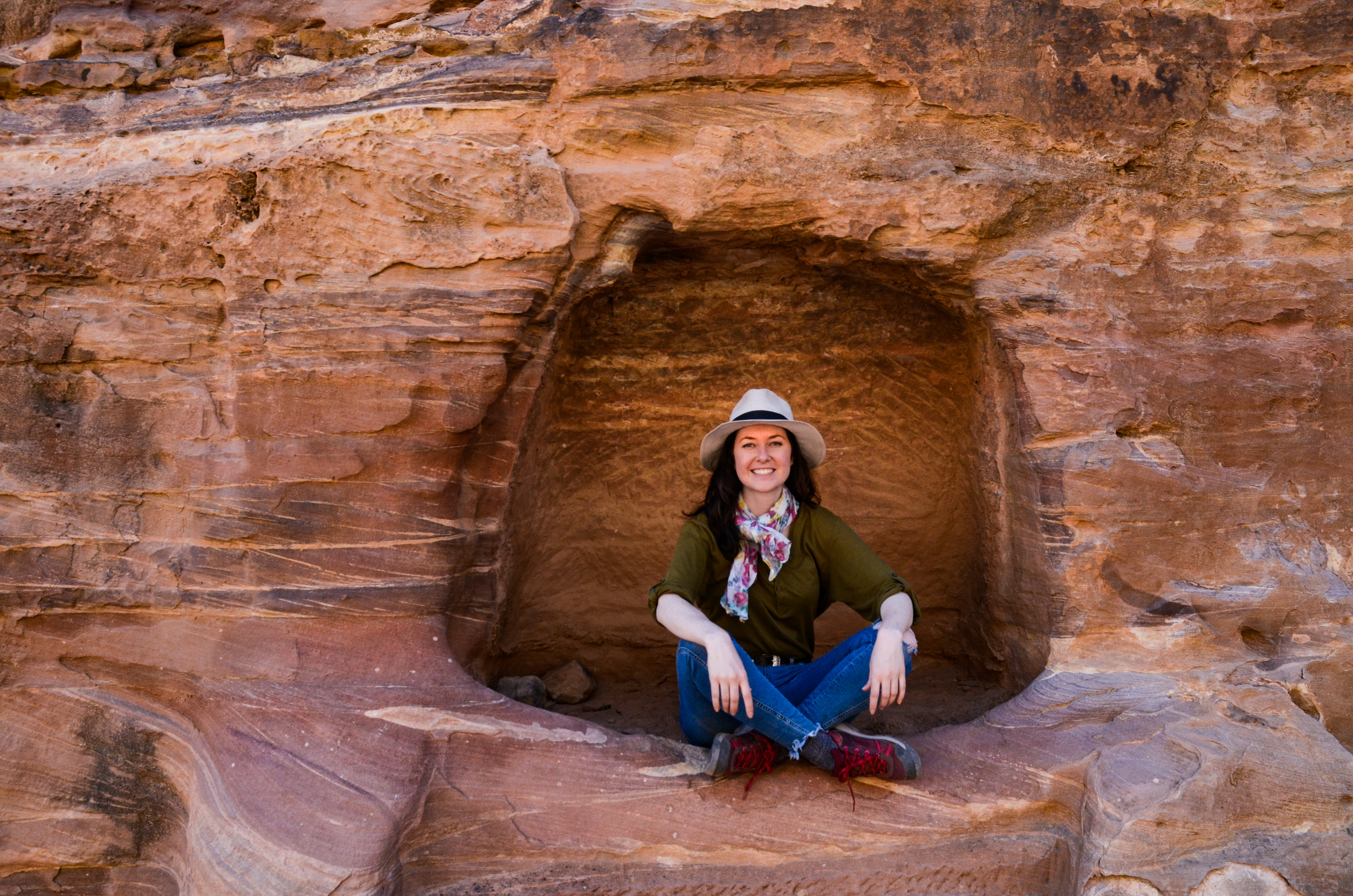
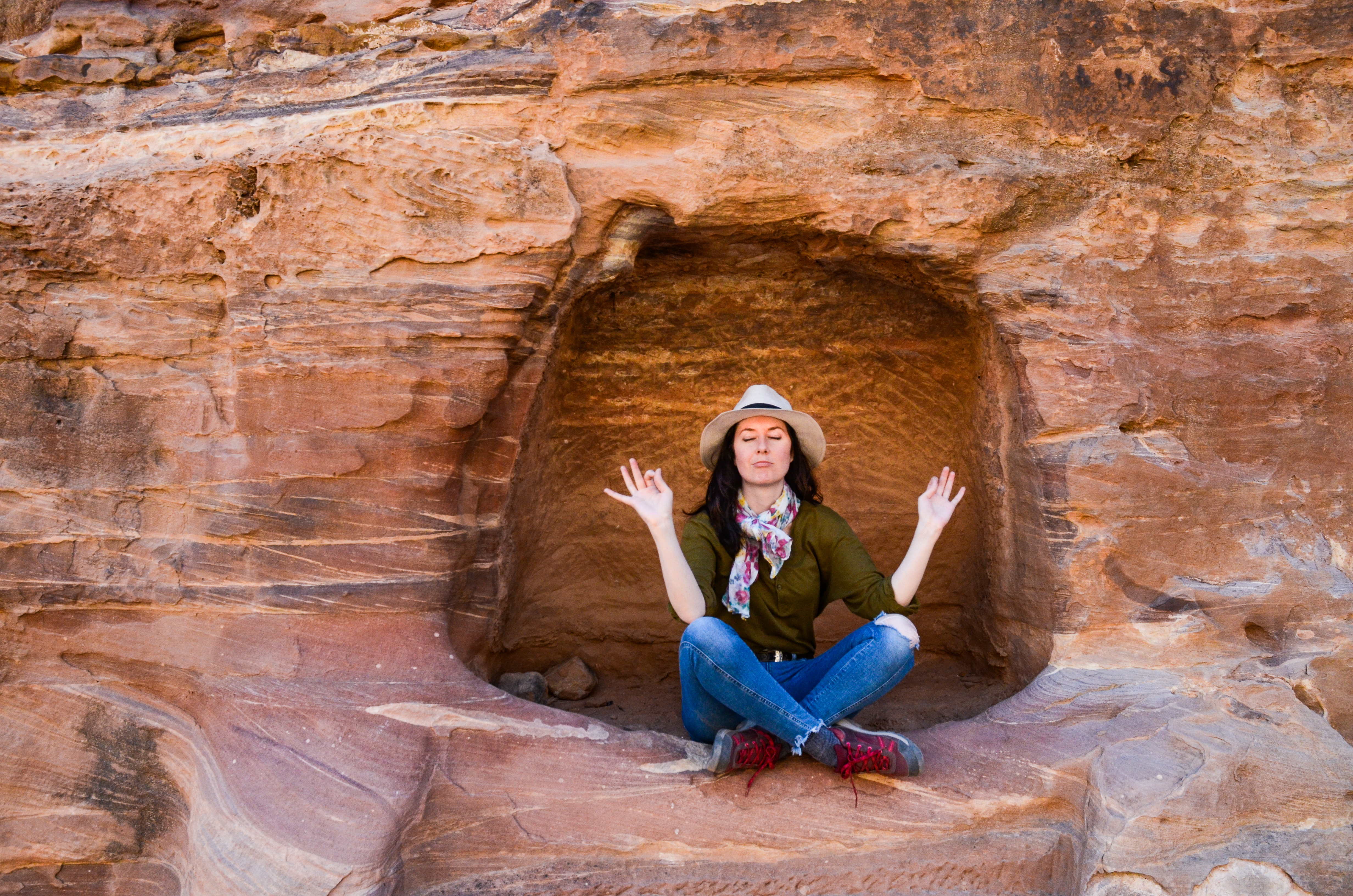
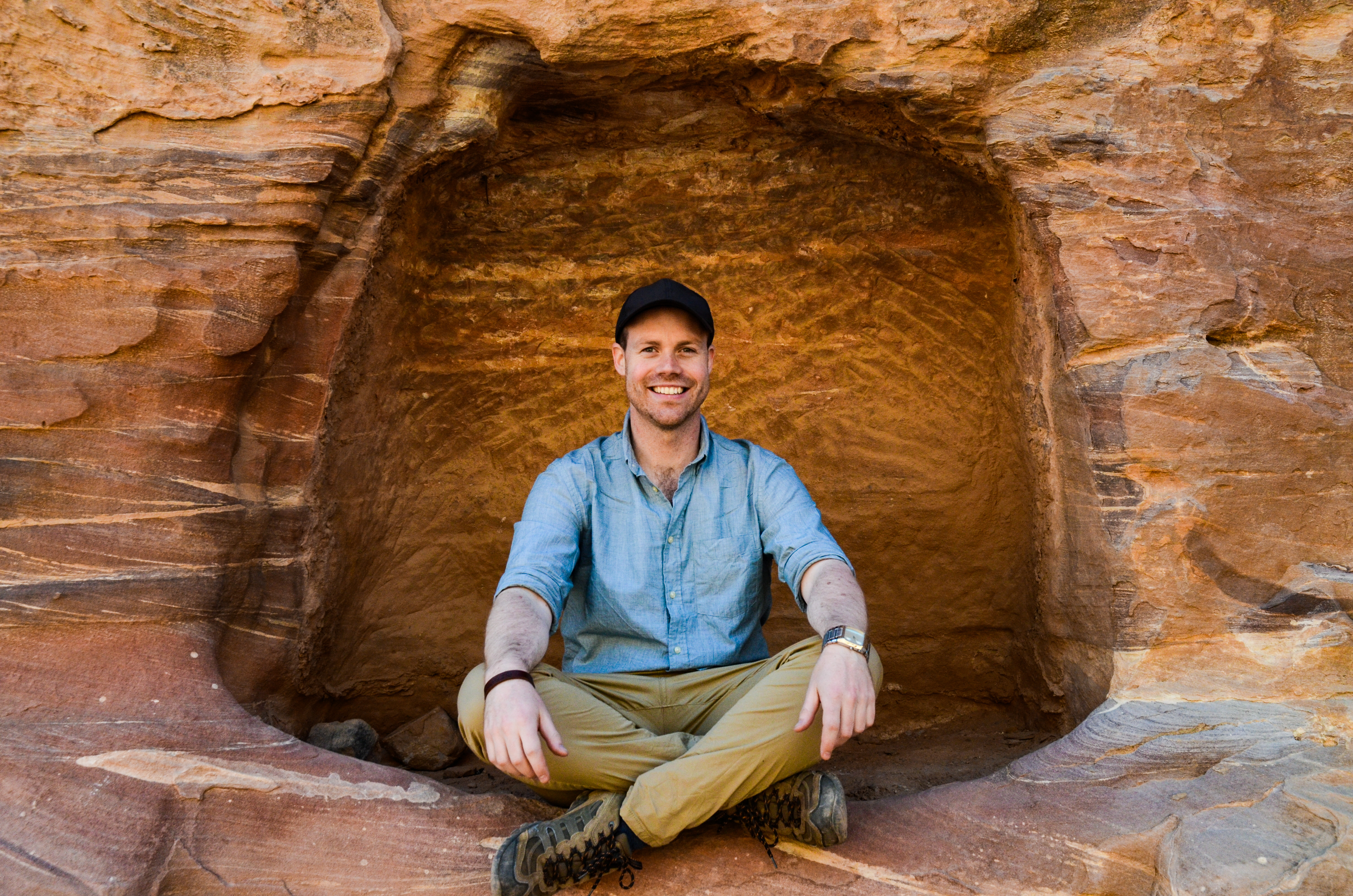
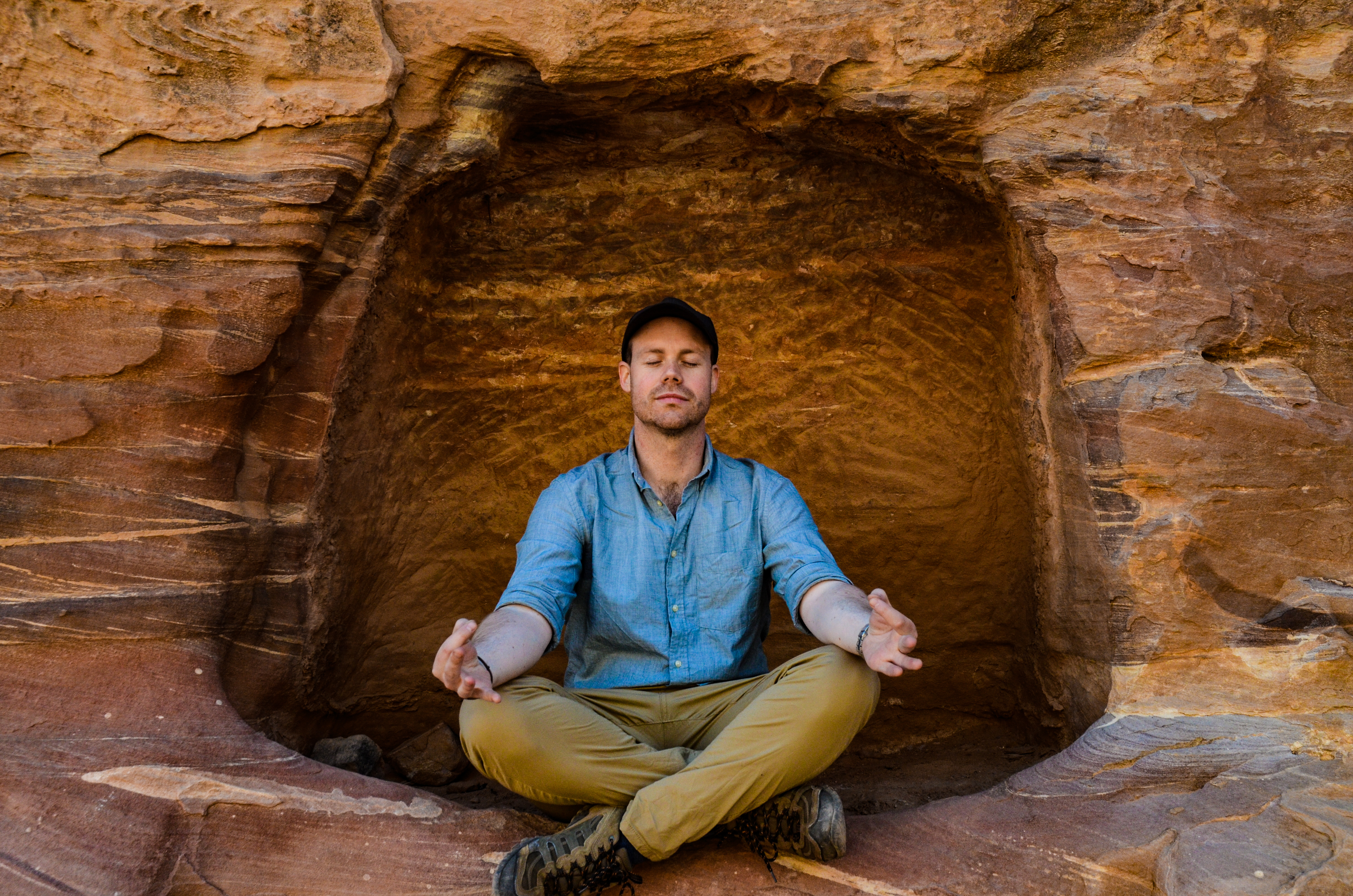
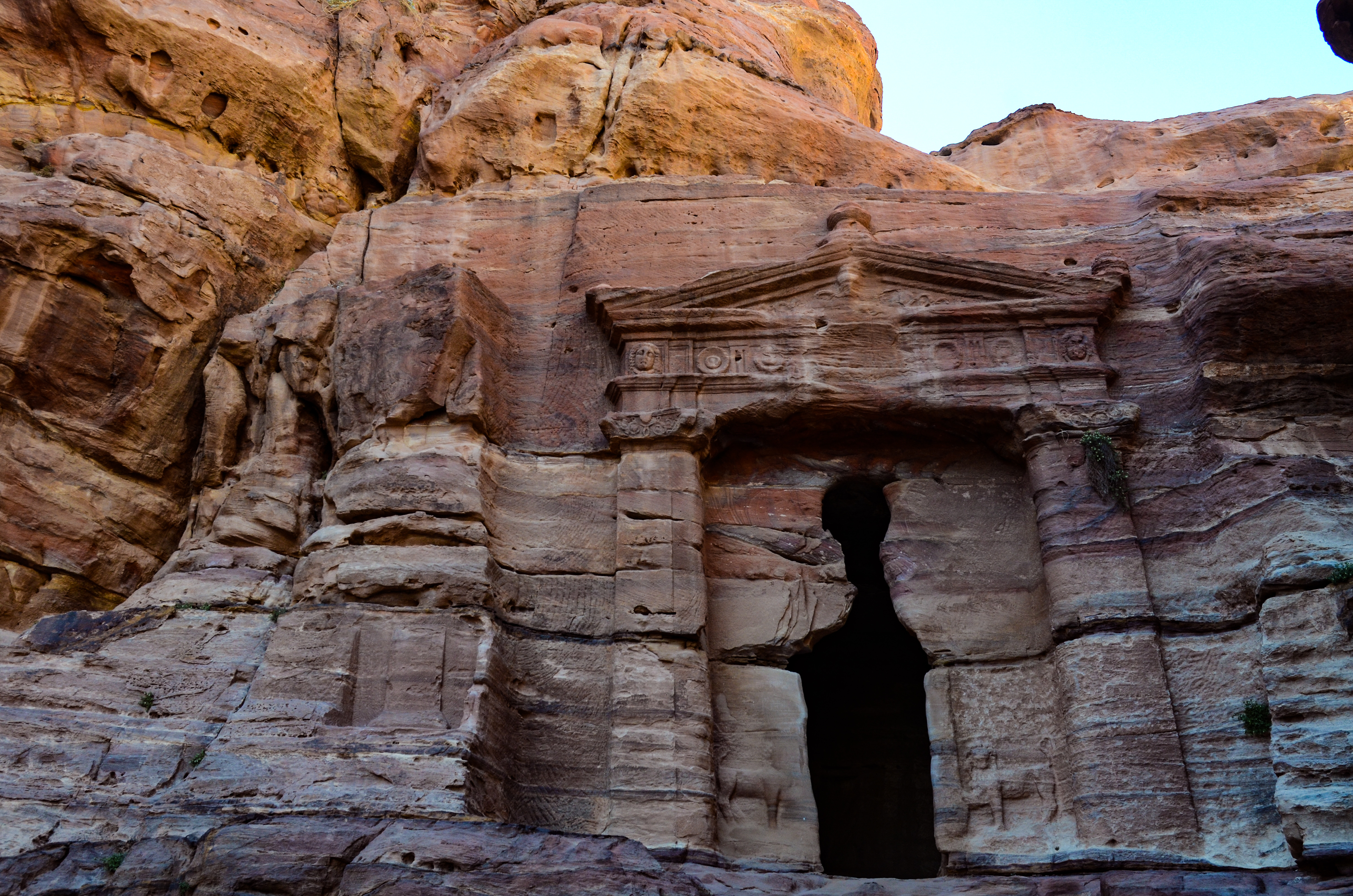
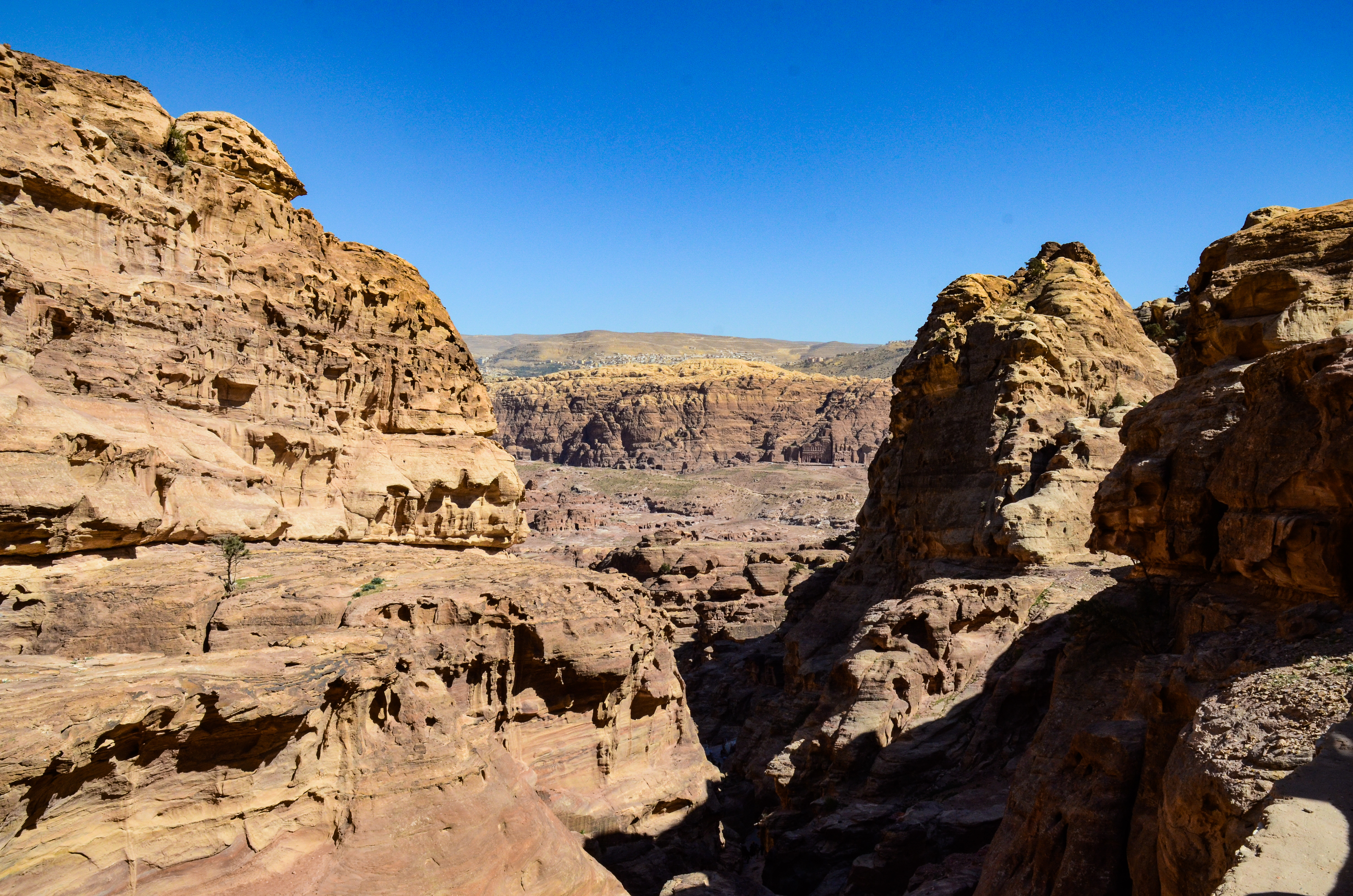
The afternoon sun bleached the rocky landscape and blinded us as we went. By the time we reached the last staircase, we were completely exhausted. But the views of the distant mountains and the Street of Facades below were completely worth it.
The Monastery of Old
Where the Treasury was rosy pink, almost ethereal, the Monastery was golden and glorious — something I would’ve pictured in ancient Greece or in the halls of the gods on Mount Olympus. The sky was so blue behind it, I remember being awestruck by the deep contrast of colours.
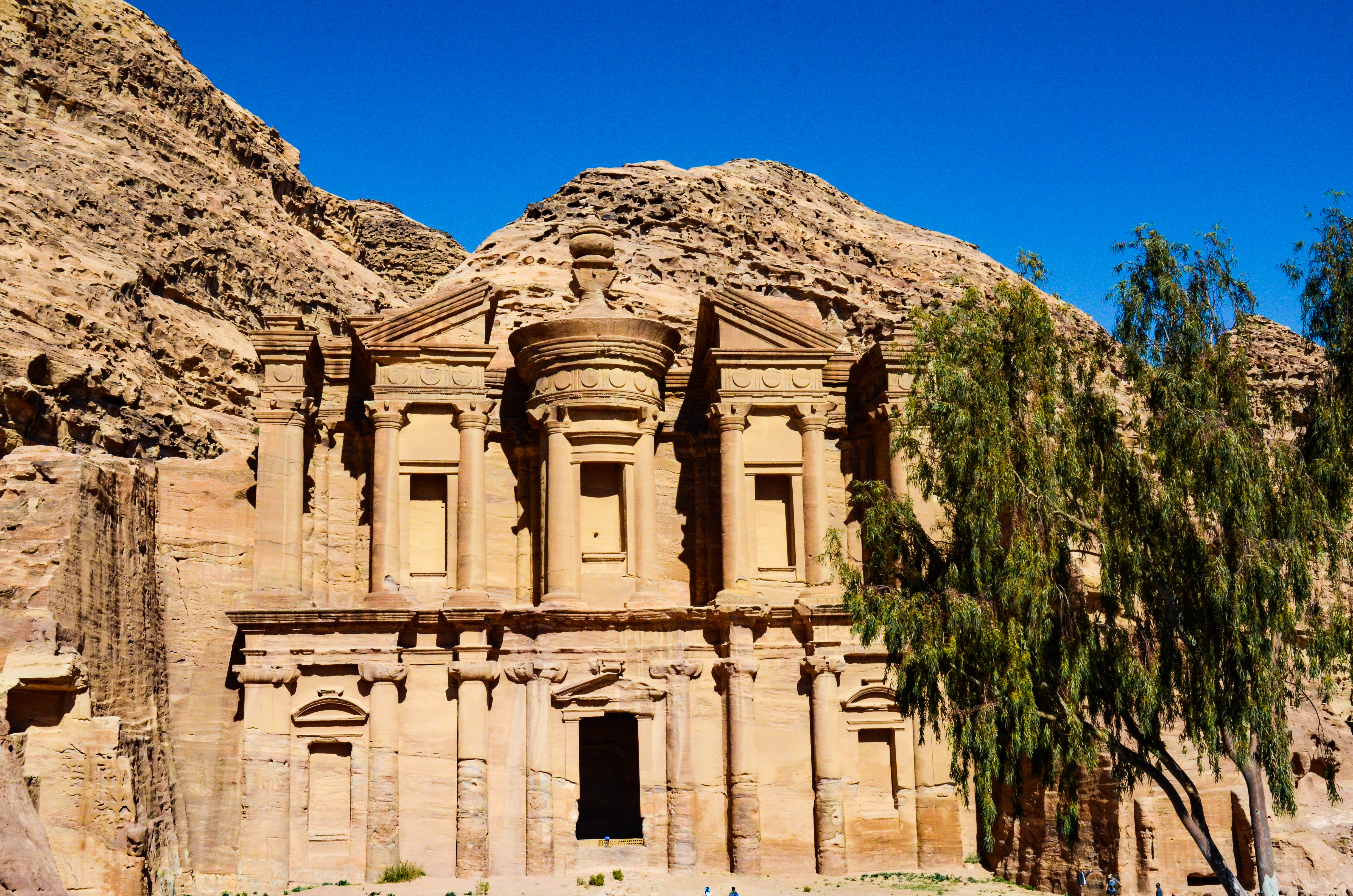
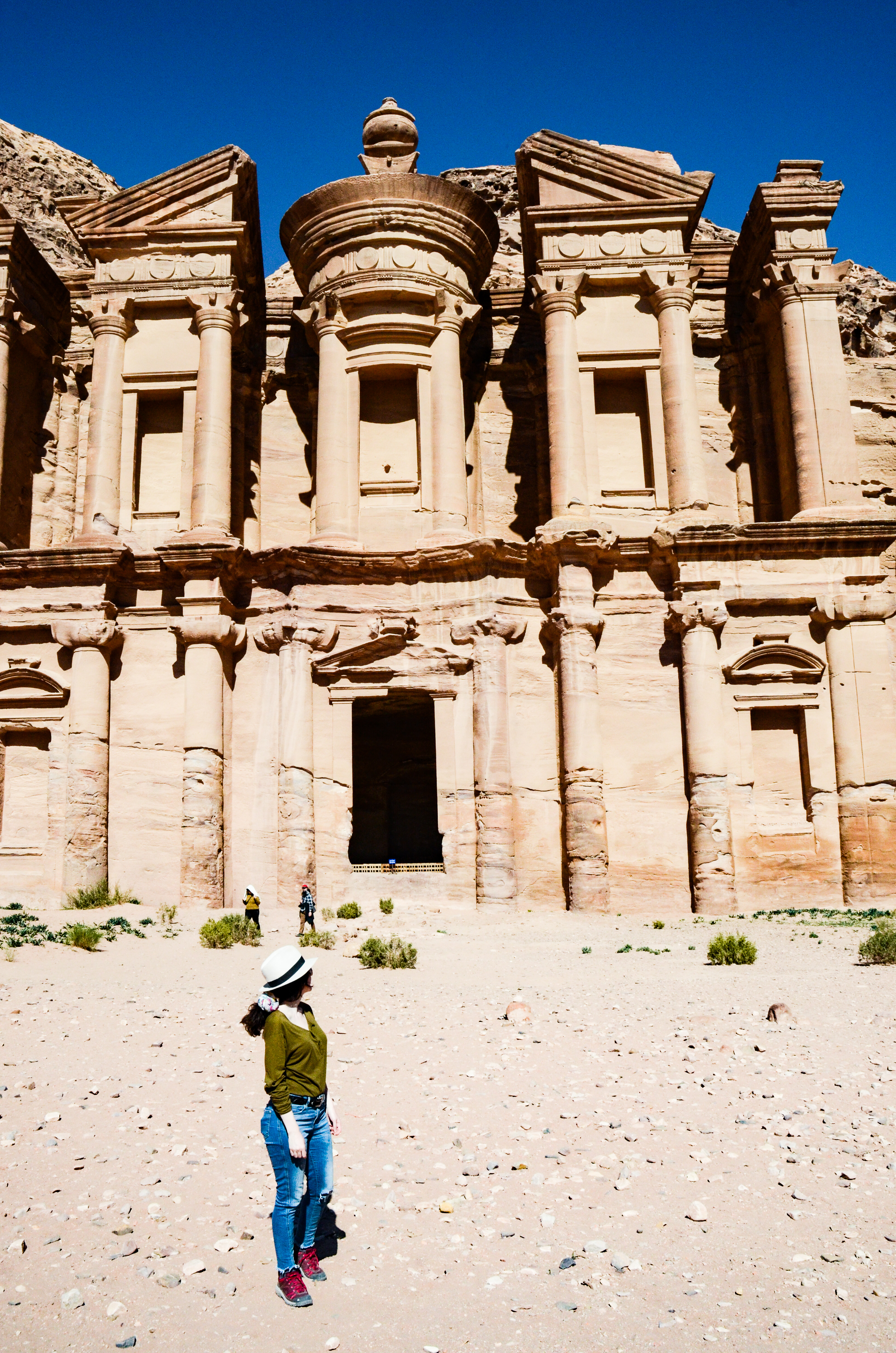
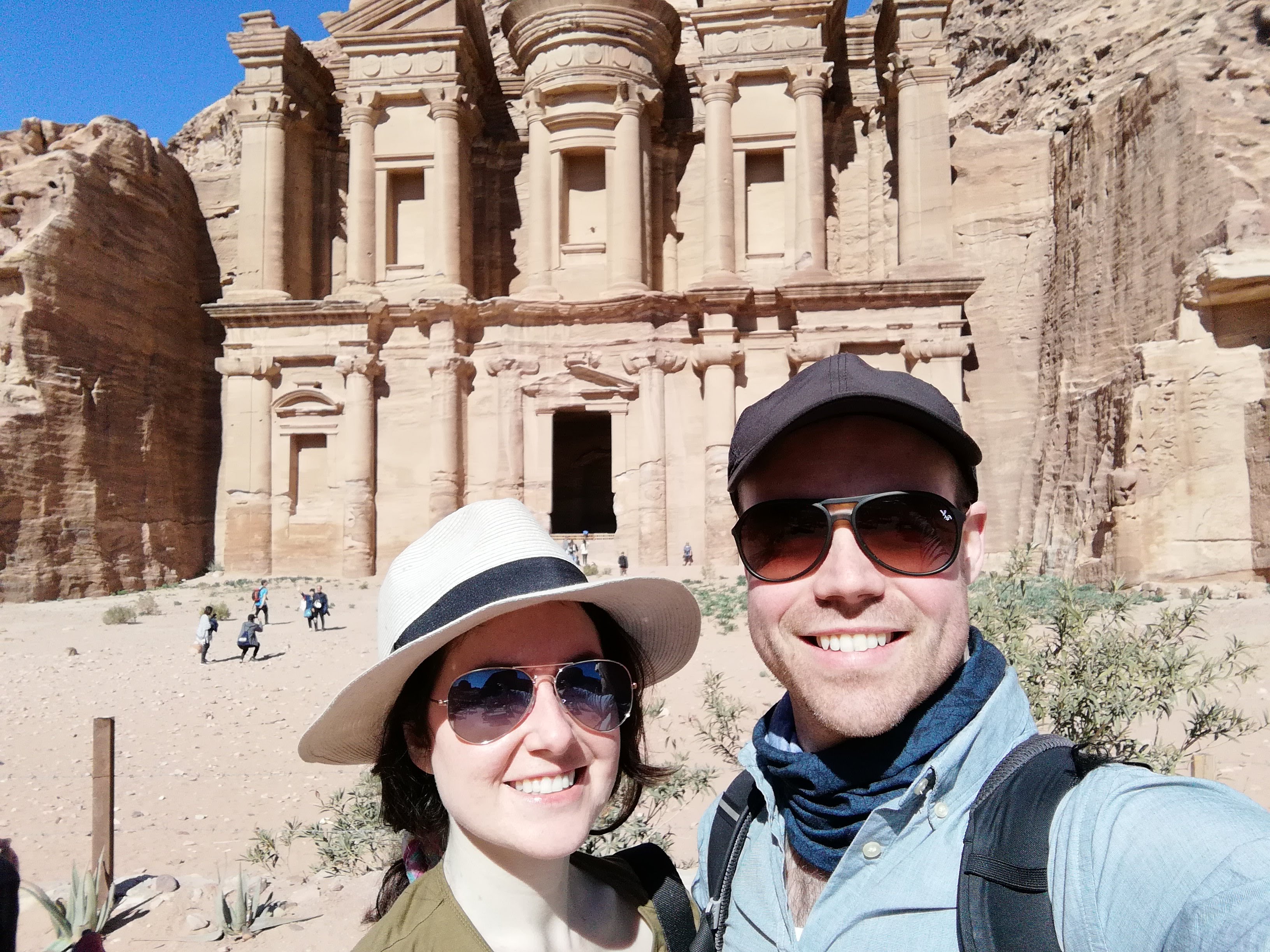
Across from the Monastery, we stopped for a much needed rest at a little cafe. Then, we followed a path leading up to a viewpoint — one of the best in all of Petra. The desert seemed to stretch for miles, with jagged purple mountains rising behind us.
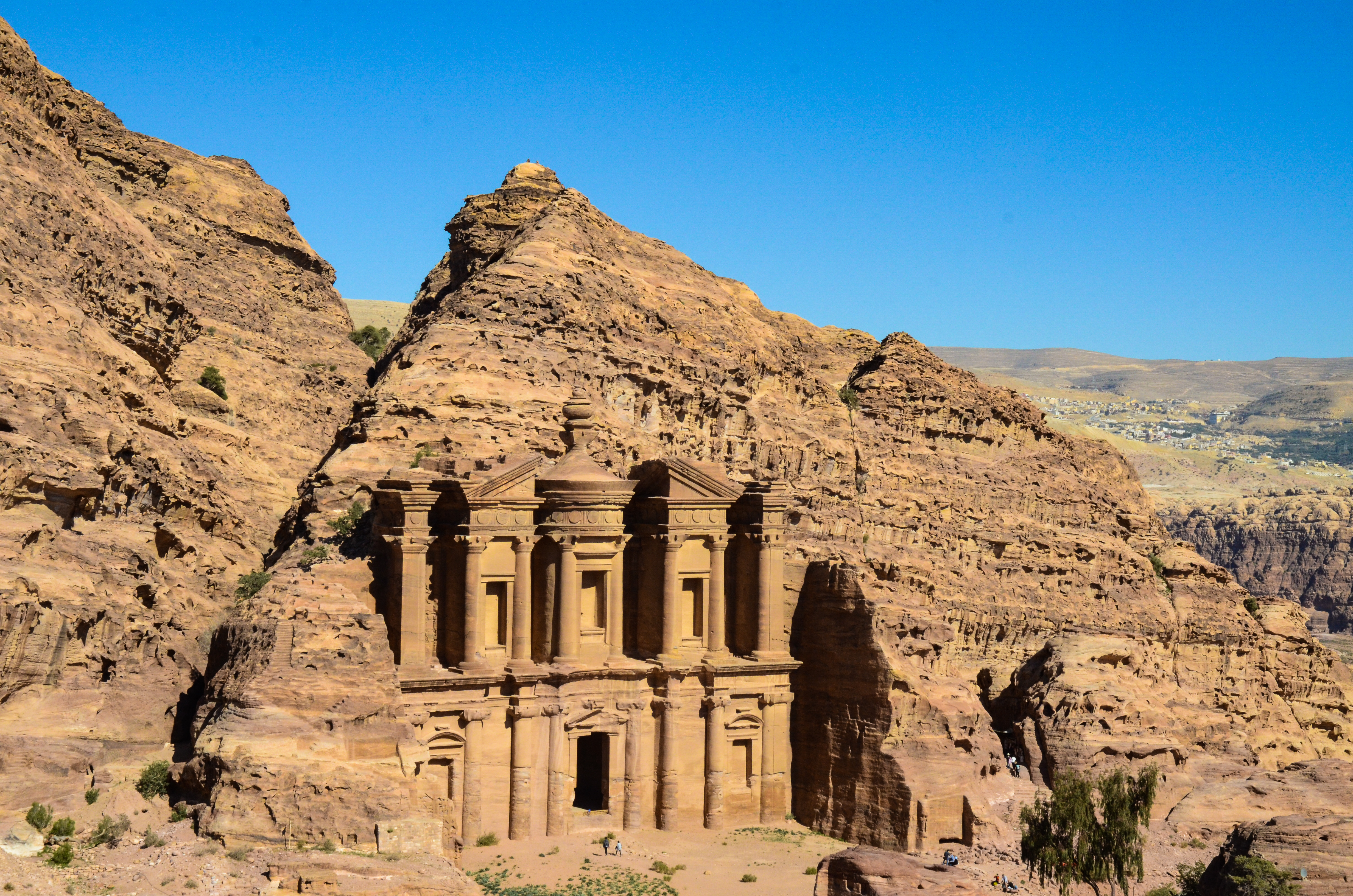
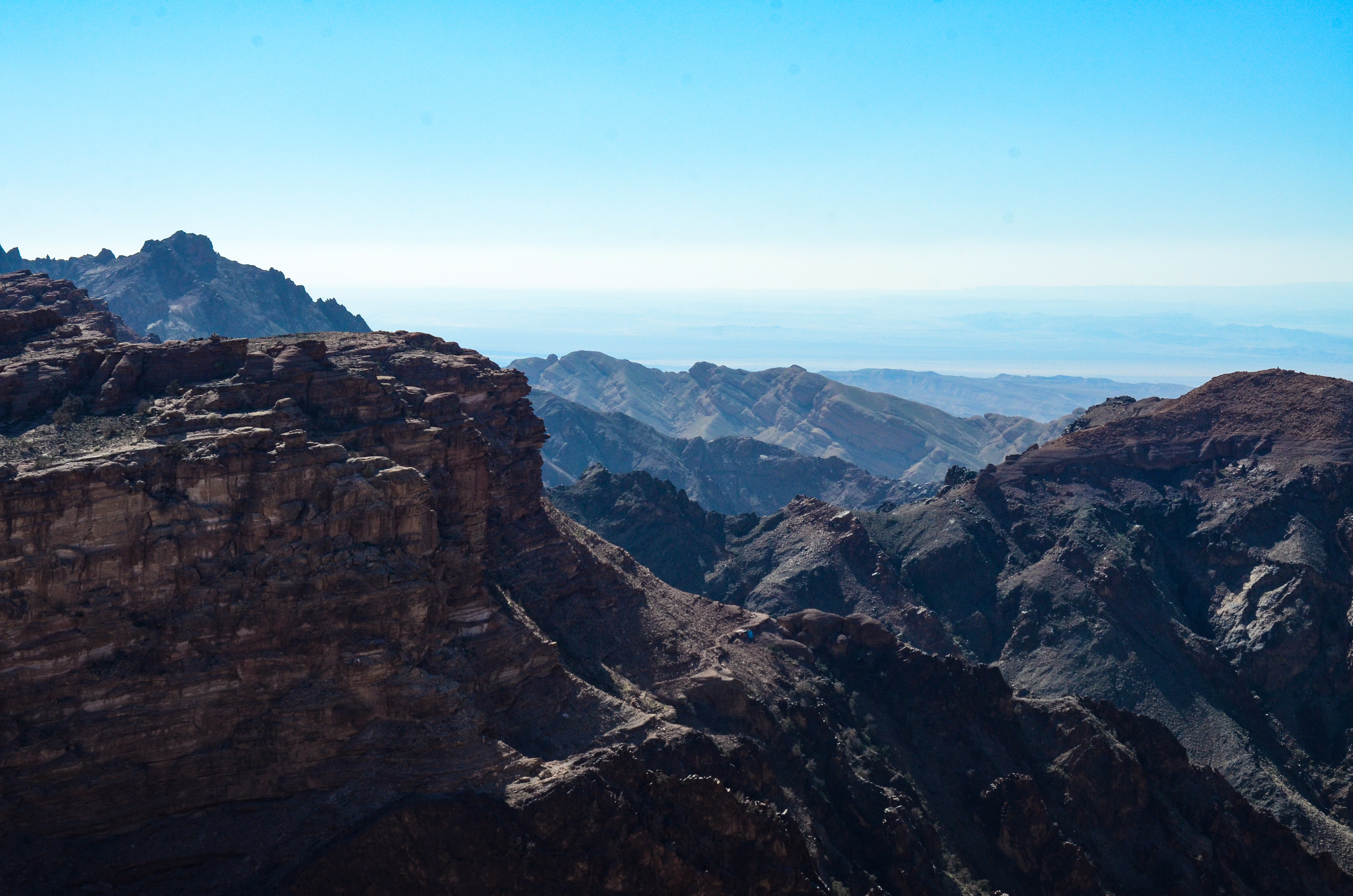
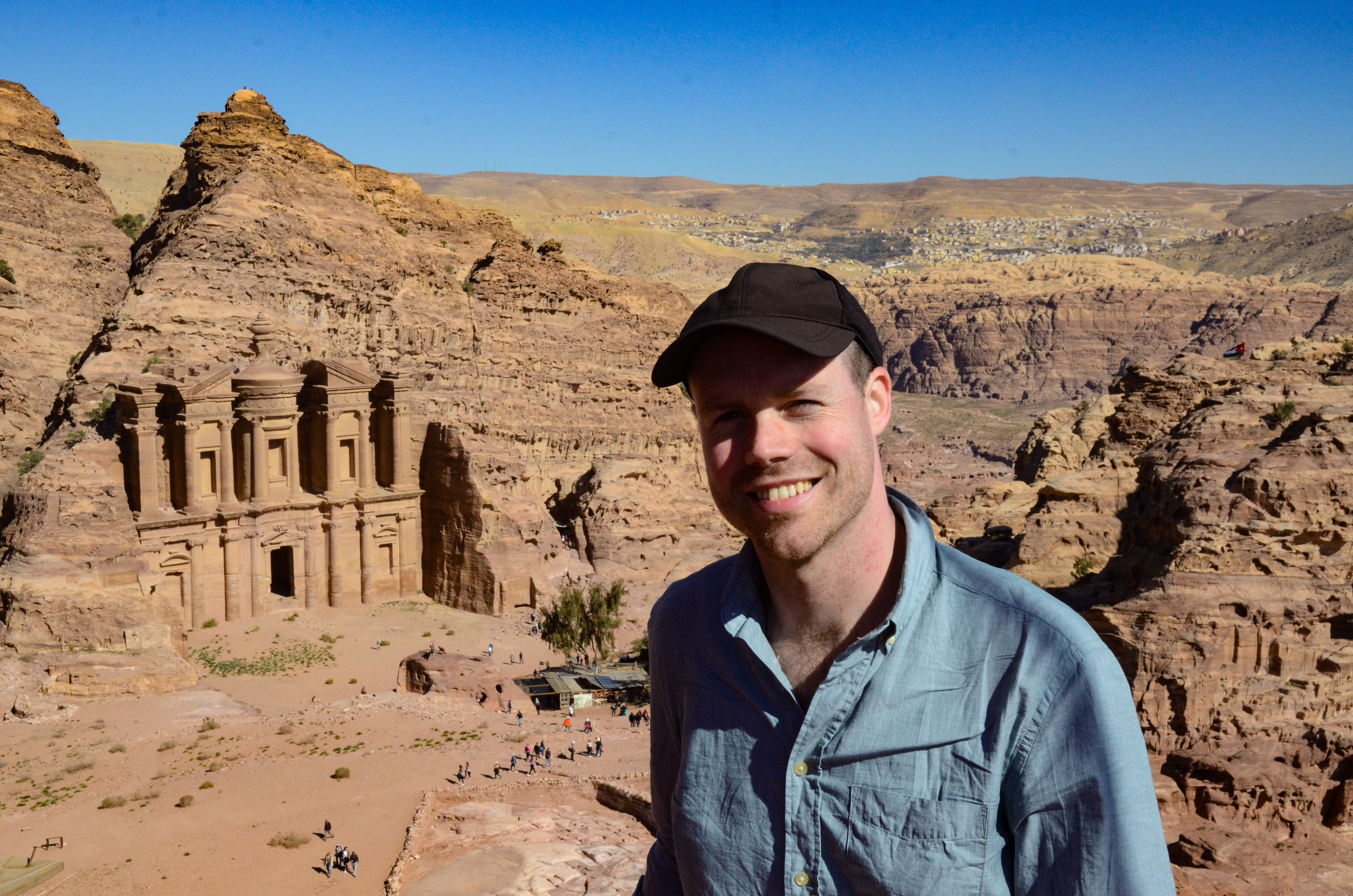
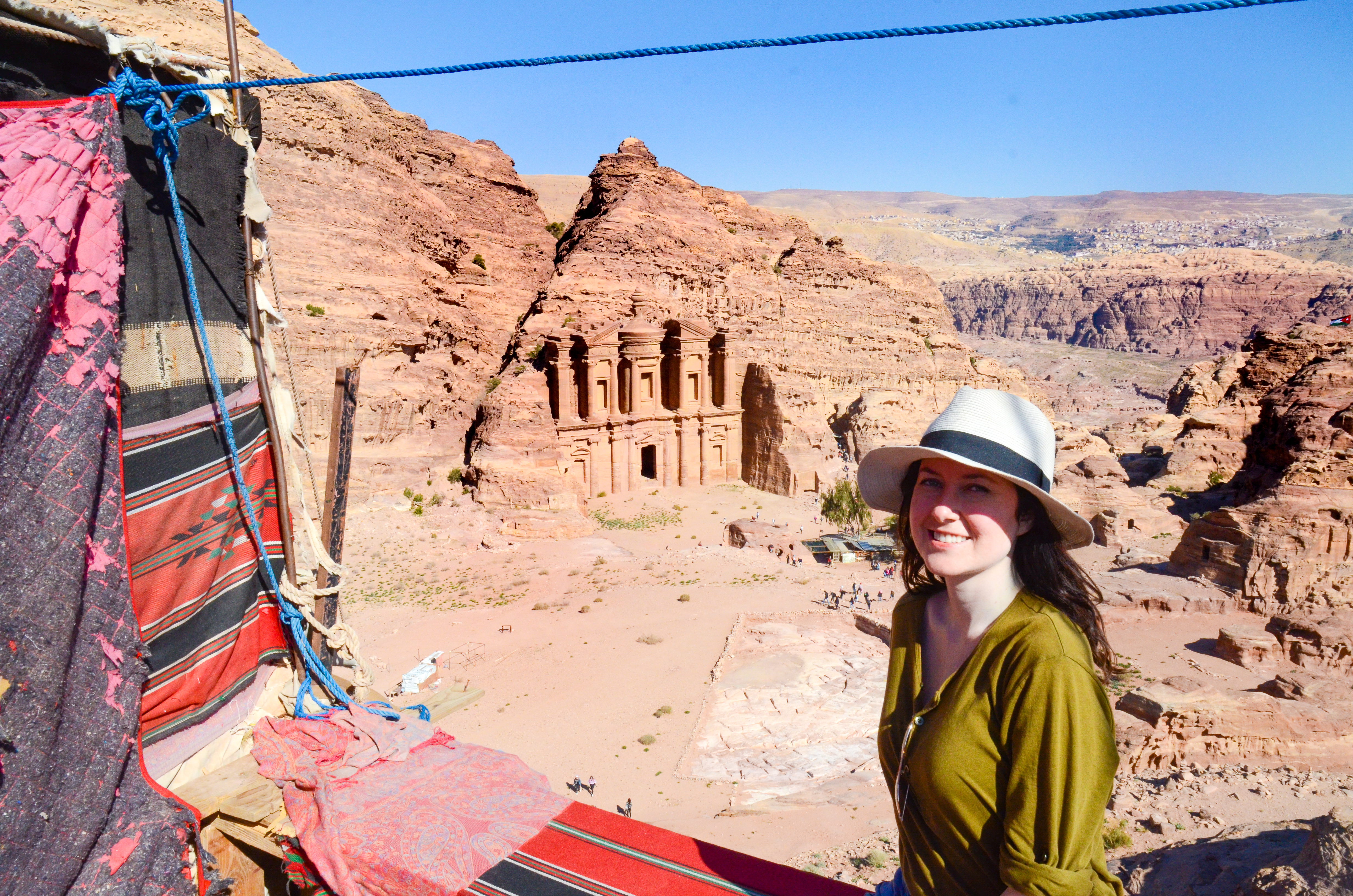
Exhausted and sunburnt, but filled with a fire to see all that Petra had to offer, we prepared for our next big hike — to the Al-Khubtha Trail.
 thewanderingfellows
4 responses to “In the Rose City of Petra”
[…] our first day in Petra, Jordan, we had already explored the famed Street of Facades and the Roman Colonnaded Street. By the […]
LikeLike
[…] exploring the ancient mysteries of Petra and the alien world of the Wadi Rum desert, we ended our incredible week in Jordan with a 2-night […]
LikeLike
[…] Next up: Petra by day […]
LikeLike
Simply Breathtaking and Beautiful to
Experience …I would love to make the incredible journey to witness its Marvel and Majestic view that would bring Inner Peace and Tranquility within my Heart and Soul. Truly a Wonder in Creation!
LikeLike