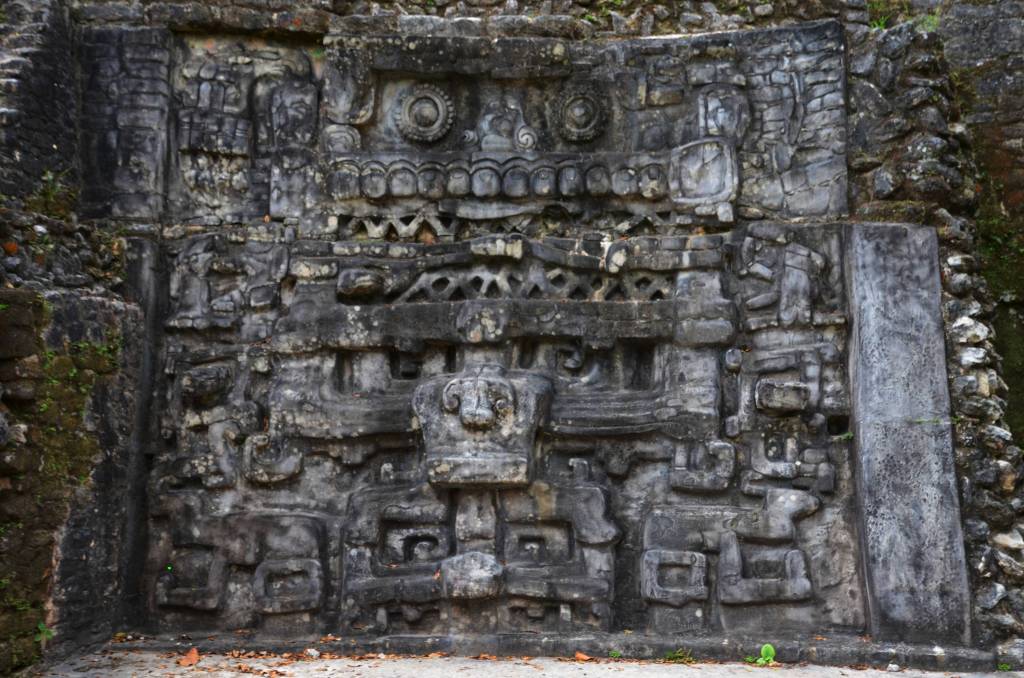
All around him, the forest had been so full of life, but now the humming, buzzing, cawing and howling had fallen silent. In the shadows he saw stone steps that led to nowhere and great mounds of decaying earth and crumbling rock. And the more he looked, the more he saw and the more he stared into the wild, laughing faces of the figures carved into the rock. For there among the creeping weeds and fallen leaves was all that remained of a once great Maya city.
In 1938, an unsuspecting woodcutter in Belize stumbled upon ruins in the depths of the jungle. Long dead and abandoned, the city of Caracol remained hidden from the modern world by great palm trees and hungry, strangling ivy. In the 6th century its power and greatness had rivalled the likes of Tikal in Guatemala, but today, only a few structures and carvings remain to tell its story.
I’ve always wondered what it must have been like to discover a lost city as an explorer of old. How it must have felt to suddenly find yourself dwarfed by towering stepped pyramids, so cold and alien in the middle of a thick, wild jungle. The closest I’ve ever come to capturing that feeling was exploring the Maya ruins of Caracol in May 2022.
While a few decades have come and gone since its discovery, getting to Caracol is nearly as adventurous as it was back in the day. As it’s located near the disputed Belize-Guatemalan border, the only safe way is through the massive Mountain Pine Ridge Forest — an off-roading trip that isn’t kind to any rental car. To save ourselves the worry, we booked a full-day tour with Belize Nature Travel.
We met our guide, Mike, bright and early at Table Rock Jungle Lodge and set off in his old Toyota Land Cruiser. He said he was “Mestizo” — half Mayan and half Latino — from the nearby Maya city of San Ignacio. He was a joy to be around from the beginning and his enthusiasm and passion for Maya history and culture was infectious.
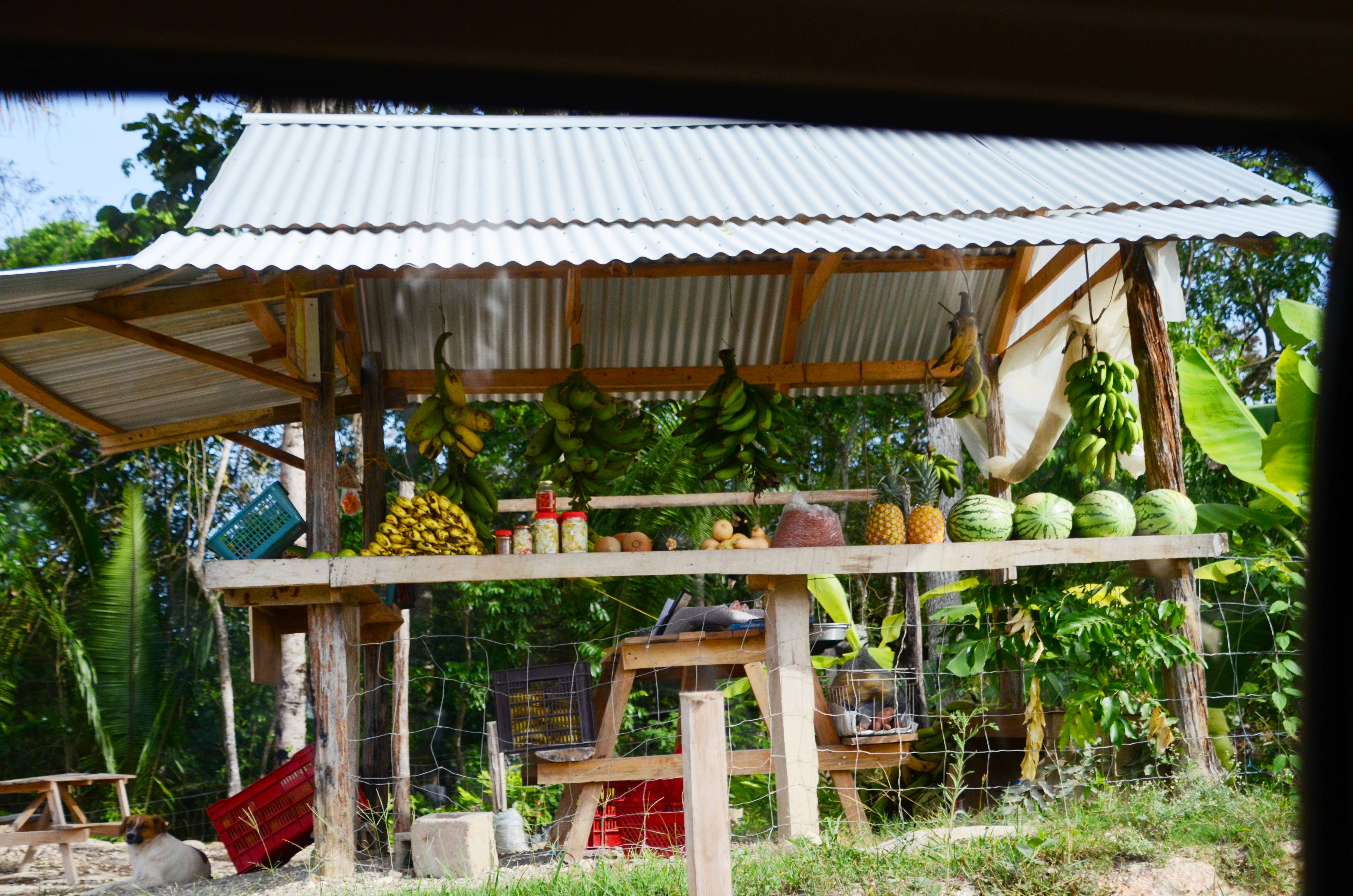
The drive to the pine forest was about an hour, and we spent the whole time talking to Mike about his family, archeology and the history of Belize. Along the way, we stopped at a fruit stall which he said had the absolute best bananas.
In one particularly sweet moment, he gave us advice for a happy marriage — the same advice he had received from his grandfather years ago. “Communication is important but it’s really all about respecting each other, and the little things you can do to make life easier for them.”
Among the pines
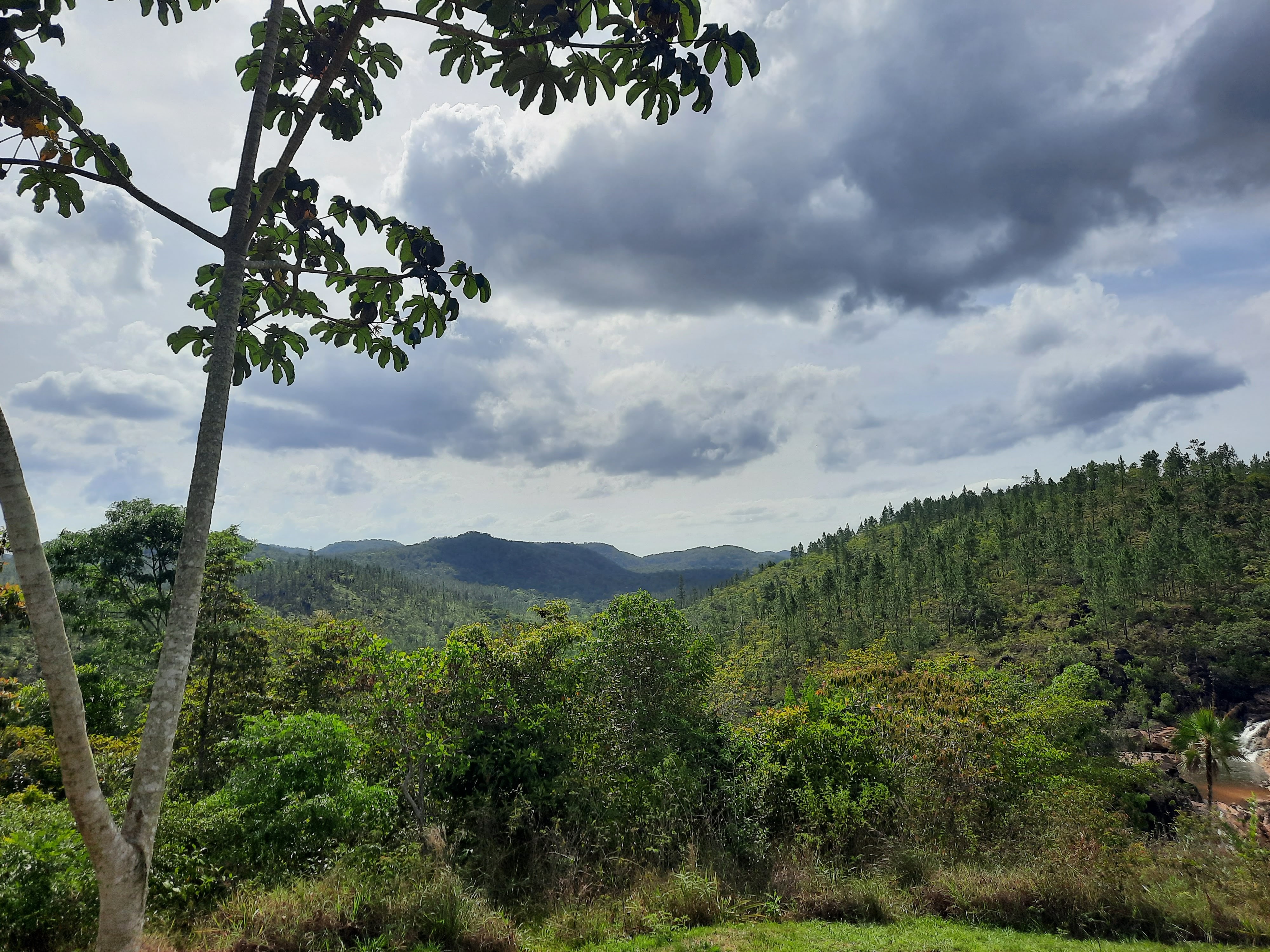
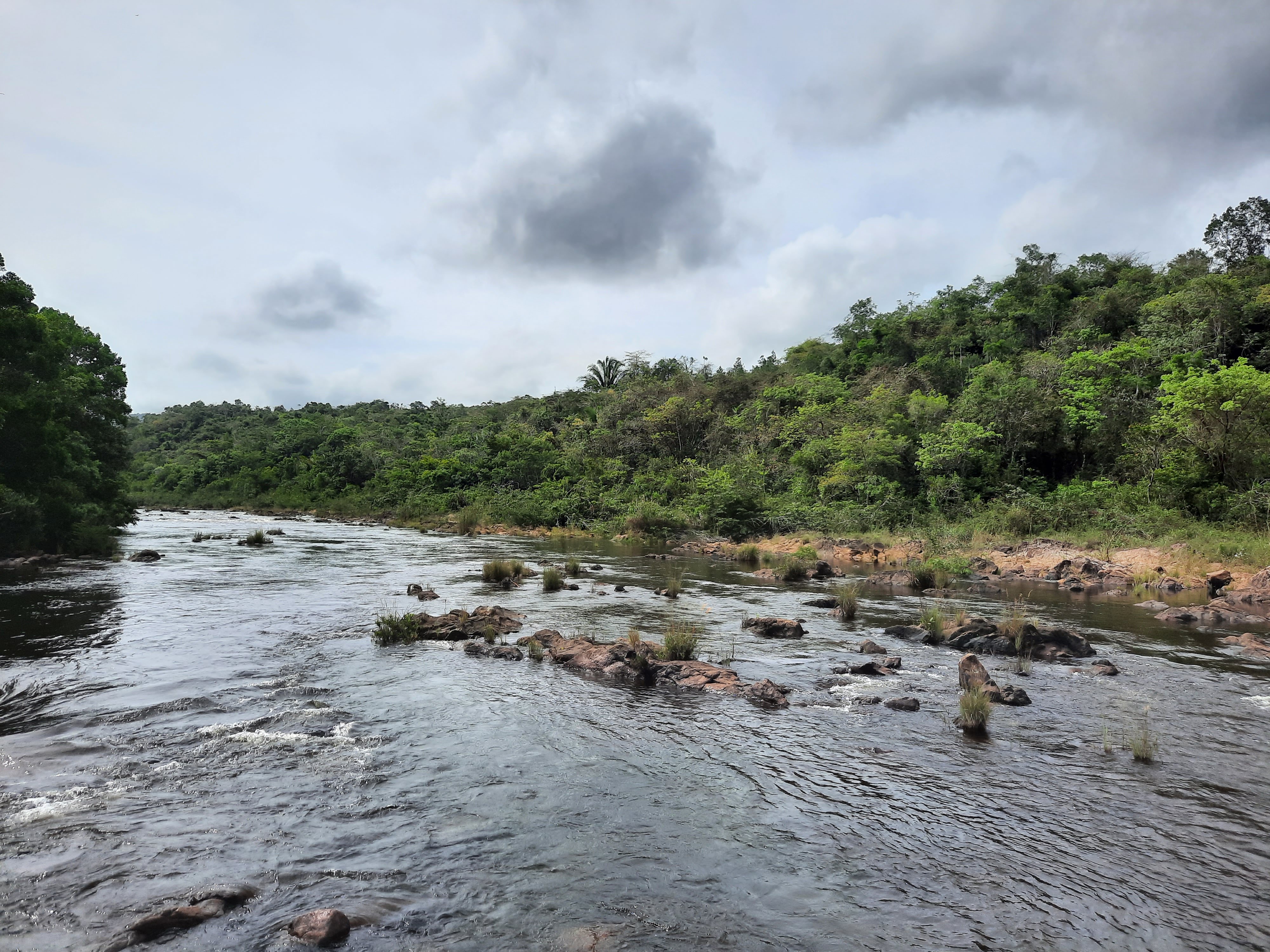
Once we entered the Mountain Pine Ridge Forest, Mike expertly took on all the potholes, boulders and narrow bridges that made up our little road. It was a slow, bumpy ride, but it gave us time to enjoy the views of the forest.
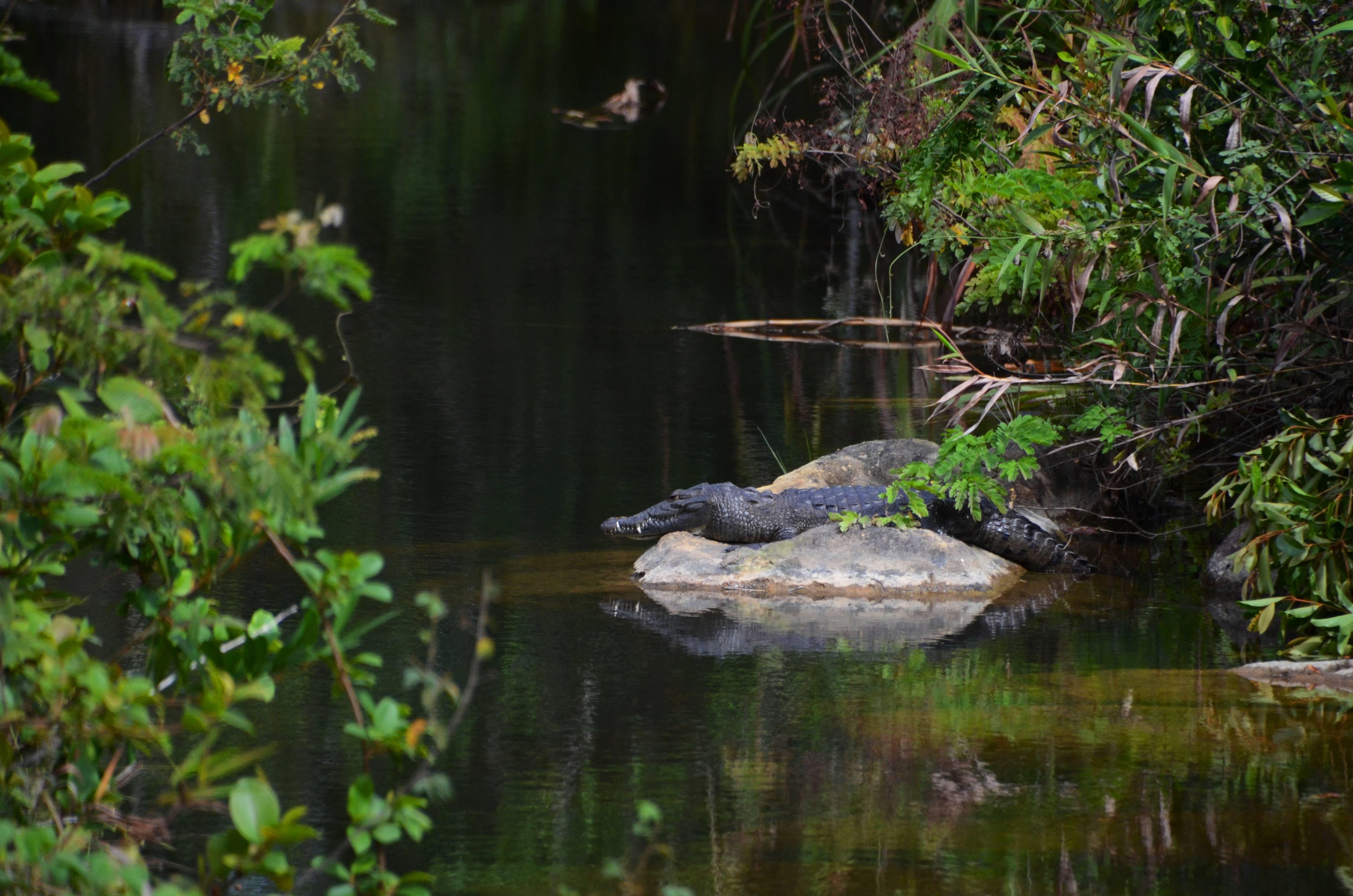
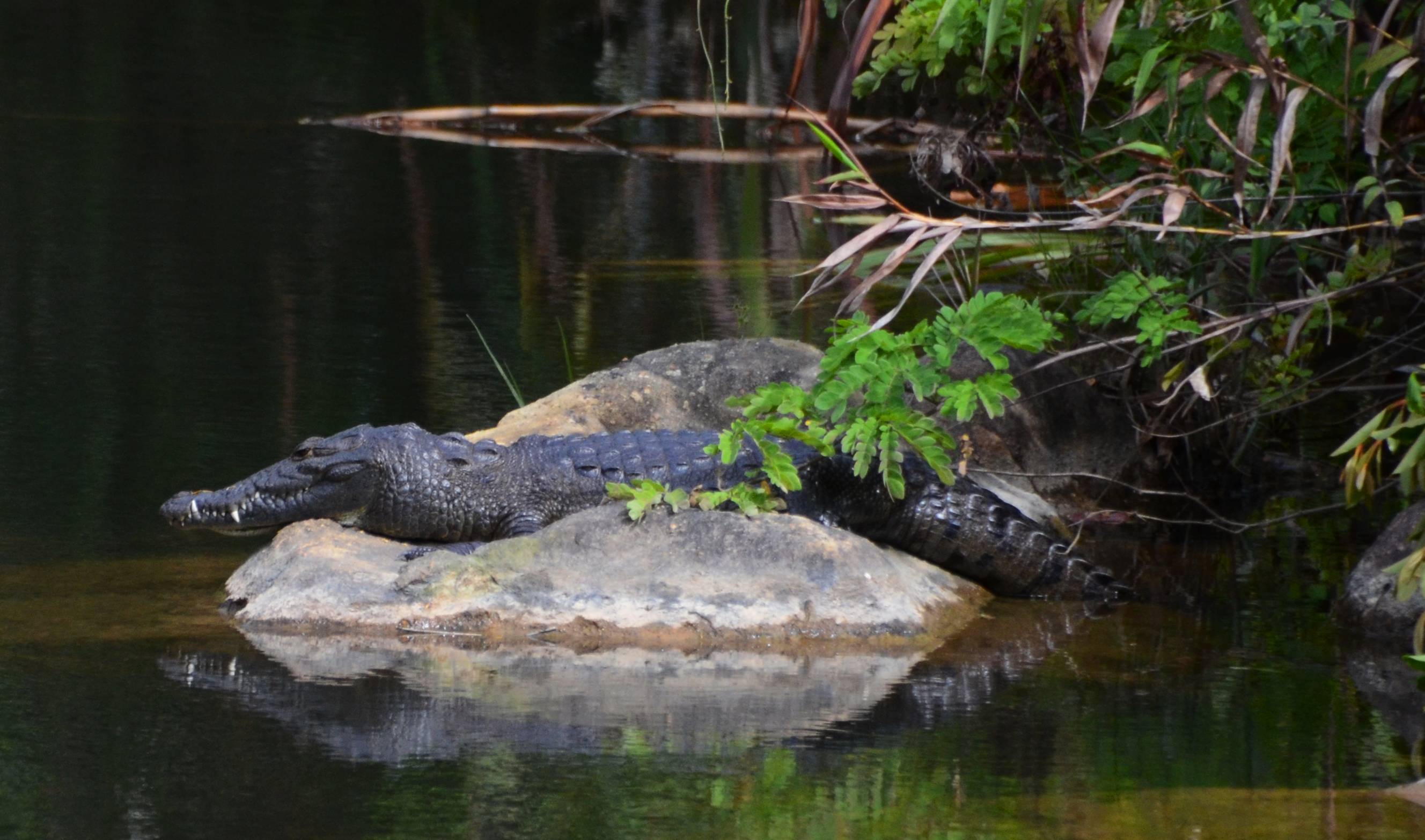
Seeing pine trees and open valleys felt strange after spending days in the heart of the rainforest — it was like we were back in the US or UK again. But the exotic wildlife was still all around us, and Mike pointed out a coatimundi crossing the road, a small toothy crocodile in a bubbling creek and a black hawk hidden in the pines.
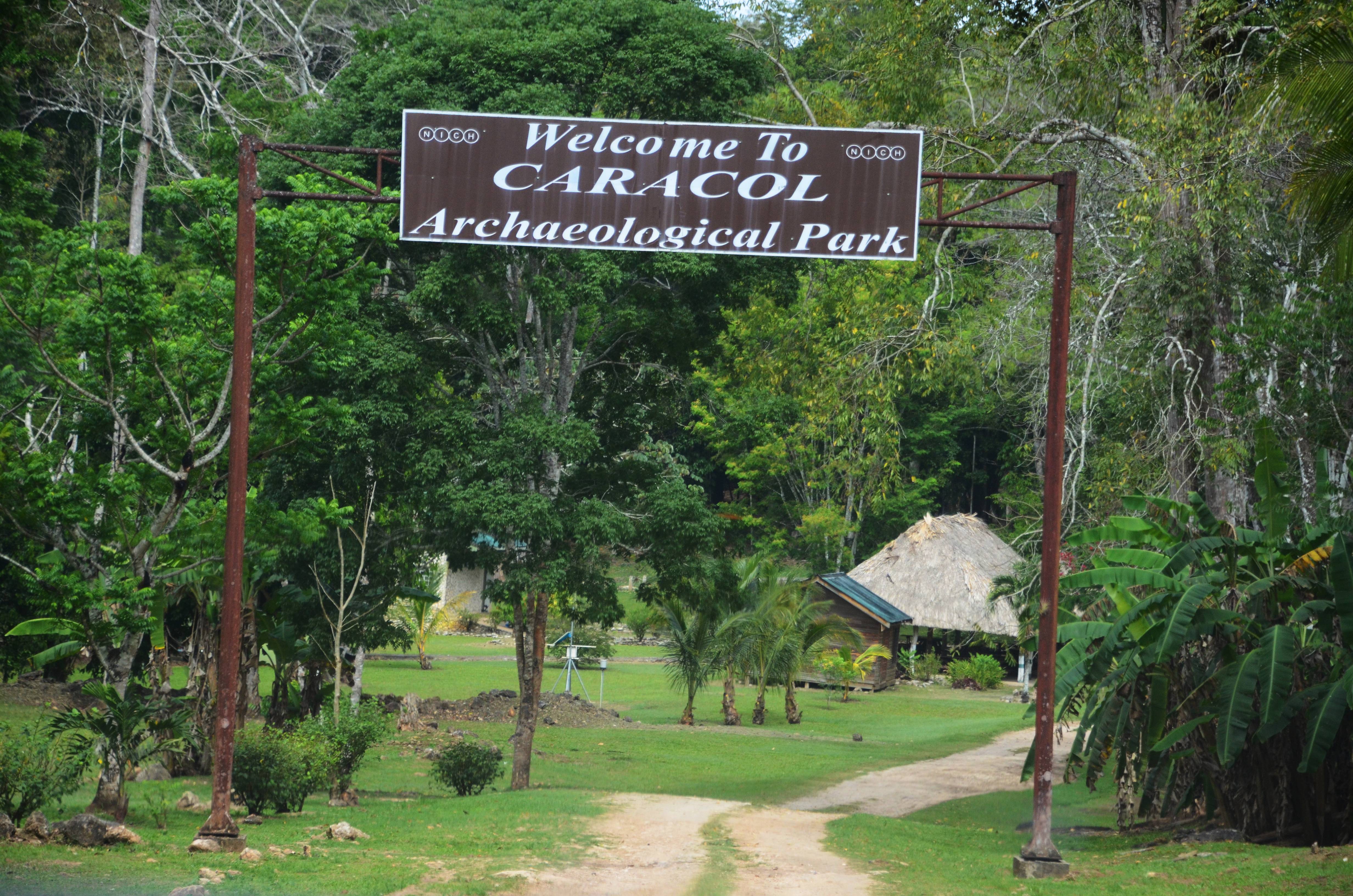
As we drove into Caracol, all was quiet. The parking area and visitor centre looked tired and practically abandoned. The only sign of life was a grim soldier, heavily armed and sweating bullets in his uniform.
Happily, we realised we had the place to ourselves — but it felt a little eerie, as if we had been thrown back in time. Here we were, all alone at the dangerous border with Guatemala, walking through a thick jungle and heading toward an ancient city. Who knew what fate awaited us.
Walking with giants
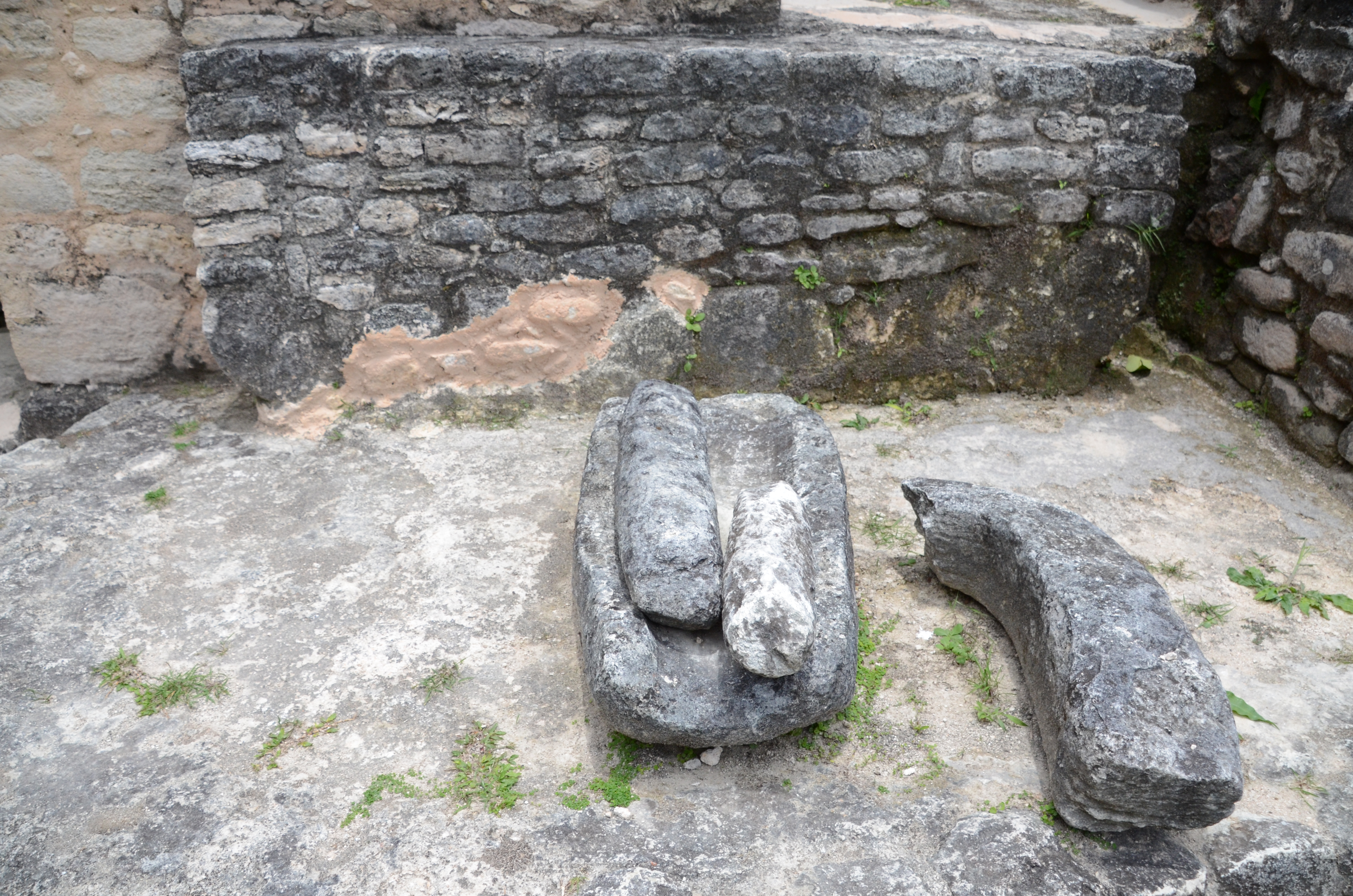
Mike started our tour in the jungle among the fire ants and mosquitos. Swatting as we walked, we came across the stone foundations that once made up the houses of the commoners of Caracol. We learned that the flooring was built in two layers to protect against monsoon flooding, which would have happened often in these central lowlands.
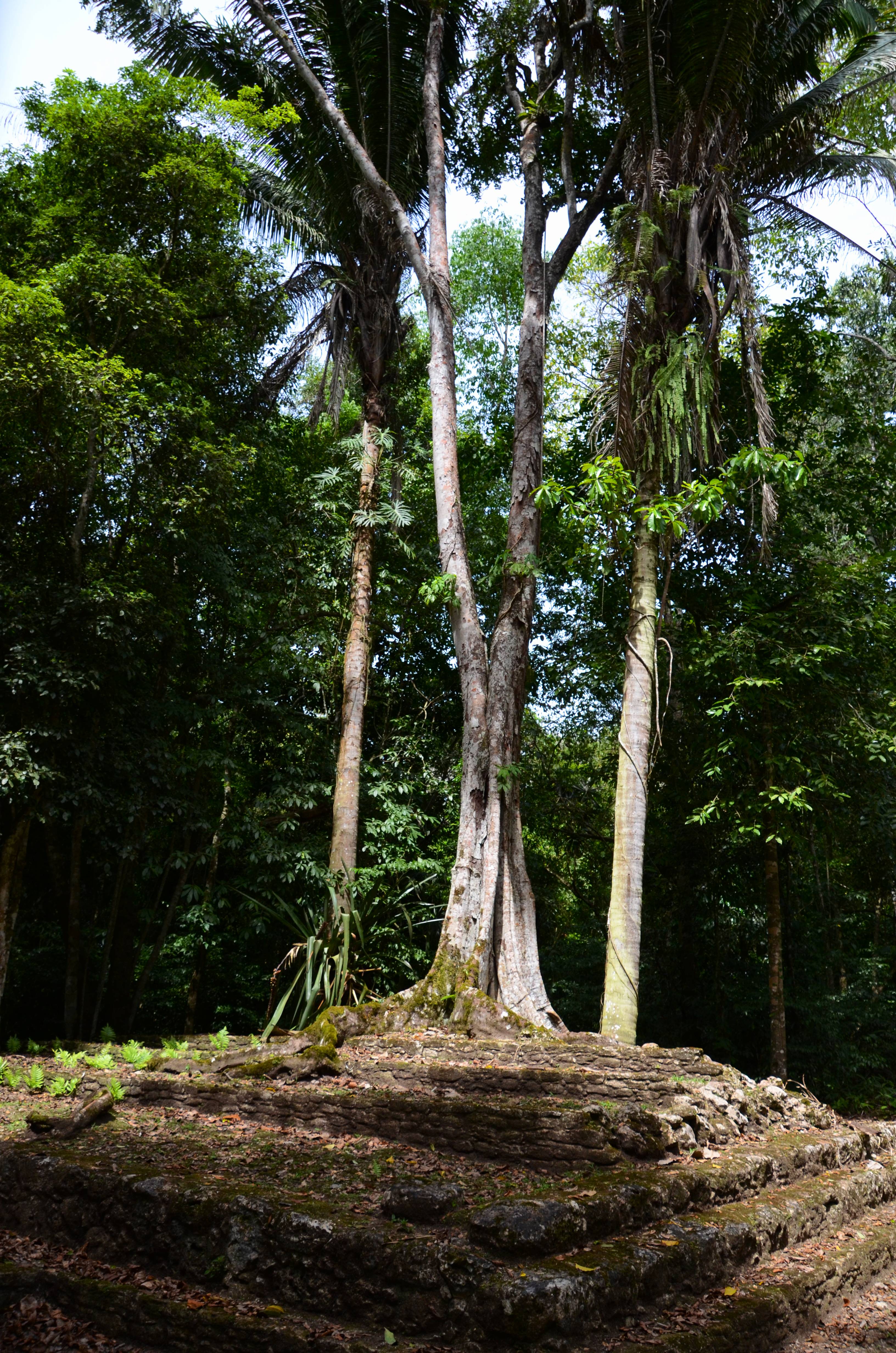
I remember being struck by the immensity of the trees around us. Huge palm trees marked the houses of the dead like monolith headstones.
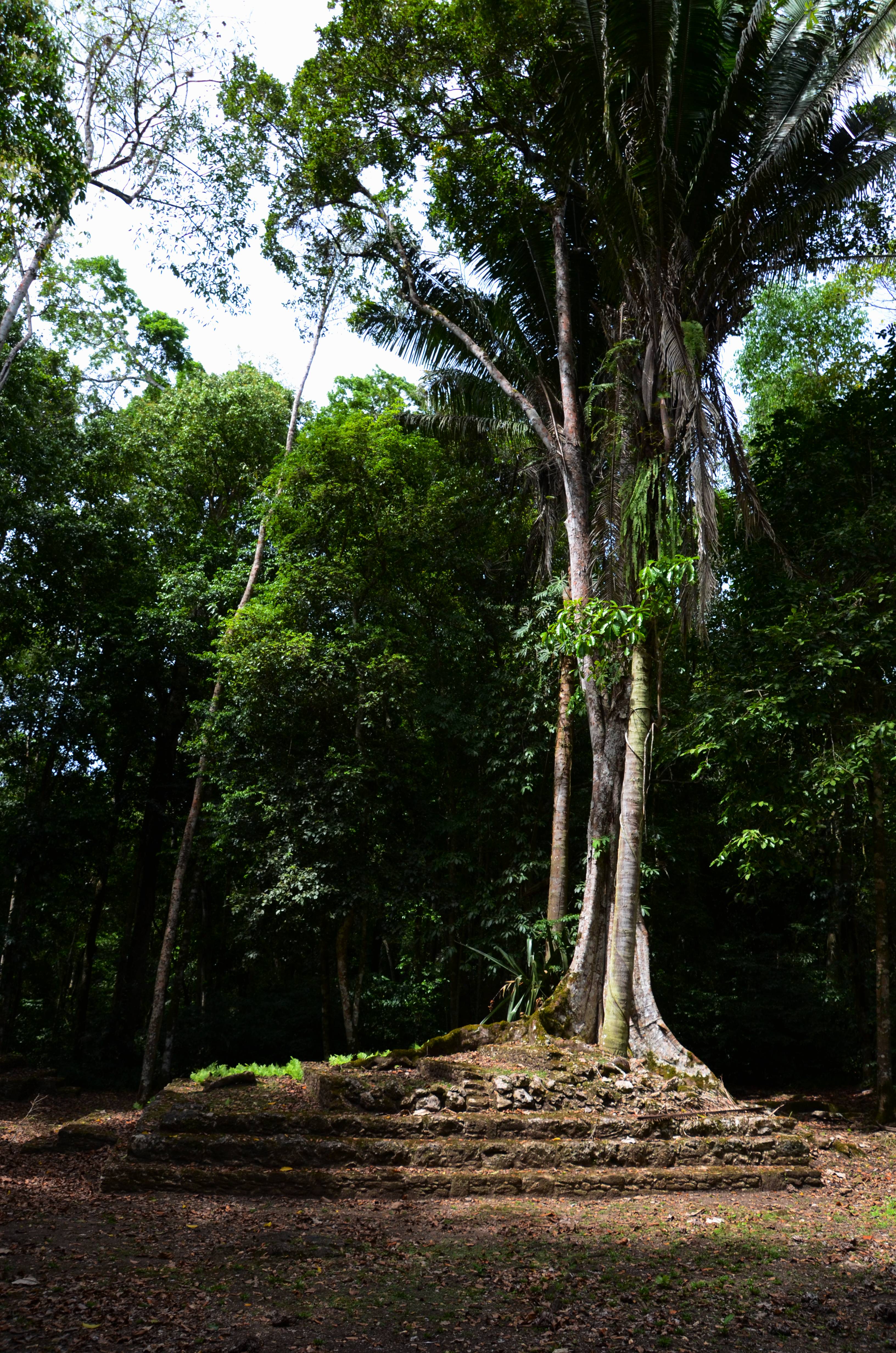
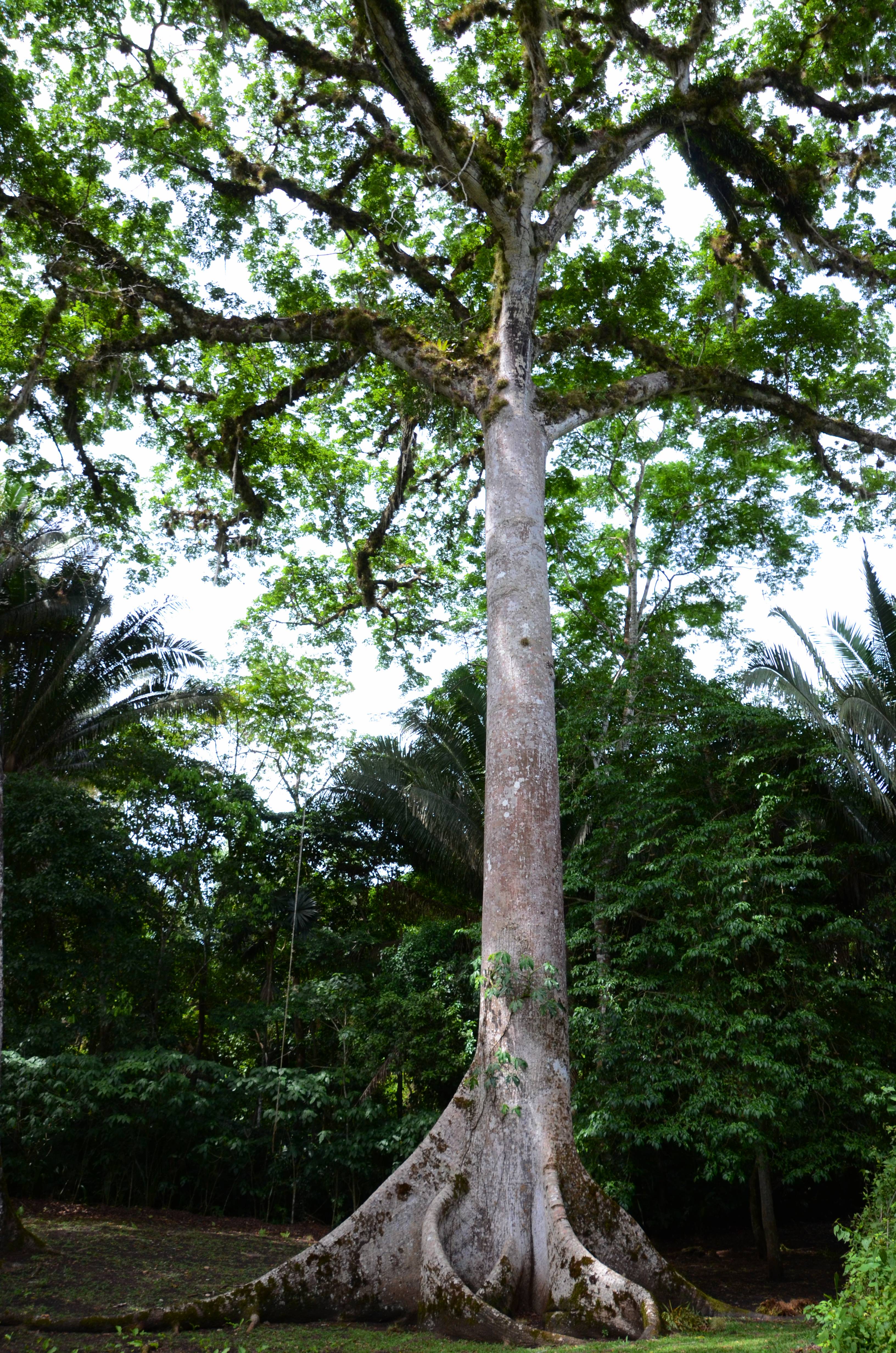
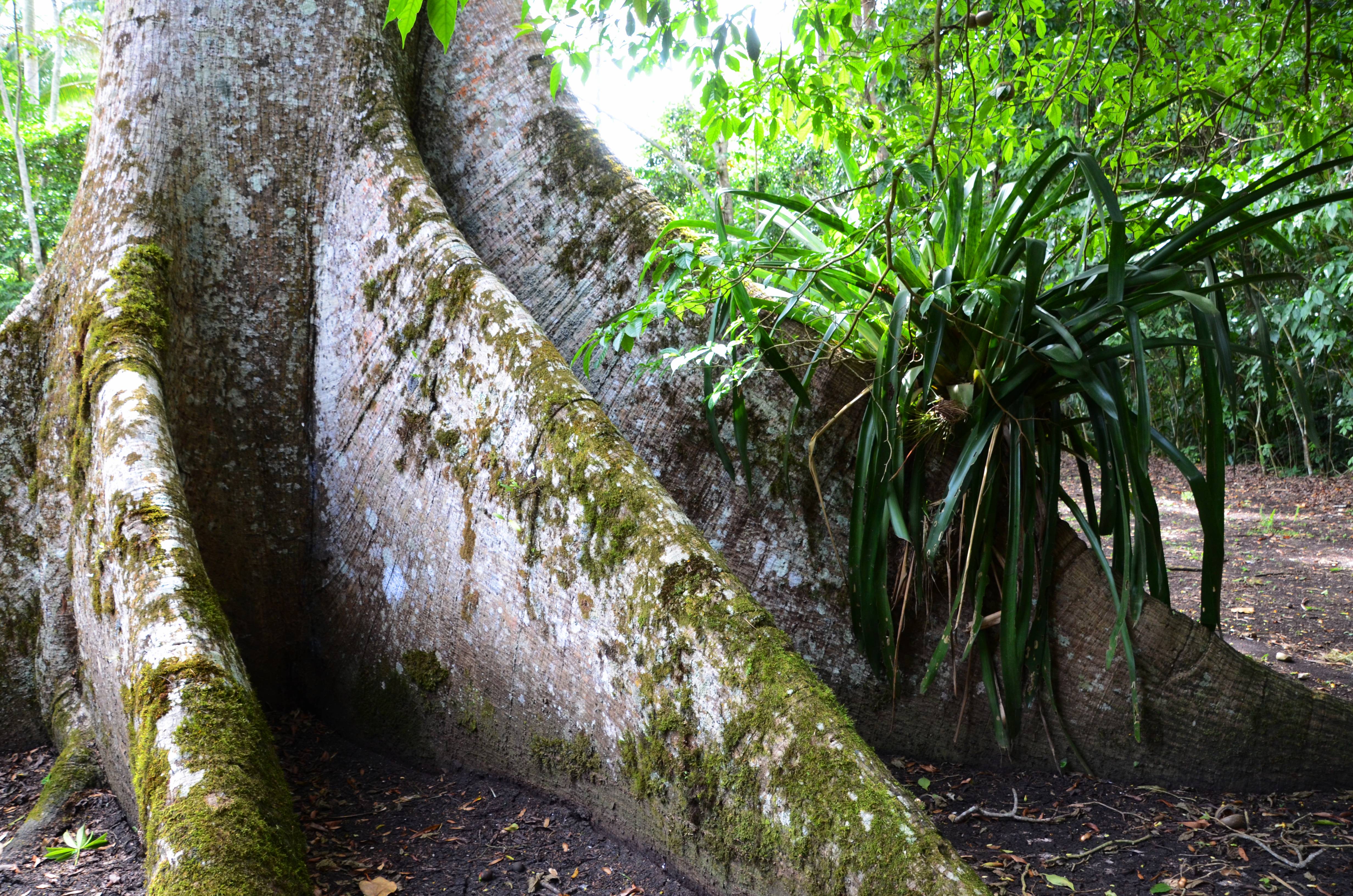
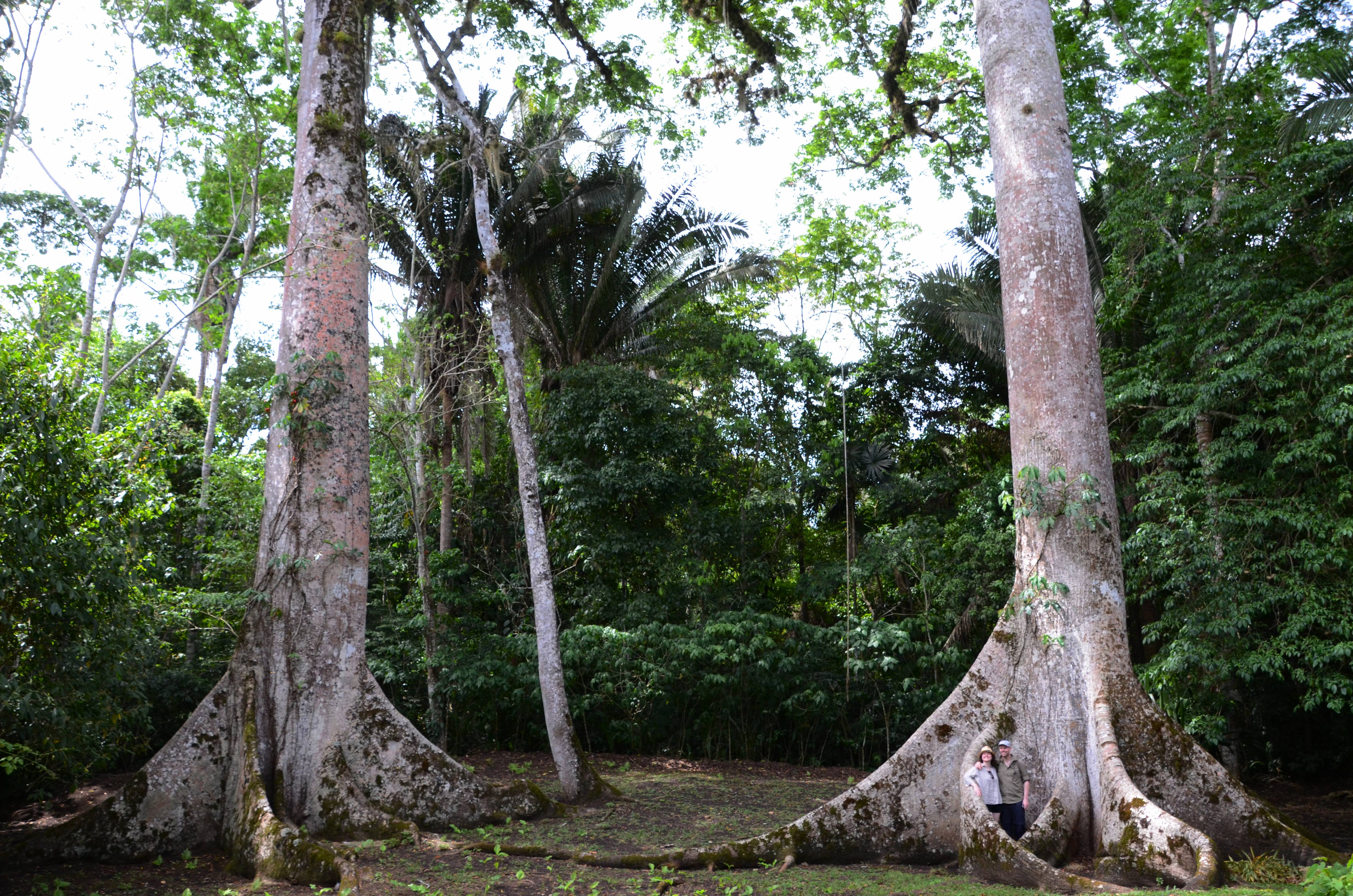
Yet larger still, were the Ceiba trees on the path up ahead. My jaw dropped. Their roots alone dwarfed me by a mile. As we stood at the base of one, I felt as small and insignificant as the ants that were crawling up their mighty trunks.
Considered sacred to the Maya, the Ceiba, or Tree of Life, as they called it, was believed to connect the three layers of the world with their roots in the Underworld, their trunks here on earth and their branches high up in the Heavens. Craning my neck to gaze into the never-ending canopy, I believed every word.
Ghosts in the ruins
Next, we walked to a small plaza with larger mounds. Mike showed us the dark, creepy gates at the base of two of them. One was broken and the earthen foundation uprooted — clear evidence of tomb robbers searching for valuable jade trinkets. Luckily, they had somehow failed to enter the other mound, which had recently revealed a giant jade mask worth millions.
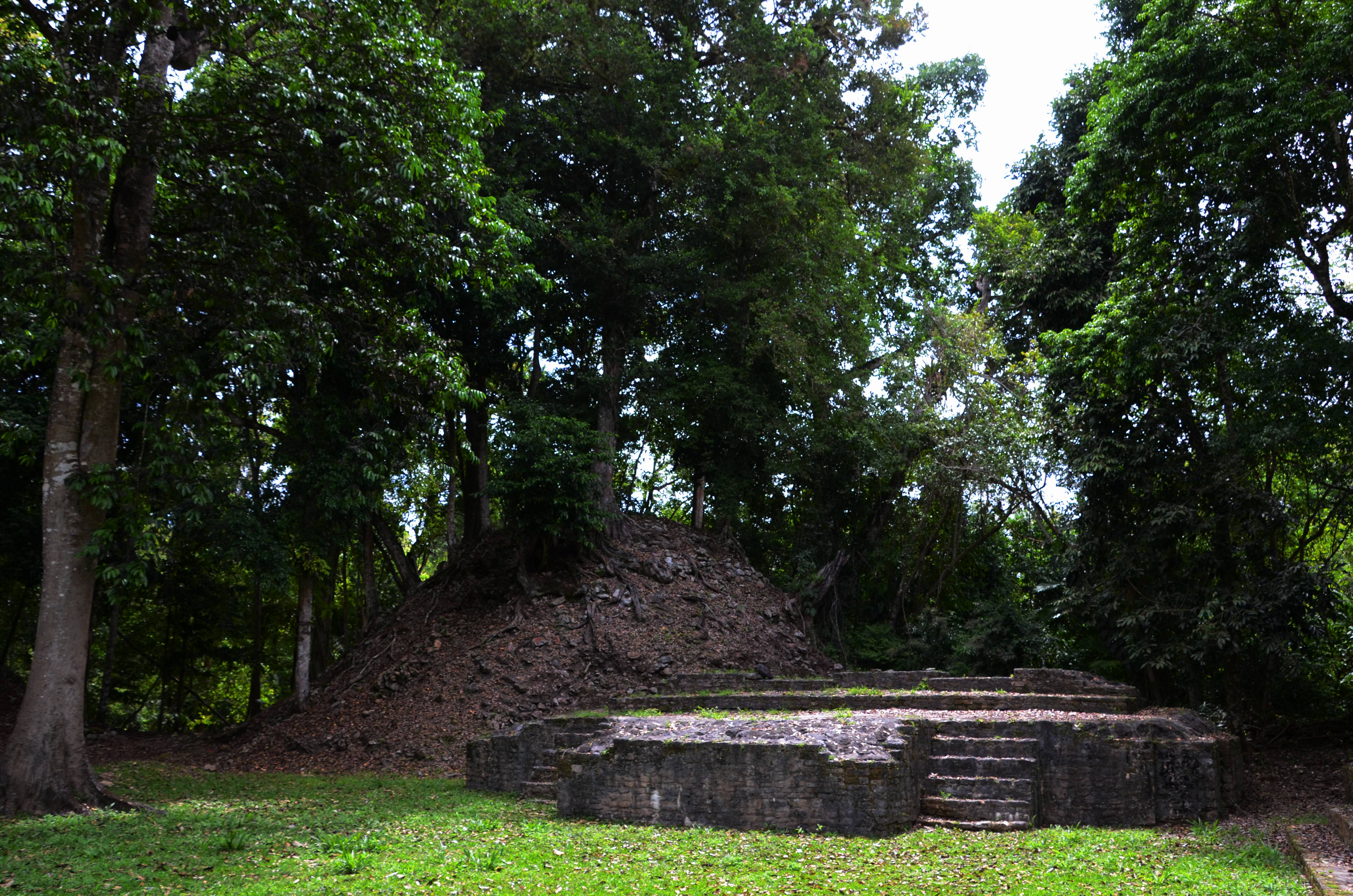
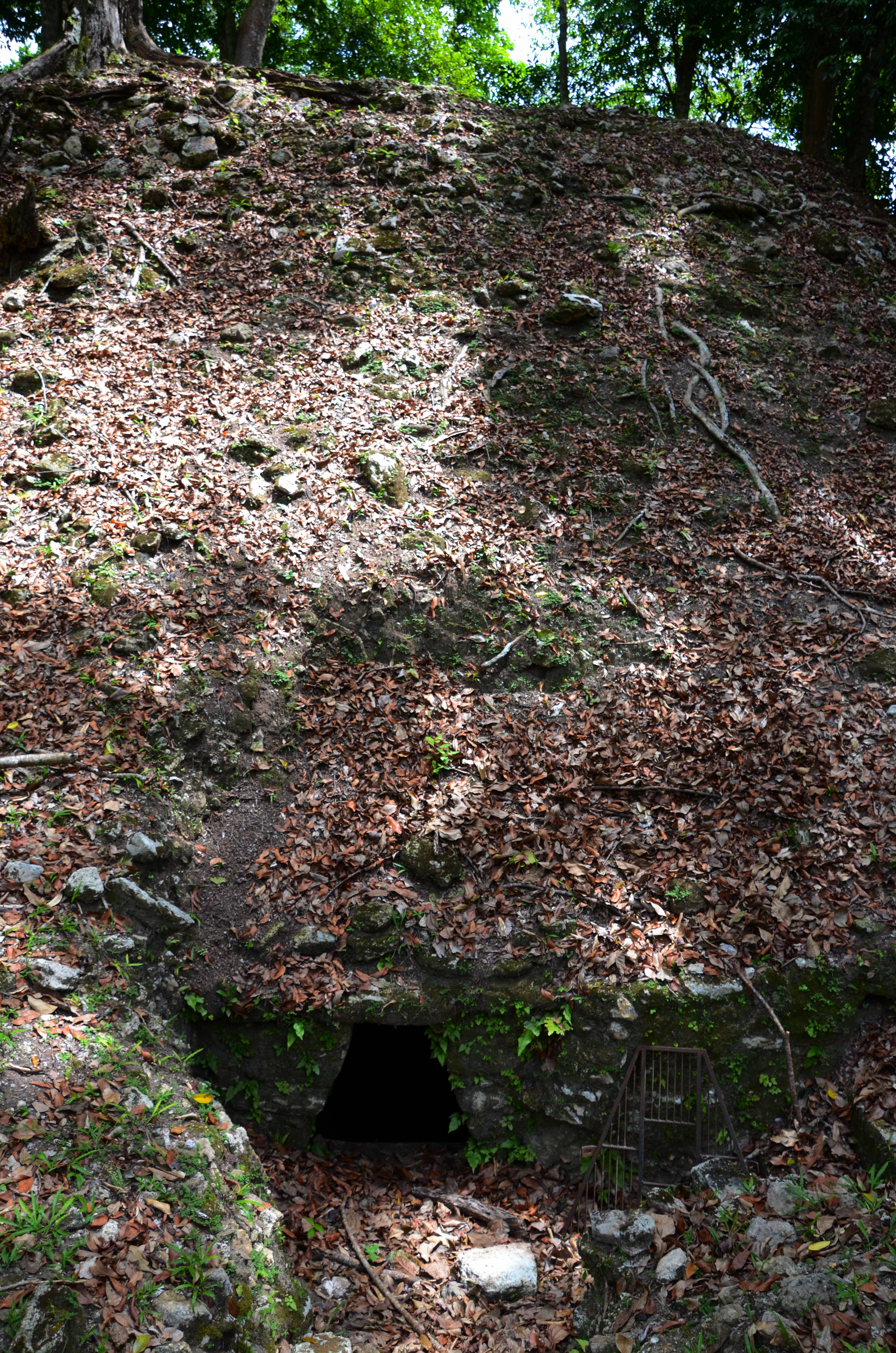
Much like the Egyptians, the ancient Maya cast spells to protect their tombs, and the Curse of the Mummy is a very real fear here. Mike told us that today, before any tomb is opened, a local Maya shaman is asked to break the spell and protect the archeologists and crew from the dark magic.
Mike went on to tell us a fascinating story about a friend who foolishly dug up the burial mounds on his property and discovered small jade figurines buried within. After selling them on the black market, he got greedy and was determined to dig up more of the mounds. Mike said he warned him to stop, that he must respect the magic, but his friend didn’t listen. Days later, he was found dead, sitting upright and cross-legged in his yard with no obvious signs of a struggle or heart attack.
“The spirits had come for him.”
Watchers in the Trees
We soon found ourselves in the Pok-A-Tok arena, where the citizens of Caracol would’ve played their favourite ball game using only their hips, elbows and knees to hit the ball. Suddenly, the nearby tree began to shake and bend every which way as if it were caught in a storm. ‘Monkeys!’ Mike shouted, and I ran over with my camera ready.
These weren’t just any monkeys but howler monkeys — the lions of the trees who roar deep into the night. We had been wanting to see them up close ever since our first sleepless night at Black Rock Lodge.
One or two adults lounging in the branches looked us over with solemn dark eyes. Their little serious faces seemed to disapprove of our presence in their jungle, but their babies were far more curious, and they seemed to enjoy entertaining us by leaping from tree to tree.
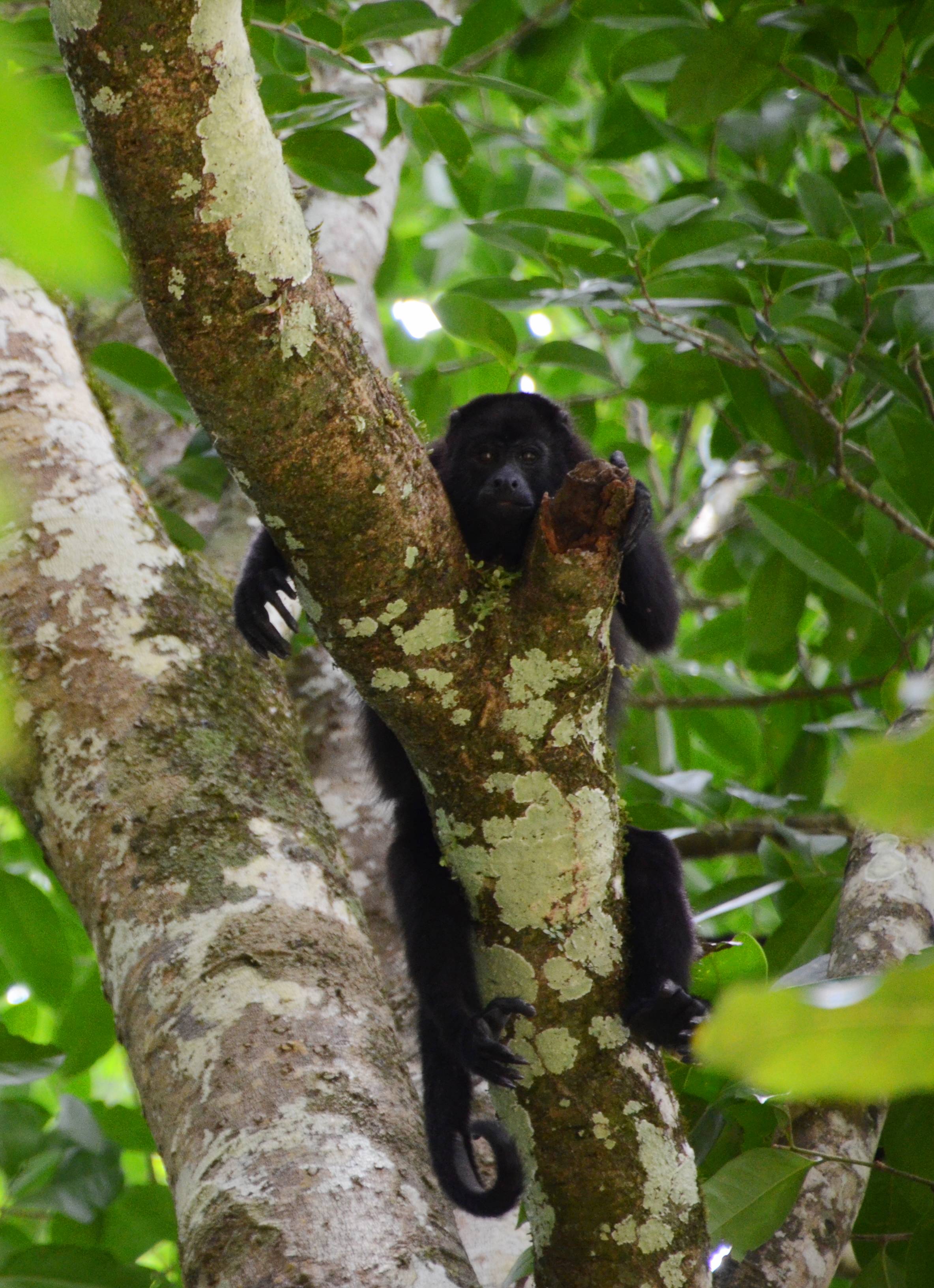
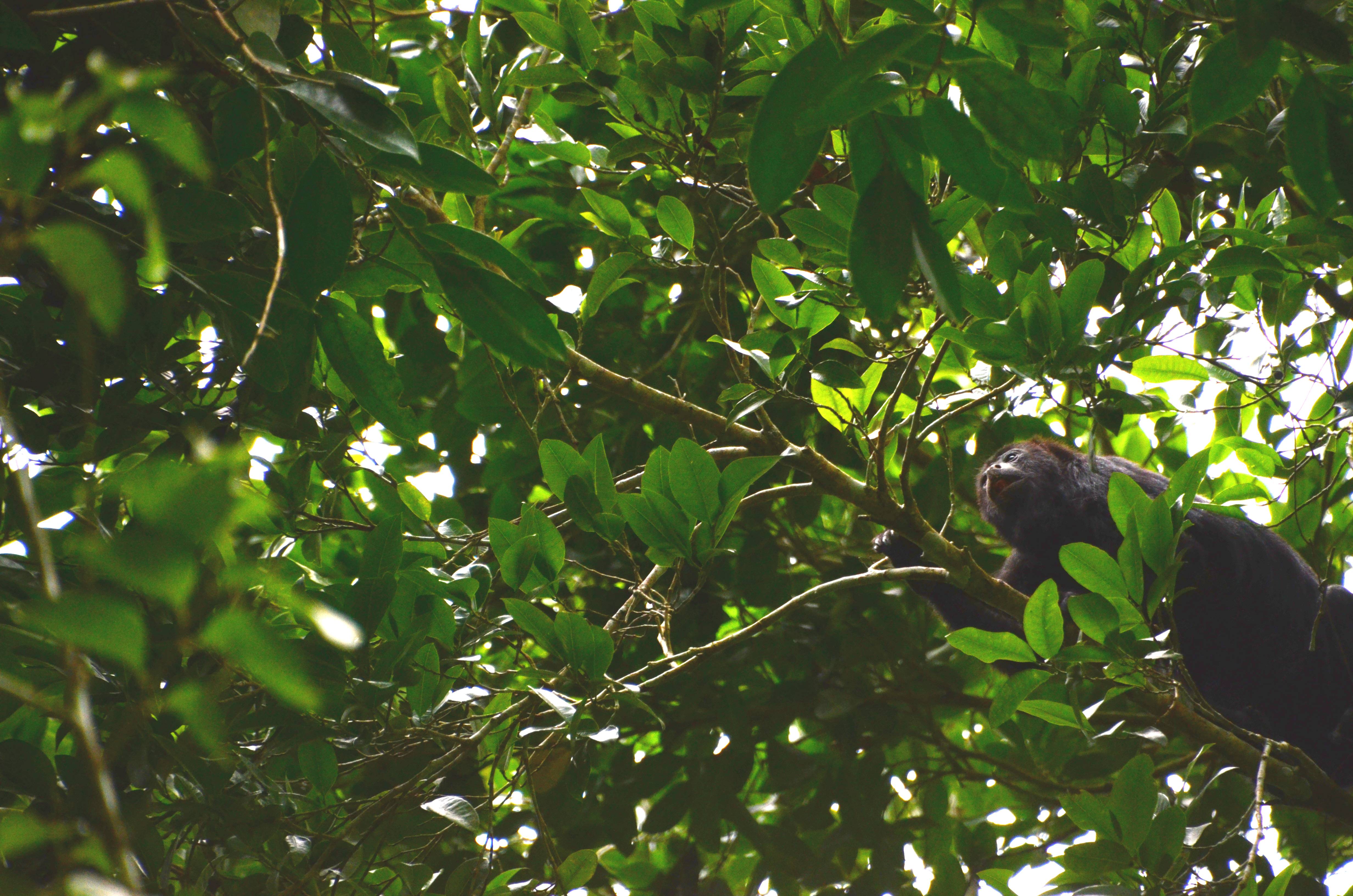
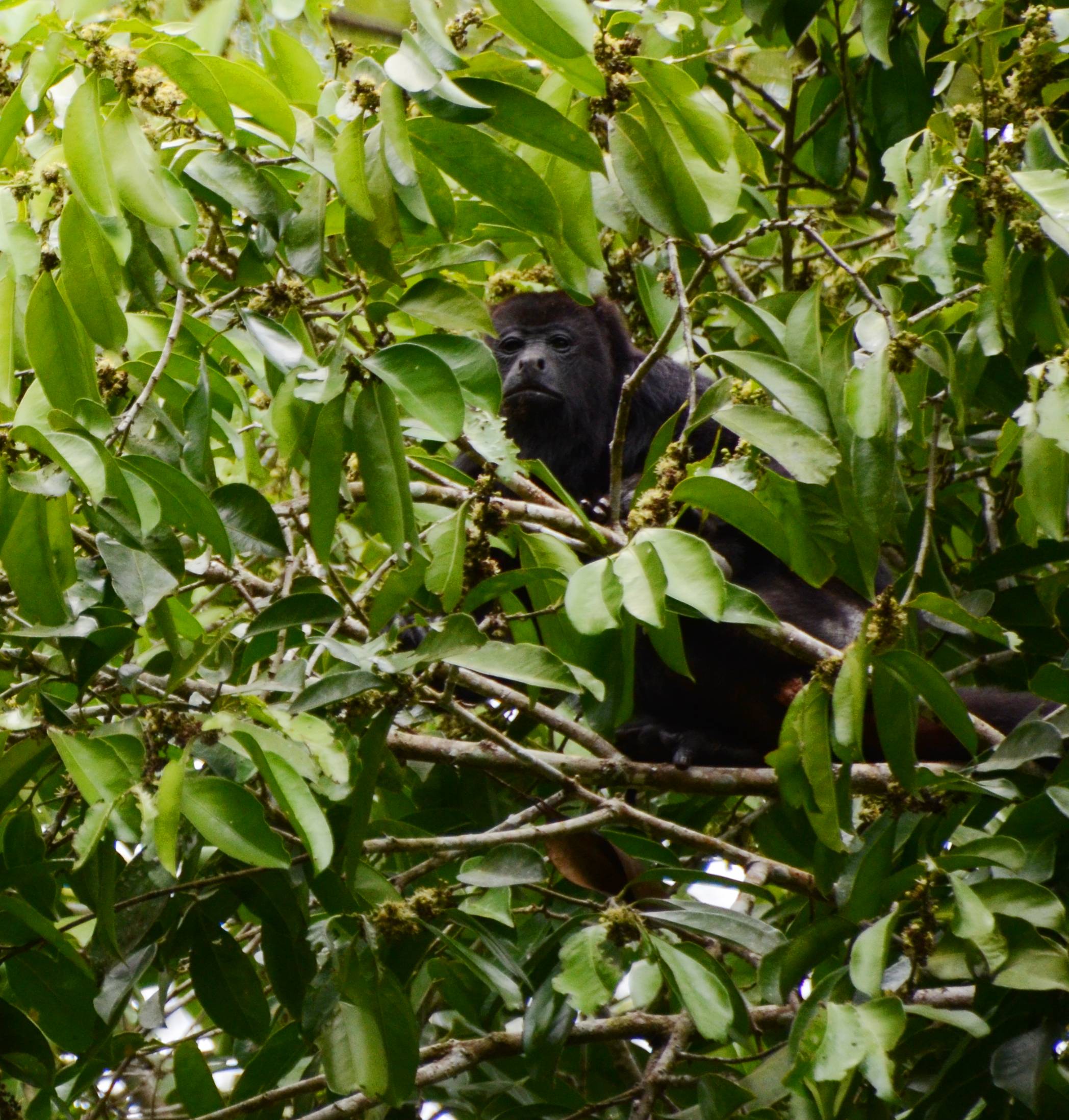
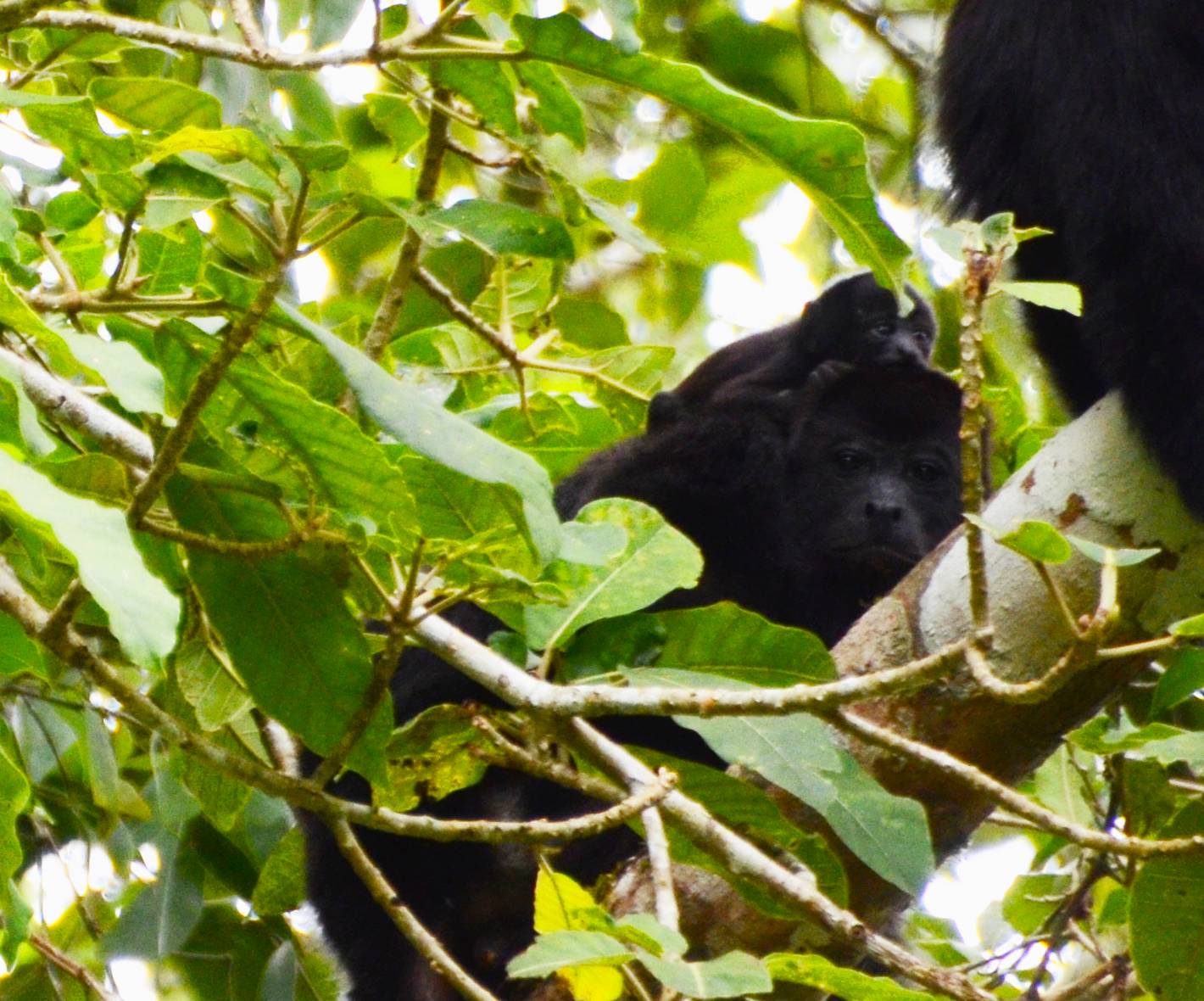
We followed them as they moved through the trees, taking us into another open plaza with even taller mounds and buildings. These were the dwellings of the noble class, Mike said — the shamans, astronomers and friends of the royal family.
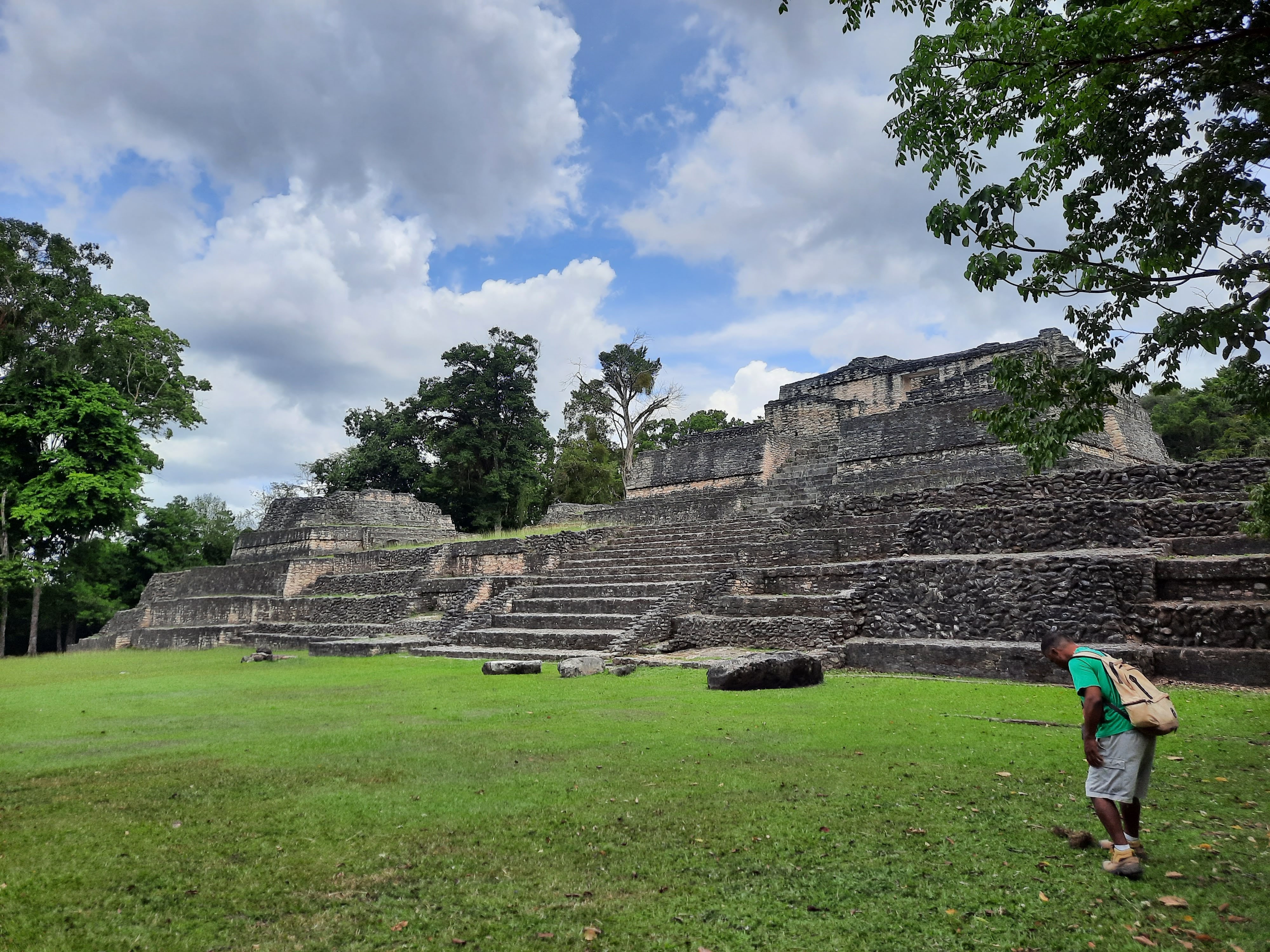
As we looked around, we suddenly heard the strange chicken-like scream of the Montezuma Oropendola. They flew back and forth from their hanging nests in the surrounding palm trees, blocking the way back.
Though we were still the only people in the area, I couldn’t help feeling watched, as if the eyes of the jungle were following our every move.
Palace in the Sky
Caracol seemed to go on for miles and miles. No matter where we walked, the jungle remained as dense and impenetrable as ever. Every time it opened up into one of the lush green plazas, I was surprised by the sudden feeling of openness and shocked that I hadn’t been able to see the structures through the trees.
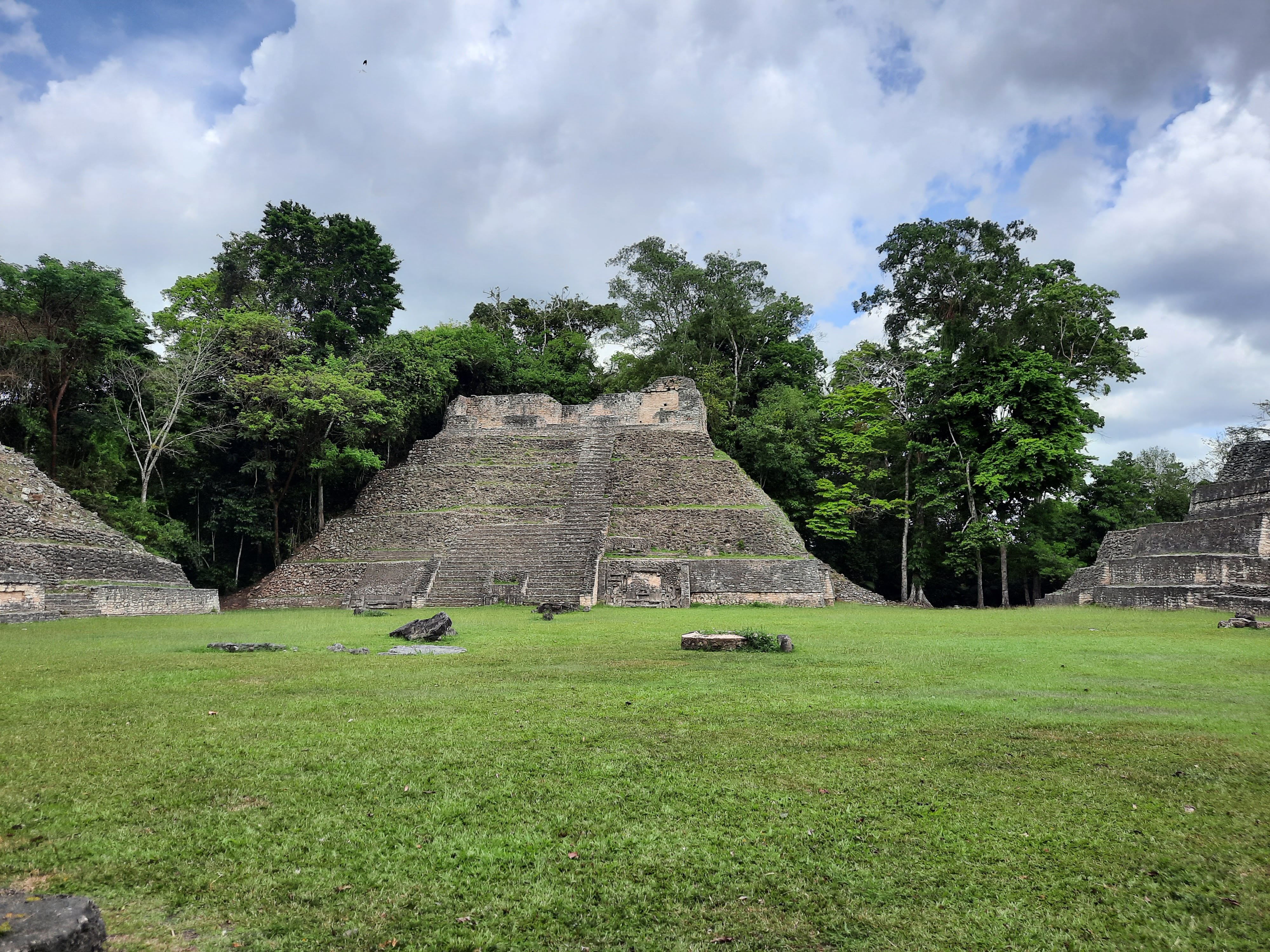
So, when we left the howlers and Montezumas, I was again surprised when the jungle suddenly ended. We walked out of the wall of trees and entered the largest plaza yet.
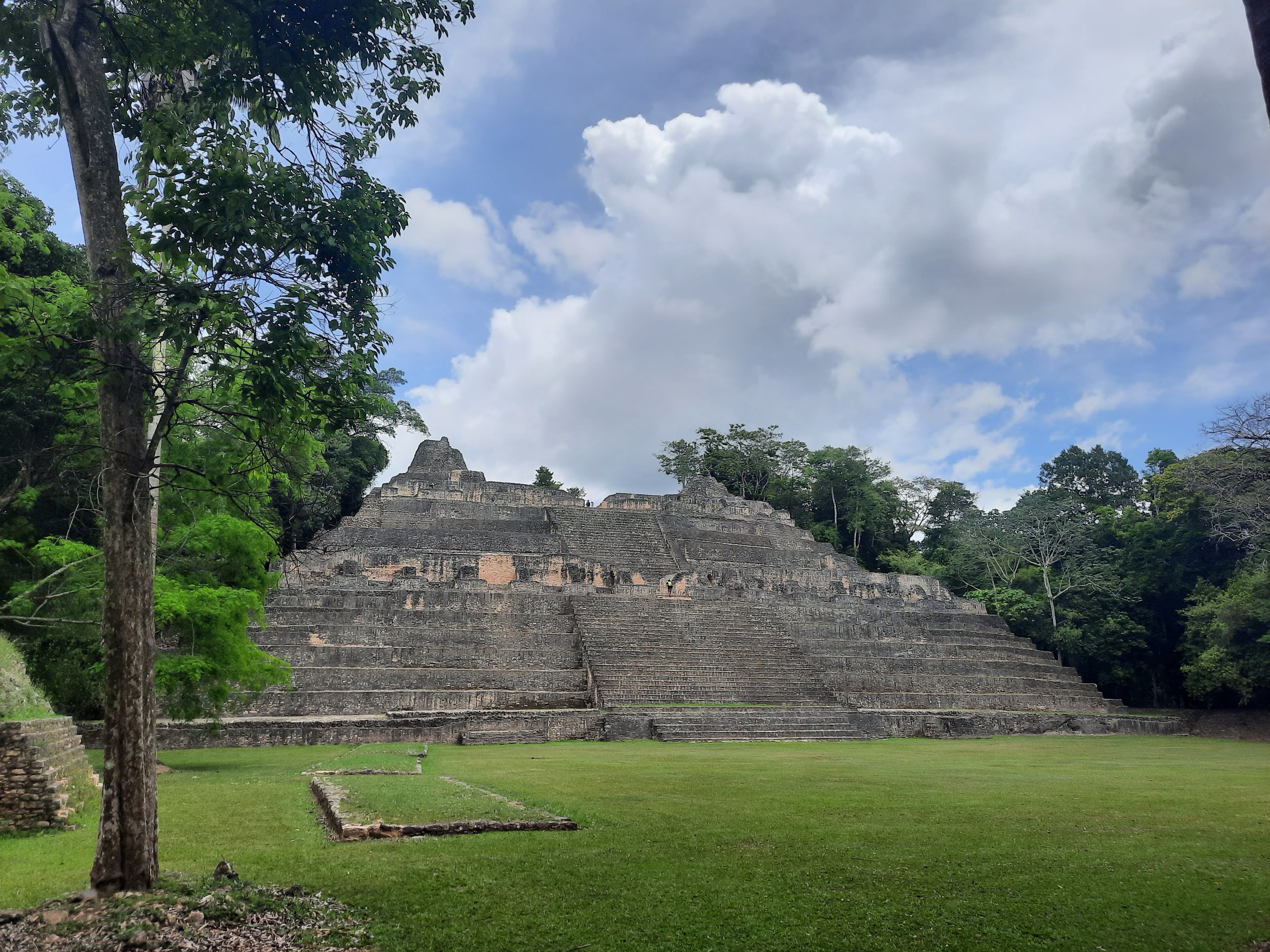
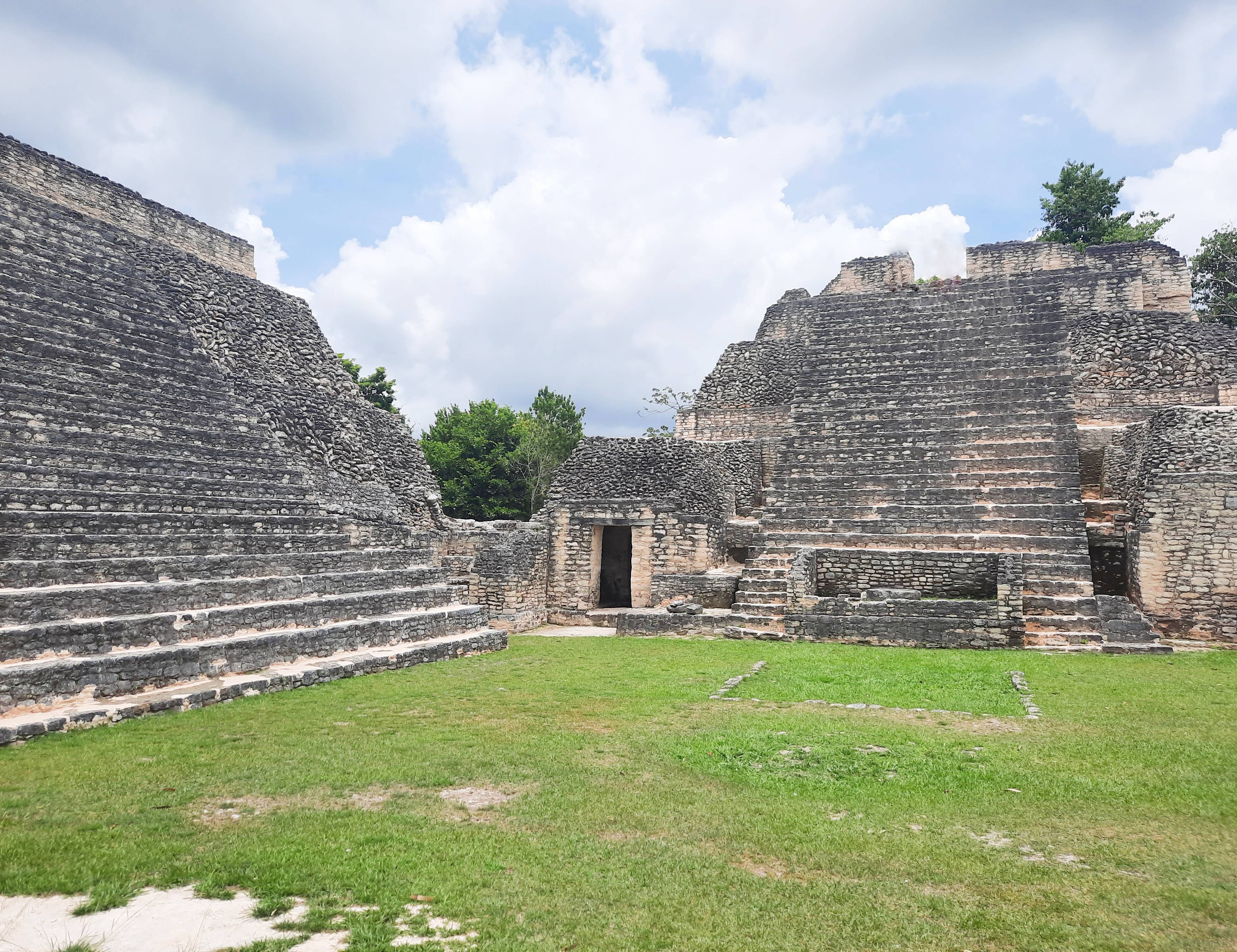
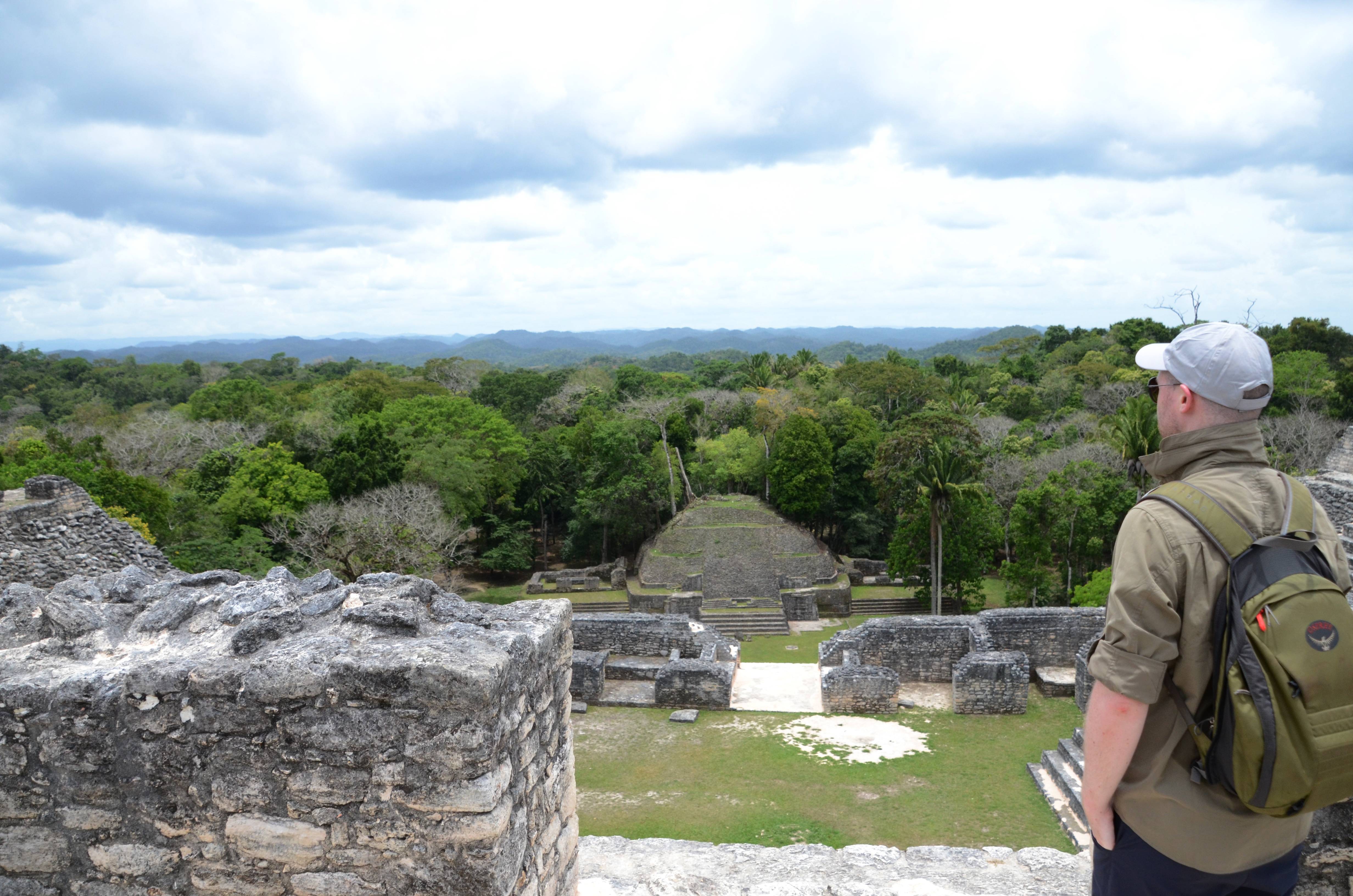
Two structures stood immediately in front of us, one after the other. As we walked in further, Caana the Sky Palace came into view from the left — and it towered over all. Hundreds of great stone steps formed a staircase to heaven. From where we were standing in the centre of the plaza, it was a gorgeous, unforgettable sight to behold.
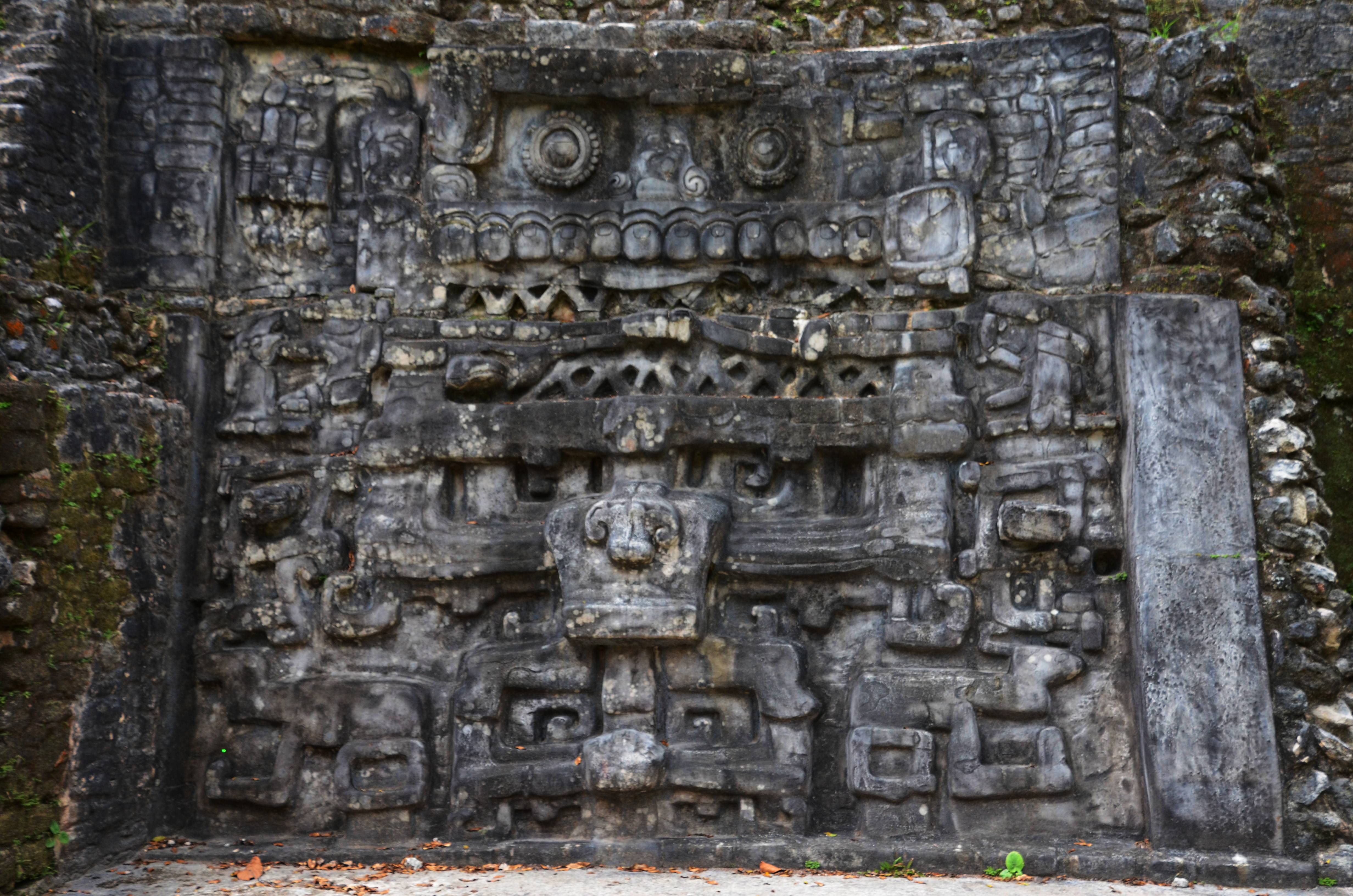
First, we explored the two smaller structures — either temples or residences of the elite class and royal family, Mike said. On the nearest pyramid, three snarling, animal-like faces stared back at us. The intricate carvings snaked up the stone staircase. At its base, we could see the long-nosed Chaac, the rain god, with a growling Jaguar god on his head, a classic symbol of protection.
At the top sat a wide-eyed figure with a jarring, skeletal smile. This lesser rain deity was carved in the Mexican style, an indication that the people of Caracol were trading and interacting with Maya in Central Mexico.
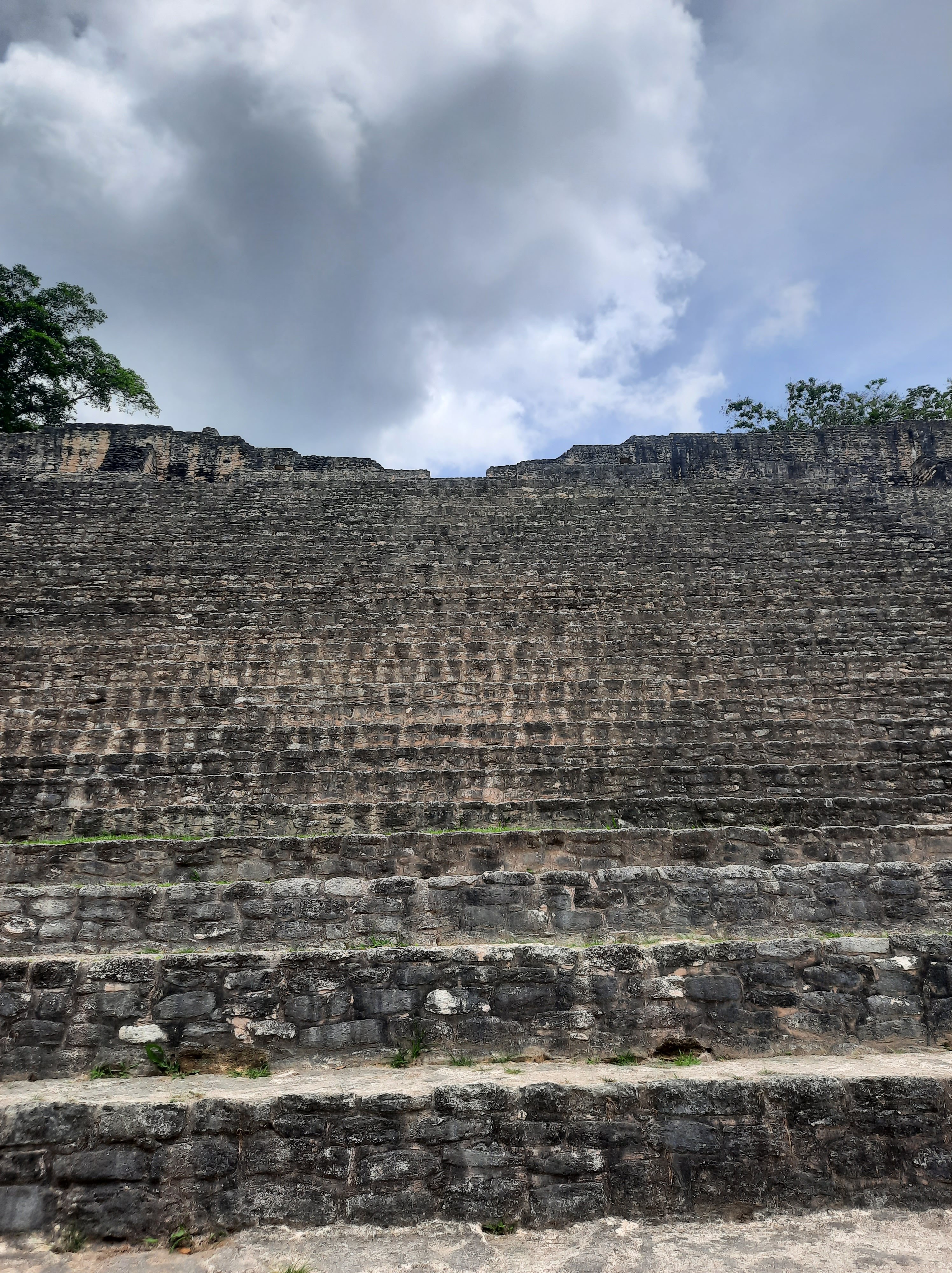
As we slowly climbed the large steps of Caana, Mike told us all about the customs and traditions of the Maya who lived here long ago. One point I found fascinating was how the ancient Maya had revered little people and saw them as spiritual beings or demi-gods. They were given a special place to live in the palace and often had significant roles to play in religious ceremonies and rites — accurately depicted in Apocalypto.
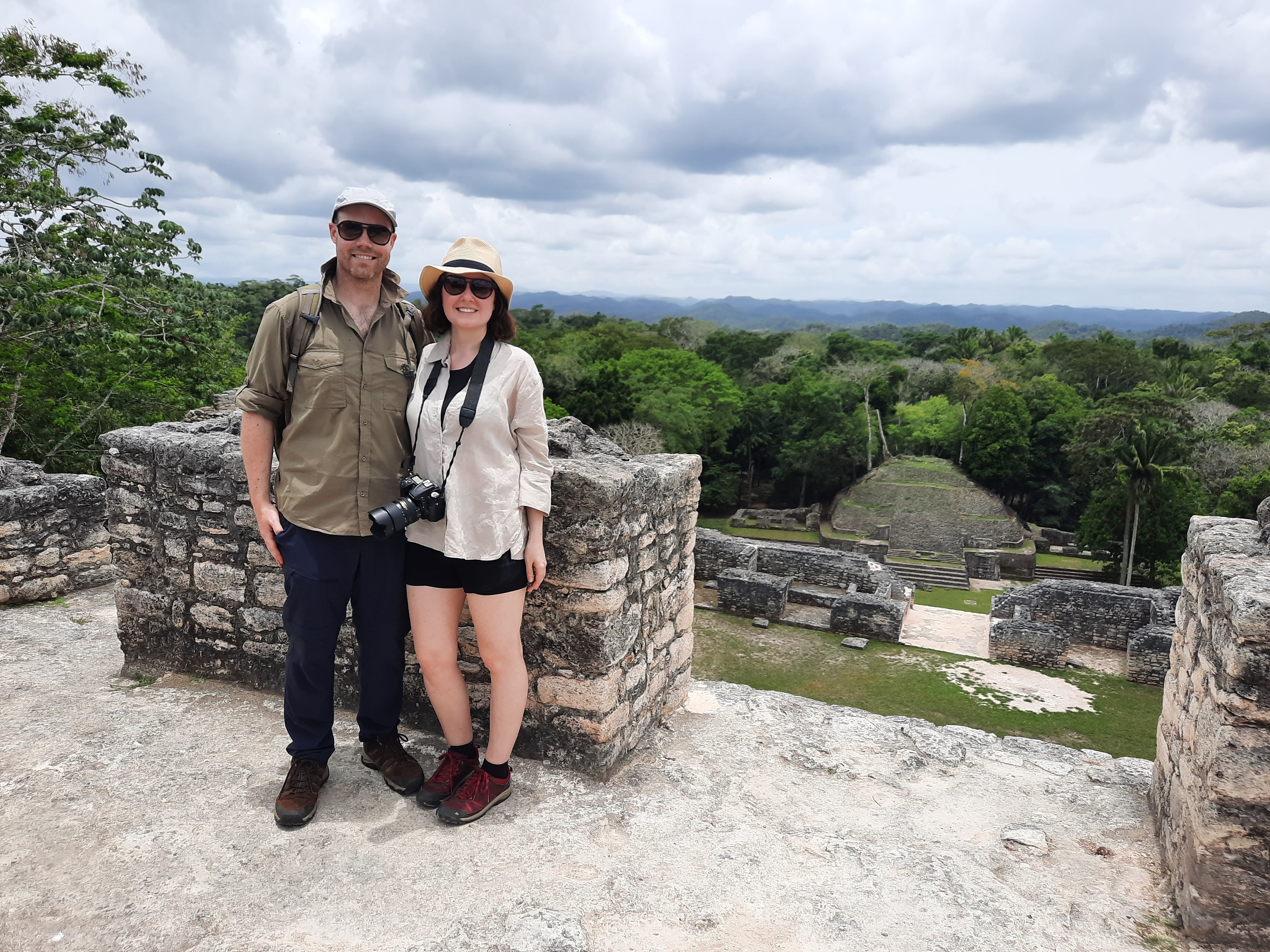
Onwards we went up into the sky. At 140 feet, the Sky Palace is the largest structure in Caracol — and all of Belize. Climbing each step involves hands and elbows, and in the extreme heat, it’s an exhausting workout. When we reached the summit, I was surprised to see yet another courtyard surrounded by more temples. It was incredible to imagine ancient people building these temples in the clouds.
Two shrines adorned either side of the main staircase. We ran inside them to seek the cool shade, but Mike pointed to the dark, hollow opening in the floor. Tombs had been found deep within these, Mike told us, and one of the bodies was a woman wearing jade earrings. There’s evidence that she may have been Lady Batz’ Ek, a princess of Mexico and mother to one of Caracol’s kings, Lord K’an II, in the 7th century.
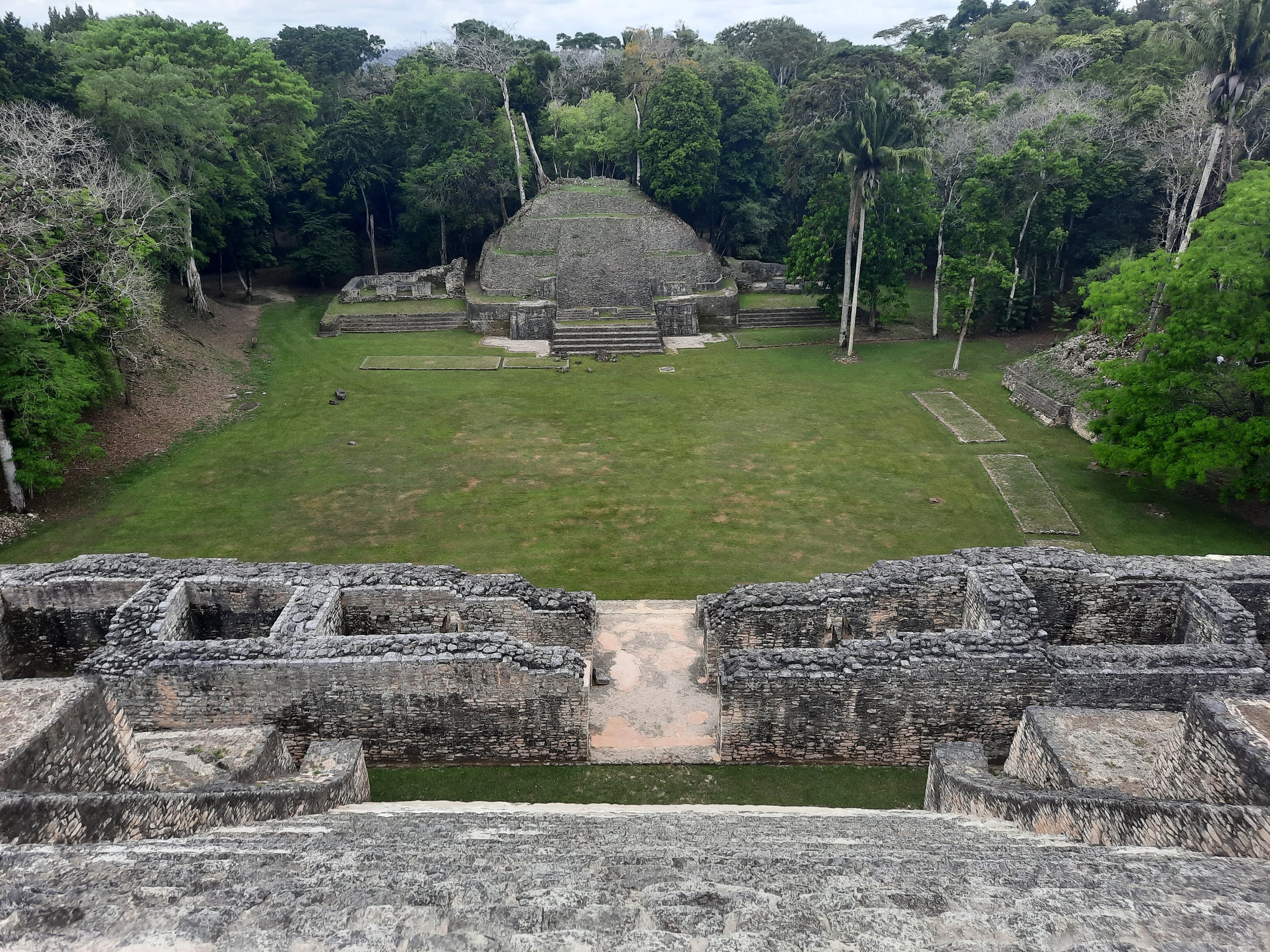
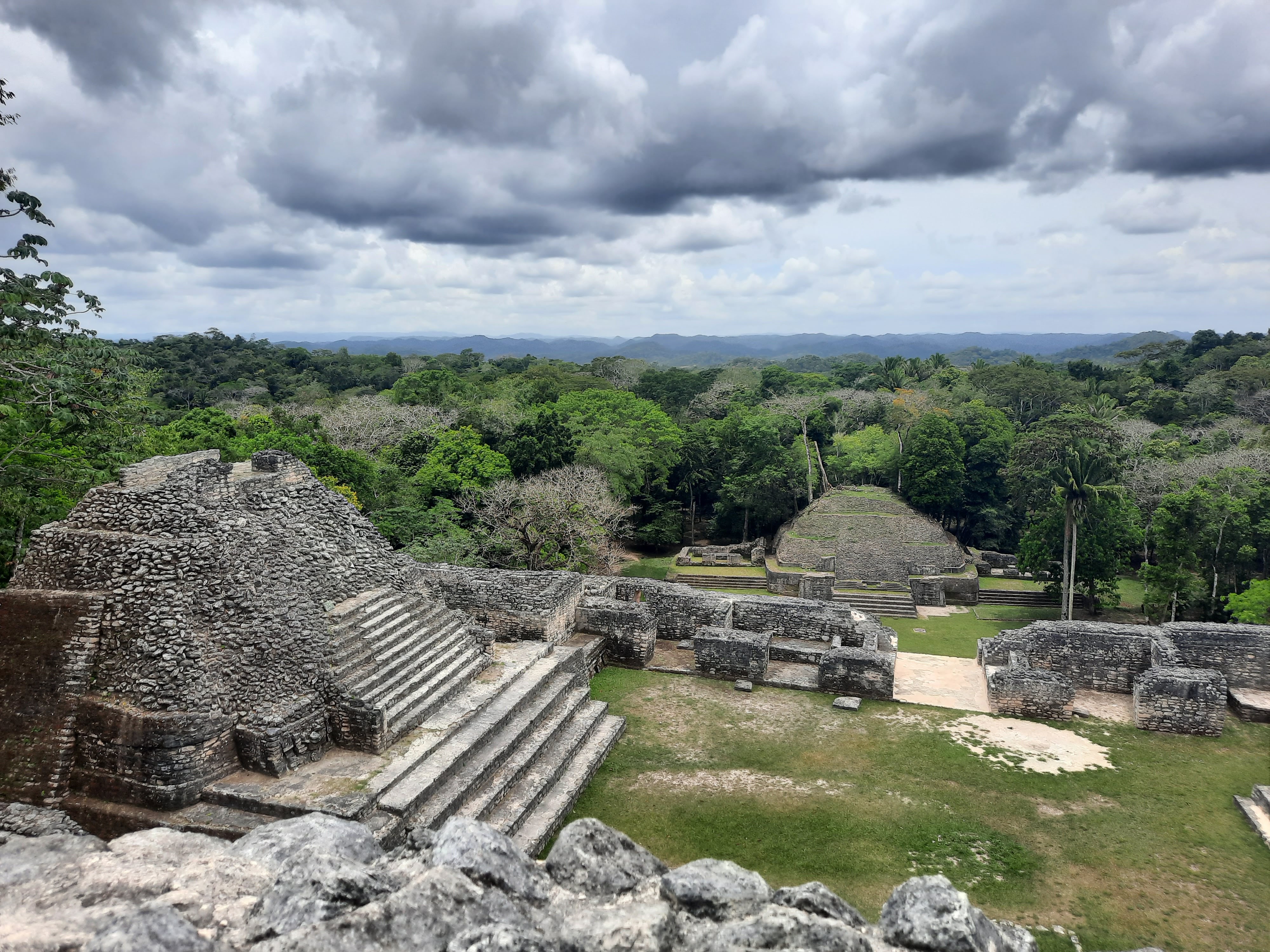
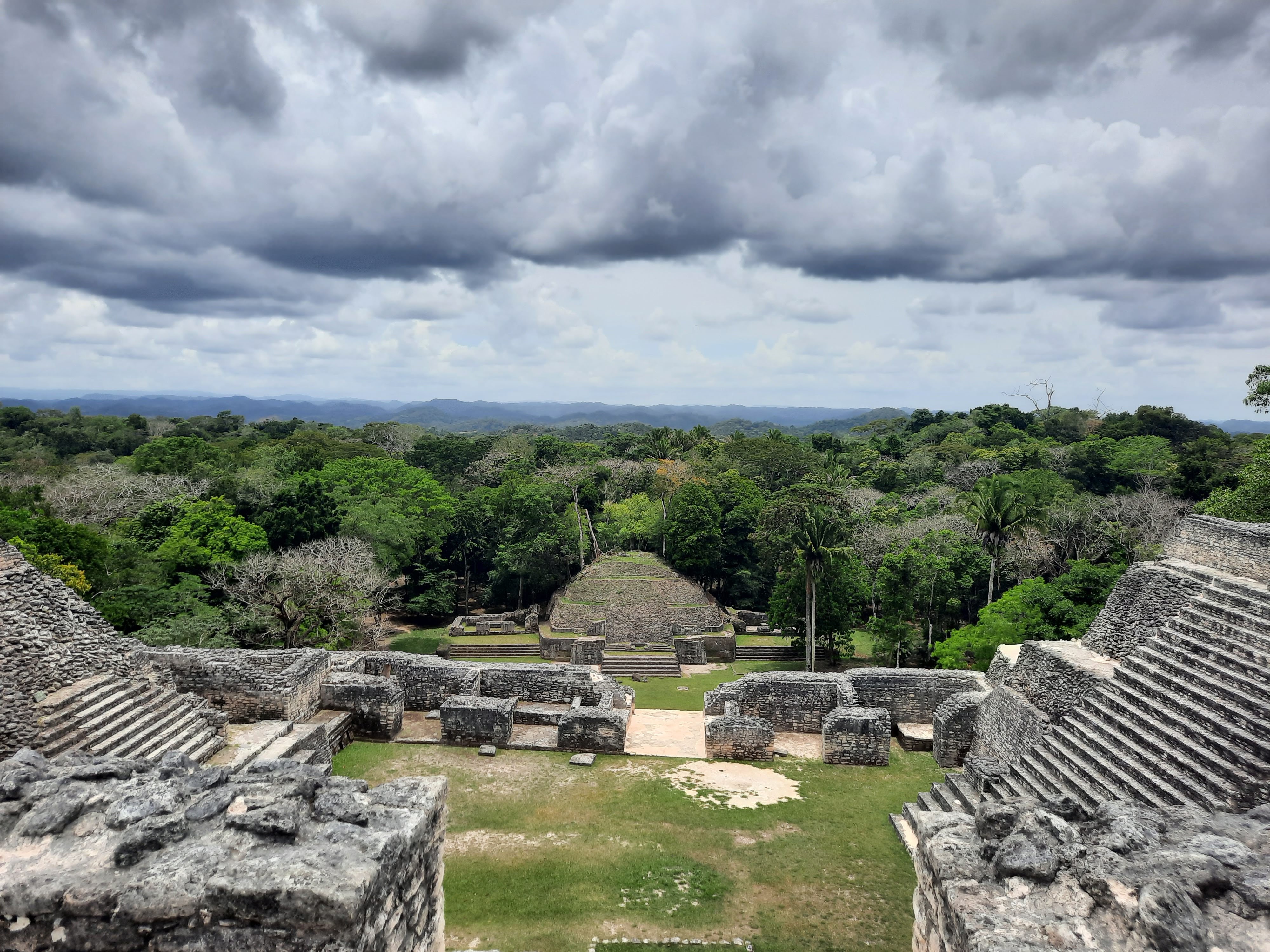
I was struck by the beautiful bird’s-eye view of Caracol. From where we stood, the vast, surrounding jungle lay before us and stretched on for miles, covering the Maya Mountains in a blanket of green in the distance. From this high seat in the sky, I wondered what the world would have looked like to the ancient kings back then, if it was as lush and green and full of life — or if they had seen their doom approaching in the barren wasteland far below.
The way home
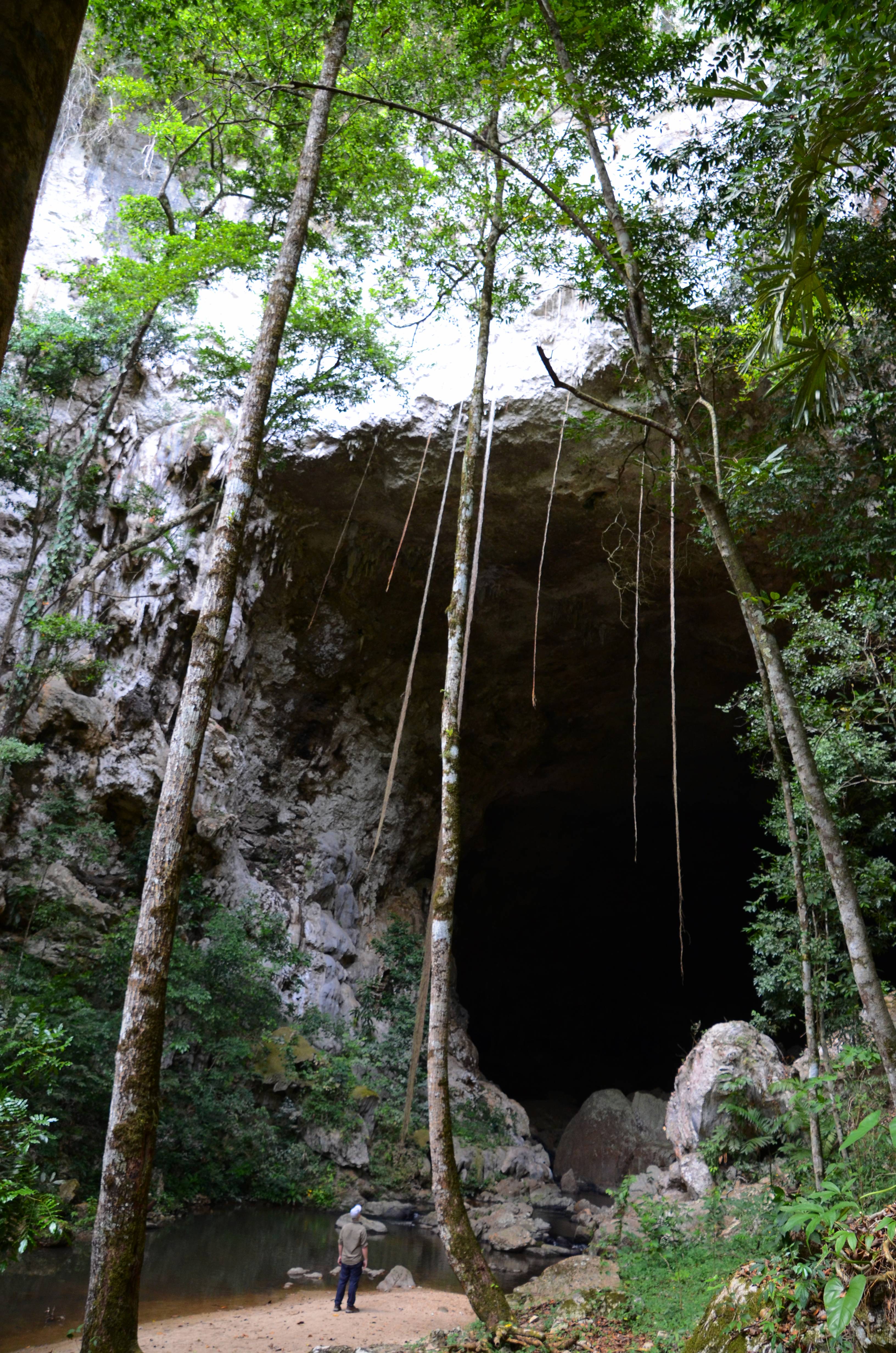
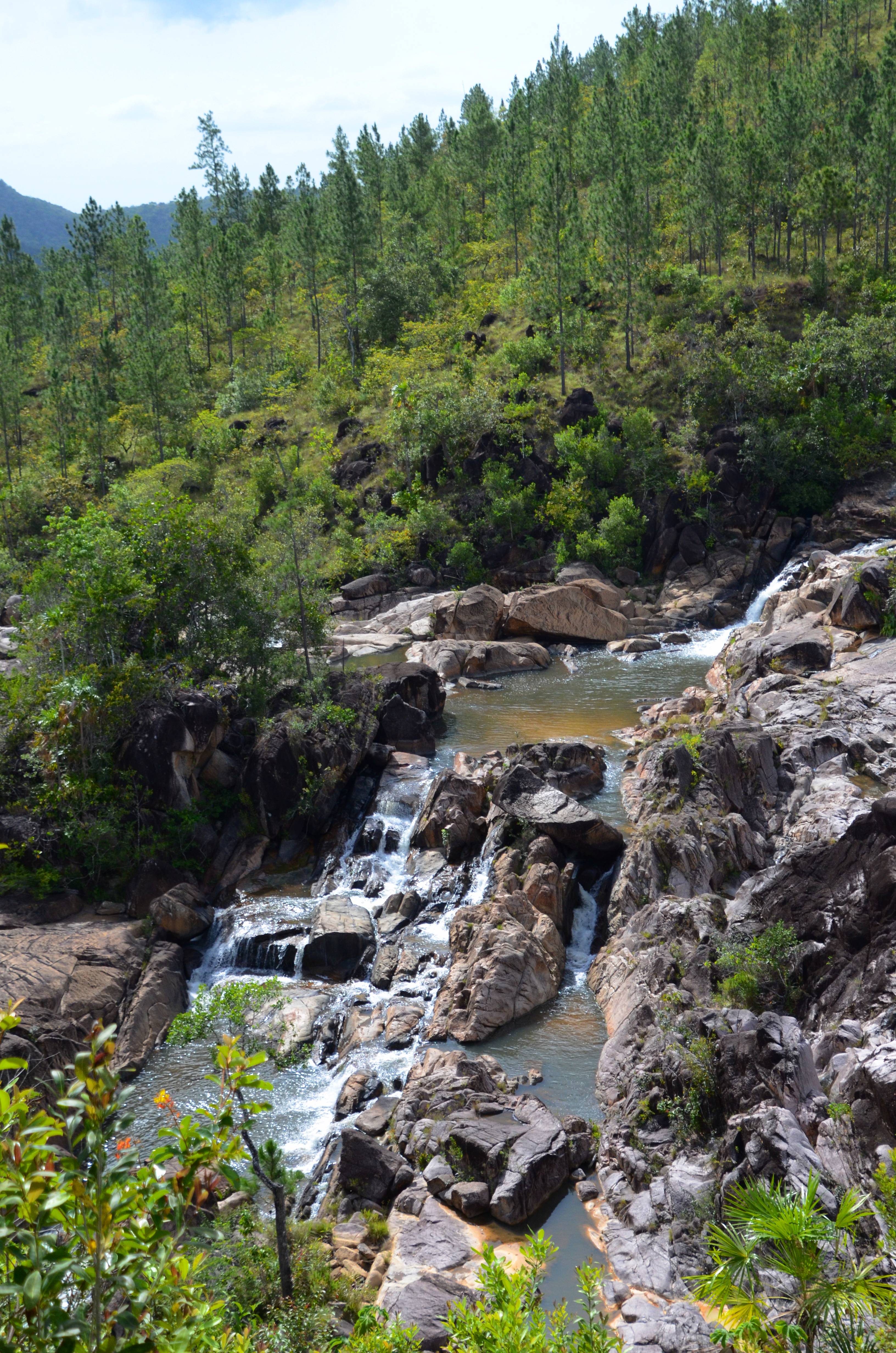
On the way back, we stopped at Rio Frio cave, a mammoth cave in the heart of the jungle that completely felt like a place from another world. Then we took a much-needed dip in the incredible Rio On Pools to cool off in the scorching heat.
As we neared San Ignacio, Mike decided that we all deserved a cold beer after a long and sweaty day. Patrick insisted on getting them as a thank you, and we all enjoyed a bottle of Belikin before heading back. It was the perfect ending to a great day exploring Maya culture and history with Mike. I wish him all the best and I hope to see him again one day soon.
Back at Table Rock Lodge, we knew our time in the jungle of Belize was coming to an end. We had spent our days birdwatching and river cruising, exploring the Maya ruins of Xunantunich, Caracol and the dark underworld of Actun Tunichil Muknal. Next, we would begin our road trip to the coast and the pristine beaches of Belize.
 thewanderingfellows
2 responses to “The Lost City of Caracol”
[…] of our time at Table Rock was spent exploring the nearby Maya sites of Actun Tunichil Muknal and Caracol. But whenever we had the chance, we swam in the gorgeous saltwater pool and relaxed with a couple […]
LikeLike
[…] We had explored the mysterious Maya ruins of Xunantunich, the dark passageways of the Actun Tunichl Mucknal and the wild forests of Caracol. […]
LikeLike